Pasquier J et al. (JUN 2017)
The Journal of heart and lung transplantation : the official publication of the International Society for Heart Transplantation 36 6 684--693
Coculturing with endothelial cells promotes in vitro maturation and electrical coupling of human embryonic stem cell-derived cardiomyocytes.
BACKGROUND Pluripotent human embryonic stem cells (hESC) are a promising source of repopulating cardiomyocytes. We hypothesized that we could improve maturation of cardiomyocytes and facilitate electrical interconnections by creating a model that more closely resembles heart tissue; that is,containing both endothelial cells (ECs) and cardiomyocytes. METHODS We induced cardiomyocyte differentiation in the coculture of an hESC line expressing the cardiac reporter NKX2.5-green fluorescent protein (GFP),and an Akt-activated EC line (E4(+)ECs). We quantified spontaneous beating rates,synchrony,and coordination between different cardiomyocyte clusters using confocal imaging of Fura Red-detected calcium transients and computer-assisted image analysis. RESULTS After 8 days in culture,94% ± 6% of the NKX2-5GFP(+) cells were beating when hESCs embryonic bodies were plated on E4(+)ECs compared with 34% ± 12.9% for controls consisting of hESCs cultured on BD Matrigel (BD Biosciences) without ECs at Day 11 in culture. The spatial organization of beating areas in cocultures was different. The GFP(+) cardiomyocytes were close to the E4(+)ECs. The average beats/min of the cardiomyocytes in coculture was faster and closer to physiologic heart rates compared with controls (50 ± 14 [n = 13] vs 25 ± 9 [n = 8]; p < 0.05). The coculture with ECs led to synchronized beating relying on the endothelial network,as illustrated by the loss of synchronization upon the disruption of endothelial bridges. CONCLUSIONS The coculturing of differentiating cardiomyocytes with Akt-activated ECs but not EC-conditioned media results in (1) improved efficiency of the cardiomyocyte differentiation protocol and (2) increased maturity leading to better intercellular coupling with improved chronotropy and synchrony.
View Publication
Multiscale computational models for optogenetic control of cardiac function
The ability to stimulate mammalian cells with light has significantly changed our understanding of electrically excitable tissues in health and disease,paving the way toward various novel therapeutic applications. Here,we demonstrate the potential of optogenetic control in cardiac cells using a hybrid experimental/computational technique. Experimentally,we introduced channelrhodopsin-2 into undifferentiated human embryonic stem cells via a lentiviral vector,and sorted and expanded the genetically engineered cells. Via directed differentiation,we created channelrhodopsin-expressing cardiomyocytes,which we subjected to optical stimulation. To quantify the impact of photostimulation,we assessed electrical,biochemical,and mechanical signals using patch-clamping,multielectrode array recordings,and video microscopy. Computationally,we introduced channelrhodopsin-2 into a classic autorhythmic cardiac cell model via an additional photocurrent governed by a light-sensitive gating variable. Upon optical stimulation,the channel opens and allows sodium ions to enter the cell,inducing a fast upstroke of the transmembrane potential. We calibrated the channelrhodopsin-expressing cell model using single action potential readings for different photostimulation amplitudes,pulse widths,and frequencies. To illustrate the potential of the proposed approach,we virtually injected channelrhodopsin-expressing cells into different locations of a human heart,and explored its activation sequences upon optical stimulation. Our experimentally calibrated computational toolbox allows us to virtually probe landscapes of process parameters,and identify optimal photostimulation sequences toward pacing hearts with light. ?? 2011 Biophysical Society.
View Publication
Davis RP et al. (JUL 2013)
Differentiation 86 1–2 30--37
Generation of induced pluripotent stem cells from human foetal fibroblasts using the Sleeping Beauty transposon gene delivery system
Transposon gene delivery systems offer an alternative,non-viral-based approach to generate induced pluripotent stem cells (iPSCs). Here we used the Sleeping Beauty (SB) transposon to generate four human iPSC lines from foetal fibroblasts. In contrast to other gene delivery systems,the SB transposon does not exhibit an integration bias towards particular genetic elements,thereby reducing the risk of insertional mutagenesis. Furthermore,unlike the alternative transposon piggyBac,SB has no SB-like elements within the human genome,minimising the possibility of mobilising endogenous transposon elements. All iPSC lines exhibited the expected characteristics of pluripotent human cells,including the ability to differentiate to derivatives of all three germ layers in vitro. Re-expression of the SB transposase in the iPSCs after reprogramming resulted in the mobilisation of some of the transposons. These results indicate that the SB transposon system is a useful addition to methods for generating human iPSCs,both for basic and applied biomedical research,and in the context of future therapeutic application. textcopyright 2013 International Society of Differentiation.
View Publication
产品类型:
产品号#:
85850
85857
产品名:
mTeSR™1
mTeSR™1
Prè et al. (JUL 2014)
PLoS ONE 9 7 e103418
A time course analysis of the electrophysiological properties of neurons differentiated from human induced Pluripotent Stem Cells (iPSCs)
Many protocols have been designed to differentiate human embryonic stem cells (ESCs) and human induced pluripotent stem cells (iPSCs) into neurons. Despite the relevance of electrophysiological properties for proper neuronal function,little is known about the evolution over time of important neuronal electrophysiological parameters in iPSC-derived neurons. Yet,understanding the development of basic electrophysiological characteristics of iPSC-derived neurons is critical for evaluating their usefulness in basic and translational research. Therefore,we analyzed the basic electrophysiological parameters of forebrain neurons differentiated from human iPSCs,from day 31 to day 55 after the initiation of neuronal differentiation. We assayed the developmental progression of various properties,including resting membrane potential,action potential,sodium and potassium channel currents,somatic calcium transients and synaptic activity. During the maturation of iPSC-derived neurons,the resting membrane potential became more negative,the expression of voltage-gated sodium channels increased,the membrane became capable of generating action potentials following adequate depolarization and,at day 48-55,50% of the cells were capable of firing action potentials in response to a prolonged depolarizing current step,of which 30% produced multiple action potentials. The percentage of cells exhibiting miniature excitatory post-synaptic currents increased over time with a significant increase in their frequency and amplitude. These changes were associated with an increase of Ca2+ transient frequency. Co-culturing iPSC-derived neurons with mouse glial cells enhanced the development of electrophysiological parameters as compared to pure iPSC-derived neuronal cultures. This study demonstrates the importance of properly evaluating the electrophysiological status of the newly generated neurons when using stem cell technology,as electrophysiological properties of iPSC-derived neurons mature over time.
View Publication
产品类型:
产品号#:
85850
85857
产品名:
mTeSR™1
mTeSR™1
Chung HCY et al. (JAN 2012)
Stem cells and development 21 2 206--16
Human induced pluripotent stem cells derived under feeder-free conditions display unique cell cycle and DNA replication gene profiles.
Use of animal feeder layers and serum containing media in the derivation and propagation of induced pluripotent stem cells (iPSCs) can hinder clinical translation,because of the presence of xeno-material/pathogens. A defined and standardized system would be ideal for generating a homogenous population of iPSCs,which closely resembles human embryonic stem cells (hESCs). This article presents a novel and extensive comparison between in-house produced iPSCs and hESCs under feeder" and "feeder-free" conditions�
View Publication
A practical synthesis of Rho-Kinase inhibitor Y-27632 and fluoro derivatives and their evaluation in human pluripotent stem cells.
A practical synthesis of the Rho-Kinase inhibitor Y-27632 and two new fluoro derivatives was achieved in seven steps and with a good overall yield of 45% starting from commercially available (R)-1-phenylethylamine. Compared to Y-27632 the new fluoro derivatives showed reduced or no effect on hPSC vitality and expansion after dissociation in human pluripotent stem cells.
View Publication
产品类型:
产品号#:
85850
85857
产品名:
mTeSR™1
mTeSR™1
Jara-Avaca M et al. (FEB 2017)
Stem cell reports 8 2 305--317
EBIO Does Not Induce Cardiomyogenesis in Human Pluripotent Stem Cells but Modulates Cardiac Subtype Enrichment by Lineage-Selective Survival.
Subtype-specific human cardiomyocytes (CMs) are valuable for basic and applied research. Induction of cardiomyogenesis and enrichment of nodal-like CMs was described for mouse pluripotent stem cells (mPSCs) in response to 1-ethyl-2-benzimidazolinone (EBIO),a chemical modulator of small-/intermediate-conductance Ca(2+)-activated potassium channels (SKs 1-4). Investigating EBIO in human pluripotent stem cells (PSCs),we have applied three independent differentiation protocols of low to high cardiomyogenic efficiency. Equivalent to mPSCs,timed EBIO supplementation during hPSC differentiation resulted in dose-dependent enrichment of up to 80% CMs,including an increase in nodal- and atrial-like phenotypes. However,our study revealed extensive EBIO-triggered cell loss favoring cardiac progenitor preservation and,subsequently,CMs with shortened action potentials. Proliferative cells were generally more sensitive to EBIO,presumably via an SK-independent mechanism. Together,EBIO did not promote cardiogenic differentiation of PSCs,opposing previous findings,but triggered lineage-selective survival at a cardiac progenitor stage,which we propose as a pharmacological strategy to modulate CM subtype composition.
View Publication
产品类型:
产品号#:
85850
85857
产品名:
mTeSR™1
mTeSR™1
Mandal A et al. (FEB 2016)
In Vitro Cellular and Developmental Biology - Animal 52 2 243--251
Long-term culture and cryopreservation does not affect the stability and functionality of human embryonic stem cell-derived hepatocyte-like cells
Human embryonic stem cells (hESCs) are predicted to be an unlimited source of hepatocytes which can pave the way for applications such as cell replacement therapies or as a model of human development or even to predict the hepatotoxicity of drug compounds. We have optimized a 23-d differentiation protocol to generate hepatocyte-like cells (HLCs) from hESCs,obtaining a relatively pure population which expresses the major hepatic markers and is functional and mature. The stability of the HLCs in terms of hepato-specific marker expression and functionality was found to be intact even after an extended period of in vitro culture and cryopreservation. The hESC-derived HLCs have shown the capability to display sensitivity and an alteration in the level of CYP enzyme upon drug induction. This illustrates the potential of such assays in predicting the hepatotoxicity of a drug compound leading to advancement of pharmacology
View Publication


 EasySep™小鼠TIL(CD45)正选试剂盒




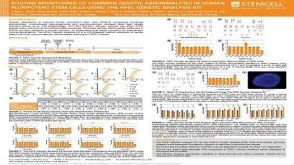 科学海报Routine Monitoring of Common Genetic Abnormalities in Human Pluripotent Stem Cells Using the hPSC Genetic Analysis Kit
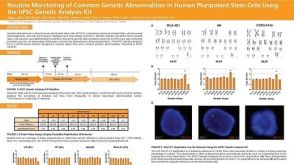 科学海报Routine Monitoring of Common Genetic Abnormalities in Human Pluripotent Stem Cells Using the hPSC Genetic Analysis Kit
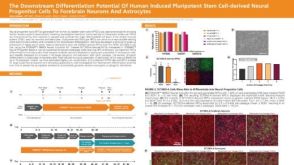 科学海报The Downstream Differentiation Potential of Human Induced Pluripotent Stem Cell-Derived Neural Progenitor Cells to Forebrain Neurons and Astrocytes
 沪公网安备31010102008431号