Lee J et al. (AUG 2015)
FASEB journal : official publication of the Federation of American Societies for Experimental Biology 29 8 3399--3410
Early induction of a prechondrogenic population allows efficient generation of stable chondrocytes from human induced pluripotent stem cells.
Regeneration of human cartilage is inherently inefficient; an abundant autologous source,such as human induced pluripotent stem cells (hiPSCs),is therefore attractive for engineering cartilage. We report a growth factor-based protocol for differentiating hiPSCs into articular-like chondrocytes (hiChondrocytes) within 2 weeks,with an overall efficiency textgreater90%. The hiChondrocytes are stable and comparable to adult articular chondrocytes in global gene expression,extracellular matrix production,and ability to generate cartilage tissue in vitro and in immune-deficient mice. Molecular characterization identified an early SRY (sex-determining region Y) box (Sox)9(low) cluster of differentiation (CD)44(low)CD140(low) prechondrogenic population during hiPSC differentiation. In addition,2 distinct Sox9-regulated gene networks were identified in the Sox9(low) and Sox9(high) populations providing novel molecular insights into chondrogenic fate commitment and differentiation. Our findings present a favorable method for generating hiPSC-derived articular-like chondrocytes. The hiChondrocytes are an attractive cell source for cartilage engineering because of their abundance,autologous nature,and potential to generate articular-like cartilage rather than fibrocartilage. In addition,hiChondrocytes can be excellent tools for modeling human musculoskeletal diseases in a dish and for rapid drug screening.
View Publication
产品类型:
产品号#:
07923
85850
85857
产品名:
Dispase (1 U/mL)
mTeSR™1
mTeSR™1
Wu Q et al. (DEC 2015)
Cell Research 25 12 1--19
MSX2 mediates entry of human pluripotent stem cells into mesendoderm by simultaneously suppressing SOX2 and activating NODAL signaling
How BMP signaling integrates into and destabilizes the pluripotency circuitry of human pluripotent stem cells (hPSCs) to initiate differentiation into individual germ layers is a long-standing puzzle. Here we report muscle segment homeobox 2 (MSX2),a homeobox transcription factor of msh family,as a direct target gene of BMP signaling and a master mediator of hPSCs' differentiation to mesendoderm. Enforced expression of MSX2 suffices to abolish pluripotency and induce directed mesendoderm differentiation of hPSCs,while MSX2 depletion impairs mesendoderm induction. MSX2 is a direct target gene of the BMP pathway in hPSCs,and can be synergistically activated by Wnt signals via LEF1 during mesendoderm induction. Furthermore,MSX2 destabilizes the pluripotency circuitry through direct binding to the SOX2 promoter and repression of SOX2 transcription,while MSX2 controls mesendoderm lineage commitment by simultaneous suppression of SOX2 and induction of NODAL expression through direct binding and activation of the Nodal promoter. Interestingly,SOX2 can promote the degradation of MSX2 protein,suggesting a mutual antagonism between the two lineage-specifying factors in the control of stem cell fate. Together,our findings reveal crucial new mechanisms of destabilizing pluripotency and directing lineage commitment in hPSCs.
View Publication
产品类型:
产品号#:
85850
85857
产品名:
mTeSR™1
mTeSR™1
Maldonado M et al. (AUG 2016)
Stem cell research 17 2 222--227
ROCK inhibitor primes human induced pluripotent stem cells to selectively differentiate towards mesendodermal lineage via epithelial-mesenchymal transition-like modulation.
Robust control of human induced pluripotent stem cell (hIPSC) differentiation is essential to realize its patient-tailored therapeutic potential. Here,we demonstrate a novel application of Y-27632,a small molecule Rho-associated protein kinase (ROCK) inhibitor,to significantly influence the differentiation of hIPSCs in a lineage-specific manner. The application of Y-27632 to hIPSCs resulted in a decrease in actin bundling and disruption of colony formation in a concentration and time-dependent manner. Such changes in cell and colony morphology were associated with decreased expression of E-cadherin,a cell-cell junctional protein,proportional to the increased exposure to Y-27632. Interestingly,gene and protein expression of pluripotency markers such as NANOG and OCT4 were not downregulated by an exposure to Y-27632 up to 36h. Simultaneously,epithelial-to-mesenchymal (EMT) transition markers were upregulated with an exposure to Y-27632. These EMT-like changes in the cells with longer exposure to Y-27632 resulted in a significant increase in the subsequent differentiation efficiency towards mesendodermal lineage. In contrast,an inhibitory effect was observed when cells were subjected to ectodermal differentiation after prolonged exposure to Y-27632. Collectively,these results present a novel method for priming hIPSCs to modulate their differentiation potential with a simple application of Y-27632.
View Publication
产品类型:
产品号#:
85850
85857
产品名:
mTeSR™1
mTeSR™1
Cao J et al. (JUN 2013)
Analyst 138 14 4147--4160
Fourier transform infrared microspectroscopy reveals that tissue culture conditions affect the macromolecular phenotype of human embryonic stem cells
We employed Fourier transform infrared (FTIR) microspectroscopy to investigate the effects of different tissue culture environments on the FTIR spectra of undifferentiated human embryonic stem cells (hESCs) and their differentiated progeny. First we tested whether there were any possible spectral artifacts resulting from the use of transflectance measurements by comparing them with transmission measurements and found no evidence of these concluding that the lack of any differences resulted from the homogeneity of the dried cytospun cellular monolayers. We found that hESCs that were enzymatically passaged onto mouse embryonic fibroblasts (MEFs) in KOSR based hESC medium,hESCs enzymatically passaged onto Matrigel in mTESR medium and hESCs mechanically passaged onto MEFs in KOSR-based hESC medium,possessed unique FTIR spectroscopic signatures that reflect differences in their macromolecular chemistry. Further,these spectroscopic differences persisted even upon differentiation towards mesendodermal lineages. Our results suggest that FTIR microspectroscopy is a powerful,objective,measurement modality that complements existing methods for studying the phenotype of hESCs and their progeny,particularly changes induced by the cellular environment.
View Publication
产品类型:
产品号#:
85850
85857
产品名:
mTeSR™1
mTeSR™1
Rodin S et al. (OCT 2014)
Nature protocols 9 10 2354--68
Monolayer culturing and cloning of human pluripotent stem cells on laminin-521-based matrices under xeno-free and chemically defined conditions.
A robust method for culturing human pluripotent stem (hPS) cells under chemically defined and xeno-free conditions is an important tool for stem cell research and for the development of regenerative medicine. Here,we describe a protocol for monolayer culturing of Oct-4-positive hPS cells on a specific laminin-521 (LN-521) isoform,under xeno-free and chemically defined conditions. The cells are dispersed into single-cell suspension and then plated on LN-521 isoform at densities higher than 5,000 cells per cm²,where they attach,migrate and survive by forming small monolayer cell groups. The cells avidly divide and expand horizontally until the entire dish is covered by a confluent monolayer. LN-521,in combination with E-cadherin,allows cloning of individual hPS cells in separate wells of 96-well plates without the presence of rho-associated protein kinase (ROCK) inhibitors or any other inhibitors of anoikis. Characterization of cells maintained for several months in culture reveals pluripotency with a minimal degree of genetic abnormalities.
View Publication
产品类型:
产品号#:
100-0485
100-1077
200-0117
77003
85850
85857
产品名:
温和细胞解离试剂
ReLeSR™
CellAdhere™ Laminin-521
CellAdhere™ Laminin-521
mTeSR™1
mTeSR™1
Qian H et al. (MAY 2006)
Blood 107 9 3503--10
Contribution of alpha6 integrins to hematopoietic stem and progenitor cell homing to bone marrow and collaboration with alpha4 integrins.
The laminin receptor integrin alpha6 chain is ubiquitously expressed in human and mouse hematopoietic stem and progenitor cells. We have studied its role for homing of stem and progenitor cells to mouse hematopoietic tissues in vivo. A function-blocking anti-integrin alpha6 antibody significantly reduced progenitor cell homing to bone marrow (BM) of lethally irradiated mice,with a corresponding retention of progenitors in blood. Remarkably,the anti-integrin alpha6 antibody profoundly inhibited BM homing of long-term multilineage engrafting stem cells,studied by competitive repopulation assay and analysis of donor-derived lymphocytes and myeloid cells in blood 16 weeks after transplantation. A similar profound inhibition of long-term stem cell homing was obtained by using a function-blocking antibody against alpha4 integrin,studied in parallel. Furthermore,the anti-integrin alpha6 and alpha4 antibodies synergistically inhibited homing of short-term repopulating stem cells. Intravenous injection of anti-integrin alpha6 antibodies,in contrast to antibodies against alpha4 integrin,did not mobilize progenitors or enhance cytokine-induced mobilization by G-CSF. Our results provide the first evidence for a distinct functional role of integrin alpha6 receptor during hematopoietic stem and progenitor cell homing and collaboration of alpha6 integrin with alpha4 integrin receptors during homing of short-term stem cells.
View Publication
产品类型:
产品号#:
03134
产品名:
MethoCult™M3134
Bauer TR et al. (NOV 2006)
Blood 108 10 3313--20
Correction of the disease phenotype in canine leukocyte adhesion deficiency using ex vivo hematopoietic stem cell gene therapy.
Canine leukocyte adhesion deficiency (CLAD) represents the canine counter-part of the human disease leukocyte adhesion deficiency (LAD). Defects in the leukocyte integrin CD18 adhesion molecule in both CLAD and LAD lead to recurrent,life-threatening bacterial infections. We evaluated ex vivo retroviral-mediated gene therapy in CLAD using 2 nonmyeloablative conditioning regimens--200 cGy total body irradiation (TBI) or 10 mg/kg busulfan--with or without posttransplantation immunosuppression. In 6 of 11 treated CLAD dogs,therapeutic levels of CD18(+) leukocytes were achieved. Conditioning with either TBI or busulfan allowed long-term engraftment,and immunosuppression was not required for efficacy. The percentage of CD18(+) leukocytes in the peripheral blood progressively increased over 6 to 8 months after infusion to levels ranging from 1.26% to 8.37% at 1-year follow-up in the 6 dogs. These levels resulted in reversal or moderation of the severe CLAD phenotype. Linear amplification-mediated polymerase chain reaction assays indicated polyclonality of insertion sites. These results describe ex vivo hematopoietic stem cell gene transfer in a disease-specific,large animal model using 2 clinically applicable conditioning regimens,and they provide support for the use of nonmyeloablative conditioning regimens in preclinical protocols of retroviral-mediated gene transfer for nonmalignant hematopoietic diseases such as LAD.
View Publication
产品类型:
产品号#:
09600
09650
产品名:
StemSpan™ SFEM
StemSpan™ SFEM
Karamatic Crew V et al. (OCT 2004)
Blood 104 8 2217--23
CD151, the first member of the tetraspanin (TM4) superfamily detected on erythrocytes, is essential for the correct assembly of human basement membranes in kidney and skin.
Tetraspanins are thought to facilitate the formation of multiprotein complexes at cell surfaces,but evidence illuminating the biologic importance of this role is sparse. Tetraspanin CD151 forms very stable laminin-binding complexes with integrins alpha3beta1 and alpha6beta1 in kidney and alpha3beta1 and alpha6beta4 in skin. It is encoded by a gene at the same position on chromosome 11p15.5 as the MER2 blood group gene. We show that CD151 expresses the MER2 blood group antigen and is located on erythrocytes. We examined CD151 in 3 MER2-negative patients (2 are sibs) of Indian Jewish origin with end-stage kidney disease. In addition to hereditary nephritis the sibs have sensorineural deafness,pretibial epidermolysis bullosa,and beta-thalassemia minor. The 3 patients are homozygous for a single nucleotide insertion (G383) in exon 5 of CD151,causing a frameshift and premature stop signal at codon 140. The resultant truncated protein would lack its integrin-binding domain. We conclude that CD151 is essential for the proper assembly of the glomerular and tubular basement membrane in kidney,has functional significance in the skin,is probably a component of the inner ear,and could play a role in erythropoiesis.
View Publication
产品类型:
产品号#:
09600
09650
产品名:
StemSpan™ SFEM
StemSpan™ SFEM
Porayette P et al. (AUG 2009)
The Journal of Biological Chemistry 284 35 23806--17
Differential Processing of Amyloid-β Precursor Protein Directs Human Embryonic Stem Cell Proliferation and Differentiation into Neuronal Precursor Cells
The amyloid-beta precursor protein (AbetaPP) is a ubiquitously expressed transmembrane protein whose cleavage product,the amyloid-beta (Abeta) protein,is deposited in amyloid plaques in neurodegenerative conditions such as Alzheimer disease,Down syndrome,and head injury. We recently reported that this protein,normally associated with neurodegenerative conditions,is expressed by human embryonic stem cells (hESCs). We now report that the differential processing of AbetaPP via secretase enzymes regulates the proliferation and differentiation of hESCs. hESCs endogenously produce amyloid-beta,which when added exogenously in soluble and fibrillar forms but not oligomeric forms markedly increased hESC proliferation. The inhibition of AbetaPP cleavage by beta-secretase inhibitors significantly suppressed hESC proliferation and promoted nestin expression,an early marker of neural precursor cell (NPC) formation. The induction of NPC differentiation via the non-amyloidogenic pathway was confirmed by the addition of secreted AbetaPPalpha,which suppressed hESC proliferation and promoted the formation of NPCs. Together these data suggest that differential processing of AbetaPP is normally required for embryonic neurogenesis.
View Publication
产品类型:
产品号#:
85850
85857
产品名:
mTeSR™1
mTeSR™1
Lian R-L et al. (FEB 2016)
Molecular and cellular biochemistry 413 1-2 69--85
Effects of induced pluripotent stem cells-derived conditioned medium on the proliferation and anti-apoptosis of human adipose-derived stem cells.
Human adipose-derived stem cells (hASCs) become an appealing source for regenerative medicine. However,with the multi-passage or cryopreservation for large-scale growth procedures in terms of preclinical and clinical purposes,hASCs often reveal defective cell viability,which is a major obstacle for cell therapy. In our study,the effects of induced pluripotent stem cells-derived conditioned medium (iPS-CM) on the proliferation and anti-apoptosis in hASCs were investigated. hASCs at passage 1 were identified by the analysis of typical surface antigens with flow cytometry assay and adipogenic and osteogenic differentiation. The effect of iPS-CM on the proliferation in hASCs was analyzed by cell cycle assay and Ki67/P27 quantitative polymerase chain reaction analysis. The effect of iPS-CM on the anti-apoptosis of hASCs irradiated by 468 J/m(2) of ultraviolet C was investigated by annexin v/propidium iodide analysis,mitochondrial membrane potential assay,intracellular reactive oxygen species assay,Western blotting and caspase activity assays. The effect of iPS-CM on the surface antigen expressions of hASCs was analyzed using flow cytometry assay. The levels of Activin A and bFGF in culture supernatant of hASCs with different treatments were also detected by enzyme-linked immunosorbent assay. iPS-CM promoted proliferation and inhibited apoptosis of hASCs. This discovery demonstrates that iPS-CM might be used as one of the available means to overcome the propagation obstacle for hASCs and make for large-scale growth procedures in terms of preclinical and clinical purposes.
View Publication
产品类型:
产品号#:
85850
85857
产品名:
mTeSR™1
mTeSR™1
Smagghe BJ et al. (MAR 2013)
PLoS ONE 8 3 e58601
MUC1* Ligand, NM23-H1, Is a Novel Growth Factor That Maintains Human Stem Cells in a More Naïve State
We report that a single growth factor,NM23-H1,enables serial passaging of both human ES and iPS cells in the absence of feeder cells,their conditioned media or bFGF in a fully defined xeno-free media on a novel defined,xeno-free surface. Stem cells cultured in this system show a gene expression pattern indicative of a more naïve" state than stem cells grown in bFGF-based media. NM23-H1 and MUC1* growth factor receptor cooperate to control stem cell self-replication. By manipulating the multimerization state of NM23-H1�
View Publication


 EasySep™小鼠TIL(CD45)正选试剂盒




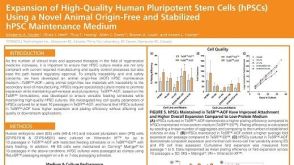 科学海报Expansion of High-Quality Human Pluripotent Stem Cells (hPSCs) Using a Novel Animal Origin-Free and Stabilized hPSC Maintenance Medium

 沪公网安备31010102008431号