Jung J-H et al. (APR 2015)
Stem cells and development 24 8 948--61
CXCR2 and its related ligands play a novel role in supporting the pluripotency and proliferation of human pluripotent stem cells.
Basic fibroblast growth factor (bFGF) is a crucial factor sustaining human pluripotent stem cells (hPSCs). We designed this study to search the substitutive factors other than bFGF for the maintenance of hPSCs by using human placenta-derived conditioned medium without exogenous bFGF (hPCCM-),containing chemokine (C-X-C motif) receptor 2 (CXCR2) ligands,including interleukin (IL)-8 and growth-related oncogene $\$(GRO$\$),which were developed on the basis of our previous studies. First,we confirmed that IL-8 and/or GRO$\$ independent roles to preserve the phenotype of hPSCs. Then,we tried CXCR2 blockage of hPSCs in hPCCM- and verified the significant decrease of pluripotency-associated genes expression and the proliferation of hPSCs. Interestingly,CXCR2 suppression of hPSCs in mTeSR™1 containing exogenous bFGF decreased the proliferation of hPSCs while maintaining pluripotency characteristics. Lastly,we found that hPSCs proliferated robustly for more than 35 passages in hPCCM- on a gelatin substratum. Higher CXCR2 expression of hPSCs cultured in hPCCM- than those in mTeSR™1 was observable. Our findings suggest that CXCR2 and its related ligands might be novel factors comparable to bFGF supporting the characteristics of hPSCs and hPCCM- might be useful for the maintenance of hPSCs as well as for the accurate evaluation of CXCR2 role in hPSCs without the confounding influence of exogenous bFGF.
View Publication
产品类型:
产品号#:
85850
85857
产品名:
mTeSR™1
mTeSR™1
Chichagova V et al. ( 2016)
1353 285--307
Generation of Human Induced Pluripotent Stem Cells Using RNA-Based Sendai Virus System and Pluripotency Validation of the Resulting Cell Population.
Human induced pluripotent stem cells (hiPSCs) provide a platform for studying human disease in vitro,increase our understanding of human embryonic development,and provide clinically relevant cell types for transplantation,drug testing,and toxicology studies. Since their discovery,numerous advances have been made in order to eliminate issues such as vector integration into the host genome,low reprogramming efficiency,incomplete reprogramming and acquisition of genomic instabilities. One of the ways to achieve integration-free reprogramming is by using RNA-based Sendai virus. Here we describe a method to generate hiPSCs with Sendai virus in both feeder-free and feeder-dependent culture systems. Additionally,we illustrate methods by which to validate pluripotency of the resulting stem cell population.
View Publication
产品类型:
产品号#:
85850
85857
产品名:
mTeSR™1
mTeSR™1
Vazin T et al. (FEB 2014)
Neurobiology of Disease 62 62--72
Efficient derivation of cortical glutamatergic neurons from human pluripotent stem cells: a model system to study neurotoxicity in Alzheimer's disease.
Alzheimer's disease (AD) is among the most prevalent forms of dementia affecting the aging population,and pharmacological therapies to date have not been successful in preventing disease progression. Future therapeutic efforts may benefit from the development of models that enable basic investigation of early disease pathology. In particular,disease-relevant models based on human pluripotent stem cells (hPSCs) may be promising approaches to assess the impact of neurotoxic agents in AD on specific neuronal populations and thereby facilitate the development of novel interventions to avert early disease mechanisms. We implemented an efficient paradigm to convert hPSCs into enriched populations of cortical glutamatergic neurons emerging from dorsal forebrain neural progenitors,aided by modulating Sonic hedgehog (Shh) signaling. Since AD is generally known to be toxic to glutamatergic circuits,we exposed glutamatergic neurons derived from hESCs to an oligomeric pre-fibrillar forms of Aβ known as globulomers"�
View Publication
产品类型:
产品号#:
85850
85857
产品名:
mTeSR™1
mTeSR™1
ndrea de Oliveira Georges JA et al. (AUG 2014)
Stem cell reviews 10 4 472--479
Aberrant patterns of X chromosome inactivation in a new line of human embryonic stem cells established in physiological oxygen concentrations
One of the differences between murine and human embryonic stem cells (ESCs) is the epigenetic state of the X chromosomes in female lines. Murine ESCs (mESCs) present two transcriptionally active Xs that will undergo the dosage compensation process of XCI upon differentiation,whereas most human ESCs (hESCs) spontaneously inactivate one X while keeping their pluripotency. Whether this reflects differences in embryonic development of mice and humans,or distinct culture requirements for the two kinds of pluripotent cells is not known. Recently it has been shown that hESCs established in physiological oxygen levels are in a stable pre-XCI state equivalent to that of mESCs,suggesting that culture in low oxygen concentration is enough to preserve that epigenetic state of the X chromosomes. Here we describe the establishment of two new lines of hESCs under physiological oxygen level and the characterization of the XCI state in the 46,XX line BR-5. We show that a fraction of undifferentiated cells present XIST RNA accumulation and single H3K27me foci,characteristic of the inactive X. Moreover,analysis of allele specific gene expression suggests that pluripotent BR-5 cells present completely skewed XCI. Our data indicate that physiological levels of oxygen are not sufficient for the stabilization of the pre-XCI state in hESCs.
View Publication
产品类型:
产品号#:
85850
85857
产品名:
mTeSR™1
mTeSR™1
Kallas A et al. (FEB 2014)
Stem Cells International 2014 298163
SOX2 is regulated differently from NANOG and OCT4 in human embryonic stem cells during early differentiation initiated with sodium butyrate
Transcription factors NANOG,OCT4,and SOX2 regulate self-renewal and pluripotency in human embryonic stem (hES) cells; however,their expression profiles during early differentiation of hES cells are unclear. In this study,we used multiparameter flow cytometric assay to detect all three transcription factors (NANOG,OCT4,and SOX2) simultaneously at single cell level and monitored the changes in their expression during early differentiation towards endodermal lineage (induced by sodium butyrate). We observed at least four distinct populations of hES cells,characterized by specific expression patterns of NANOG,OCT4,and SOX2 and differentiation markers. Our results show that a single cell can express both differentiation and pluripotency markers at the same time,indicating a gradual mode of developmental transition in these cells. Notably,distinct regulation of SOX2 during early differentiation events was detected,highlighting the potential importance of this transcription factor for self-renewal of hES cells during differentiation.
View Publication
产品类型:
产品号#:
85850
85857
产品名:
mTeSR™1
mTeSR™1
Dang LTH et al. (SEP 2014)
Biomaterials 35 27 7786--7799
Inhibition of apoptosis in human induced pluripotent stem cells during expansion in a defined culture using angiopoietin-1 derived peptide QHREDGS
Adhesion molecule signaling is critical to human pluripotent stem cell (hPSC) survival,self-renewal,and differentiation. Thus,hPSCs are grown as clumps of cells on feeder cell layers or poorly defined extracellular matrices such as Matrigel. We sought to define a small molecule that would initiate adhesion-based signaling to serve as a basis for a defined substrate for hPSC culture. Soluble angiopoeitin-1 (Ang-1)-derived peptide QHREDGS added to defined serum-free media increased hPSC colony cell number and size during long- and short-term culture when grown on feeder cell layers or Matrigel,i.e. on standard substrates,without affecting hPSC morphology,growth rate or the ability to differentiate into multiple lineages both invitro and invivo. Importantly,QHREDGS treatment decreased hPSC apoptosis during routine passaging and single-cell dissociation. Mechanistically,the interaction of QHREDGS with ??1-integrins increased expression of integrin-linked kinase (ILK),increased expression and activation of extracellular signal-regulated kinases 1/2 (ERK1/2),and decreased caspase-3/7 activity. QHREDGS immobilization to polyethylene glycol hydrogels significantly increased cell adhesion in a dose-dependent manner. We propose QHREDGS as a small molecule inhibitor of hPSC apoptosis and the basis of an affordable defined substrate for hPSC maintenance. ?? 2014 Elsevier Ltd.
View Publication
产品类型:
产品号#:
85850
85857
产品名:
mTeSR™1
mTeSR™1
Ran FA et al. (SEP 2013)
Cell 154 6 1380--1389
Double Nicking by RNA-Guided CRISPR Cas9 for Enhanced Genome Editing Specificity
Targeted genome editing technologies have enabled a broad range of research and medical applications. The Cas9 nuclease from the microbial CRISPR-Cas system is targeted to specific genomic loci by a 20 nt guide sequence,which can tolerate certain mismatches to the DNA target and thereby promote undesired off-target mutagenesis. Here,we describe an approach that combines a Cas9 nickase mutant with paired guide RNAs to introduce targeted double-strand breaks. Because individual nicks in the genome are repaired with high fidelity,simultaneous nicking via appropriately offset guide RNAs is required for double-stranded breaks and extends the number of specifically recognized bases for target cleavage. We demonstrate that using paired nicking can reduce off-target activity by 50- to 1,500-fold in cell lines and to facilitate gene knockout in mouse zygotes without sacrificing on-target cleavage efficiency. This versatile strategy enables a wide variety of genome editing applications that require high specificity. textcopyright 2013 Elsevier Inc.
View Publication
产品类型:
产品号#:
85850
85857
产品名:
mTeSR™1
mTeSR™1
Mendoza N et al. ( 2014)
1181 97--108
Shrink-induced biomimetic wrinkled substrates for functional cardiac cell alignment and culture.
The anisotropic alignment of cardiomyocytes in native myocardium tissue is a functional feature that is absent in traditional in vitro cardiac cell culture. Microenvironmental factors cue structural organization of the myocardium,which promotes the mechanical contractile properties and electrophysiological patterns seen in mature cardiomyocytes. Current nano- and microfabrication techniques,such as photolithography,generate simplified cell culture topographies that are not truly representative of the multifaceted and multi-scale fibrils of the cardiac extracellular matrix. In addition,such technologies are costly and require a clean room for fabrication. This chapter offers an easy,fast,robust,and inexpensive fabrication of biomimetic multi-scale wrinkled surfaces through the process of plasma treating and shrinking prestressed thermoplastic. Additionally,this chapter includes techniques for culturing stem cells and their cardiac derivatives on these substrates. Importantly,this wrinkled cell culture platform is compatible with both fluorescence and bright-field imaging; real-time physiological monitoring of CM action potential propagation and contraction properties can elucidate cardiotoxicity drug effects.
View Publication
Kang S et al. (APR 2009)
Molecular and cellular biology 29 8 2105--17
Fibroblast growth factor receptor 3 associates with and tyrosine phosphorylates p90 RSK2, leading to RSK2 activation that mediates hematopoietic transformation.
Dysregulation of the receptor tyrosine kinase fibroblast growth factor receptor 3 (FGFR3) plays a pathogenic role in a number of human hematopoietic malignancies and solid tumors. These include t(4;14) multiple myeloma associated with ectopic expression of FGFR3 and t(4;12)(p16;p13) acute myeloid leukemia associated with expression of a constitutively activated fusion tyrosine kinase,TEL-FGFR3. We recently reported that FGFR3 directly tyrosine phosphorylates RSK2 at Y529,which consequently regulates RSK2 activation. Here we identified Y707 as an additional tyrosine in RSK2 that is phosphorylated by FGFR3. Phosphorylation at Y707 contributes to RSK2 activation,through a putative disruption of the autoinhibitory alphaL-helix on the C terminus of RSK2,unlike Y529 phosphorylation,which facilitates ERK binding. Moreover,we found that FGFR3 interacts with RSK2 through residue W332 in the linker region of RSK2 and that this association is required for FGFR3-dependent phosphorylation of RSK2 at Y529 and Y707,as well as the subsequent RSK2 activation. Furthermore,in a murine bone marrow transplant assay,genetic deficiency in RSK2 resulted in a significantly delayed and attenuated myeloproliferative syndrome induced by TEL-FGFR3 as compared with wild-type cells,suggesting a critical role of RSK2 in FGFR3-induced hematopoietic transformation. Our current and previous findings represent a paradigm for tyrosine phosphorylation-dependent regulation of serine-threonine kinases.
View Publication


 EasySep™小鼠TIL(CD45)正选试剂盒




 实验方案How to Prepare and Plate Semi-Solid Methylcellulose Medium for Cell Culture
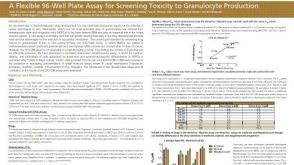 科学海报A Flexible 96-Well Plate Assay for Screening Toxicity to Granulocyte Production
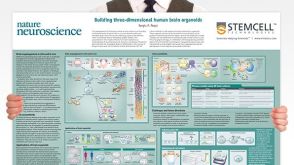 挂图Building Three-Dimensional Human Brain Organoids Overview of brain organogenesis and the applications of brain organoids in studying the development and maturation of the nervous system
 沪公网安备31010102008431号