Christoffersson J et al. (APR 2016)
Methods in molecular biology (Clifton,N.J.)
A Microfluidic Bioreactor for Toxicity Testing of Stem Cell Derived 3D Cardiac Bodies.
Modeling tissues and organs using conventional 2D cell cultures is problematic as the cells rapidly lose their in vivo phenotype. In microfluidic bioreactors the cells reside in microstructures that are continuously perfused with cell culture medium to provide a dynamic environment mimicking the cells natural habitat. These micro scale bioreactors are sometimes referred to as organs-on-chips and are developed in order to improve and extend cell culture experiments. Here,we describe the two manufacturing techniques photolithography and soft lithography that are used in order to easily produce microfluidic bioreactors. The use of these bioreactors is exemplified by a toxicity assessment on 3D clustered human pluripotent stem cells (hPSC)-derived cardiomyocytes by beating frequency imaging.
View Publication
产品类型:
产品号#:
85850
85857
产品名:
mTeSR™1
mTeSR™1
Wang YI et al. (JUL 2016)
Biotechnology and Bioengineering
Microfluidic blood-brain barrier model provides in vivo-like barrier properties for drug permeability screening
Efficient delivery of therapeutics across the neuroprotective blood-brain barrier (BBB) remains a formidable challenge for central nervous system drug development. High-fidelity in vitro models of the BBB could facilitate effective early screening of drug candidates targeting the brain. In this study,we developed a microfluidic BBB model that is capable of mimicking in vivo BBB characteristics for a prolonged period and allows for reliable in vitro drug permeability studies under recirculating perfusion. We derived brain microvascular endothelial cells (BMECs) from human induced pluripotent stem cells (hiPSCs) and cocultured them with rat primary astrocytes on the two sides of a porous membrane on a pumpless microfluidic platform for up to 10 days. The microfluidic system was designed based on the blood residence time in human brain tissues,allowing for medium recirculation at physiologically relevant perfusion rates with no pumps or external tubing,meanwhile minimizing wall shear stress to test whether shear stress is required for in vivo-like barrier properties in a microfluidic BBB model. This BBB-on-a-chip model achieved significant barrier integrity as evident by continuous tight junction formation and in vivo-like values of trans-endothelial electrical resistance (TEER). The TEER levels peaked above 4000 $$ textperiodcentered cm(2) on day 3 on chip and were sustained above 2000 $$ textperiodcentered cm(2) up to 10 days,which are the highest sustained TEER values reported in a microfluidic model. We evaluated the capacity of our microfluidic BBB model to be used for drug permeability studies using large molecules (FITC-dextrans) and model drugs (caffeine,cimetidine,and doxorubicin). Our analyses demonstrated that the permeability coefficients measured using our model were comparable to in vivo values. Our BBB-on-a-chip model closely mimics physiological BBB barrier functions and will be a valuable tool for screening of drug candidates. The residence time-based design of a microfluidic platform will enable integration with other organ modules to simulate multi-organ interactions on drug response. Biotechnol. Bioeng. 2016;9999: 1-11. textcopyright 2016 Wiley Periodicals,Inc.
View Publication
产品类型:
产品号#:
85850
85857
产品名:
mTeSR™1
mTeSR™1
Schiedlmeier B et al. (MAR 2003)
Blood 101 5 1759--68
High-level ectopic HOXB4 expression confers a profound in vivo competitive growth advantage on human cord blood CD34+ cells, but impairs lymphomyeloid differentiation.
Ectopic retroviral expression of homeobox B4 (HOXB4) causes an accelerated and enhanced regeneration of murine hematopoietic stem cells (HSCs) and is not known to compromise any program of lineage differentiation. However,HOXB4 expression levels for expansion of human stem cells have still to be established. To test the proposed hypothesis that HOXB4 could become a prime tool for in vivo expansion of genetically modified human HSCs,we retrovirally overexpressed HOXB4 in purified cord blood (CB) CD34+ cells together with green fluorescent protein (GFP) as a reporter protein,and evaluated the impact of ectopic HOXB4 expression on proliferation and differentiation in vitro and in vivo. When injected separately into nonobese diabetic-severe combined immunodeficient (NOD/SCID) mice or in competition with control vector-transduced cells,HOXB4-overexpressing cord blood CD34+ cells had a selective growth advantage in vivo,which resulted in a marked enhancement of the primitive CD34+ subpopulation (P =.01). However,high HOXB4 expression substantially impaired the myeloerythroid differentiation program,and this was reflected in a severe reduction of erythroid and myeloid progenitors in vitro (P textless.03) and in vivo (P =.01). Furthermore,HOXB4 overexpression also significantly reduced B-cell output (P textless.01). These results show for the first time unwanted side effects of ectopic HOXB4 expression and therefore underscore the need to carefully determine the therapeutic window of HOXB4 expression levels before initializing clinical trials.
View Publication
产品类型:
产品号#:
04434
04444
09600
09650
产品名:
MethoCult™H4434经典
MethoCult™H4434经典
StemSpan™ SFEM
StemSpan™ SFEM
Rutella S et al. (SEP 2003)
Journal of immunology (Baltimore,Md. : 1950) 171 6 2977--88
Identification of a novel subpopulation of human cord blood CD34-CD133-CD7-CD45+lineage- cells capable of lymphoid/NK cell differentiation after in vitro exposure to IL-15.
The hemopoietic stem cell (HSC) compartment encompasses cell subsets with heterogeneous proliferative and developmental potential. Numerous CD34(-) cell subsets that might reside at an earlier stage of differentiation than CD34(+) HSCs have been described and characterized within human umbilical cord blood (UCB). We identified a novel subpopulation of CD34(-)CD133(-)CD7(-)CD45(dim)lineage (lin)(-) HSCs contained within human UCB that were endowed with low but measurable extended long-term culture-initiating cell activity. Exposure of CD34(-)CD133(-)CD7(-)CD45(dim)lin(-) HSCs to stem cell factor preserved cell viability and was associated with the following: 1) concordant expression of the stem cell-associated Ags CD34 and CD133,2) generation of CFU-granulocyte-macrophage,burst-forming unit erythroid,and megakaryocytic aggregates,3) significant extended long-term culture-initiating cell activity,and 4) up-regulation of mRNA signals for myeloperoxidase. At variance with CD34(+)lin(-) cells,CD34(-)CD133(-)CD7(-)CD45(dim)lin(-) HSCs maintained with IL-15,but not with IL-2 or IL-7,proliferated vigorously and differentiated into a homogeneous population of CD7(+)CD45(bright)CD25(+)CD44(+) lymphoid progenitors with high expression of the T cell-associated transcription factor GATA-3. Although they harbored nonclonally rearranged TCRgamma genes,IL-15-primed CD34(-)CD133(-)CD7(-)CD45(dim)lin(-) HSCs failed to achieve full maturation,as manifested in their CD3(-)TCRalphabeta(-)gammadelta(-) phenotype. Conversely,culture on stromal cells supplemented with IL-15 was associated with the acquisition of phenotypic and functional features of NK cells. Collectively,CD34(-)CD133(-)CD7(-)CD45(dim)lin(-) HSCs from human UCB displayed an exquisite sensitivity to IL-15 and differentiated into lymphoid/NK cells. Whether the transplantation of CD34(-)lin(-) HSCs possessing T/NK cell differentiation potential may impact on immunological reconstitution and control of minimal residual disease after HSC transplantation for autoimmune or malignant diseases remains to be determined.
View Publication
产品类型:
产品号#:
09500
产品名:
BIT 9500血清替代物
Modlich U et al. (OCT 2006)
Blood 108 8 2545--53
Cell-culture assays reveal the importance of retroviral vector design for insertional genotoxicity.
Retroviral vectors with long terminal repeats (LTRs),which contain strong enhancer/promoter sequences at both ends of their genome,are widely used for stable gene transfer into hematopoietic cells. However,recent clinical data and mouse models point to insertional activation of cellular proto-oncogenes as a dose-limiting side effect of retroviral gene delivery that potentially induces leukemia. Self-inactivating (SIN) retroviral vectors do not contain the terminal repetition of the enhancer/promoter,theoretically attenuating the interaction with neighboring cellular genes. With a new assay based on in vitro expansion of primary murine hematopoietic cells and selection in limiting dilution,we showed that SIN vectors using a strong internal retroviral enhancer/promoter may also transform cells by insertional mutagenesis. Most transformed clones,including those obtained after dose escalation of SIN vectors,showed insertions upstream of the third exon of Evi1 and in reverse orientation to its transcriptional orientation. Normalizing for the vector copy number,we found the transforming capacity of SIN vectors to be significantly reduced when compared with corresponding LTR vectors. Additional modifications of SIN vectors may further increase safety. Improved cell-culture assays will likely play an important role in the evaluation of insertional mutagenesis.
View Publication
产品类型:
产品号#:
28600
产品名:
L-Calc™有限稀释软件
Li H et al. (MAY 2007)
The Journal of clinical investigation 117 5 1314--23
Ewing sarcoma gene EWS is essential for meiosis and B lymphocyte development.
Ewing sarcoma gene EWS encodes a putative RNA-binding protein with proposed roles in transcription and splicing,but its physiological role in vivo remains undefined. Here,we have generated Ews-deficient mice and demonstrated that EWS is required for the completion of B cell development and meiosis. Analysis of Ews(-/-) lymphocytes revealed a cell-autonomous defect in precursor B lymphocyte (pre-B lymphocyte) development. During meiosis,Ews-null spermatocytes were deficient in XY bivalent formation and showed reduced meiotic recombination,resulting in massive apoptosis and complete arrest in gamete maturation. Inactivation of Ews in mouse embryonic fibroblasts resulted in premature cellular senescence,and the mutant animals showed hypersensitivity to ionizing radiation. Finally,we showed that EWS interacts with lamin A/C and that loss of EWS results in a reduced lamin A/C expression. Our findings reveal essential functions for EWS in pre-B cell development and meiosis,with proposed roles in DNA pairing and recombination/repair mechanisms. Furthermore,we demonstrate a novel role of EWS in cellular senescence,possibly through its interaction and modulation of lamin A/C.
View Publication
Jia Y-Y et al. (SEP 2016)
Cytometry. Part A : the journal of the International Society for Analytical Cytology 89 9 844--851
Sorting of chromosomes on FACSAria(TM) SORP for the preparation of painting probes.
High purity chromosome sorting can be performed on instruments such as MoFlo MLS and BD influx,which are stream-in-air sorters equipped with water-cooled high power lasers. The FACSAria is a true fixed alignment,low laser powered instrument with a quartz flow cell gel-coupled to the collection optics. However,whether high purity mouse and human chromosomes can be obtained by sorting on the BD FACSAria(TM) Special Order Research Product (FACSAria SORP) remains to be determined. Here,we report that the high resolution flow karyotype of mouse lymphocytes and normal male human peripheral blood mononuclear cells (hPBMCs) can be obtained on the FACSAria SORP using laser power settings of 50 mW for 355 nm and 20 mW for 444 nm excitation. Furthermore,the use of Fluorescence in situ hybridization (FISH) confirmed that chromosome paints prepared from the sorted chromosomes demonstrated high purity and signal specificity. Notably,human chromosome 12 was separated from the chromosome 9-12 cluster in the flow karyotype,and its identity was confirmed using FISH in trisomy 12 human ES cell lines B2-C7 and B2-B8. In addition,multicolor FISH (mFISH) with human chromosome painting probes to 13,18,21,and sex chromosomes X and Y showed high signal specificity in hPBMCs. Taken together,our findings demonstrated that high resolution flow karyotype can be obtained using FACSAria SORP. Moreover,a FISH analysis confirmed high purity of the sorted chromosomes. Additionally,in contrast to centromeric satellite probes,chromosome painting probes with high specificity are more suitable for detection of chromosome aberrations,such as deletions and translocations,in prenatal diagnosis. textcopyright 2016 International Society for Advancement of Cytometry.
View Publication
产品类型:
产品号#:
85850
85857
产品名:
mTeSR™1
mTeSR™1
Barbaric I et al. (JUL 2011)
Journal of biomolecular screening 16 6 603--17
High-content screening for chemical modulators of embryonal carcinoma cell differentiation and survival.
Disentangling the complex interactions that govern stem cell fate choices of self-renewal,differentiation,or death presents a formidable challenge. Image-based phenotype-driven screening meets this challenge by providing means for rapid testing of many small molecules simultaneously. Pluripotent embryonal carcinoma (EC) cells offer a convenient substitute for embryonic stem (ES) cells in such screens because they are simpler to maintain and control. The authors developed an image-based screening assay to identify compounds that affect survival or differentiation of the human EC stem cell line NTERA2 by measuring the effect on cell number and the proportion of cells expressing a pluripotency-associated marker SSEA3. A pilot screen of 80 kinase inhibitors identified several compounds that improved cell survival or induced differentiation. The survival compounds Y-27632,HA-1077,and H-8 all strongly inhibit the kinases ROCK and PRK2,highlighting the important role of these kinases in EC cell survival. Two molecules,GF109203x and rottlerin,induced EC differentiation. The effects of rottlerin were also investigated in human ES cells. Rottlerin inhibited the self-renewal ability of ES cells,caused the cell cycle arrest,and repressed the expression of pluripotency-associated genes.
View Publication
产品类型:
产品号#:
85850
85857
产品名:
mTeSR™1
mTeSR™1
Du A et al. (MAY 2012)
Developmental Biology 365 1 175--188
Arx is required for normal enteroendocrine cell development in mice and humans
Enteroendocrine cells of the gastrointestinal (GI) tract play a central role in metabolism,digestion,satiety and lipid absorption,yet their development remains poorly understood. Here we show that Arx,a homeodomain-containing transcription factor,is required for the normal development of mouse and human enteroendocrine cells. Arx expression is detected in a subset of Neurogenin3 (Ngn3)-positive endocrine progenitors and is also found in a subset of hormone-producing cells. In mice,removal of Arx from the developing endoderm results in a decrease of enteroendocrine cell types including gastrin-,glucagon/GLP-1-,CCK-,secretin-producing cell populations and an increase of somatostatin-expressing cells. This phenotype is also observed in mice with endocrine-progenitor-specific Arx ablation suggesting that Arx is required in the progenitor for enteroendocrine cell development. In addition,depletion of human ARX in developing human intestinal tissue results in a profound deficit in expression of the enteroendocrine cell markers CCK,secretin and glucagon while expression of a pan-intestinal epithelial marker,CDX2,and other non-endocrine markers remained unchanged. Taken together,our findings uncover a novel and conserved role of Arx in mammalian endocrine cell development and provide a potential cause for the chronic diarrhea seen in both humans and mice carrying Arx mutations.
View Publication
产品类型:
产品号#:
85850
85857
产品名:
mTeSR™1
mTeSR™1
Aflaki E et al. (JUN 2014)
Science translational medicine 6 240 240ra73
Macrophage models of Gaucher disease for evaluating disease pathogenesis and candidate drugs.
Gaucher disease is caused by an inherited deficiency of glucocerebrosidase that manifests with storage of glycolipids in lysosomes,particularly in macrophages. Available cell lines modeling Gaucher disease do not demonstrate lysosomal storage of glycolipids; therefore,we set out to develop two macrophage models of Gaucher disease that exhibit appropriate substrate accumulation. We used these cellular models both to investigate altered macrophage biology in Gaucher disease and to evaluate candidate drugs for its treatment. We generated and characterized monocyte-derived macrophages from 20 patients carrying different Gaucher disease mutations. In addition,we created induced pluripotent stem cell (iPSC)-derived macrophages from five fibroblast lines taken from patients with type 1 or type 2 Gaucher disease. Macrophages derived from patient monocytes or iPSCs showed reduced glucocerebrosidase activity and increased storage of glucocerebroside and glucosylsphingosine in lysosomes. These macrophages showed efficient phagocytosis of bacteria but reduced production of intracellular reactive oxygen species and impaired chemotaxis. The disease phenotype was reversed with a noninhibitory small-molecule chaperone drug that enhanced glucocerebrosidase activity in the macrophages,reduced glycolipid storage,and normalized chemotaxis and production of reactive oxygen species. Macrophages differentiated from patient monocytes or patient-derived iPSCs provide cellular models that can be used to investigate disease pathogenesis and facilitate drug development.
View Publication


 EasySep™小鼠TIL(CD45)正选试剂盒




 39:33
线上讲座Quality by Design: Reagents and Support for hPSC-Derived Cell and Gene Therapies发布日期: 08/16/2021
39:33
线上讲座Quality by Design: Reagents and Support for hPSC-Derived Cell and Gene Therapies发布日期: 08/16/2021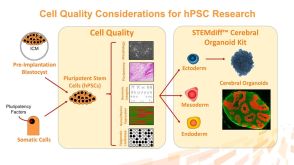

 沪公网安备31010102008431号