Ben-David U et al. (SEP 2014)
Nature communications 5 4825
Aneuploidy induces profound changes in gene expression, proliferation and tumorigenicity of human pluripotent stem cells.
Human pluripotent stem cells (hPSCs) tend to acquire genomic aberrations in culture,the most common of which is trisomy of chromosome 12. Here we dissect the cellular and molecular implications of this trisomy in hPSCs. Global gene expression analyses reveal that trisomy 12 profoundly affects the gene expression profile of hPSCs,inducing a transcriptional programme similar to that of germ cell tumours. Comparison of proliferation,differentiation and apoptosis between diploid and aneuploid hPSCs shows that trisomy 12 significantly increases the proliferation rate of hPSCs,mainly as a consequence of increased replication. Furthermore,trisomy 12 increases the tumorigenicity of hPSCs in vivo,inducing transcriptionally distinct teratomas from which pluripotent cells can be recovered. Last,a chemical screen of 89 anticancer drugs discovers that trisomy 12 raises the sensitivity of hPSCs to several replication inhibitors. Together,these findings demonstrate the extensive effect of trisomy 12 and highlight its perils for successful hPSC applications.
View Publication
产品类型:
产品号#:
07909
85850
85857
产品名:
IV型胶原酶(1mg /mL)
mTeSR™1
mTeSR™1
Arokium H et al. (OCT 2014)
PLoS ONE 9 10 e108682
Deep sequencing reveals low incidence of endogenous LINE-1 retrotransposition in human induced pluripotent stem cells
Long interspersed element-1 (LINE-1 or L1) retrotransposition induces insertional mutations that can result in diseases. It was recently shown that the copy number of L1 and other retroelements is stable in induced pluripotent stem cells (iPSCs). However,by using an engineered reporter construct over-expressing L1,another study suggests that reprogramming activates L1 mobility in iPSCs. Given the potential of human iPSCs in therapeutic applications,it is important to clarify whether these cells harbor somatic insertions resulting from endogenous L1 retrotransposition. Here,we verified L1 expression during and after reprogramming as well as potential somatic insertions driven by the most active human endogenous L1 subfamily (L1Hs). Our results indicate that L1 over-expression is initiated during the reprogramming process and is subsequently sustained in isolated clones. To detect potential somatic insertions in iPSCs caused by L1Hs retotransposition,we used a novel sequencing strategy. As opposed to conventional sequencing direction,we sequenced from the 3' end of L1Hs to the genomic DNA,thus enabling the direct detection of the polyA tail signature of retrotransposition for verification of true insertions. Deep coverage sequencing thus allowed us to detect seven potential somatic insertions with low read counts from two iPSC clones. Negative PCR amplification in parental cells,presence of a polyA tail and absence from seven L1 germline insertion databases highly suggested true somatic insertions in iPSCs. Furthermore,these insertions could not be detected in iPSCs by PCR,likely due to low abundance. We conclude that L1Hs retrotransposes at low levels in iPSCs and therefore warrants careful analyses for genotoxic effects.
View Publication
产品类型:
产品号#:
85850
85857
产品名:
mTeSR™1
mTeSR™1
Darabi R and Perlingeiro RCR ( 2016)
1357 423--439
Derivation of Skeletal Myogenic Precursors from Human Pluripotent Stem Cells Using Conditional Expression of PAX7.
Cell-based therapies are considered as one of the most promising approaches for the treatment of degenerating pathologies including muscle disorders and dystrophies. Advances in the approach of reprogramming somatic cells into induced pluripotent stem (iPS) cells allow for the possibility of using the patient's own pluripotent cells to generate specific tissues for autologous transplantation. In addition,patient-specific tissue derivatives have been shown to represent valuable material for disease modeling and drug discovery. Nevertheless,directed differentiation of pluripotent stem cells into a specific lineage is not a trivial task especially in the case of skeletal myogenesis,which is generally poorly recapitulated during the in vitro differentiation of pluripotent stem cells.Here,we describe a practical and efficient method for the derivation of skeletal myogenic precursors from differentiating human pluripotent stem cells using controlled expression of PAX7. Flow cytometry (FACS) purified myogenic precursors can be expanded exponentially and differentiated in vitro into myotubes,enabling researchers to use these cells for disease modeling as well as therapeutic purposes.
View Publication
产品类型:
产品号#:
85850
85857
产品名:
mTeSR™1
mTeSR™1
Wrighton PJ et al. (DEC 2014)
Proceedings of the National Academy of Sciences of the United States of America 111 51 18126--18131
Signals from the surface modulate differentiation of human pluripotent stem cells through glycosaminoglycans and integrins.
The fate decisions of human pluripotent stem (hPS) cells are governed by soluble and insoluble signals from the microenvironment. Many hPS cell differentiation protocols use Matrigel,a complex and undefined substrate that engages multiple adhesion and signaling receptors. Using defined surfaces programmed to engage specific cell-surface ligands (i.e.,glycosaminoglycans and integrins),the contribution of specific matrix signals can be dissected. For ectoderm and motor neuron differentiation,peptide-modified surfaces that can engage both glycosaminoglycans and integrins are effective. In contrast,surfaces that interact selectively with glycosaminoglycans are superior to Matrigel in promoting hPS cell differentiation to definitive endoderm and mesoderm. The modular surfaces were used to elucidate the signaling pathways underlying these differences. Matrigel promotes integrin signaling,which in turn inhibits mesendoderm differentiation. The data indicate that integrin-activating surfaces stimulate Akt signaling via integrin-linked kinase (ILK),which is antagonistic to endoderm differentiation. The ability to attribute cellular responses to specific interactions between the cell and the substrate offers new opportunities for revealing and controlling the pathways governing cell fate.
View Publication
mDYRK3 kinase is expressed selectively in late erythroid progenitor cells and attenuates colony-forming unit-erythroid development.
DYRKs are a new subfamily of dual-specificity kinases that was originally discovered on the basis of homology to Yak1,an inhibitor of cell cycle progression in yeast. At present,mDYRK-3 and mDYRK-2 have been cloned,and mDYRK-3 has been characterized with respect to kinase activity,expression among tissues and hematopoietic cells,and possible function during erythropoiesis. In sequence,mDYRK-3 diverges markedly in noncatalytic domains from mDYRK-2 and mDYRK-1a,but is 91.3% identical overall to hDYRK-3. Catalytically,mDYRK-3 readily phosphorylated myelin basic protein (but not histone 2B) and also appeared to autophosphorylate in vitro. Expression of mDYRK-1a,mDYRK-2,and mDYRK-3 was high in testes,but unlike mDYRK1a and mDYRK 2,mDYRK-3 was not expressed at appreciable levels in other tissues examined. Among hematopoietic cells,however,mDYRK-3 expression was selectively elevated in erythroid cell lines and primary pro-erythroid cells. In developmentally synchronized erythroid progenitor cells,expression peaked sharply following exposure to erythropoietin plus stem cell factor (SCF) (but not SCF alone),and in situ hybridizations of sectioned embryos revealed selective expression of mDYRK-3 in fetal liver. Interestingly,antisense oligonucleotides to mDYRK-3 were shown to significantly and specifically enhance colony-forming unit-erythroid colony formation. Thus,it is proposed that mDYRK-3 kinase functions as a lineage-restricted,stage-specific suppressor of red cell development. (Blood. 2001;97:901-910)
View Publication
产品类型:
产品号#:
04971
04902
04901
04963
04962
产品名:
MegaCult™-C细胞因子完整试剂盒
胶原蛋白溶液
MegaCult™-C细胞因子培养基
双室载玻片试剂盒
MegaCult™-C cfu染色试剂盒
M. Drukker et al. (may 2012)
Nature biotechnology 30 6 531--42
Isolation of primitive endoderm, mesoderm, vascular endothelial and trophoblast progenitors from human pluripotent stem cells.
To identify early populations of committed progenitors derived from human embryonic stem cells (hESCs),we screened self-renewing,BMP4-treated and retinoic acid-treated cultures with >400 antibodies recognizing cell-surface antigens. Sorting of >30 subpopulations followed by transcriptional analysis of developmental genes identified four distinct candidate progenitor groups. Subsets detected in self-renewing cultures,including CXCR4(+) cells,expressed primitive endoderm genes. Expression of Cxcr4 in primitive endoderm was confirmed in visceral endoderm of mouse embryos. BMP4-induced progenitors exhibited gene signatures of mesoderm,trophoblast and vascular endothelium,suggesting correspondence to gastrulation-stage primitive streak,chorion and allantois precursors,respectively. Functional studies in vitro and in vivo confirmed that ROR2(+) cells produce mesoderm progeny,APA(+) cells generate syncytiotrophoblasts and CD87(+) cells give rise to vasculature. The same progenitor classes emerged during the differentiation of human induced pluripotent stem cells (hiPSCs). These markers and progenitors provide tools for purifying human tissue-regenerating progenitors and for studying the commitment of pluripotent stem cells to lineage progenitors.
View Publication
产品类型:
产品号#:
85850
85857
产品名:
mTeSR™1
mTeSR™1
Lian X et al. (JUL 2012)
Proceedings of the National Academy of Sciences of the United States of America 109 27 E1848--57
Robust cardiomyocyte differentiation from human pluripotent stem cells via temporal modulation of canonical Wnt signaling.
Human pluripotent stem cells (hPSCs) offer the potential to generate large numbers of functional cardiomyocytes from clonal and patient-specific cell sources. Here we show that temporal modulation of Wnt signaling is both essential and sufficient for efficient cardiac induction in hPSCs under defined,growth factor-free conditions. shRNA knockdown of β-catenin during the initial stage of hPSC differentiation fully blocked cardiomyocyte specification,whereas glycogen synthase kinase 3 inhibition at this point enhanced cardiomyocyte generation. Furthermore,sequential treatment of hPSCs with glycogen synthase kinase 3 inhibitors followed by inducible expression of β-catenin shRNA or chemical inhibitors of Wnt signaling produced a high yield of virtually (up to 98%) pure functional human cardiomyocytes from multiple hPSC lines. The robust ability to generate functional cardiomyocytes under defined,growth factor-free conditions solely by genetic or chemically mediated manipulation of a single developmental pathway should facilitate scalable production of cardiac cells suitable for research and regenerative applications.
View Publication
产品类型:
产品号#:
72032
72034
72552
72554
85850
85857
产品名:
BIO
BIO
IWP-4
IWP-4
mTeSR™1
mTeSR™1
Koh S et al. (MAR 2013)
Stem cells and development 22 6 951--63
Growth requirements and chromosomal instability of induced pluripotent stem cells generated from adult canine fibroblasts.
In mice and humans,it has been shown that embryonic and adult fibroblasts can be reprogrammed into pluripotency by introducing 4 transcription factors,Oct3/4,Klf4,Sox2,and c-Myc (OKSM). Here,we report the derivation of induced pluripotent stem cells (iPSCs) from adult canine fibroblasts by retroviral OKSM transduction. The isolated canine iPSCs (ciPSCs) were expanded in 3 different culture media [fibroblast growth factor 2 (FGF2),leukemia inhibitory factor (LIF),or FGF2 plus LIF]. Cells cultured in both FGF2 and LIF expressed pluripotency markers [POU5F1 (OCT4),SOX2,NANOG,and LIN28] and embryonic stem cell (ESC)-specific genes (PODXL,DPPA5,FGF5,REX1,and LAMP1) and showed strong levels of alkaline phosphatase expression. In vitro differentiation by formation of embryoid bodies and by directed differentiation generated cell derivatives of all 3 germ layers as confirmed by mRNA and protein expression. In vivo,the ciPSCs created solid tumors,which failed to reach epithelial structure formation,but expressed markers for all 3 germ layers. Array comparative genomic hybridization and chromosomal fluorescence in situ hybridization analyses revealed that while retroviral transduction per se did not result in significant DNA copy number imbalance,there was evidence for the emergence of low-level aneuploidy during prolonged culture or tumor formation. In summary,we were able to derive ciPSCs from adult fibroblasts by using 4 transcription factors. The isolated iPSCs have similar characteristics to ESCs from other species,but the exact cellular mechanisms behind their unique co-dependency on both FGF2 and LIF are still unknown.
View Publication
产品类型:
产品号#:
85850
85857
产品名:
mTeSR™1
mTeSR™1
Lan F et al. (JAN 2013)
Cell Stem Cell 12 1 101--113
Familial hypertrophic cardiomyopathy (HCM) is a prevalent hereditary cardiac disorder linked to arrhythmia and sudden cardiac death. While the causes of HCM have been identified as genetic mutations in the cardiac sarcomere,the pathways by which sarcomeric mutations engender myocyte hypertrophy and electrophysiological abnormalities are not understood. To elucidate the mechanisms underlying HCM development,we generated patient-specific induced pluripotent stem cell cardiomyocytes (iPSC-CMs) from a ten-member family cohort carrying a hereditary HCM missense mutation (Arg663His) in the MYH7 gene. Diseased iPSC-CMs recapitulated numerous aspects of the HCM phenotype including cellular enlargement and contractile arrhythmia at the single-cell level. Calcium (Ca2+) imaging indicated dysregulation of Ca2+ cycling and elevation in intracellular Ca2+ ([Ca2+] i) are central mechanisms for disease pathogenesis. Pharmacological restoration of Ca2+ homeostasis prevented development of hypertrophy and electrophysiological irregularities. We anticipate that these findings will help elucidate the mechanisms underlying HCM development and identify novel therapies for the disease. textcopyright 2013 Elsevier Inc.
View Publication
产品类型:
产品号#:
85850
85857
产品名:
mTeSR™1
mTeSR™1
Leydon C et al. (OCT 2013)
Tissue Engineering Part A 19 19-20 2233--2241
Human embryonic stem cell-derived epithelial cells in a novel in vitro model of vocal mucosa.
A satisfactory in vitro model of vocal fold mucosa does not exist,thus precluding a systematic,controlled study of vocal fold biology and biomechanics. We sought to create a valid,reproducible three-dimensional (3D) in vitro model of human origin of vocal fold mucosa of human origin. We hypothesized that coculture of human embryonic stem cell (hESC)-derived simple epithelial cells with primary vocal fold fibroblasts under appropriate conditions would elicit morphogenesis of progenitor cells into vocal fold epithelial-like cells and creation of a basement membrane. Using an in vitro prospective study design,hESCs were differentiated into cells that coexpressed the simple epithelial cell marker,keratin 18 (K18),and the transcription factor,p63. These simple epithelial cells were cocultured with primary vocal fold fibroblasts seeded in a collagen gel scaffold. The cells were cultured for 3 weeks in a keratinocyte medium at an air–liquid interface. After that time,the engineered mucosa demonstrated a stratified,squamous epithelium and a continuous basement membrane recapitulating the key morphologic and phenotypic characteristics of native vocal fold mucosa. hESC-derived epithelial cells exhibited positive staining for vocal fold stratified,squamous epithelial markers,keratin 13 (K13) and 14 (K14),as well as tight junctions,adherens junctions,gap junctions,and desmosomes. Despite the presence of components critical for epithelial structural integrity,the epithelium demonstrated greater permeability than native tissue indicating compromised functional integrity. While further work is warranted to improve functional barrier integrity,this study demonstrates that hESC-derived epithelial progenitor cells can be engineered to create a replicable 3D in vitro model of vocal fold mucosa featuring a multilayered,terminally differentiated epithelium.
View Publication


 EasySep™小鼠TIL(CD45)正选试剂盒




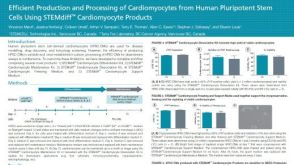 科学海报Efficient Production and Processing of Cardiomyocytes from Human Pluripotent Stem Cells Using STEMdiff™ Cardiomyocyte Products

 沪公网安备31010102008431号