Cipriano AF et al. (JAN 2017)
Acta biomaterialia 48 499--520
Cytocompatibility and early inflammatory response of human endothelial cells in direct culture with Mg-Zn-Sr alloys.
Crystalline Mg-Zinc (Zn)-Strontium (Sr) ternary alloys consist of elements naturally present in the human body and provide attractive mechanical and biodegradable properties for a variety of biomedical applications. The first objective of this study was to investigate the degradation and cytocompatibility of four Mg-4Zn-xSr alloys (x=0.15,0.5,1.0,1.5wt%; designated as ZSr41A,B,C,and D respectively) in the direct culture with human umbilical vein endothelial cells (HUVEC) in vitro. The second objective was to investigate,for the first time,the early-stage inflammatory response in cultured HUVECs as indicated by the induction of vascular cellular adhesion molecule-1 (VCAM-1). The results showed that the 24-h in vitro degradation of the ZSr41 alloys containing a β-phase with a Zn/Sr at% ratio ∼1.5 was significantly faster than the ZSr41 alloys with Zn/Sr at% ∼1. Additionally,the adhesion density of HUVECs in the direct culture but not in direct contact with the ZSr41 alloys for up to 24h was not adversely affected by the degradation of the alloys. Importantly,neither culture media supplemented with up to 27.6mM Mg(2+) ions nor media intentionally adjusted up to alkaline pH 9 induced any detectable adverse effects on HUVEC responses. In contrast,the significantly higher,yet non-cytotoxic,Zn(2+) ion concentration from the degradation of ZSr41D alloy was likely the cause for the initially higher VCAM-1 expression on cultured HUVECs. Lastly,analysis of the HUVEC-ZSr41 interface showed near-complete absence of cell adhesion directly on the sample surface,most likely caused by either a high local alkalinity,change in surface topography,and/or surface composition. The direct culture method used in this study was proposed as a valuable tool for studying the design aspects of Zn-containing Mg-based biomaterials in vitro,in order to engineer solutions to address current shortcomings of Mg alloys for vascular device applications. STATEMENT OF SIGNIFICANCE Magnesium (Mg) alloys specifically designed for biodegradable implant applications have been the focus of biomedical research since the early 2000s. Physicochemical properties of Mg alloys make these metallic biomaterials excellent candidates for temporary biodegradable implants in orthopedic and cardiovascular applications. As Mg alloys continue to be investigated for biomedical applications,it is necessary to understand whether Mg-based materials or the alloying elements have the intrinsic ability to direct an immune response to improve implant integration while avoiding cell-biomaterial interactions leading to chronic inflammation and/or foreign body reactions. The present study utilized the direct culture method to investigate for the first time the in vitro transient inflammatory activation of endothelial cells induced by the degradation products of Zn-containing Mg alloys.
View Publication
产品类型:
产品号#:
85850
85857
产品名:
mTeSR™1
mTeSR™1
Galat Y et al. (MAR 2017)
Stem cell research & therapy 8 1 67
Cytokine-free directed differentiation of human pluripotent stem cells efficiently produces hemogenic endothelium with lymphoid potential.
BACKGROUND The robust generation of human hematopoietic progenitor cells from induced or embryonic pluripotent stem cells would be beneficial for multiple areas of research,including mechanistic studies of hematopoiesis,the development of cellular therapies for autoimmune diseases,induced transplant tolerance,anticancer immunotherapies,disease modeling,and drug/toxicity screening. Over the past years,significant progress has been made in identifying effective protocols for hematopoietic differentiation from pluripotent stem cells and understanding stages of mesodermal,endothelial,and hematopoietic specification. Thus,it has been shown that variations in cytokine and inhibitory molecule treatments in the first few days of hematopoietic differentiation define primitive versus definitive potential of produced hematopoietic progenitor cells. The majority of current feeder-free,defined systems for hematopoietic induction from pluripotent stem cells include prolonged incubations with various cytokines that make the differentiation process complex and time consuming. We established that the application of Wnt agonist CHIR99021 efficiently promotes differentiation of human pluripotent stem cells in the absence of any hematopoietic cytokines to the stage of hemogenic endothelium capable of definitive hematopoiesis. METHODS The hemogenic endothelium differentiation was accomplished in an adherent,serum-free culture system by applying CHIR99021. Hemogenic endothelium progenitor cells were isolated on day 5 of differentiation and evaluated for their endothelial,myeloid,and lymphoid potential. RESULTS Monolayer induction based on GSK3 inhibition,described here,yielded a large number of CD31(+)CD34(+) hemogenic endothelium cells. When isolated and propagated in adherent conditions,these progenitors gave rise to mature endothelium. When further cocultured with OP9 mouse stromal cells,these progenitors gave rise to various cells of myeloid lineages as well as natural killer lymphoid,T-lymphoid,and B-lymphoid cells. CONCLUSION The results of this study substantiate a method that significantly reduces the complexity of current protocols for hematopoietic induction,offers a defined system to study the factors that affect the early stages of hematopoiesis,and provides a new route of lymphoid and myeloid cell derivation from human pluripotent stem cells,thus enhancing their use in translational medicine.
View Publication
产品类型:
产品号#:
85850
85857
产品名:
mTeSR™1
mTeSR™1
Lanfer B et al. (OCT 2009)
Biomaterials 30 30 5950--8
The growth and differentiation of mesenchymal stem and progenitor cells cultured on aligned collagen matrices.
Cell-matrix interactions are paramount for the successful repair and regeneration of damaged and diseased tissue. Since many tissues have an anisotropic architecture,it has been proposed that aligned extracellular matrix (ECM) structures in particular could guide and support the differentiation of resident mesenchymal stem and progenitor cells (MSCs). We therefore created aligned collagen type I structures using a microfluidic set-up with the aim to assess their impact on MSC growth and differentiation. In addition,we refined our aligned collagen matrices by incorporating the glycosaminoglycan (GAG) heparin to demonstrate the versatility of the applied methodology to study multiple ECM components in a single system. Our reconstituted,aligned ECM structures maintained and allowed multilineage (osteogenic/adipogenic/chondrogenic) differentiation of MSCs. Most noticeable was the observation that during osteogenesis,aligned collagen substrates choreographed ordered matrix mineralization. Likewise,myotube assembly of C2C12 cells was profoundly influenced by aligned topographic features resulting in enhanced myotube organization and length. Our results shed light on the regulation of MSCs through directional ECM structures and demonstrate the versatility of these cell culture platforms for guiding the morphogenesis of tissue types with anisotropic structures.
View Publication
产品类型:
产品号#:
05401
产品名:
MesenCult™ MSC基础培养基 (人)
Teichroeb JH et al. (JAN 2011)
PLoS ONE 6 10 e23436
Suppression of the imprinted gene NNAT and X-chromosome gene activation in isogenic human iPS cells.
Genetic comparison between human embryonic stem cells and induced pluripotent stem cells has been hampered by genetic variation. To solve this problem,we have developed an isogenic system that allows direct comparison of induced pluripotent stem cells (hiPSCs) to their genetically matched human embryonic stem cells (hESCs). We show that hiPSCs have a highly similar transcriptome to hESCs. Global transcriptional profiling identified 102-154 genes (textgreater2 fold) that showed a difference between isogenic hiPSCs and hESCs. A stringent analysis identified NNAT as a key imprinted gene that was dysregulated in hiPSCs. Furthermore,a disproportionate number of X-chromosome localized genes were over-expressed in female hiPSCs. Our results indicate that despite a remarkably close transcriptome to hESCs,isogenic hiPSCs have alterations in imprinting and regulation of X-chromosome genes.
View Publication
产品类型:
产品号#:
85850
85857
产品名:
mTeSR™1
mTeSR™1
Su H et al. (JUL 2013)
Stem Cell Research 11 1 529--539
Transplanted motoneurons derived from human induced pluripotent stem cells form functional connections with target muscle
Induced pluripotent stem cells (iPSCs) hold promise for the treatment of motoneuron diseases because of their distinct features including pluripotency,self-derivation and potential ability to differentiate into motoneurons. However,it is still unknown whether human iPSC-derived motoneurons can functionally innervate target muscles in vivo,which is the definitive sign of successful cell therapy for motoneuron diseases. In the present study,we demonstrated that human iPSCs derived from mesenchymal cells of the umbilical cord possessed a high yield in neural differentiation. Using a chemically-defined in vitro system,human iPSCs efficiently differentiated into motoneurons which displayed typical morphology,expressed specific molecules,and generated repetitive trains of action potentials. When transplanted into the injured musculocutaneous nerve of rats,they survived robustly,extended axons along the nerve,and formed functional connections with the target muscle (biceps brachii),thereby protecting the muscle from atrophy. Our study provides evidence for the first time that human iPSC-derived motoneurons are truly functional not only in vitro but also in vivo,and they have potential for stem cell-based therapies for motoneuron diseases. textcopyright 2013 Elsevier B.V.
View Publication
产品类型:
产品号#:
85850
85857
产品名:
mTeSR™1
mTeSR™1
Jang J et al. (OCT 2014)
Stem Cells 32 10 2616--2625
Nrf2, a regulator of the proteasome, controls self-renewal and pluripotency in human embryonic stem cells
Nuclear factor,erythroid 2-like 2 (Nrf2) is a master transcription factor for cellular defense against endogenous and exogenous stresses by regulating expression of many antioxidant and detoxification genes. Here,we show that Nrf2 acts as a key pluripotency gene and a regulator of proteasome activity in human embryonic stem cells (hESCs). Nrf2 expression is highly enriched in hESCs and dramatically decreases upon differentiation. Nrf2 inhibition impairs both the self-renewal ability of hESCs and re-establishment of pluripotency during cellular reprogramming. Nrf2 activation can delay differentiation. During early hESC differentiation,Nrf2 closely colocalizes with OCT4 and NANOG. As an underlying mechanism,our data show that Nrf2 regulates proteasome activity in hESCs partially through proteasome maturation protein (POMP),a proteasome chaperone,which in turn controls the proliferation of self-renewing hESCs,three germ layer differentiation and cellular reprogramming. Even modest proteasome inhibition skews the balance of early differentiation toward mesendoderm at the expense of an ectodermal fate by decreasing the protein level of cyclin D1 and delaying the degradation of OCT4 and NANOG proteins. Taken together,our findings suggest a new potential link between environmental stress and stemness with Nrf2 and the proteasome coordinately positioned as key mediators.
View Publication
产品类型:
产品号#:
85850
85857
产品名:
mTeSR™1
mTeSR™1
Liu Y et al. (JUL 2014)
PLoS ONE 9 7 e100885
Modulating notochordal differentiation of human induced pluripotent stem cells using natural nucleus pulposus tissue matrix
Human induced pluripotent stem cells (hiPSCs) can differentiate into notochordal cell (NC)-like cells when cultured in the presence of natural porcine nucleus pulposus (NP) tissue matrix. The method promises massive production of high-quality,functional cells to treat degenerative intervertebral discs (IVDs). Based on our previous work,we further examined the effect of cell-NP matrix contact and culture medium on the differentiation,and further assessed the functional differentiation ability of the generated NC-like. The study showed that direct contact between hiPSCs and NP matrix can promote the differentiation yield,whilst both the contact and non-contact cultures can generate functional NC-like cells. The generated NC-like cells are highly homogenous regarding the expression of notochordal marker genes. A culture medium containing a cocktail of growth factors (FGF,EGF,VEGF and IGF-1) also supported the notochordal differentiation in the presence of NP matrix. The NC-like cells showed excellent functional differentiation ability to generate NP-like tissue which was rich in aggrecan and collagen type II; and particularly,the proteoglycan to collagen content ratio was as high as 12.5-17.5 which represents a phenotype close to NP rather than hyaline cartilage. Collectively,the present study confirmed the effectiveness and flexibility of using natural NP tissue matrix to direct notochordal differentiation of hiPSCs,and the potential of using the generated NC-like cells for treating IVD degeneration.
View Publication
Jiang B et al. (OCT 2015)
Biomaterials 65 103--114
Generation of cardiac spheres from primate pluripotent stem cells in a small molecule-based 3D system.
Pluripotent stem cell (PSC) usage in heart regenerative medicine requires producing enriched cardiomyocytes (CMs) with mature phenotypes in a defined medium. However,current methods are typically performed in 2D environments that produce immature CMs. Here we report a simple,growth factor-free 3D culture system to rapidly and efficiently generate 85.07 ± 1.8% of spontaneously contractile cardiac spheres (scCDSs) using 3D-cultured human and monkey PSC-spheres. Along with small molecule-based 3D induction,this protocol produces CDSs of up to 95.7% CMs at a yield of up to 237 CMs for every input pluripotent cell,is effective for human and monkey PSCs,and maintains 81.03 ± 12.43% of CDSs in spontaneous contractibility for over three months. These CDSs displayed CM ultrastructure,calcium transient,appropriate pharmacological responses and CM gene expression profiles specific for maturity. Furthermore,3D-derived CMs displayed more mature phenotypes than those from a parallel 2D-culture. The system is compatible to large-scaly produce CMs for disease study,cell therapy and pharmaceutics screening.
View Publication
产品类型:
产品号#:
07923
85850
85857
产品名:
Dispase (1 U/mL)
mTeSR™1
mTeSR™1
Billing AM et al. (FEB 2016)
Scientific reports 6 21507
Comprehensive transcriptomic and proteomic characterization of human mesenchymal stem cells reveals source specific cellular markers.
Mesenchymal stem cells (MSC) are multipotent cells with great potential in therapy,reflected by more than 500 MSC-based clinical trials registered with the NIH. MSC are derived from multiple tissues but require invasive harvesting and imply donor-to-donor variability. Embryonic stem cell-derived MSC (ESC-MSC) may provide an alternative,but how similar they are to ex vivo MSC is unknown. Here we performed an in depth characterization of human ESC-MSC,comparing them to human bone marrow-derived MSC (BM-MSC) as well as human embryonic stem cells (hESC) by transcriptomics (RNA-seq) and quantitative proteomics (nanoLC-MS/MS using SILAC). Data integration highlighted and validated a central role of vesicle-mediated transport and exosomes in MSC biology and also demonstrated,through enrichment analysis,their versatility and broad application potential. Particular emphasis was placed on comparing profiles between ESC-MSC and BM-MSC and assessing their equivalency. Data presented here shows that differences between ESC-MSC and BM-MSC are similar in magnitude to those reported for MSC of different origin and the former may thus represent an alternative source for therapeutic applications. Finally,we report an unprecedented coverage of MSC CD markers,as well as membrane associated proteins which may benefit immunofluorescence-based applications and contribute to a refined molecular description of MSC.
View Publication
产品类型:
产品号#:
85850
85857
产品名:
mTeSR™1
mTeSR™1
Phetfong J et al. (JUL 2016)
Cell and Tissue Research 365 1 101--112
Cell type of origin influences iPSC generation and differentiation to cells of the hematoendothelial lineage
The use of induced pluripotent stem cells (iPSCs) as a source of cells for cell-based therapy in regenerative medicine is hampered by the limited efficiency and safety of the reprogramming procedure and the low efficiency of iPSC differentiation to specialized cell types. Evidence suggests that iPSCs retain an epigenetic memory of their parental cells with a possible influence on their differentiation capacity in vitro. We reprogramme three cell types,namely human umbilical cord vein endothelial cells (HUVECs),endothelial progenitor cells (EPCs) and human dermal fibroblasts (HDFs),to iPSCs and compare their hematoendothelial differentiation capacity. HUVECs and EPCs were at least two-fold more efficient in iPSC reprogramming than HDFs. Both HUVEC- and EPC-derived iPSCs exhibited high potentiality toward endothelial cell differentiation compared with HDF-derived iPSCs. However,only HUVEC-derived iPSCs showed efficient differentiation to hematopoietic stem/progenitor cells. Examination of DNA methylation at promoters of hematopoietic and endothelial genes revealed evidence for the existence of epigenetic memory at the endothelial genes but not the hematopoietic genes in iPSCs derived from HUVECs and EPCs indicating that epigenetic memory involves an endothelial differentiation bias. Our findings suggest that endothelial cells and EPCs are better sources for iPSC derivation regarding their reprogramming efficiency and that the somatic cell type used for iPSC generation toward specific cell lineage differentiation is of importance.
View Publication
产品类型:
产品号#:
04435
04445
07923
85850
85857
产品名:
MethoCult™H4435富集
MethoCult™H4435富集
Dispase (1 U/mL)
mTeSR™1
mTeSR™1
Soh B-S et al. ( 2016)
Nature communications 7 10774
Endothelin-1 supports clonal derivation and expansion of cardiovascular progenitors derived from human embryonic stem cells.
Coronary arteriogenesis is a central step in cardiogenesis,requiring coordinated generation and integration of endothelial cell and vascular smooth muscle cells. At present,it is unclear whether the cell fate programme of cardiac progenitors to generate complex muscular or vascular structures is entirely cell autonomous. Here we demonstrate the intrinsic ability of vascular progenitors to develop and self-organize into cardiac tissues by clonally isolating and expanding second heart field cardiovascular progenitors using WNT3A and endothelin-1 (EDN1) human recombinant proteins. Progenitor clones undergo long-term expansion and differentiate primarily into endothelial and smooth muscle cell lineages in vitro,and contribute extensively to coronary-like vessels in vivo,forming a functional human-mouse chimeric circulatory system. Our study identifies EDN1 as a key factor towards the generation and clonal derivation of ISL1(+) vascular intermediates,and demonstrates the intrinsic cell-autonomous nature of these progenitors to differentiate and self-organize into functional vasculatures in vivo.
View Publication


 EasySep™小鼠TIL(CD45)正选试剂盒




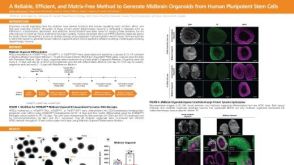 科学海报A Reliable, Efficient, and Matrix-Free Method to Generate Midbrain Organoids from Human Pluripotent Stem Cells
 沪公网安备31010102008431号