Chin EWM et al. (JUL 2016)
Neuromolecular medicine 18 3 364--377
Choline Ameliorates Disease Phenotypes in Human iPSC Models of Rett Syndrome.
Rett syndrome (RTT) is a postnatal neurodevelopmental disorder that primarily affects girls. Mutations in the methyl-CpG-binding protein 2 (MECP2) gene account for approximately 95 % of all RTT cases. To model RTT in vitro,we generated induced pluripotent stem cells (iPSCs) from fibroblasts of two RTT patients with different mutations (MECP2 (R306C) and MECP2 (1155$$32)) in their MECP2 gene. We found that these iPSCs were capable of differentiating into functional neurons. Compared to control neurons,the RTT iPSC-derived cells had reduced soma size and a decreased amount of synaptic input,evident both as fewer Synapsin 1-positive puncta and a lower frequency of spontaneous excitatory postsynaptic currents. Supplementation of the culture media with choline rescued all of these defects. Choline supplementation may act through changes in the expression of choline acetyltransferase,an important enzyme in cholinergic signaling,and also through alterations in the lipid metabolite profiles of the RTT neurons. Our study elucidates the possible mechanistic pathways for the effect of choline on human RTT cell models,thereby illustrating the potential for using choline as a nutraceutical to treat RTT.
View Publication
产品类型:
产品号#:
85850
85857
产品名:
mTeSR™1
mTeSR™1
Barnea-Cramer AO et al. (JUL 2016)
Scientific reports 6 29784
Function of human pluripotent stem cell-derived photoreceptor progenitors in blind mice.
Photoreceptor degeneration due to retinitis pigmentosa (RP) is a primary cause of inherited retinal blindness. Photoreceptor cell-replacement may hold the potential for repair in a completely degenerate retina by reinstating light sensitive cells to form connections that relay information to downstream retinal layers. This study assessed the therapeutic potential of photoreceptor progenitors derived from human embryonic and induced pluripotent stem cells (ESCs and iPSCs) using a protocol that is suitable for future clinical trials. ESCs and iPSCs were cultured in four specific stages under defined conditions,resulting in generation of a near-homogeneous population of photoreceptor-like progenitors. Following transplantation into mice with end-stage retinal degeneration,these cells differentiated into photoreceptors and formed a cell layer connected with host retinal neurons. Visual function was partially restored in treated animals,as evidenced by two visual behavioral tests. Furthermore,the magnitude of functional improvement was positively correlated with the number of engrafted cells. Similar efficacy was observed using either ESCs or iPSCs as source material. These data validate the potential of human pluripotent stem cells for photoreceptor replacement therapies aimed at photoreceptor regeneration in retinal disease.
View Publication
Ichida JK et al. (AUG 2014)
Nature chemical biology 10 8 632--9
Notch inhibition allows oncogene-independent generation of iPS cells.
The reprogramming of somatic cells to pluripotency using defined transcription factors holds great promise for biomedicine. However,human reprogramming remains inefficient and relies either on the use of the potentially dangerous oncogenes KLF4 and CMYC or the genetic inhibition of the tumor suppressor gene p53. We hypothesized that inhibition of signal transduction pathways that promote differentiation of the target somatic cells during development might relieve the requirement for non-core pluripotency factors during induced pluripotent stem cell (iPSC) reprogramming. Here,we show that inhibition of Notch greatly improves the efficiency of iPSC generation from mouse and human keratinocytes by suppressing p21 in a p53-independent manner and thereby enriching for undifferentiated cells capable of long-term self-renewal. Pharmacological inhibition of Notch enabled routine production of human iPSCs without KLF4 and CMYC while leaving p53 activity intact. Thus,restricting the development of somatic cells by altering intercellular communication enables the production of safer human iPSCs.
View Publication
产品类型:
产品号#:
73092
85850
85857
产品名:
DBZ
mTeSR™1
mTeSR™1
Wray J et al. (AUG 2009)
Blood 114 9 1852--8
Metnase mediates chromosome decatenation in acute leukemia cells.
After DNA replication,sister chromatids must be untangled,or decatenated,before mitosis so that chromatids do not tear during anaphase. Topoisomerase IIalpha (Topo IIalpha) is the major decatenating enzyme. Topo IIalpha inhibitors prevent decatenation,causing cells to arrest during mitosis. Here we report that acute myeloid leukemia cells fail to arrest at the mitotic decatenation checkpoint,and their progression through this checkpoint is regulated by the DNA repair component Metnase (also termed SETMAR). Metnase contains a SET histone methylase and transposase nuclease domain,and is a component of the nonhomologous end-joining DNA double-strand break repair pathway. Metnase interacts with Topo IIalpha and enhances its decatenation activity. Here we show that multiple types of acute leukemia cells have an attenuated mitotic arrest when decatenation is inhibited and that in an acute myeloid leukemia (AML) cell line this is mediated by Metnase. Of further importance,Metnase permits continued proliferation of these AML cells even in the presence of the clinical Topo IIalpha inhibitor VP-16. In vitro,purified Metnase prevents VP-16 inhibition of Topo IIalpha decatenation of tangled DNA. Thus,Metnase expression levels may predict AML resistance to Topo IIalpha inhibitors,and Metnase is a potential therapeutic target for small molecule interference.
View Publication
产品类型:
产品号#:
02690
产品名:
StemSpan™CC100
Miyoshi N et al. (JAN 2010)
Proceedings of the National Academy of Sciences of the United States of America 107 1 40--5
Defined factors induce reprogramming of gastrointestinal cancer cells.
Although cancer is a disease with genetic and epigenetic origins,the possible effects of reprogramming by defined factors remain to be fully understood. We studied the effects of the induction or inhibition of cancer-related genes and immature status-related genes whose alterations have been reported in gastrointestinal cancer cells. Retroviral-mediated introduction of induced pluripotent stem (iPS) cell genes was necessary for inducing the expression of immature status-related proteins,including Nanog,Ssea4,Tra-1-60,and Tra-1-80 in esophageal,stomach,colorectal,liver,pancreatic,and cholangiocellular cancer cells. Induced cells,but not parental cells,possessed the potential to express morphological patterns of ectoderm,mesoderm,and endoderm,which was supported by epigenetic studies,indicating methylation of DNA strands and the histone H3 protein at lysine 4 in promoter regions of pluripotency-associated genes such as NANOG. In in vitro analysis induced cells showed slow proliferation and were sensitized to differentiation-inducing treatment,and in vivo tumorigenesis was reduced in NOD/SCID mice. This study demonstrated that pluripotency was manifested in induced cells,and that the induced pluripotent cancer (iPC) cells were distinct from natural cancer cells with regard to their sensitivity to differentiation-inducing treatment. Retroviral-mediated introduction of iPC cells confers higher sensitivity to chemotherapeutic agents and differentiation-inducing treatment.
View Publication
产品类型:
产品号#:
85850
85857
产品名:
mTeSR™1
mTeSR™1
Wu X et al. (JAN 2018)
Cell 172 3 423--438.e25
Intrinsic Immunity Shapes Viral Resistance of Stem Cells.
Stem cells are highly resistant to viral infection compared to their differentiated progeny; however,the mechanism is mysterious. Here,we analyzed gene expression in mammalian stem cells and cells at various stages of differentiation. We find that,conserved across species,stem cells express a subset of genes previously classified as interferon (IFN) stimulated genes (ISGs) but that expression is intrinsic,as stem cells are refractory to interferon. This intrinsic ISG expression varies in a cell-type-specific manner,and many ISGs decrease upon differentiation,at which time cells become IFN responsive,allowing induction of a broad spectrum of ISGs by IFN signaling. Importantly,we show that intrinsically expressed ISGs protect stem cells against viral infection. We demonstrate the in vivo importance of intrinsic ISG expression for protecting stem cells and their differentiation potential during viral infection. These findings have intriguing implications for understanding stem cell biology and the evolution of pathogen resistance.
View Publication
Zhou T et al. (JUL 2011)
Journal of the American Society of Nephrology : JASN 22 7 1221--1228
Generation of induced pluripotent stem cells from urine
Forced expression of selected transcription factors can transform somatic cells into embryonic stem cell (ESC)-like cells,termed induced pluripotent stem cells (iPSCs). There is no consensus regarding the preferred tissue from which to harvest donor cells for reprogramming into iPSCs,and some donor cell types may be more prone than others to accumulation of epigenetic imprints and somatic cell mutations. Here,we present a simple,reproducible,noninvasive method for generating human iPSCs from renal tubular cells present in urine. This procedure eliminates many problems associated with other protocols,and the resulting iPSCs display an excellent ability to differentiate. These data suggest that urine may be a preferred source for generating iPSCs.
View Publication
产品类型:
产品号#:
85850
85857
产品名:
mTeSR™1
mTeSR™1
Mansouri M et al. ( 2016)
Nature Communications 7 May 11529
Highly efficient baculovirus-mediated multigene delivery in primary cells
Multigene delivery and subsequent cellular expression is emerging as a key technology required in diverse research fields including,synthetic and structural biology,cellular reprogramming and functional pharmaceutical screening. Current viral delivery systems such as retro- and adenoviruses suffer from limited DNA cargo capacity,thus impeding unrestricted multigene expression. We developed MultiPrime,a modular,non-cytotoxic,non-integrating,baculovirus-based vector system expediting highly efficient transient multigene expression from a variety of promoters. MultiPrime viruses efficiently transduce a wide range of cell types,including non-dividing primary neurons and induced-pluripotent stem cells (iPS). We show that MultiPrime can be used for reprogramming,and for genome editing and engineering by CRISPR/Cas9. Moreover,we implemented dual-host-specific cassettes enabling multiprotein expression in insect and mammalian cells using a single reagent. Our experiments establish MultiPrime as a powerful and highly efficient tool,to deliver multiple genes for a wide range of applications in primary and established mammalian cells.
View Publication
Naive embryonic stem cells hold great promise for research and therapeutics as they have broad and robust developmental potential. While such cells are readily derived from mouse blastocysts it has not been possible to isolate human equivalents easily,although human naive-like cells have been artificially generated (rather than extracted) by coercion of human primed embryonic stem cells by modifying culture conditions or through transgenic modification. Here we show that a sub-population within cultures of human embryonic stem cells (hESCs) and induced pluripotent stem cells (hiPSCs) manifests key properties of naive state cells. These naive-like cells can be genetically tagged,and are associated with elevated transcription of HERVH,a primate-specific endogenous retrovirus. HERVH elements provide functional binding sites for a combination of naive pluripotency transcription factors,including LBP9,recently recognized as relevant to naivety in mice. LBP9-HERVH drives hESC-specific alternative and chimaeric transcripts,including pluripotency-modulating long non-coding RNAs. Disruption of LBP9,HERVH and HERVH-derived transcripts compromises self-renewal. These observations define HERVH expression as a hallmark of naive-like hESCs,and establish novel primate-specific transcriptional circuitry regulating pluripotency.
View Publication
Pessina A et al. (FEB 2009)
Toxicology in vitro : an international journal published in association with BIBRA 23 1 194--200
Application of human CFU-Mk assay to predict potential thrombocytotoxicity of drugs.
Megakaryocytopoiesis gives rise to platelets by proliferation and differentiation of lineage-specific progenitors,identified in vitro as Colony Forming Unit-Megakaryocytes (CFU-Mk). The aim of this study was to refine and optimize the in vitro Standard Operating Procedure (SOP) of the CFU-Mk assay for detecting drug-induced thrombocytopenia and to prevalidate a model for predicting the acute exposure levels that cause maximum tolerated decreases in the platelets count,based on the correlation with the maximal plasma concentrations (C max) in vivo. The assay was linear under the SOP conditions,and the in vitro endpoints (percentage of colonies growing) were reproducible within and across laboratories. The protocol performance phase was carried out testing 10 drugs (selected on the base of their recognised or potential in vivo haematotoxicity,according to the literature). Results showed that a relationship can be established between the maximal concentration in plasma (C max) and the in vitro concentrations that inhibited the 10-50-90 percent of colonies growth (ICs). When C max is lower than IC10,it is possible to predict that the chemicals have no direct toxicity effect on CFU-Mk and could not induce thrombocytopenia due to bone marrow damage. When the C max is higher than IC90 and/or IC50,thrombocytopenia can occur due to direct toxicity of chemicals on CFU-Mk progenitors.
View Publication


 EasySep™小鼠TIL(CD45)正选试剂盒




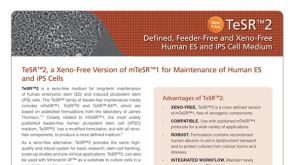 产品手册TeSR™2 Defined Feeder-Free and Xeno-Free Human ES and iPS Cell Medium

 沪公网安备31010102008431号