Hexum MK et al. (JAN 2011)
Methods in molecular biology (Clifton,N.J.) 767 433--47
In vivo evaluation of putative hematopoietic stem cells derived from human pluripotent stem cells.
Efficient derivation and isolation of hematopoietic stem cells (HSCs) from human pluripotent stem cell (hPSC) populations remains a major goal in the field of developmental hematopoiesis. These enticing pluripotent stem cells (comprising both human embryonic stem cells and induced pluripotent stem cells) have been successfully used to generate a wide array of hematopoietic cells in vitro,from primitive hematoendothelial precursors to mature myeloid,erythroid,and lymphoid lineage cells. However,to date,PSC-derived cells have demonstrated only limited potential for long-term multilineage hematopoietic engraftment in vivo - the test by which putative HSCs are defined. Successful generation and characterization of HSCs from hPSCs not only requires an efficient in vitro differentiation system that provides insight into the developmental fate of hPSC-derived cells,but also necessitates an in vivo engraftment model that allows identification of specific mechanisms that hinder or promote hematopoietic engraftment. In this chapter,we will describe a method that utilizes firefly luciferase-expressing hPSCs and bioluminescent imaging to noninvasively track the survival,proliferation,and migration of transplanted hPSC-derived cells. Combined with lineage and functional analyses of engrafted cells,this system is a useful tool to gain insight into the in vivo potential of hematopoietic cells generated from hPSCs.
View Publication
Cardiac malformations and disease are the leading causes of death in the United States in live-born infants and adults,respectively. In both of these cases,a decrease in the number of functional cardiomyocytes often results in improper growth of heart tissue,wound healing complications,and poor tissue repair. The field of cardiac tissue engineering seeks to address these concerns by developing cardiac patches created from a variety of biomaterial scaffolds to be used in surgical repair of the heart. These scaffolds should be fully degradable biomaterial systems with tunable properties such that the materials can be altered to meet the needs of both in vitro culture (e.g. disease modeling) and in vivo application (e.g. cardiac patch). Current platforms do not utilize both structural anisotropy and proper cell-matrix contacts to promote functional cardiac phenotypes and thus there is still a need for critically sized scaffolds that mimic both the structural and adhesive properties of native tissue. To address this need,we have developed a silk-based scaffold platform containing cardiac tissue-derived extracellular matrix (cECM). These silk-cECM composite scaffolds have tunable architectures,degradation rates,and mechanical properties. Subcutaneous implantation in rats demonstrated that addition of the cECM to aligned silk scaffold led to 99% endogenous cell infiltration and promoted vascularization of a critically sized scaffold (10 × 5 × 2.5 mm) after 4 weeks in vivo. In vitro,silk-cECM scaffolds maintained the HL-1 atrial cardiomyocytes and human embryonic stem cell-derived cardiomyocytes and promoted a more functional phenotype in both cell types. This class of hybrid silk-cECM anisotropic scaffolds offers new opportunities for developing more physiologically relevant tissues for cardiac repair and disease modeling.
View Publication
产品类型:
产品号#:
05850
05857
05870
05875
85850
85857
85870
85875
产品名:
mTeSR™1
mTeSR™1
Li X et al. (MAY 2017)
Stem cell research 21 32--39
Pyrimidoindole derivative UM171 enhances derivation of hematopoietic progenitor cells from human pluripotent stem cells.
In the field of hematopoietic regeneration,deriving hematopoietic stem cells (HSCs) from pluripotent stem cells with engraftment potential is the central mission. Unstable hematopoietic differentiation protocol due to variation factors such as serums and feeder cells,remains a major technical issue impeding the screening of key factors for the derivation of HSCs. In combination with hematopoietic cytokines,UM171 has the capacity to facilitate the maintenance and expansion of human primary HSCs in vitro. Here,using a serum-free,feeder-free,and chemically defined induction protocol,we observed that UM171 enhanced hematopoietic derivation through the entire process of hematopoietic induction in vitro. UM171 facilitated generation of robust CD34(+)CD45(+) derivatives that formed more and larger sized CFU-GM as well as larger sized CFU-Mix. In our protocol,the derived hematopoietic progenitors failed to engraft in NOG mice,indicating the absence of long-term HSC from these progenitors. In combination with other factors and protocols,UM171 might be broadly used for hematopoietic derivation from human pluripotent stem cells in vitro.
View Publication
产品类型:
产品号#:
05850
05857
05870
05875
85850
85857
85870
85875
产品名:
mTeSR™1
mTeSR™1
Boitano AE et al. (SEP 2010)
Science (New York,N.Y.) 329 5997 1345--8
Aryl hydrocarbon receptor antagonists promote the expansion of human hematopoietic stem cells.
Although practiced clinically for more than 40 years,the use of hematopoietic stem cell (HSC) transplants remains limited by the ability to expand these cells ex vivo. An unbiased screen with primary human HSCs identified a purine derivative,StemRegenin 1 (SR1),that promotes the ex vivo expansion of CD34+ cells. Culture of HSCs with SR1 led to a 50-fold increase in cells expressing CD34 and a 17-fold increase in cells that retain the ability to engraft immunodeficient mice. Mechanistic studies show that SR1 acts by antagonizing the aryl hydrocarbon receptor (AHR). The identification of SR1 and AHR modulation as a means to induce ex vivo HSC expansion should facilitate the clinical use of HSC therapy.
View Publication
产品类型:
产品号#:
72342
72344
72352
72354
72732
72734
产品名:
StemRegenin 1
StemRegenin 1
StemRegenin 1(盐酸盐)
StemRegenin 1(盐酸盐)
CH223191
CH223191
Liang M et al. (MAR 2009)
The journal of gene medicine 11 3 185--96
Targeted transduction of CD34+ hematopoietic progenitor cells in nonpurified human mobilized peripheral blood mononuclear cells.
BACKGROUND: Conventional gene-therapy applications of hematopoietic stem cells (HSCs) involve purification of CD34+ progenitor cells from the mobilized peripheral blood,ex vivo transduction of the gene of interest into them,and reinfusion of the transduced CD34+ progenitor cells into patients. Eliminating the process of purification would save labor,time and money,while enhancing HSCs viability,transplantability and pluripotency. Lentiviral vectors have been widely used in gene therapy because they infect both dividing and nondividing cells and provide sustained transgene expression. One of the exceptions to this rule is quiescent primary lymphocytes,in which reverse transcription of viral DNA is not completed. METHODS: In the present study,we tested the possibility of targeting CD34+ progenitor cells within nonpurified human mobilized peripheral blood mononuclear cells (mPBMCs) utilizing vesicular stomatitis virus G (VSV-G) pseudotyped lentiviral vectors,based on the assumption that the CD34+ progenitor cells would be preferentially transduced. To further enhance the specificity of vector transduction,we also examined utilizing a modified Sindbis virus envelope (2.2) pseudotyped lentiviral vector,developed in our laboratory,that allows targeted transduction to specific cell receptors via antibody recognition. RESULTS: Both the VSV-G and 2.2 pseudotyped vectors achieved measurable results when they were used to target CD34+ progenitor cells in nonpurified mPBMCs. CONCLUSIONS: Overall,the data obtained demonstrate the potential of ex vivo targeting of CD34+ progenitor cells without purification.
View Publication
产品类型:
产品号#:
04434
04444
产品名:
MethoCult™ H4434 Classic
MethoCult™ H4434 Classic
Ghiaur G et al. (APR 2008)
Blood 111 7 3313--21
Rac1 is essential for intraembryonic hematopoiesis and for the initial seeding of fetal liver with definitive hematopoietic progenitor cells.
Definitive hematopoietic stem and progenitor cells (HSCs/Ps) originating from the yolk sac and/or para-aorta-splanchno-pleura/aorta-gonad-mesonephros are hypothesized to colonize the fetal liver,but mechanisms involved are poorly defined. The Rac subfamily of Rho GTPases has been shown to play essential roles in HSC/P localization to the bone marrow following transplantation. Here,we study the role of Rac1 in HSC/P migration during ontogeny and seeding of fetal liver. Using a triple-transgenic approach,we have deleted Rac1 in HSCs/Ps during very early embryonic development. Without Rac1,there was a decrease in circulating HSCs/Ps in the blood of embryonic day (E) 10.5 embryos,while yolk sac definitive hematopoiesis was quantitatively normal. Intraembryonic hematopoiesis was significantly impaired in Rac1-deficient embryos,culminating with absence of intra-aortic clusters and fetal liver hematopoiesis. At E10.5,Rac1-deficient HSCs/Ps displayed decreased transwell migration and impaired inter-action with the microenvironment in migration-dependent assays. These data suggest that Rac1 plays an important role in HSC/P migration during embryonic development and is essential for the emergence of intraembryonic hematopoiesis.
View Publication
产品类型:
产品号#:
03134
09600
09650
产品名:
MethoCult™ M3134
StemSpan™ SFEM
StemSpan™ SFEM
Li L et al. (AUG 2011)
Blood 118 6 1504--15
A critical role for SHP2 in STAT5 activation and growth factor-mediated proliferation, survival, and differentiation of human CD34+ cells.
SHP2,a cytoplasmic protein-tyrosine phosphatase encoded by the PTPN11 gene,plays a critical role in developmental hematopoiesis in the mouse,and gain-of-function mutations of SHP2 are associated with hematopoietic malignancies. However,the role of SHP2 in adult hematopoiesis has not been addressed in previous studies. In addition,the role of SHP2 in human hematopoiesis has not been described. These questions are of considerable importance given the interest in development of SHP2 inhibitors for cancer treatment. We used shRNA-mediated inhibition of SHP2 expression to investigate the function of SHP2 in growth factor (GF) signaling in normal human CD34(+) cells. SHP2 knockdown resulted in markedly reduced proliferation and survival of cells cultured with GF,and reduced colony-forming cell growth. Cells expressing gain-of-function SHP2 mutations demonstrated increased dependency on SHP2 expression for survival compared with cells expressing wild-type SHP2. SHP2 knockdown was associated with significantly reduced myeloid and erythroid differentiation with retention of CD34(+) progenitors with enhanced proliferative capacity. Inhibition of SHP2 expression initially enhanced and later inhibited STAT5 phosphorylation and reduced expression of the antiapoptotic genes MCL1 and BCLXL. These results indicate an important role for SHP2 in STAT5 activation and GF-mediated proliferation,survival,and differentiation of human progenitor cells.
View Publication
产品类型:
产品号#:
09600
09650
产品名:
StemSpan™ SFEM
StemSpan™ SFEM
Dobo I et al. (JAN 2001)
The hematology journal : the official journal of the European Haematology Association / EHA 2 6 396--403
Comparison of four serum-free, cytokine-free media for analysis of endogenous erythroid colony growth in polycythemia vera and essential thrombocythemia.
INTRODUCTION: The assay of endogenous erythroid colony formation (EEC),a characteristic of polycythemia vera and essential thrombocythemia,is not standardized. In this multicentric study,we tested four semisolid,serum-free,cytokine-free media based on either methylcellulose (M1,M2) or collagen (C1,C2) commercialized for the EEC assay. MATERIALS AND METHODS: Bone marrow mononuclear cells (BMMC) from 73 individuals (62 patients with either polycythemia vera (26),essential thrombocythemia (19),secondary polyglobuly (17) or chronic myeloid leukemia (2) and 11 healthy donors) were grown in parallel in the four media without,or with 0.01 U/ml erythropoietin (EPo). RESULTS: In all four media EEC formation was specific,as it was not observed in cultures of patients with secondary polyglobuly or chronic myeloid leukemia,nor of healthy donors. Analysis of fresh or MGG-stained collagen gel cultures allowed detection of EEC formation significantly more frequently than methylcellulose-based media; addition of 0.01 U/ml of EPo had little or no effect on EEC formation. Collagen-based medium C1 gave better results than the other media tested: the 'C1' EEC assay was positive for 68.2% of polycythemia vera cultures with significantly higher median EEC numbers (6.5/10(5) BMMC for patients with one major criteria of polycythemia vera and 19 and 21/10(5) BMMC for patients with two or three major criteria,respectively). Medium C1 was also better for essential thrombocythemia cultures with 47.4% of positive results but with a low median EEC number (6.7/10(5) BMMC). When associated with the ELISA dosage of serum EPo,the 'C1' EEC assay allowed confirmation or elimination of the diagnosis of polycythemia vera for 91% (20/22) of polyglobulic patients. CONCLUSION: We propose that serum-free collagen-based culture systems be considered to standardize the EEC assay,now part of the new criteria of polycythemia vera.
View Publication
Silencing p21(Waf1/Cip1/Sdi1) expression increases gene transduction efficiency in primitive human hematopoietic cells.
Adult hematopoietic and other tissue stem cells have highly constrained cell cycling that limits their susceptibility to standard gene therapy vectors,which depend upon chromosomal integration. Using cytokine cocktails to increase transduction efficiency often compromises subsequent stem cell function in vivo. We previously showed that p21(Waf1/Cip1/Sdi1) (p21) mediates stem cell quiescence in vivo and decreasing its expression ex vivo leads to an expansion of stem cell pool in vivo. Here,we report that application of p21 specific siRNA increased the gene transduction efficiency in hematopoietic stem cells while preserving cell multipotentiality. Both types of siRNA,synthesized siRNA and transcribed shRNA,reduced p21 expression in target cells by 85-98%. The effect of RNAi in these cells was transient and the level of p21 mRNA returned to base line 14-28 days after siRNA treatment. This brief interval of reduction,however,was sufficient to increase transduction efficiency to two- to four-fold in cell cultures,and followed by a seven- to eight-fold increase in mice. The RNAi treated,lentivector-transduced CD34+ cells retained multipotentiality as assessed in vitro by colony formation assay and in vivo by NOD/SCID mouse transplantation assay. Reduction of p21 resulted in an increased chromosomal integration of lentivector into target cellular DNA. Taken together,both synthesized and transcribed siRNA knocked down p21 expression in human CD34+ hematopoietic stem/progenitor cells. Silencing p21 expression increased gene transduction efficiency and vector integration while retaining stem cell multipotentiality. Thus,RNAi targeting of p21 is a useful strategy to increase stem cell gene transfer efficiency. Decreasing p21 expression transiently while increasing gene-transfer vector integration may ultimately facilitate clinical applications of gene therapy.
View Publication
产品类型:
产品号#:
09850
产品名:
Heckl D et al. (APR 2011)
Blood 117 14 3737--47
Lentiviral gene transfer regenerates hematopoietic stem cells in a mouse model for Mpl-deficient aplastic anemia.
Thpo/Mpl signaling plays an important role in the maintenance of hematopoietic stem cells (HSCs) in addition to its role in megakaryopoiesis. Patients with inactivating mutations in Mpl develop thrombocytopenia and aplastic anemia because of progressive loss of HSCs. Yet,it is unknown whether this loss of HSCs is an irreversible process. In this study,we used the Mpl knockout (Mpl(-/-)) mouse model and expressed Mpl from newly developed lentiviral vectors specifically in the physiologic Mpl target populations,namely,HSCs and megakaryocytes. After validating lineage-specific expression in vivo using lentiviral eGFP reporter vectors,we performed bone marrow transplantation of transduced Mpl(-/-) bone marrow cells into Mpl(-/-) mice. We show that restoration of Mpl expression from transcriptionally targeted vectors prevents lethal adverse reactions of ectopic Mpl expression,replenishes the HSC pool,restores stem cell properties,and corrects platelet production. In some mice,megakaryocyte counts were atypically high,accompanied by bone neo-formation and marrow fibrosis. Gene-corrected Mpl(-/-) cells had increased long-term repopulating potential,with a marked increase in lineage(-)Sca1(+)cKit(+) cells and early progenitor populations in reconstituted mice. Transcriptome analysis of lineage(-)Sca1(+)cKit(+) cells in Mpl-corrected mice showed functional adjustment of genes involved in HSC self-renewal.
View Publication
产品类型:
产品号#:
09600
09650
产品名:
StemSpan™ SFEM
StemSpan™ SFEM
Kobune M et al. (AUG 2004)
Blood 104 4 1002--9
Indian hedgehog gene transfer augments hematopoietic support of human stromal cells including NOD/SCID-beta2m-/- repopulating cells.
Hematopoietic stem cells (HSCs) are a subset of bone marrow cells that are capable of self-renewal and of giving rise to all types of blood cells. However,the mechanisms involved in controlling the number and abilities of HSCs remain largely unknown. The Indian hedgehog (Ihh) signal has an essential role in inducing hematopoietic tissue during embryogenesis. We investigated the roles of the Ihh in coculture with CD34+ cells and human stromal cells. Ihh mRNA was expressed in primary and telomerized human (hTERT) stromal cells,and its receptor molecules were detected in CD34+ cells. Ihh gene transfer into hTERT stromal cells enhanced their hematopoietic supporting potential,which was elevated compared with control stromal cells,as indicated by the colony-forming units in culture (CFU-Cs) (26-fold +/- 2-fold versus 59-fold +/- 3-fold of the initial cell number; mixed colony-forming units [CFU-Mix's],63-fold +/- 37-fold versus 349-fold +/- 116-fold). Engraftments of nonobese diabetic/severe combined immunodeficiency-beta2m-/- (NOD/SCID-beta2-/-) repopulating cells (RCs) expanded on Ihh stromal cells were significantly higher compared with control coculture results,and engraftment was neutralized by addition of an antihedgehog antibody. Limiting dilution analysis indicated that NOD/SCID-beta2m-/- RCs proliferated efficiently on Ihh stromal cells,compared with control stromal cells. These results indicate that Ihh gene transfer could enhance the primitive hematopoietic support ability of human stromal cells.
View Publication


 EasySep™小鼠TIL(CD45)正选试剂盒




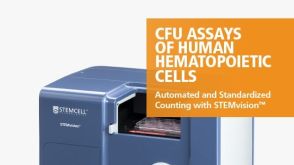 产品手册STEMvision™ Automated and Standardized Counting of CFU Assays of Human Hematopoietic Cells
 沪公网安备31010102008431号