Mandegar MA et al. (APR 2016)
Cell Stem Cell 18 4 541--553
CRISPR Interference Efficiently Induces Specific and Reversible Gene Silencing in Human iPSCs
Developing technologies for efficient and scalable disruption of gene expression will provide powerful tools for studying gene function,developmental pathways,and disease mechanisms. Here,we develop clustered regularly interspaced short palindromic repeat interference (CRISPRi) to repress gene expression in human induced pluripotent stem cells (iPSCs). CRISPRi,in which a doxycycline-inducible deactivated Cas9 is fused to a KRAB repression domain,can specifically and reversibly inhibit gene expression in iPSCs and iPSC-derived cardiac progenitors,cardiomyocytes,and T lymphocytes. This gene repression system is tunable and has the potential to silence single alleles. Compared with CRISPR nuclease (CRISPRn),CRISPRi gene repression is more efficient and homogenous across cell populations. The CRISPRi system in iPSCs provides a powerful platform to perform genome-scale screens in a wide range of iPSC-derived cell types,dissect developmental pathways,and model disease.
View Publication
产品类型:
产品号#:
07920
07922
85850
85857
产品名:
ACCUTASE™
ACCUTASE™
mTeSR™1
mTeSR™1
Bhadriraju K et al. (JUL 2016)
Stem Cell Research 17 1 122--129
Large-scale time-lapse microscopy of Oct4 expression in human embryonic stem cell colonies
Identification and quantification of the characteristics of stem cell preparations is critical for understanding stem cell biology and for the development and manufacturing of stem cell based therapies. We have developed image analysis and visualization software that allows effective use of time-lapse microscopy to provide spatial and dynamic information from large numbers of human embryonic stem cell colonies. To achieve statistically relevant sampling,we examined textgreater 680 colonies from 3 different preparations of cells over 5 days each,generating a total experimental dataset of 0.9 terabyte (TB). The 0.5 Giga-pixel images at each time point were represented by multi-resolution pyramids and visualized using the Deep Zoom Javascript library extended to support viewing Giga-pixel images over time and extracting data on individual colonies. We present a methodology that enables quantification of variations in nominally-identical preparations and between colonies,correlation of colony characteristics with Oct4 expression,and identification of rare events.
View Publication
Raouf A et al. (JUL 2008)
Cell stem cell 3 1 109--18
Transcriptome analysis of the normal human mammary cell commitment and differentiation process.
Mature mammary epithelial cells are generated from undifferentiated precursors through a hierarchical process,but the molecular mechanisms involved,particularly in the human mammary gland,are poorly understood. To address this issue,we isolated highly purified subpopulations of primitive bipotent and committed luminal progenitor cells as well as mature luminal and myoepithelial cells from normal human mammary tissue and compared their transcriptomes obtained using three different methods. Elements unique to each subset of mammary cells were identified,and changes that accompany their differentiation in vivo were shown to be recapitulated in vitro. These include a stage-specific change in NOTCH pathway gene expression during the commitment of bipotent progenitors to the luminal lineage. Functional studies further showed NOTCH3 signaling to be critical for this differentiation event to occur in vitro. Taken together,these findings provide an initial foundation for future delineation of mechanisms that perturb primitive human mammary cell growth and differentiation.
View Publication
产品类型:
产品号#:
05601
产品名:
EpiCult™-B 人培养基
Archibald PRT et al. (AUG 2016)
Bioprocess and Biosystems Engineering 1--12
Comparability of automated human induced pluripotent stem cell culture: a pilot study
Consistent and robust manufacturing is essential for the translation of cell therapies,and the utilisation automation throughout the manufacturing process may allow for improvements in quality control,scalability,reproducibility and economics of the process. The aim of this study was to measure and establish the comparability between alternative process steps for the culture of hiPSCs. Consequently,the effects of manual centrifugation and automated non-centrifugation process steps,performed using TAP Biosystems' CompacT SelecT automated cell culture platform,upon the culture of a human induced pluripotent stem cell (hiPSC) line (VAX001024c07) were compared. This study,has demonstrated that comparable morphologies and cell diameters were observed in hiPSCs cultured using either manual or automated process steps. However,non-centrifugation hiPSC populations exhibited greater cell yields,greater aggregate rates,increased pluripotency marker expression,and decreased differentiation marker expression compared to centrifugation hiPSCs. A trend for decreased variability in cell yield was also observed after the utilisation of the automated process step. This study also highlights the detrimental effect of the cryopreservation and thawing processes upon the growth and characteristics of hiPSC cultures,and demonstrates that automated hiPSC manufacturing protocols can be successfully transferred between independent laboratories.
View Publication
产品类型:
产品号#:
85850
85857
产品名:
mTeSR™1
mTeSR™1
Griesi-Oliveira K et al. (NOV 2014)
Molecular psychiatry 20 March 1--16
Modeling non-syndromic autism and the impact of TRPC6 disruption in human neurons.
An increasing number of genetic variants have been implicated in autism spectrum disorders (ASDs),and the functional study of such variants will be critical for the elucidation of autism pathophysiology. Here,we report a de novo balanced translocation disruption of TRPC6,a cation channel,in a non-syndromic autistic individual. Using multiple models,such as dental pulp cells,induced pluripotent stem cell (iPSC)-derived neuronal cells and mouse models,we demonstrate that TRPC6 reduction or haploinsufficiency leads to altered neuronal development,morphology and function. The observed neuronal phenotypes could then be rescued by TRPC6 complementation and by treatment with insulin-like growth factor-1 or hyperforin,a TRPC6-specific agonist,suggesting that ASD individuals with alterations in this pathway may benefit from these drugs. We also demonstrate that methyl CpG binding protein-2 (MeCP2) levels affect TRPC6 expression. Mutations in MeCP2 cause Rett syndrome,revealing common pathways among ASDs. Genetic sequencing of TRPC6 in 1041 ASD individuals and 2872 controls revealed significantly more nonsynonymous mutations in the ASD population,and identified loss-of-function mutations with incomplete penetrance in two patients. Taken together,these findings suggest that TRPC6 is a novel predisposing gene for ASD that may act in a multiple-hit model. This is the first study to use iPSC-derived human neurons to model non-syndromic ASD and illustrate the potential of modeling genetically complex sporadic diseases using such cells.Molecular Psychiatry advance online publication,11 November 2014; doi:10.1038/mp.2014.141.
View Publication
Chen C et al. (AUG 2013)
Journal of Neurochemistry 126 3 318--330
Inhibition of neuronal nitric oxide synthase activity promotes migration of human-induced pluripotent stem cell-derived neural stem cells toward cancer cells
The breakthrough in derivation of human-induced pluripotent stem cells (hiPSCs) provides an approach that may help overcome ethical and allergenic challenges posed in numerous medical applications involving human cells,including neural stem/progenitor cells (NSCs). Considering the great potential of NSCs in targeted cancer gene therapy,we investigated in this study the tumor tropism of hiPSC-derived NSCs and attempted to enhance the tropism by manipulation of biological activities of proteins that are involved in regulating the migration of NSCs toward cancer cells. We first demonstrated that hiPSC-NSCs displayed tropism for both glioblastoma cells and breast cancer cells in vitro and in vivo. We then compared gene expression profiles between migratory and non-migratory hiPSC-NSCs toward these cancer cells and observed that the gene encoding neuronal nitric oxide synthase (nNOS) was down-regulated in migratory hiPSC-NSCs. Using nNOS inhibitors and nNOS siRNAs,we demonstrated that this protein is a relevant regulator in controlling migration of hiPSC-NSCs toward cancer cells,and that inhibition of its activity or down-regulation of its expression can sensitize poorly migratory NSCs and be used to improve their tumor tropism. These findings suggest a novel application of nNOS inhibitors in neural stem cell-mediated cancer therapy.
View Publication
West FD et al. (AUG 2010)
Stem cells and development 19 8 1211--1220
Porcine induced pluripotent stem cells produce chimeric offspring.
Ethical and moral issues rule out the use of human induced pluripotent stem cells (iPSCs) in chimera studies that would determine the full extent of their reprogrammed state,instead relying on less rigorous assays such as teratoma formation and differentiated cell types. To date,only mouse iPSC lines are known to be truly pluripotent. However,initial mouse iPSC lines failed to form chimeric offspring,but did generate teratomas and differentiated embryoid bodies,and thus these specific iPSC lines were not completely reprogrammed or truly pluripotent. Therefore,there is a need to address whether the reprogramming factors and process used eventually to generate chimeric mice are universal and sufficient to generate reprogrammed iPSC that contribute to chimeric offspring in additional species. Here we show that porcine mesenchymal stem cells transduced with 6 human reprogramming factors (POU5F1,SOX2,NANOG,KLF4,LIN28,and C-MYC) injected into preimplantation-stage embryos contributed to multiple tissue types spanning all 3 germ layers in 8 of 10 fetuses. The chimerism rate was high,85.3% or 29 of 34 live offspring were chimeras based on skin and tail biopsies harvested from 2- to 5-day-old pigs. The creation of pluripotent porcine iPSCs capable of generating chimeric offspring introduces numerous opportunities to study the facets significantly affecting cell therapies,genetic engineering,and other aspects of stem cell and developmental biology.
View Publication
产品类型:
产品号#:
85850
85857
产品名:
mTeSR™1
mTeSR™1
Castro-Diaz N et al. (JUL 2014)
Genes and Development 28 13 1397--1409
Evolutionally dynamic L1 regulation in embryonic stem cells
Mobile elements are important evolutionary forces that challenge genomic integrity. Long interspersed element-1 (L1,also known as LINE-1) is the only autonomous transposon still active in the human genome. It displays an unusual pattern of evolution,with,at any given time,a single active L1 lineage amplifying to thousands of copies before getting replaced by a new lineage,likely under pressure of host restriction factors,which act notably by silencing L1 expression during early embryogenesis. Here,we demonstrate that in human embryonic stem (hES) cells,KAP1 (KRAB [Kruppel-associated box domain]-associated protein 1),the master cofactor of KRAB-containing zinc finger proteins (KRAB-ZFPs) previously implicated in the restriction of endogenous retroviruses,represses a discrete subset of L1 lineages predicted to have entered the ancestral genome between 26.8 million and 7.6 million years ago. In mice,we documented a similar chronologically conditioned pattern,albeit with a much contracted time scale. We could further identify an L1-binding KRAB-ZFP,suggesting that this rapidly evolving protein family is more globally responsible for L1 recognition. KAP1 knockdown in hES cells induced the expression of KAP1-bound L1 elements,but their younger,human-specific counterparts (L1Hs) were unaffected. Instead,they were stimulated by depleting DNA methyltransferases,consistent with recent evidence demonstrating that the PIWI-piRNA (PIWI-interacting RNA) pathway regulates L1Hs in hES cells. Altogether,these data indicate that the early embryonic control of L1 is an evolutionarily dynamic process and support a model in which newly emerged lineages are first suppressed by DNA methylation-inducing small RNA-based mechanisms before KAP1-recruiting protein repressors are selected.
View Publication
产品类型:
产品号#:
85850
85857
产品名:
mTeSR™1
mTeSR™1
Diederichs S and Tuan RS (JUL 2014)
Stem cells and development 23 14 1--53
Functional comparison of human-induced pluripotent stem cell-derived mesenchymal cells and bone marrow-derived mesenchymal stromal cells from the same donor.
Mesenchymal stem cells (MSCs) have a high potential for therapeutic efficacy in treating diverse musculoskeletal injuries and cardiovascular diseases,and for ameliorating the severity of graft-versus-host and autoimmune diseases. While most of these clinical applications require substantial cell quantities,the number of MSCs that can be obtained initially from a single donor is limited. Reports on the derivation of MSC-like cells from pluripotent stem cells (PSCs) are,thus,of interest,as the infinite proliferative capacity of PSCs opens the possibility to generate large amounts of uniform batches of MSCs. However,characterization of such MSC-like cells is currently inadequate,especially with regard to the question of whether these cells are equivalent or identical to MSCs. In this study,we have derived MSC-like cells [induced PSC-derived MSC-like progenitor cells (iMPCs)] using four different methodologies from a newly established induced PSC line reprogrammed from human bone marrow stromal cells (BMSCs),and compared the iMPCs directly with the originating parental BMSCs. The iMPCs exhibited typical MSC/fibroblastic morphology and MSC-typical surface marker profile,and they were capable of differentiation in vitro along the osteogenic,chondrogenic,and adipogenic lineages. However,compared with the parental BMSCs,iMPCs displayed a unique expression pattern of mesenchymal and pluripotency genes and were less responsive to traditional BMSC differentiation protocols. We,therefore,conclude that iMPCs generated from PSCs via spontaneous differentiation represent a distinct population of cells which exhibit MSC-like characteristics.
View Publication


 EasySep™小鼠TIL(CD45)正选试剂盒




 17:30
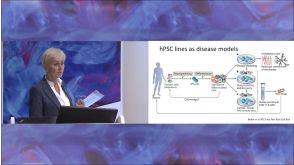
线上讲座Nature Research Round Table: Human Pluripotent Stem Cell Lines as Disease Models发布日期: 11/01/2019
17:30
线上讲座Nature Research Round Table: Human Pluripotent Stem Cell Lines as Disease Models发布日期: 11/01/2019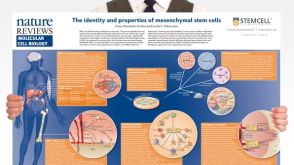 挂图The Identity and Properties of Mesenchymal Stem Cells Overview of MSC expansion, differentiation, immunoregulatory properties and therapeutic potential

 沪公网安备31010102008431号