ErbB Receptor Tyrosine Kinase: A Molecular Switch between Cardiac and Neuroectoderm Specification in Human Pluripotent Stem Cells
Mechanisms determining intrinsic differentiation bias inherent to human pluripotent stem cells (hPSCs) toward cardiogenic fate remain elusive. We evaluated the interplay between ErbB4 and EGFR in determining cardiac differentiation in vitro as these receptor tyrosine kinases (RTKs) are key to heart and brain development in vivo. Our results demonstrate that during cardiac differentiation,cell fate biases exist in hPSCs due to cardiac/neuroectoderm divergence post cardiac mesoderm stage. Stage-specific up-regulation of EGFR in concert with persistent Wnt3a signaling post cardiac mesoderm favors commitment towards neural progenitor cells (NPCs). Inhibition of EGFR abrogates these effects with enhanced (textgreater2-fold) cardiac differentiation efficiencies by increasing proliferation of Nkx2-5 expressing cardiac progenitors while reducing proliferation of Sox2 expressing NPCs. Forced overexpression of ErbB4 rescued cardiac commitment by augmenting Wnt11 signaling. Convergence between EGFR/ErbB4 and canonical/non-canonical Wnt signaling determines cardiogenic fate in hPSCs. This article is protected by copyright. All rights reserved.
View Publication
产品类型:
产品号#:
85850
85857
产品名:
mTeSR™1
mTeSR™1
Carter DA et al. (SEP 2016)
Scientific reports 6 33792
Mislocalisation of BEST1 in iPSC-derived retinal pigment epithelial cells from a family with autosomal dominant vitreoretinochoroidopathy (ADVIRC).
Autosomal dominant vitreoretinochoroidopathy (ADVIRC) is a rare,early-onset retinal dystrophy characterised by distinct bands of circumferential pigmentary degeneration in the peripheral retina and developmental eye defects. ADVIRC is caused by mutations in the Bestrophin1 (BEST1) gene,which encodes a transmembrane protein thought to function as an ion channel in the basolateral membrane of retinal pigment epithelial (RPE) cells. Previous studies suggest that the distinct ADVIRC phenotype results from alternative splicing of BEST1 pre-mRNA. Here,we have used induced pluripotent stem cell (iPSC) technology to investigate the effects of an ADVIRC associated BEST1 mutation (c.704T textgreater C,p.V235A) in patient-derived iPSC-RPE. We found no evidence of alternate splicing of the BEST1 transcript in ADVIRC iPSC-RPE,however in patient-derived iPSC-RPE,BEST1 was expressed at the basolateral membrane and the apical membrane. During human eye development we show that BEST1 is expressed more abundantly in peripheral RPE compared to central RPE and is also expressed in cells of the developing retina. These results suggest that higher levels of mislocalised BEST1 expression in the periphery,from an early developmental stage,could provide a mechanism that leads to the distinct clinical phenotype observed in ADVIRC patients.
View Publication
产品类型:
产品号#:
85850
85857
产品名:
mTeSR™1
mTeSR™1
Lin S et al. (NOV 2010)
Toxicological Sciences 118 1 202--12
Comparison of the toxicity of smoke from conventional and harm reduction cigarettes using human embryonic stem cells.
This study evaluated the hypothesis that smoke from harm reduction cigarettes impedes attachment and proliferation of H9 human embryonic stem cells (hESCs). Smoke from three harm reduction brands was compared with smoke from a conventional brand. Doses of smoke were measured in puff equivalents (PE) (1 PE = the amount of smoke in one puff that dissolves in 1 ml of medium). Cytotoxic doses were determined using morphological criteria and trypan blue staining,and apoptosis was confirmed using Magic Red staining. Attachment and proliferation of hESC were followed at a noncytotoxic dose in time-lapse videos collected using BioStation technology. Data were mined from videos either manually or using video bioinformatics subroutines developed with CL-Quant software. Mainstream (MS) and sidestream (SS) smoke from conventional and harm reduction cigarettes induced apoptosis in hESC colonies at 1 PE. At 0.1 PE (noncytotoxic),SS smoke from all brands inhibited attachment of hESC colonies to Matrigel with the strongest inhibition occurring in harm reduction brands. At 0.1 PE,SS smoke,but not MS smoke,from all brands inhibited hESC growth,and two harm reduction brands were more potent than the conventional brand. In general,hESC appeared more sensitive to smoke than their mouse ESC counterparts. Although harm reduction cigarettes are often marketed as safer than conventional brands,our assays show that SS smoke from harm reduction cigarettes was at least as potent or in some cases more potent than smoke from a conventional brand and that SS smoke was more inhibitory than MS smoke in all assays.
View Publication
产品类型:
产品号#:
85850
85857
产品名:
mTeSR™1
mTeSR™1
Li Z et al. (OCT 2011)
Stem cells and development 20 10 1701--10
Functional characterization and expression profiling of human induced pluripotent stem cell- and embryonic stem cell-derived endothelial cells.
With regard to human induced pluripotent stem cells (hiPSCs),in which adult cells are reprogrammed into embryonic-like cells using defined factors,their functional and transcriptional expression pattern during endothelial differentiation has yet to be characterized. In this study,hiPSCs and human embryonic stem cells (hESCs) were differentiated using the embryoid body method,and CD31(+) cells were sorted. Fluorescence activated cell sorting analysis of hiPSC-derived endothelial cells (hiPSC-ECs) and hESC-derived endothelial cells (hESC-ECs) demonstrated similar endothelial gene expression patterns. We showed functional vascular formation by hiPSC-ECs in a mouse Matrigel plug model. We compared the gene profiles of hiPSCs,hESCs,hiPSC-ECs,hESC-ECs,and human umbilical vein endothelial cells (HUVECs) using whole genome microarray. Our analysis demonstrates that gene expression variation of hiPSC-ECs and hESC-ECs contributes significantly to biological differences between hiPSC-ECs and hESC-ECs as well as to the distances" among hiPSCs�
View Publication
产品类型:
产品号#:
85850
85857
产品名:
mTeSR™1
mTeSR™1
Wu H et al. (SEP 2011)
Journal of breast cancer 14 3 175--80
Can CD44+/CD24- Tumor Cells Be Used to Determine the Extent of Breast Cancer Invasion Following Neoadjuvant Chemotherapy?
PURPOSE: To investigate the distribution of CD44(+)/CD24(-) cells in breast cancers in relation to tumor size before and after the administration of neoadjuvant chemotherapy. METHODS: CD44(+)/CD24(-) tumor cells obtained from breast cancer specimens were characterized in vivo and in vitro using tumor formation assays and mammosphere generation assays,respectively. The distribution of CD44+/CD24- tumor cells in 78 breast cancer specimens following administration of neoadjuvant chemotherapy was also evaluated using immunofluorescence assays,and this distribution was compared with the extent of tumor invasion predicted by Response Evaluation Criteria in Solid Tumours (RECIST). RESULTS: In 27/78 cases,complete remission (CR) was identified using RECIST. However,18 of these CR cases were associated with a scattered distribution of tumor stem cells in the outline of the original tumor prior to neoadjuvant chemotherapy. After neoadjuvant chemotherapy,24 cases involved cancer cells that were confined to the tumor outline,and 21 cases had tumor cells or tumor stem cells overlapping the tumor outline. In addition,there were 6 patients who were insensitive to chemotherapy,and in these cases,both cancer cells and stem cells were detected outside the contours of the tumor volume imaged prior to chemotherapy. CONCLUSION: CD44+/CD24- tumor cells may be an additional parameter to evaluate when determining the extent of breast cancer invasion.
View Publication
产品类型:
产品号#:
05620
产品名:
MammoCult™人培养基试剂盒
Shimada H et al. (JAN 2012)
Biochemical and Biophysical Research Communications 417 2 659--664
Accelerated generation of human induced pluripotent stem cells with retroviral transduction and chemical inhibitors under physiological hypoxia
Induced pluripotent stem (iPS) cells are generated from somatic cells by the forced expression of a defined set of pluripotency-associated transcription factors. Human iPS cells can be propagated indefinitely,while maintaining the capacity to differentiate into all cell types in the body except for extra-embryonic tissues. This technology not only represents a new way to use individual-specific stem cells for regenerative medicine but also constitutes a novel method to obtain large amounts of disease-specific cells for biomedical research. Despite their great potential,the long reprogramming process (up to 1. month) remains one of the most significant challenges facing standard virus-mediated methodology. In this study,we report the accelerated generation of human iPS cells from adipose-derived stem (ADS) cells,using a new combination of chemical inhibitors under a setting of physiological hypoxia in conjunction with retroviral transduction of Oct4,Sox2,Klf4,and L-Myc. Under optimized conditions,we observed human embryonic stem (ES)-like cells as early as 6. days after the initial retroviral transduction. This was followed by the emergence of fully reprogrammed cells bearing Tra-1-81-positive and DsRed transgene-silencing properties on day 10. The resulting cell lines resembled human ES cells in many respects including proliferation rate,morphology,pluripotency-associated markers,global gene expression patterns,genome-wide DNA methylation states,and the ability to differentiate into all three of the germ layers,both in vitro and in vivo. Our method,when combined with chemical inhibitors under conditions of physiological hypoxia,offers a powerful tool for rapidly generating bona fide human iPS cells and facilitates the application of iPS cell technology to biomedical research. textcopyright 2011 Elsevier Inc.
View Publication
Detection, isolation, and stimulation of quiescent primitive leukemic progenitor cells from patients with acute myeloid leukemia (AML).
Although many acute myeloid leukemia (AML) colony-forming cells (CFCs) and long-term culture-initiating cells (LTC-ICs) directly isolated from patients are actively cycling,quiescent progenitors are present in most samples. In the current study,(3)H-thymidine ((3)H-Tdr) suicide assays demonstrated that most NOD/SCID mouse leukemia-initiating cells (NOD/SL-ICs) are quiescent in 6 of 7 AML samples. AML cells in G(0),G(1),and S/G(2)+M were isolated from 4 of these samples using Hoechst 33342/pyroninY staining and cell sorting. The progenitor content of each subpopulation was consistent with the (3)H-Tdr suicide results,with NOD/SL-ICs found almost exclusively among G(0) cells while the cycling status of AML CFCs and LTC-ICs was more heterogeneous. Interestingly,after 72 hours in serum-free culture with or without Steel factor (SF),Flt-3 ligand (FL),and interleukin-3 (IL-3),most G(0) AML cells entered active cell cycle (percentage of AML cells remaining in G(0) at 72 hours,1.2% to 37%,and 0% to 7.6% in cultures without and with growth factors [GFs],respectively) while G(0) cells from normal lineage-depleted bone marrow remained quiescent in the absence of GF. All 4 AML samples showed evidence of autocrine production of 2 or more of SF,FL,IL-3,and granulocyte-macrophage colony-stimulating factor (GM-CSF). In addition,3 of 4 samples contained an internal tandem duplication of the FLT3 gene. In summary,quiescent leukemic cells,including NOD/SL-ICs,are present in most AML patients. Their spontaneous entry into active cell cycle in short-term culture might be explained by the deregulated GF signaling present in many AMLs.
View Publication
产品类型:
产品号#:
05150
09500
09600
09650
产品名:
MyeloCult™H5100
BIT 9500血清替代物
StemSpan™ SFEM
StemSpan™ SFEM
Lai W-H et al. (DEC 2010)
Cellular reprogramming 12 6 641--653
ROCK inhibition facilitates the generation of human-induced pluripotent stem cells in a defined, feeder-, and serum-free system.
Human-induced pluripotent stem cells (iPSCs) generated from human adult somatic cells through reprogramming hold great promises for future regenerative medicine. However,exposure of human iPSCs to animal feeder and serum in the process of their generation and maintenance imposes risk of transmitting animal pathogens to human subjects,thus hindering the potential therapeutic applications. Here,we report the successful generation of human iPSCs in a feeder-independent culture system with defined factors. Two stable human iPSC lines were established from primary human dermal fibroblasts of two healthy volunteers. These human iPSCs expressed a panel of pluripotency markers including stage-specific embryonic antigen (SSEA)-4,tumor-rejection antigen (TRA)-1-60,TRA-1-81,and alkaline phosphatase,while maintaining normal karyotypes and the exogenous reprogramming factors being silenced. In addition,these human iPSCs can differentiate along lineages representative of the three embryonic germ layers upon formation of embryoid bodies,indicating their pluripotency. Furthermore,subcutaneous transplantation of these cells into immunodeficient mice resulted in teratoma formation in 6 to 8 weeks. Our findings are an important step toward generating patient-specific iPSCs in a more clinically compliant manner by eliminating the need of animal feeder cells and animal serum.
View Publication
产品类型:
产品号#:
85850
85857
产品名:
mTeSR™1
mTeSR™1
Zhang S et al. (APR 2014)
Biomaterials 35 12 3786--3793
The influence of a spatiotemporal 3D environment on endothelial cell differentiation of human induced pluripotent stem cells.
Current EC differentiation protocols are inefficient,and the phenotypes of the differentiated ECs are only briefly stable,which significantly inhibits their utility for basic science research. Here,a remarkably more efficient hiPSC-EC differentiation protocol that incorporates a three-dimensional (3D) fibrin scaffold is presented. With this protocol,up to 45% of the differentiated hiPSCs assumed an EC phenotype,and after purification,greater than 95% of the cells displayed the EC phenotype (based on CD31 expression). The hiPSC-ECs continued to display EC characteristics for 4 weeks invitro. Gene and protein expression levels of CD31,CD144 and von Willebrand factor-8 (vWF-8) were significantly up-regulated in differentiated hiPSC-ECs. hiPSC-ECs also have biological function to up-take Dil-conjugated acetylated LDL (Dil-ac-LDL) and form tubular structures on Matrigel. Collectively,these data demonstrate that a 3D differentiation protocol can efficiently generate ECs from hiPSCs and,furthermore,the differentiated hiPSC-ECs are functional and can maintain EC fate up to 4 weeks invitro. ?? 2014 Elsevier Ltd.
View Publication
产品类型:
产品号#:
85850
85857
产品名:
mTeSR™1
mTeSR™1
Mehta A et al. (NOV 2014)
Biochimica et biophysica acta 1843 11 2394--2402
Phasic modulation of Wnt signaling enhances cardiac differentiation in human pluripotent stem cells by recapitulating developmental ontogeny.
Cardiomyocytes (CMs) derived from human pluripotent stem cells (hPSCs) offer immense value in studying cardiovascular regenerative medicine. However,intrinsic biases and differential responsiveness of hPSCs towards cardiac differentiation pose significant technical and logistic hurdles that hamper human cardiomyocyte studies. Tandem modulation of canonical and non-canonical Wnt signaling pathways may play a crucial role in cardiac development that can efficiently generate cardiomyocytes from pluripotent stem cells. Our Wnt signaling expression profiles revealed that phasic modulation of canonical/non-canonical axis enabled orderly recapitulation of cardiac developmental ontogeny. Moreover,evaluation of 8 hPSC lines showed marked commitment towards cardiac-mesoderm during the early phase of differentiation,with elevated levels of canonical Wnts (Wnt3 and 3a) and Mesp1. Whereas continued activation of canonical Wnts was counterproductive,its discrete inhibition during the later phase of cardiac differentiation was accompanied by significant up-regulation of non-canonical Wnt expression (Wnt5a and 11) and enhanced Nkx2.5(+) (up to 98%) populations. These Nkx2.5(+) populations transited to contracting cardiac troponin T-positive CMs with up to 80% efficiency. Our results suggest that timely modulation of Wnt pathways would transcend intrinsic differentiation biases of hPSCs to consistently generate functional CMs that could facilitate their scalable production for meaningful clinical translation towards personalized regenerative medicine.
View Publication
PDX1 binds and represses hepatic genes to ensure robust pancreatic commitment in differentiating human embryonic stem cells.
Inactivation of the Pancreatic and Duodenal Homeobox 1 (PDX1) gene causes pancreatic agenesis,which places PDX1 high atop the regulatory network controlling development of this indispensable organ. However,little is known about the identity of PDX1 transcriptional targets. We simulated pancreatic development by differentiating human embryonic stem cells (hESCs) into early pancreatic progenitors and subjected this cell population to PDX1 chromatin immunoprecipitation sequencing (ChIP-seq). We identified more than 350 genes bound by PDX1,whose expression was upregulated on day 17 of differentiation. This group included known PDX1 targets and many genes not previously linked to pancreatic development. ChIP-seq also revealed PDX1 occupancy at hepatic genes. We hypothesized that simultaneous PDX1-driven activation of pancreatic and repression of hepatic programs underlie early divergence between pancreas and liver. In HepG2 cells and differentiating hESCs,we found that PDX1 binds and suppresses expression of endogenous liver genes. These findings rebrand PDX1 as a context-dependent transcriptional repressor and activator within the same cell type.
View Publication


 EasySep™小鼠TIL(CD45)正选试剂盒




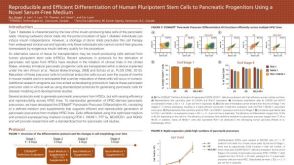 科学海报Reproducible and Efficient Differentiation of Human Pluripotent Stem Cells to Pancreatic Progenitors Using a Novel Serum-Free Medium
 沪公网安备31010102008431号