Gene transfer into pluripotent stem cells via lentiviral transduction
Recombinant lentiviral vectors are powerful tools to stably manipulate human pluripotent stem cells. They can be used to deliver ectopic genes,shRNAs,miRNAs,or any possible genetic DNA sequence into diving and nondividing cells. Here we describe a general protocol for the production of self-inactivating lentiviral vector particles and their purification to high titers by either ultracentrifugation or ultrafiltration. Next we provide a basic procedure to transduce human pluripotent stem cells and propagate clonal cell lines.
View Publication
产品类型:
产品号#:
07923
85850
85857
产品名:
Dispase (1 U/mL)
mTeSR™1
mTeSR™1
Keller KC et al. (MAR 2016)
Stem Cells and Development 25 13 scd.2015.0367
Wnt5a Supports Osteogenic Lineage Decisions in Embryonic Stem Cells
The specification of pluripotent stem cells into the bone-forming osteoblasts has been explored in a number of studies. However,the current body of literature has yet to adequately address the role of Wnt glycoproteins in the differentiation of pluripotent stem cells along the osteogenic lineage. During mouse embryonic stem cell (ESC) in vitro osteogenesis,the non-canonical WNT5a is expressed early on. Cells either sorted by their positive WNT5a expression or when supplemented with recombinant WNT5a (rWNT5a) during a two-day window showed significantly enhanced osteogenic yield. Mechanistically,rWNT5a supplementation up-regulated PKC,CamKII and JNK activity while antagonizing the key effector of canonical Wnt signaling: beta-catenin. Conversely,when recombinant WNT3a (rWNT3a) or other positive regulators of �?�-catenin were employed during this same time-window there was a decrease in osteogenic marker expression. However,if rWNT3a was supplemented during a time-window following rWNT5a treatment,osteogenic differentiation was enhanced both in murine and human ESCs. Elucidating the role of these WNT ligands in directing the early stages of osteogenesis has the potential to considerably improve tissue engineering protocols and applications for regenerative medicine.
View Publication
产品类型:
产品号#:
85850
85857
产品名:
mTeSR™1
mTeSR™1
Zhong B et al. (MAY 2011)
Stem cells and development 20 5 795--807
Efficient generation of nonhuman primate induced pluripotent stem cells.
Induced pluripotent stem (iPS) cells have great potential for regenerative medicine and gene therapy. Thus far,iPS cells have typically been generated using integrating viral vectors expressing various reprogramming transcription factors; nonintegrating methods have been less effective and efficient. Because there is a significant risk of malignant transformation and cancer involved with the use of iPS cells,careful evaluation of transplanted iPS cells will be necessary in small and large animal studies before clinical application. Here,we have generated and characterized nonhuman primate iPS cells with the goal of evaluating iPS cell transplantation in a clinically relevant large animal model. We developed stable Phoenix-RD114-based packaging cell lines that produce OCT4,SOX2,c-MYC,and KLF4 (OSCK) expressing gammaretroviral vectors. Using these vectors in combination with small molecules,we were able to efficiently and reproducibly generate nonhuman primate iPS cells from pigtailed macaques (Macaca nemestrina). The established nonhuman primate iPS cells exhibited pluripotency and extensive self-renewal capacity. The facile and reproducible generation of nonhuman primate iPS cells using defined producer cells as a source of individual reprogramming factors should provide an important resource to optimize and evaluate iPS cell technology for studies involving stem cell biology and regenerative medicine.
View Publication
Cai J et al. (JAN 2004)
Journal of neurochemistry 88 1 212--26
Membrane properties of rat embryonic multipotent neural stem cells.
We have characterized several potential stem cell markers and defined the membrane properties of rat fetal (E10.5) neural stem cells (NSC) by immunocytochemistry,electrophysiology and microarray analysis. Immunocytochemical analysis demonstrates specificity of expression of Sox1,ABCG2/Bcrp1,and shows that nucleostemin labels both progenitor and stem cell populations. NSCs,like hematopoietic stem cells,express high levels of aldehyde dehydrogenase (ALDH) as assessed by Aldefluor labeling. Microarray analysis of 96 transporters and channels showed that Glucose transporter 1 (Glut1/Slc2a1) expression is unique to fetal NSCs or other differentiated cells. Electrophysiological examination showed that fetal NSCs respond to acetylcholine and its agonists,such as nicotine and muscarine. NSCs express low levels of tetrodotoxin (TTX) sensitive and insensitive sodium channels and calcium channels while expressing at least three kinds of potassium channels. We find that gap junction communication is mediated by connexin (Cx)43 and Cx45,and is essential for NSC survival and proliferation. Overall,our results show that fetal NSCs exhibit a unique signature that can be used to determine their location and assess their ability to respond to their environment.
View Publication
产品类型:
产品号#:
01700
01702
01705
产品名:
ALDEFLUOR™ 试剂盒
ALDEFLUOR™测定缓冲液
ALDEFLUOR™ DEAB试剂
Juopperi TA et al. (FEB 2007)
Experimental hematology 35 2 335--41
Isolation of bone marrow-derived stem cells using density-gradient separation.
OBJECTIVE: Our laboratory has established two unique methods to isolate murine hematopoietic stem cells on the basis of functional characteristics such as the ability of stem cells to home to bone marrow and aldehyde dehydrogenase (ALDH) activity. An essential component of both protocols is the separation of whole bone marrow into small-sized cells by counter-flow elutriation. We sought to provide the scientific community with an alternate approach to acquire our stem cells by replacing elutriation with the use of density-gradient centrifugation. METHODS: The elutriated fraction 25 population was characterized based on density using a discontinuous gradient. The long-term reconstituting potential of whole bone marrow cells collected at each density interface was determined by subjecting the fractions to the two-day homing protocol,transplanting them into lethally irradiated recipient mice,and assessing peripheral blood chimerism. We also investigated the ability of high-density bone marrow cells isolated in conjunction with the ALDH protocol to repopulate the hematopoietic system of myeloablated recipients. RESULTS: Bone marrow cells collected at the high-density interface of 1.081/1.087 g/mL (fraction 3) had the capacity for homing to marrow and the ability to provide long-term hematopoietic reconstitution. Fraction three lineage-depleted ALDH-bright cells could also engraft and provide long-term hematopoiesis at limiting dilutions. CONCLUSIONS: Density-gradient centrifugation can be used in conjunction with either of our stem cell isolation protocols to obtain cells with long-term reconstitution ability. We anticipate that this strategy will encourage and enable investigators to study the biology of HSCs isolated using functional characteristics.
View Publication
产品类型:
产品号#:
01700
01702
01705
产品名:
ALDEFLUOR™ 试剂盒
ALDEFLUOR™测定缓冲液
ALDEFLUOR™ DEAB试剂
Carmona G et al. (MAR 2008)
Blood 111 5 2640--6
Activation of Epac stimulates integrin-dependent homing of progenitor cells.
Cell therapy is a novel promising option for treatment of ischemic diseases. Administered endothelial progenitor cells (EPCs) are recruited to ischemic regions and improve neovascularization. However,the number of cells that home to ischemic tissues is restricted. The GTPase Rap1 plays an important role in the regulation of adhesion and chemotaxis. We investigated whether pharmacologic activation of Epac1,a nucleotide exchange protein for Rap1,which is directly activated by cAMP,can improve the adhesive and migratory capacity of distinct progenitor cell populations. Stimulation of Epac by a cAMP-analog increased Rap1 activity and stimulated the adhesion of human EPCs,CD34(+) hematopoietic progenitor cells,and mesenchymal stem cells (MSCs). Specifically,short-term stimulation with a specific Epac activator increased the beta2-integrin-dependent adhesion of EPCs to endothelial cell monolayers,and of EPC and CD34(+) cells to ICAM-1. Furthermore,the Epac activator enhanced the beta1-integrin-dependent adhesion of EPCs and MSCs to the matrix protein fibronectin. In addition,Epac1 activation induced the beta1- and beta2-integrin-dependent migration of EPCs on fibronectin and fibrinogen. Interestingly,activation of Epac rapidly increased lateral mobility of beta1- and beta2-integrins,thereby inducing integrin polarization,and stimulated beta1-integrin affinity,whereas the beta2-integrin affinity was not increased. Furthermore,prestimulation of EPCs with the Epac activator increased homing to ischemic muscles and neovascularization-promoting capacity of intravenously injected EPCs in the model of hind limb ischemia. These data demonstrate that activation of Epac1 increases integrin activity and integrin-dependent homing functions of progenitor cells and enhances their in vivo therapeutic potential. These results may provide a platform for the development of novel therapeutic approaches to improve progenitor cell homing.
View Publication
产品类型:
产品号#:
05401
05402
05411
产品名:
MesenCult™ MSC基础培养基 (人)
MesenCult™ MSC 刺激补充剂(人)
MesenCult™ 增殖试剂盒(人)
Dani C et al. (JUN 1997)
Journal of cell science 110 ( Pt 1 1279--85
Differentiation of embryonic stem cells into adipocytes in vitro.
Embryonic stem cells,derived from the inner cell mass of murine blastocysts,can be maintained in a totipotent state in vitro. In appropriate conditions embryonic stem cells have been shown to differentiate in vitro into various derivatives of all three primary germ layers. We describe in this paper conditions to induce differentiation of embryonic stem cells reliably and at high efficiency into adipocytes. A prerequisite is to treat early developing embryonic stem cell-derived embryoid bodies with retinoic acid for a precise period of time. Retinoic acid could not be substituted by adipogenic hormones nor by potent activators of peroxisome proliferator-activated receptors. Treatment with retinoic acid resulted in the subsequent appearance of large clusters of mature adipocytes in embryoid body outgrowths. Lipogenic and lipolytic activities as well as high level expression of adipocyte specific genes could be detected in these cultures. Analysis of expression of potential adipogenic genes,such as peroxisome proliferator-activated receptors gamma and delta and CCAAT/enhancer binding protein beta,during differentiation of retinoic acid-treated embryoid bodies has been performed. The temporal pattern of expression of genes encoding these nuclear factors resembled that found during mouse embryogenesis. The differentiation of embryonic stem cells into adipocytes will provide an invaluable model for the characterisation of the role of genes expressed during the adipocyte development programme and for the identification of new adipogenic regulatory genes.
View Publication
产品类型:
产品号#:
100-1045
72262
72264
产品名:
全反式视黄酸
All-Trans Retinoic Acid
全反式视黄酸
Aanei CM et al. (NOV 2011)
Experimental cell research 317 18 2616--29
Focal adhesion protein abnormalities in myelodysplastic mesenchymal stromal cells.
Direct cell-cell contact between haematopoietic progenitor cells (HPCs) and their cellular microenvironment is essential to maintain 'stemness'. In cancer biology,focal adhesion (FA) proteins are involved in survival signal transduction in a wide variety of human tumours. To define the role of FA proteins in the haematopoietic microenvironment of myelodysplastic syndromes (MDS),CD73-positive mesenchymal stromal cells (MSCs) were immunostained for paxillin,pFAK [Y(397)],and HSP90α/β and p130CAS,and analysed for reactivity,intensity and cellular localisation. Immunofluorescence microscopy allowed us to identify qualitative and quantitative differences,and subcellular localisation analysis revealed that in pathological MSCs,paxillin,pFAK [Y(397)],and HSP90α/β formed nuclear molecular complexes. Increased expression of paxillin,pFAK [Y(397)],and HSP90α/β and enhanced nuclear co-localisation of these proteins correlated with a consistent proliferative advantage in MSCs from patients with refractory anaemia with excess blasts (RAEB) and negatively impacted clonogenicity of HPCs. These results suggest that signalling via FA proteins could be implicated in HPC-MSC interactions. Further,because FAK is an HSP90α/β client protein,these results suggest the utility of HSP90α/β inhibition as a target for adjuvant therapy for myelodysplasia.
View Publication


 EasySep™小鼠TIL(CD45)正选试剂盒




 技术公告Culturing Leukemic Stem & Progenitor Cells with StemSpan™ Medium
 50:32
线上讲座Understanding Pancreatic Development and Diabetes Using Patient-Specific iPS Cells发布日期: 04/18/2016
50:32
线上讲座Understanding Pancreatic Development and Diabetes Using Patient-Specific iPS Cells发布日期: 04/18/2016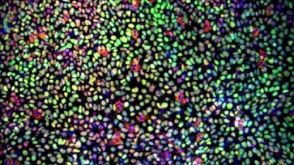 实验方案Maintenance of Porcine Pluripotent Stem Cells (pPSCs) Using eTeSR™

 沪公网安备31010102008431号