Thoma EC et al. (OCT 2016)
Scientific reports 6 35830
Establishment of a translational endothelial cell model using directed differentiation of induced pluripotent stem cells from Cynomolgus monkey.
Due to their broad differentiation potential,pluripotent stem cells (PSCs) offer a promising approach for generating relevant cellular models for various applications. While human PSC-based cellular models are already advanced,similar systems for non-human primates (NHPs) are still lacking. However,as NHPs are the most appropriate animals for evaluating the safety of many novel pharmaceuticals,the availability of in vitro systems would be extremely useful to bridge the gap between cellular and animal models. Here,we present a NHP in vitro endothelial cell system using induced pluripotent stem cells (IPSCs) from Cynomolgus monkey (Macaca fascicularis). Based on an adapted protocol for human IPSCs,we directly differentiated macaque IPSCs into endothelial cells under chemically defined conditions. The resulting endothelial cells can be enriched using immuno-magnetic cell sorting and display endothelial marker expression and function. RNA sequencing revealed that the differentiation process closely resembled vasculogenesis. Moreover,we showed that endothelial cells derived from macaque and human IPSCs are highly similar with respect to gene expression patterns and key endothelial functions,such as inflammatory responses. These data demonstrate the power of IPSC differentiation technology to generate defined cell types for use as translational in vitro models to compare cell type-specific responses across species.
View Publication
产品类型:
产品号#:
85850
85857
产品名:
mTeSR™1
mTeSR™1
Guo D et al. (JAN 2017)
Stem cell research 18 64--66
Generation of non-integrated induced pluripotent stem cells from a 59-year-old female with multiple endocrine neoplasia type 1 syndrome.
Urine resource cells were collected from a 59-year-old female patient with multiple endocrine neoplasia type 1 syndrome (MEN1) for generating iPS cells with episomal plasmids carrying Oct4,Sox2,Klf4 and miR-302-367. The patient sustained a heterozygous GtextgreaterT transition mutation on the exon 9 of Men1 gene that was confirmed by sequencing analysis on the obtained iPSC lines. Karyotyping indicated the chromosomes with normal appearances and numbers. Their pluripotency was demonstrated by gene expression,as well as their abilities for differentiating into three germ layers. This cell line provides an ideal model for studying MEN1.
View Publication
产品类型:
产品号#:
85850
85857
产品名:
mTeSR™1
mTeSR™1
Chung HCY et al. (JAN 2012)
Stem cells and development 21 2 206--16
Human induced pluripotent stem cells derived under feeder-free conditions display unique cell cycle and DNA replication gene profiles.
Use of animal feeder layers and serum containing media in the derivation and propagation of induced pluripotent stem cells (iPSCs) can hinder clinical translation,because of the presence of xeno-material/pathogens. A defined and standardized system would be ideal for generating a homogenous population of iPSCs,which closely resembles human embryonic stem cells (hESCs). This article presents a novel and extensive comparison between in-house produced iPSCs and hESCs under feeder" and "feeder-free" conditions�
View Publication
A practical synthesis of Rho-Kinase inhibitor Y-27632 and fluoro derivatives and their evaluation in human pluripotent stem cells.
A practical synthesis of the Rho-Kinase inhibitor Y-27632 and two new fluoro derivatives was achieved in seven steps and with a good overall yield of 45% starting from commercially available (R)-1-phenylethylamine. Compared to Y-27632 the new fluoro derivatives showed reduced or no effect on hPSC vitality and expansion after dissociation in human pluripotent stem cells.
View Publication
产品类型:
产品号#:
85850
85857
产品名:
mTeSR™1
mTeSR™1
Iacovino M et al. (OCT 2011)
Stem Cells 29 10 1580--1587
Inducible cassette exchange: A rapid and efficient system enabling conditional gene expression in embryonic stem and primary cells
Genetic modification is critically enabling for studies addressing specification and maintenance of cell fate; however,methods for engineering modifications are inefficient. We demonstrate a rapid and efficient recombination system in which an inducible,floxed cre allele replaces itself with an incoming transgene. We target this inducible cassette exchange (ICE) allele to the (HPRT) locus and demonstrate recombination in murine embryonic stem cells (ESCs) and primary cells from derivative ICE mice. Using lentivectors,we demonstrate recombination at a randomly integrated ICE locus in human ESCs. To illustrate the utility of this system,we insert the myogenic regulator,Myf5,into the ICE locus in each platform. This enables efficient directed differentiation of mouse and human ESCs into skeletal muscle and conditional myogenic transdetermination of primary cells cultured in vitro. This versatile tool is thus well suited to gain-of-function studies probing gene function in the specification and reprogramming of cell fate.
View Publication
产品类型:
产品号#:
85850
85857
产品名:
mTeSR™1
mTeSR™1
Jara-Avaca M et al. (FEB 2017)
Stem cell reports 8 2 305--317
EBIO Does Not Induce Cardiomyogenesis in Human Pluripotent Stem Cells but Modulates Cardiac Subtype Enrichment by Lineage-Selective Survival.
Subtype-specific human cardiomyocytes (CMs) are valuable for basic and applied research. Induction of cardiomyogenesis and enrichment of nodal-like CMs was described for mouse pluripotent stem cells (mPSCs) in response to 1-ethyl-2-benzimidazolinone (EBIO),a chemical modulator of small-/intermediate-conductance Ca(2+)-activated potassium channels (SKs 1-4). Investigating EBIO in human pluripotent stem cells (PSCs),we have applied three independent differentiation protocols of low to high cardiomyogenic efficiency. Equivalent to mPSCs,timed EBIO supplementation during hPSC differentiation resulted in dose-dependent enrichment of up to 80% CMs,including an increase in nodal- and atrial-like phenotypes. However,our study revealed extensive EBIO-triggered cell loss favoring cardiac progenitor preservation and,subsequently,CMs with shortened action potentials. Proliferative cells were generally more sensitive to EBIO,presumably via an SK-independent mechanism. Together,EBIO did not promote cardiogenic differentiation of PSCs,opposing previous findings,but triggered lineage-selective survival at a cardiac progenitor stage,which we propose as a pharmacological strategy to modulate CM subtype composition.
View Publication
Dahl C et al. (APR 2002)
Journal of immunological methods 262 1-2 137--43
The establishment of a combined serum-free and serum-supplemented culture method of obtaining functional cord blood-derived human mast cells.
BACKGROUND: Serum-free cultures supplemented with stem cell factor (SCF) and IL-6 is reported to support the extensive growth of less functional human cord blood-derived mast cells. OBJECTIVE: To obtain more functional mast cells from cord blood,we developed a culture system combining a serum-free condition for 0-8 weeks of culture,and followed by a serum-supplemented culture condition and examined the function of the cells compared to the cells cultured continuously in serum-free condition. METHODS: Human cord blood progenitors were purified with anti-CD133 antibody. They were cultured in a serum-free medium StemSpan supplemented with SCF at 100 ng/ml and IL-6 at 50 ng/ml for 8 weeks. Then,an aliquot of the cultured cells were cultured in the above condition but further supplemented with 10% fetal calf serum (FCS). RESULTS: The addition of FCS after 8 weeks of culture significantly increased the amount of histamine per mast cell (3.8 pg/cell) when compared to the serum-free condition (0.7 pg/cell). The cells cultured with FCS after 8 weeks expressed more FcvarepsilonRI alpha and released textgreater30% of the histamine content upon anti-IgE stimulation than those cultured without serum. CONCLUSION: It is uncertain why FCS enhanced the functional maturation of mast cells when added after week 8 of culture but suppressed mast cell development when added at day 0 of culture. Yet,the present method combining a serum-free culture system with a serum-supplemented culture system seems to be beneficial for most of the laboratories to obtain functional human mast cells.
View Publication
产品类型:
产品号#:
09600
09650
产品名:
StemSpan™ SFEM
StemSpan™ SFEM
Ramos-Mejia V et al. (MAY 2012)
Stem cells and development 21 7 1145--55
The Adaptation of Human Embryonic Stem Cells to Different Feeder-Free Culture Conditions Is Accompanied by a Mitochondrial Response
The mitochondrial contribution to the maintenance of human embryonic stem cell (hESC) pluripotency and culture homeostasis remains poorly understood. Here,we sought to determine whether hESC adaptation to different feeder-free culture conditions is linked to a mitochondrial adaptation. The expression of ESC pluripotency factors and parameters of mitochondrial contribution including mitochondrial membrane potential,mtDNA content,and the expression of master mitochondrial genes implicated in replication,transcription,and biogenesis were determined in 8 hESC lines maintained in 2 distinct human feeders-conditioned media (CM): human foreskin fibroblast-CM (HFF-CM) and mesenchymal stem cell-CM (MSC-CM). We show a robust parallel trend between the expression of ESC pluripotency factors and the mitochondrial contribution depending on the culture conditions employed to maintain the hESCs,with those in MSC-CM consistently displaying increased levels of pluripotency markers associated to an enhanced mitochondrial contribution. The differences in the mitochondrial status between hESCs maintained in MSC-CM versus HFF-CM respond to coordinated changes in mitochondrial gene expression and biogenesis. Importantly,the culture conditions determine the mitochondrial distribution within the stage-specific embryonic antigen 3 positive (SSEA3(+)) and negative (SSEA3(-)) isolated cell subsets. hESC colonies in MSC-CM display an intrinsic" high mitochondrial status which may suffice to support undifferentiated growth�
View Publication
产品类型:
产品号#:
85850
85857
产品名:
mTeSR™1
mTeSR™1
Dumitru R et al. (JUN 2012)
Molecular cell 46 5 573--583
Human embryonic stem cells have constitutively active Bax at the Golgi and are primed to undergo rapid apoptosis.
Human embryonic stem (hES) cells activate a rapid apoptotic response after DNA damage but the underlying mechanisms are unknown. A critical mediator of apoptosis is Bax,which is reported to become active and translocate to the mitochondria only after apoptotic stimuli. Here we show that undifferentiated hES cells constitutively maintain Bax in its active conformation. Surprisingly,active Bax was maintained at the Golgi rather than at the mitochondria,thus allowing hES cells to effectively minimize the risks associated with having preactivated Bax. After DNA damage,active Bax rapidly translocated to the mitochondria by a p53-dependent mechanism. Interestingly,upon differentiation,Bax was no longer active,and cells were not acutely sensitive to DNA damage. Thus,maintenance of Bax in its active form is a unique mechanism that can prime hES cells for rapid death,likely to prevent the propagation of mutations during the early critical stages of embryonic development.
View Publication
产品类型:
产品号#:
85850
85857
产品名:
mTeSR™1
mTeSR™1
Sequiera GL et al. (JAN 2013)
Life Sciences 92 1 63--71
Ontogenic development of cardiomyocytes derived from transgene-free human induced pluripotent stem cells and its homology with human heart
Aim: Reprogramming of somatic cells utilizing viral free methods provide a remarkable method to generate human induced pluripotent stem cells (hiPSCs) for regenerative medicine. In this study,we evaluate developmental ontogeny of cardiomyocytes following induced differentiation of hiPSCs. Main Methods: Fibroblasts were reprogrammed with episomal vectors to generate hiPSC and were subsequently differentiated to cardiomyocytes. Ontogenic development of cardiomyocytes was studied by real-time PCR. Key findings: Human iPSCs derived from episomal based vectors maintain classical pluripotency markers,generate teratomas and spontaneously differentiate into three germ layers in vitro. Cardiomyogenic induction of these hiPSCs efficiently generated cardiomyocytes. Ontogenic gene expression studies demonstrated that differentiation of cardiomyocytes was initiated by increased expression of mesodermal markers,followed by early cardiac committed markers,structural and ion channel genes. Furthermore,our correlation analysis of gene expression studies with human heart demonstrated that pivotal structural genes like cardiac troponin,actinin,myosin light chain maintained a high correlation with ion channel genes indicating coordinated activation of cardiac transcriptional machinery. Finally,microelectrode recordings show that these cardiomyocytes could respond aptly to pharmacologically active drugs. Cardiomyocytes showed a chronotropic response to isoproterenol,reduced Na+ influx with quinidine,prolongation of beating rate corrected field potential duration (cFPD) with E-4031 and reduced beating frequency and shortened cFPD with verapamil. Significance: Our study shows that viral free hiPSCs efficiently differentiate into cardiomyocytes with cardiac-specific molecular,structural,and functional properties that recapitulate developmental ontogeny of cardiogenesis. These results,coupled with the potential to generate patient-specific hiPSC lines hold great promise for the development of in vitro platform for drug pharmacogenomics; disease modeling and regenerative medicine. textcopyright 2012 Elsevier Inc. All rights reserved.
View Publication
产品类型:
产品号#:
85850
85857
产品名:
mTeSR™1
mTeSR™1
Sahara M et al. (JUL 2014)
Cell Research 24 7 820--841
Manipulation of a VEGF-Notch signaling circuit drives formation of functional vascular endothelial progenitors from human pluripotent stem cells
Human pluripotent stem cell (hPSC)-derived endothelial lineage cells constitutes a promising source for therapeutic revascularization,but progress in this arena has been hampered by a lack of clinically-scalable differentiation protocols and inefficient formation of a functional vessel network integrating with the host circulation upon transplantation. Using a human embryonic stem cell reporter cell line,where green fluorescent protein expression is driven by an endothelial cell-specific VE-cadherin (VEC) promoter,we screened for textgreater 60 bioactive small molecules that would promote endothelial differentiation,and found that administration of BMP4 and a GSK-3β inhibitor in an early phase and treatment with VEGF-A and inhibition of the Notch signaling pathway in a later phase led to efficient differentiation of hPSCs to the endothelial lineage within six days. This sequential approach generated textgreater 50% conversion of hPSCs to endothelial cells (ECs),specifically VEC(+)CD31(+)CD34(+)CD14(-)KDR(high) endothelial progenitors (EPs) that exhibited higher angiogenic and clonogenic proliferation potential among endothelial lineage cells. Pharmaceutical inhibition or genetical knockdown of Notch signaling,in combination with VEGF-A treatment,resulted in efficient formation of EPs via KDR(+) mesodermal precursors and blockade of the conversion of EPs to mature ECs. The generated EPs successfully formed functional capillary vessels in vivo with anastomosis to the host vessels when transplanted into immunocompromised mice. Manipulation of this VEGF-A-Notch signaling circuit in our protocol leads to rapid large-scale production of the hPSC-derived EPs by 12- to 20-fold vs current methods,which may serve as an attractive cell population for regenerative vascularization with superior vessel forming capability compared to mature ECs.
View Publication


 EasySep™小鼠TIL(CD45)正选试剂盒




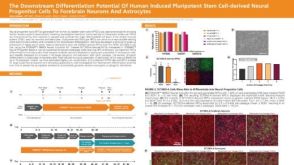 科学海报The Downstream Differentiation Potential of Human Induced Pluripotent Stem Cell-Derived Neural Progenitor Cells to Forebrain Neurons and Astrocytes
 沪公网安备31010102008431号