Ninomiya H et al. (JAN 2015)
In vitro cellular & developmental biology. Animal 51 1 1--8
Improved efficiency of definitive endoderm induction from human induced pluripotent stem cells in feeder and serum-free culture system
Improvement of methods to produce endoderm-derived cells from pluripotent stem cells is important to realize high-efficient induction of endodermal tissues such as pancreas and hepatocyte. Difficulties hampering such efforts include the low efficiency of definitive endoderm cell induction and establishing appropriate defined culture conditions to ensure a safe cell source for human transplantation. Based on previous studies,we revised the experimental condition of definitive endoderm induction in feeder- and serum-free culture. Our results suggested that CHIR99021 is more effective than Wnt3A ligand in feeder- and serum-free conditions. In addition,keeping cell density low during endoderm induction is important for the efficiency. On the other hand,we showed that overtreatment with CHIR99021 converted the cells into BRACHYURY-expressing posterior mesoderm cells rather than endoderm,indicating strict CHIR99021 treatment requirements for endoderm differentiation. Nevertheless,these results should enable better control in the production of definitive endoderm-derived cells.
View Publication
产品类型:
产品号#:
85850
85857
产品名:
mTeSR™1
mTeSR™1
Uenishi G et al. (DEC 2014)
Stem Cell Reports 3 6 1073--1084
Tenascin C promotes hematoendothelial development and T lymphoid commitment from human pluripotent stem cells in chemically defined conditions
The recent identification of hemogenic endothelium (HE) in human pluripotent stem cell (hPSC) cultures presents opportunities to investigate signaling pathways that are essential for blood development from endothelium and provides an exploratory platform for de novo generation of hematopoietic stem cells (HSCs). However,the use of poorly defined human or animal components limits the utility of the current differentiation systems for studying specific growth factors required for HE induction and manufacturing clinical-grade therapeutic blood cells. Here,we identified chemically defined conditions required to produce HE from hPSCs growing in Essential 8 (E8) medium and showed that Tenascin C (TenC),an extracellular matrix protein associated with HSC niches,strongly promotes HE and definitive hematopoiesis in this system. hPSCs differentiated in chemically defined conditions undergo stages of development similar to those previously described in hPSCs cocultured on OP9 feeders,including the formation of VE-Cadherin(+)CD73(-)CD235a/CD43(-) HE and hematopoietic progenitors with myeloid and T lymphoid potential.
View Publication
产品类型:
产品号#:
04236
04436
85850
85857
产品名:
MethoCult™SF H4236
MethoCult™ SF H4436
mTeSR™1
mTeSR™1
Hansson ML et al. (FEB 2015)
Journal of Biological Chemistry 290 9 5661--5672
Efficient delivery and functional expression of transfected modified mRNA in human embryonic stem cell-derived retinal pigmented epithelial cells
Gene- and cell-based therapies are promising strategies for the treatment of degenerative retinal diseases such as age-related macular degeneration,Stargardt disease,and retinitis pigmentosa. Cellular engineering before transplantation may allow the delivery of cellular factors that can promote functional improvements,such as increased engraftment or survival of transplanted cells. A current challenge in traditional DNA-based vector transfection is to find a delivery system that is both safe and efficient,but using mRNA as an alternative to DNA can circumvent these major roadblocks. In this study,we show that both unmodified and modified mRNA can be delivered to retinal pigmented epithelial (RPE) cells with a high efficiency compared with conventional plasmid delivery systems. On the other hand,administration of unmodified mRNA induced a strong innate immune response that was almost absent when using modified mRNA. Importantly,transfection of mRNA encoding a key regulator of RPE gene expression,microphthalmia-associated transcription factor (MITF),confirmed the functionality of the delivered mRNA. Immunostaining showed that transfection with either type of mRNA led to the expression of roughly equal levels of MITF,primarily localized in the nucleus. Despite these findings,quantitative RT-PCR analyses showed that the activation of the expression of MITF target genes was higher following transfection with modified mRNA compared with unmodified mRNA. Our findings,therefore,show that modified mRNA transfection can be applied to human embryonic stem cell-derived RPE cells and that the method is safe,efficient,and functional.
View Publication
产品类型:
产品号#:
85850
85857
产品名:
mTeSR™1
mTeSR™1
C. Kropp et al. (Oct 2016)
Stem cells translational medicine 5 1289-1301
Impact of Feeding Strategies on the Scalable Expansion of Human Pluripotent Stem Cells in Single-Use Stirred Tank Bioreactors.
The routine application of human pluripotent stem cells (hPSCs) and their derivatives in biomedicine and drug discovery will require the constant supply of high-quality cells by defined processes. Culturing hPSCs as cell-only aggregates in (three-dimensional [3D]) suspension has the potential to overcome numerous limitations of conventional surface-adherent (two-dimensional [2D]) cultivation. Utilizing single-use instrumented stirred-tank bioreactors,we showed that perfusion resulted in a more homogeneous culture environment and enabled superior cell densities of 2.85 X 10(6) cells per milliliter and 47% higher cell yields compared with conventional repeated batch cultures. Flow cytometry,quantitative reverse-transcriptase polymerase chain reaction,and global gene expression analysis revealed a high similarity across 3D suspension and 2D precultures,underscoring that matrix-free hPSC culture efficiently supports maintenance of pluripotency. Interestingly,physiological data and gene expression assessment indicated distinct changes of the cells' energy metabolism,suggesting a culture-induced switch from glycolysis to oxidative phosphorylation in the absence of hPSC differentiation. Our data highlight the plasticity of hPSCs' energy metabolism and provide clear physiological and molecular targets for process monitoring and further development. This study paves the way toward more efficient GMP-compliant cell production and underscores the enormous process development potential of hPSCs in suspension culture. SIGNIFICANCE Human pluripotent stem cells (hPSCs) are a unique source for the,in principle,unlimited production of functional human cell types in vitro,which are of high value for therapeutic and industrial applications. This study applied single-use,clinically compliant bioreactor technology to develop advanced,matrix-free,and more efficient culture conditions for the mass production of hPSCs in scalable suspension culture. Using extensive analytical tools to compare established conditions with this novel culture strategy,unexpected physiological features of hPSCs were discovered. These data allow a more rational process development,providing significant progress in the field of translational stem cell research and medicine.
View Publication
Turan S et al. (APR 2016)
Molecular Therapy 24 October 2015 1--12
Precise correction of disease mutations in induced pluripotent stem cells derived from patients with limb girdle muscular dystrophy
Limb girdle muscular dystrophies types 2B (LGMD2B) and 2D (LGMD2D) are degenerative muscle diseases caused by mutations in the dysferlin and alpha-sarcoglycan genes,respectively. Using patient-derived induced pluripotent stem cells (iPSC),we corrected the dysferlin nonsense mutation c.5713CtextgreaterT; p.R1905X and the most common alpha-sarcoglycan mutation,missense c.229CtextgreaterT; p.R77C,by single-stranded oligonucleotide-mediated gene editing,using the CRISPR/Cas9 gene editing system to enhance the frequency of homology-directed repair. We demonstrated seamless,allele-specific correction at efficiencies of 0.7-1.5%. As an alternative,we also carried out precise gene addition strategies for correction of the LGMD2B iPSC by integration of wild-type dysferlin cDNA into the H11 safe harbor locus on chromosome 22,using dual integrase cassette exchange (DICE) or TALEN-assisted homologous recombination for insertion precise (THRIP). These methods employed TALENs and homologous recombination,and DICE also utilized site-specific recombinases. With DICE and THRIP,we obtained targeting efficiencies after selection of ˜20%. We purified iPSC corrected by all methods and verified rescue of appropriate levels of dysferlin and alpha-sarcoglycan protein expression and correct localization,as shown by immunoblot and immunocytochemistry. In summary,we demonstrate for the first time precise correction of LGMD iPSC and validation of expression,opening the possibility of cell therapy utilizing these corrected iPSC.Molecular Therapy (2016); doi:10.1038/mt.2016.40.
View Publication
产品类型:
产品号#:
85850
85857
产品名:
mTeSR™1
mTeSR™1
Hasehira K et al. (JUN 2016)
Glycoconjugate Journal 1--10
Structural and quantitative evidence of ??2???6-sialylated N-glycans as markers of the differentiation potential of human mesenchymal stem cells
Human somatic stem cells such as mesenchymal stem cells (hMSCs) have the capacity to differentiate into mesenchymal tissue lineages and to alter immune regulatory functions. As such,they hold promise for use in stem cell-based therapies. However,no method is currently available to evaluate the actual differentiation capacity of hMSCs prior to cell transplantation. Previously,we performed a comprehensive glycan profiling of adipose-derived hMSCs using high-density lectin microarray and demonstrated that $$2-6-sialylation is a marker of the differentiation potential of these cells. Nevertheless,no information was available about the structural details of these of $$2-6-sialylated glycans. Here we used high performance liquid chromatography (HPLC) analysis combined with mass spectrometry (MS) to perform a structural and quantitative glycome analysis targeting both N- and O-glycans derived from early (with differentiation ability) and late (without differentiation ability) passages of adipose tissue-derived hMSCs. Findings in these cells were compared with those from human induced pluripotent stem cells (hiPSCs),human dermal fibroblasts (hFibs) and cartilage tissue-derived chondrocytes. A higher percentage of $$2-6-sialylated N-glycans was detected in early passage cells (24-28 % of sialylated N-glycans) compared with late passage cells (13-15 %). A major $$2-6-sialylated N-glycan structure detected in adipose-derived hMSCs was that of mono-sialylated biantennary N-glycan. Similar results were obtained for the cartilage tissue-derived chondrocytes,Yub621c (28 % for passage 7 and 5 % for passage 28). In contrast,no significant differences were observed between early and late passage hMSCs with respect to $$2-6-sialylated O-glycan percentages. These results demonstrate that levels of $$2-6-sialylated N-glycans,but not O-glycans,could be used as markers of the differential potential of hMSCs.
View Publication
产品类型:
产品号#:
85850
85857
产品名:
mTeSR™1
mTeSR™1
Zheng X et al. (MAY 2004)
Blood 103 9 3535--43
Gamma-catenin contributes to leukemogenesis induced by AML-associated translocation products by increasing the self-renewal of very primitive progenitor cells.
Acute myeloid leukemia (AML) is characterized by the block of differentiation,deregulated apoptosis,and an increased self-renewal of hematopoietic precursors. It is unclear whether the self-renewal of leukemic blasts results from the cumulative effects of blocked differentiation and impaired apoptosis or whether there are mechanisms directly increasing self-renewal. The AML-associated translocation products (AATPs) promyelocytic leukemia/retinoic acid receptor alpha (PML/RAR alpha),promyelocytic leukemia zinc finger (PLZF)/RAR alpha (X-RAR alpha),and AML-1/ETO block hematopoietic differentiation. The AATPs activate the Wnt signaling by up-regulating gamma-catenin. Activation of the Wnt signaling augments self-renewal of hematopoietic stem cells (HSCs). Therefore,we investigated how AATPs influence self-renewal of HSCs and evaluated the role of gamma-catenin in the determination of the phenotype of HSCs expressing AATPs. Here we show that the AATPs directly activate the gamma-catenin promoter. The crucial role of gamma-catenin in increasing the self-renewal of HSCs upon expression of AATPs is demonstrated by (i) the abrogation of replating efficiency upon hindrance of gamma-catenin expression through RNA interference,and (ii) the augmentation of replating efficiency of HSCs upon overexpression of gamma-catenin itself. In addition,the inoculation of gamma-catenin-transduced HSCs into irradiated recipient mice establishes the clinical picture of AML. These data provide the first evidence that the aberrant activation of Wnt signaling by the AATP decisively contributes to the pathogenesis of AML.
View Publication
产品类型:
产品号#:
03434
03444
产品名:
MethoCult™GF M3434
MethoCult™GF M3434
Kimura T et al. (JUN 2004)
Blood 103 12 4478--86
The sphingosine 1-phosphate receptor agonist FTY720 supports CXCR4-dependent migration and bone marrow homing of human CD34+ progenitor cells.
The novel immunosuppressant FTY720 activates sphingosine 1-phosphate receptors (S1PRs) that affect responsiveness of lymphocytes to chemokines such as stromal cell-derived factor 1 (SDF-1),resulting in increased lymphocyte homing to secondary lymphoid organs. Since SDF-1 and its receptor CXCR4 are also involved in bone marrow (BM) homing of hematopoietic stem and progenitor cells (HPCs),we analyzed expression of S1PRs and the influence of FTY720 on SDF-1/CXCR4-mediated effects in human HPCs. By reverse transcriptase-polymerase chain reaction (RT-PCR),S1PRs were expressed in mobilized CD34+ HPCs,particularly in primitive CD34+/CD38- cells. Incubation of HPCs with FTY720 resulted in prolonged SDF-1-induced calcium mobilization and actin polymerization,and substantially increased SDF-1-dependent in vitro transendothelial migration,without affecting VLA-4,VLA-5,and CXCR4 expression. In nonobese diabetic-severe combined immunodeficient (NOD/SCID) mice,the number of CD34+/CD38- cells that homed to the BM after 18 hours was significantly raised by pretreatment of animals and cells with FTY720,tending to result in improved engraftment. In addition,in vitro growth of HPCs (week-5 cobblestone area-forming cells [CAFCs]) was 2.4-fold increased. We conclude that activation of S1PRs by FTY720 increases CXCR4 function in HPCs both in vitro and in vivo,supporting homing and proliferation of HPCs. In the hematopoietic microenvironment,S1PRs are involved in migration and maintenance of HPCs by modulating the effects of SDF-1.
View Publication
产品类型:
产品号#:
04230
产品名:
MethoCult™H4230
Baens M et al. (MAY 2006)
Cancer research 66 10 5270--7
Selective expansion of marginal zone B cells in Emicro-API2-MALT1 mice is linked to enhanced IkappaB kinase gamma polyubiquitination.
The translocation t(11;18)(q21;q21) that generates an API2-MALT1 fusion protein is the most common structural abnormality among the genetic defects reported in mucosa-associated lymphoid tissue (MALT)-type lymphomas,and its presence correlates with the apparent lack of further genetic instability or chromosomal imbalances. Hence,constitutive nuclear factor-kappaB (NF-kappaB) activation induced by the API2-MALT1 fusion protein is considered essential for B-cell transformation. To examine its role in B-cell development and lymphomagenesis,Emu-API2-MALT1 transgenic mice were produced. Our data show that expression of the API2-MALT1 fusion protein alone is not sufficient for the development of lymphoma masses within 50 weeks. Nevertheless,API2-MALT1 expression affected B-cell maturation in the bone marrow and triggered the specific expansion of splenic marginal zone B cells. Polyubiquitination of IkappaB kinase gamma (IKKgamma),indicative for enhanced NF-kappaB activation,was increased in splenic lymphocytes and promoted the survival of B cells ex vivo. In addition,we show that the API2-MALT1 fusion resided in the cholesterol- and sphingolipid-enriched membrane microdomains,termed lipid rafts. We provide evidence that association of the MALT1 COOH terminal with the lipid rafts,which is mediated by the API2 portion,is sufficient to trigger NF-kappaB activation via enhanced polyubiquitination of IKKgamma. Taken together,these data support the hypothesis that the API2-MALT1 fusion protein can contribute to MALT lymphoma formation via increased NF-kappaB activation.
View Publication
产品类型:
产品号#:
03630
产品名:
MethoCult™M3630
Spaggiari GM et al. (FEB 2008)
Blood 111 3 1327--33
Mesenchymal stem cells inhibit natural killer-cell proliferation, cytotoxicity, and cytokine production: role of indoleamine 2,3-dioxygenase and prostaglandin E2.
Recently,a number of clinical trials used either mesenchymal stem cells (MSCs) or natural killer (NK) cells in an attempt to improve the effectiveness of hematopoietic stem cell transplantation (HSCT). In view of the relevant role of both MSCs and NK cells in HSCT,we have recently explored the result of possible interactions between the 2 cell types. We found that activated NK cells could kill MSCs,whereas MSCs strongly inhibited interleukin-2 (IL-2)-induced NK-cell proliferation. In this study,we further analyzed the inhibitory effect exerted by MSCs on NK cells. We show that MSCs not only inhibit the cytokine-induced proliferation of freshly isolated NK cells but also prevent the induction of effector functions,such as cytotoxic activity and cytokine production. Moreover,we show that this inhibitory effect is related to a sharp down-regulation of the surface expression of the activating NK receptors NKp30,NKp44,and NKG2D. Finally,we demonstrate that indoleamine 2,3-dioxygenase and prostaglandin E2 represent key mediators of the MSC-induced inhibition of NK cells.
View Publication
产品类型:
产品号#:
05401
05402
05411
产品名:
MesenCult™ MSC基础培养基 (人)
MesenCult™ MSC 刺激补充剂(人)
MesenCult™ 增殖试剂盒(人)
Lagarkova MA et al. (NOV 2008)
Cell Cycle 7 22 3610--3612
CD 30 is a marker of undifferentiated human embryonic stem cells rather than a biomarker of transformed hESCs
Recently it has been demonstrated that CD30 expression was rather specific for transformed than for normal human ES cells and therefore CD30 maybe suggested as a potential marker for human ES cells bearing chromosomal abnormalities. Using immunohistochemistry and RT-PCR analysis we examined �?¡D30 expression in 10 hESCs lines with normal and abberant karyotypes. All hESC lines expressed CD30 antigen and RNA in undifferentiated state whether cell line beared chromosomal abnormalities or not. In contrast to previous notions our data demonstrate that CD30 could be considered as marker of undifferentiated hESCs without respect to karyotype changes.
View Publication


 EasySep™小鼠TIL(CD45)正选试剂盒




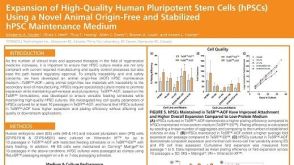 科学海报Expansion of High-Quality Human Pluripotent Stem Cells (hPSCs) Using a Novel Animal Origin-Free and Stabilized hPSC Maintenance Medium
 沪公网安备31010102008431号