Meng G et al. (APR 2009)
Stem cells and development 19 4 1--31
Extra-cellular Matrix Isolated from Foreskin Fibroblasts Supports Long Term Xeno-Free Human Embryonic Stem Cell Culture.
Human embryonic stem (hES) cells hold great promise for application of human cell and tissue replacement therapy. However,the overwhelming majority of currently available hES cell lines have been directly or indirectly exposed to materials containing animal-derived components during their derivation,propagation,and cryopreservation. Unlike feeder based cultures,which require the simultaneous growth of feeder and stem cells,resulting in mixed cell populations,stem cells grown on feeder-free systems are easily separated from the surface,presenting a pure population of cells for downstream applications. In this study we have developed a novel method to expand hES cells in xeno-free,feeder-free conditions using two different matrices derived from xeno-free human foreskin fibroblasts (XF-HFFs). Using XF-HFF-derived extracellular matrix,together with 100ng/ml recombinant bFGF supplemented HEScGRO Basal Medium,long term xeno-free expansion of hES cells is possible. Resulting hES cells were subjected to stringent tests and were found to maintain ES cell features,including morphology,pluripotency,stable karyotype,and expression of cell surface markers,for at least 20 passages. Xeno-free culturing practices are essential for the translation of basic hES cell research into the clinic. Therefore,the method presented in this study demonstrates that hES cells can be cultured in complete xeno-free conditions without the loss of pluripotency and furthermore,without the possibility of contamination from exogenous sources.
View Publication
产品类型:
产品号#:
85850
85857
产品名:
mTeSR™1
mTeSR™1
Rank G et al. (SEP 2010)
Blood 116 9 1585--92
Identification of a PRMT5-dependent repressor complex linked to silencing of human fetal globin gene expression.
Defining the molecular mechanisms underpinning fetal (gamma) globin gene silencing may provide strategies for reactivation of gamma-gene expression,a major therapeutic objective in patients with beta-thalassemia and sickle cell disease (SCD). We have previously demonstrated that symmetric methylation of histone H4 Arginine 3 (H4R3me2s) by the protein arginine methyltransferase PRMT5 is required for recruitment of the DNA methyltransferase DNMT3A to the gamma-promoter,and subsequent DNA methylation and gene silencing. Here we show in an erythroid cell line,and in primary adult erythroid progenitors that PRMT5 induces additional repressive epigenetic marks at the gamma-promoter through the assembly of a multiprotein repressor complex containing the histone modifying enzymes SUV4-20h1,casein kinase 2alpha (CK2alpha),and components of the nucleosome remodeling and histone deacetylation complex. Expression of a mutant form of PRMT5 lacking methyltransferase activity or shRNA-mediated knockdown of SUV4-20h1 resulted in loss of complex binding to the gamma-promoter,reversal of both histone and DNA repressive epigenetic marks,and increased gamma-gene expression. The repressive H4K20me3 mark induced by SUV4-20h1 is enriched on the gamma-promoter in erythroid progenitors from adult bone marrow compared with cord blood,suggesting developmental specificity. These studies define coordinated epigenetic events linked to fetal globin gene silencing,and provide potential therapeutic targets for the treatment of beta-thalassemia and SCD.
View Publication
Lin H et al. (JAN 2003)
Stem cells (Dayton,Ohio) 21 2 152--61
Multilineage potential of homozygous stem cells derived from metaphase II oocytes.
Human stem cells derived from human fertilized oocytes,fetal primordial germ cells,umbilical cord blood,and adult tissues provide potential cell-based therapies for repair of degenerating or damaged tissues. However,the diversity of major histocompatibility complex (MHC) antigens in the general population and the resultant risk of immune-mediated rejection complicates the allogenic use of established stem cells. We assessed an alternative approach,employing chemical activation of nonfertilized metaphase II oocytes for producing stem cells homozygous for MHC. By using F1 hybrid mice (H-2-B/D),we established stem cell lines homozygous for H-2-B and H-2-D,respectively. The undifferentiated cells retained a normal karyotype,expressed stage-specific embryonic antigen-1 and Oct4,and were positive for alkaline phosphatase and telomerase. Teratomatous growth of these cells displayed the development of a variety of tissue types encompassing all three germ layers. In addition,these cells demonstrated the potential for in vitro differentiation into endoderm,neuronal,and hematopoietic lineages. We also evaluated this homozygous stem cell approach in human tissue. Five unfertilized blastocysts were derived from a total of 25 human oocytes,and cells from one of the five hatched blastocysts proliferated and survived beyond two passages. Our studies demonstrate a plausible homozygous stem cell" approach for deriving pluripotent stem cells that can overcome the immune-mediated rejection response common in allotransplantation�
View Publication
产品类型:
产品号#:
03434
03444
产品名:
MethoCult™GF M3434
MethoCult™GF M3434
Sun N et al. (JAN 2009)
Nature protocols 4 8 1192--201
Long term non-invasive imaging of embryonic stem cells using reporter genes.
Development of non-invasive and accurate methods to track cell fate after delivery will greatly expedite transition of embryonic stem (ES) cell therapy to the clinic. In this protocol,we describe the in vivo monitoring of stem cell survival,proliferation and migration using reporter genes. We established stable ES cell lines constitutively expressing double fusion (DF; enhanced green fluorescent protein and firefly luciferase) or triple fusion (TF; monomeric red fluorescent protein,firefly luciferase and herpes simplex virus thymidine kinase (HSVtk)) reporter genes using lentiviral transduction. We used fluorescence-activated cell sorting to purify these populations in vitro,bioluminescence imaging and positron emission tomography (PET) imaging to track them in vivo and fluorescence immunostaining to confirm the results ex vivo. Unlike other methods of cell tracking,such as iron particle and radionuclide labeling,reporter genes are inherited genetically and can be used to monitor cell proliferation and survival for the lifetime of transplanted cells and their progeny.
View Publication
产品类型:
产品号#:
85850
85857
产品名:
mTeSR™1
mTeSR™1
Dí et al. (DEC 2010)
Cardiovascular research 88 3 502--11
Endothelial progenitor cells undergo an endothelial-to-mesenchymal transition-like process mediated by TGFbetaRI.
AIMS: Endothelial progenitor cells (EPC) have been shown to repair pulmonary endothelium,although they can also migrate into the arterial intima and differentiate into smooth muscle-like (mesenchymal) cells contributing to intimal hyperplasia. The molecular mechanisms by which this process proceeds have not been fully elucidated. Here,we study whether genes involved in the endothelial-to-mesenchymal transition (EnMT) may contribute to the mesenchymal phenotype acquisition of EPC and we evaluate whether transforming growth factor β1 (TGFβ1) is involved in this process. METHODS AND RESULTS: Our results show that co-culture of EPC with smooth muscle cells (SMC) increases the expression of the mesenchymal cell markers α-smooth muscle actin,sm22-α,and myocardin,and decreases the expression of the endothelial cell marker CD31. In the same conditions,we also observed a concomitant increase in the gene expression of the EnMT-related transcription factors: slug,snail,zeb1,and endothelin-1. This indicates that mesenchymal phenotype acquisition occurred through an EnMT-like process. Inhibition of TGFβ receptor I (TGFβRI) downregulated snail gene expression,blocked the EnMT,and facilitated the differentiation of EPC to the endothelial cell lineage. Furthermore,TGFβRI inhibition decreased migration of EPC stimulated by SMC without affecting their functionality and adhesion capacity. CONCLUSION: These results indicate that EPC may differentiate into SMC-like cells through an EnMT-like process and that TGFβI plays an important role in the fate of EPC.
View Publication
产品类型:
产品号#:
09600
09650
产品名:
StemSpan™ SFEM
StemSpan™ SFEM
Calvanese V et al. (AUG 2010)
Proceedings of the National Academy of Sciences of the United States of America 107 31 13736--41
Sirtuin 1 regulation of developmental genes during differentiation of stem cells
The longevity-promoting NAD+-dependent class III histone deacetylase Sirtuin 1 (SIRT1) is involved in stem cell function by controlling cell fate decision and/or by regulating the p53-dependent expression of NANOG. We show that SIRT1 is down-regulated precisely during human embryonic stem cell differentiation at both mRNA and protein levels and that the decrease in Sirt1 mRNA is mediated by a molecular pathway that involves the RNA-binding protein HuR and the arginine methyltransferase coactivator-associated arginine methyltransferase 1 (CARM1). SIRT1 down-regulation leads to reactivation of key developmental genes such as the neuroretinal morphogenesis effectors DLL4,TBX3,and PAX6,which are epigenetically repressed by this histone deacetylase in pluripotent human embryonic stem cells. Our results indicate that SIRT1 is regulated during stem cell differentiation in the context of a yet-unknown epigenetic pathway that controls specific developmental genes in embryonic stem cells.
View Publication
Duan X et al. (JAN 2011)
Journal of cellular physiology 226 1 150--7
Application of induced pluripotent stem (iPS) cells in periodontal tissue regeneration
Tissue engineering provides a new paradigm for periodontal tissue regeneration in which proper stem cells and effective cellular factors are very important. The objective of this study was,for the first time,to investigate the capabilities and advantages of periodontal tissue regeneration using induced pluripotent stem (iPS) cells and enamel matrix derivatives (EMD). In this study the effect of EMD gel on iPS cells in vitro was first determined,and then tissue engineering technique was performed to repair periodontal defects in three groups: silk scaffold only; silk scaffold + EMD; and silk scaffold + EMD + iPS cells. EMD greatly enhanced the mRNA expression of Runx2 but inhibited the mRNA expression of OC and mineralization nodule formation in vitro. Transplantation of iPS cells showed higher expression levels of OC,Osx,and Runx2 genes,both 12 and 24 days postsurgery. At 24 days postsurgery in the iPS cell group,histological analysis showed much more new alveolar bone and cementum formation with regenerated periodontal ligament between them. The results showed the commitment role that EMD contributes in mesenchymal progenitors to early cells in the osteogenic lineage. iPS cells combined with EMD provide a valuable tool for periodontal tissue engineering,by promoting the formation of new cementum,alveolar bone,and normal periodontal ligament.
View Publication
产品类型:
产品号#:
85850
85857
产品名:
mTeSR™1
mTeSR™1
Downes A et al. (OCT 2011)
Journal of Raman Spectroscopy 42 10 1864--1870
Raman spectroscopy and CARS microscopy of stem cells and their derivatives
The characterisation of stem cells is of vital importance to regenerative medicine. Failure to separate out all stem cells from differentiated cells before therapies can result in teratomas - tumours of multiple cell types. Typically,characterisation is performed in a destructive manner with fluorescent assays. A truly non-invasive method of characterisation would be a major breakthrough in stem cell-based therapies. Raman spectroscopy has revealed that DNA and RNA levels drop when a stem cell differentiates into other cell types,which we link to a change in the relative sizes of the nucleus and cytoplasm. We also used Raman spectroscopy to investigate the biochemistry within an early embryo,or blastocyst,which differs greatly from colonies of embryonic stem cells. Certain cell types that differentiate from stem cells can be identified by directly imaging the biochemistry with CARS microscopy; examples presented are hydroxyapatite - a precursor to bone,and lipids in adipocytes.
View Publication
产品类型:
产品号#:
85850
85857
产品名:
mTeSR™1
mTeSR™1
Koh S and Piedrahita JA ( 2015)
1330 69--78
Generation of induced pluripotent stem cells (iPSCs) from adult canine fibroblasts
Induced pluripotent stem cells hold great potential in regenerative medicine as it enables to generate pluripotent stem cells from any available cell types. Ectopic expression of four transcription factors (Oct4,Sox2,Klf4,and c-Myc) can reprogram fibroblasts directly to pluripotency as shown in multiple species. Here,we describe detailed protocols for generation of iPSCs from adult canine fibroblasts. Robust canine iPSCs will provide powerful tools not only to study human diseases,but also for the development of therapeutic approaches.
View Publication


 EasySep™小鼠TIL(CD45)正选试剂盒




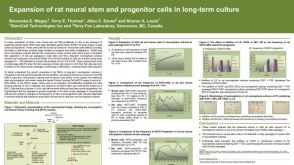 科学海报Expansion of Rat Neural Stem and Progenitor Cells in Long-Term Culture


 沪公网安备31010102008431号