A bioengineered niche promotes in vivo engraftment and maturation of pluripotent stem cell derived human lung organoids.
Human pluripotent stem cell (hPSC) derived tissues often remain developmentally immature in vitro,and become more adult-like in their structure,cellular diversity and function following transplantation into immunocompromised mice. Previously we have demonstrated that hPSC-derived human lung organoids (HLOs) resembled human fetal lung tissue in vitro (Dye et al.,2015). Here we show that HLOs required a bioartificial microporous poly(lactide-co-glycolide) (PLG) scaffold niche for successful engraftment,long-term survival,and maturation of lung epithelium in vivo. Analysis of scaffold-grown transplanted tissue showed airway-like tissue with enhanced epithelial structure and organization compared to HLOs grown in vitro. By further comparing in vitro and in vivo grown HLOs with fetal and adult human lung tissue,we found that in vivo transplanted HLOs had improved cellular differentiation of secretory lineages that is reflective of differences between fetal and adult tissue,resulting in airway-like structures that were remarkably similar to the native adult human lung.
View Publication
产品类型:
产品号#:
85850
85857
产品名:
mTeSR™1
mTeSR™1
Ovchinnikov DA et al. (JUL 2012)
World journal of stem cells 4 7 71--9
Generation of a human embryonic stem cell line stably expressing high levels of the fluorescent protein mCherry.
AIM: The generation and characterization of a human embryonic stem cell (hESC) line stably expressing red fluorescent mCherry protein.backslashnbackslashnMETHODS: Lentiviral transduction of a ubiquitously-expressed human EF-1α promoter driven mCherry transgene was performed in MEL2 hESC. Red fluore-scence was assessed by immunofluorescence and flow cytometry. Pluripotency of stably transduced hESC was determined by immunofluorescent pluripotency marker expression,flow cytometry,teratoma assays and embryoid body-based differentiation followed by reverse transcriptase-polymerase chain reaction. Quantification of cell motility and survival was performed with time lapse microscopy.backslashnbackslashnRESULTS: Constitutively fluorescently-labeled hESCs are useful tools for facile in vitro and in vivo tracking of survival,motility and cell spreading on various surfaces before and after differentiation. Here we describe the generation and characterization of a hESC line (MEL2) stably expressing red fluorescent protein,mCherry. This line was generated by random integration of a fluorescent protein-expressing cassette,driven by the ubiquitously-expressed human EF-1α promoter. Stably transfected MEL2-mCherry hESC were shown to express pluripotency markers in the nucleus (POU5F1/OCT4,NANOG and SOX2) and on the cell surface (SSEA4,TRA1-60 and TG30/CD9) and were shown to maintain a normal karyotype in long-term (for at least 35 passages) culture. MEL2-mCherry hESC further readily differentiated into representative cell types of the three germ layers in embryoid body and teratoma based assays and,importantly,maintained robust mCherry expression throughout differentiation. The cell line was next adapted to single-cell passaging,rendering it compatible with numerous bioengineering applications such as measurement of cell motility and cell spreading on various protein modified surfaces,quantification of cell attachment to nanoparticles and rapid estimation of cell survival.backslashnbackslashnCONCLUSION: The MEL2-mCherry hESC line conforms to the criteria of bona fide pluripotent stem cells and maintains red fluorescence throughout differentiation,making it a useful tool for bioengineering and in vivo tracking experiments.
View Publication
De Falco E et al. (DEC 2004)
Blood 104 12 3472--82
SDF-1 involvement in endothelial phenotype and ischemia-induced recruitment of bone marrow progenitor cells.
Chemokine stromal derived factor 1 (SDF-1) is involved in trafficking of hematopoietic stem cells (HSCs) from the bone marrow (BM) to peripheral blood (PB) and has been found to enhance postischemia angiogenesis. This study was aimed at investigating whether SDF-1 plays a role in differentiation of BM-derived c-kit(+) stem cells into endothelial progenitor cells (EPCs) and in ischemia-induced trafficking of stem cells from PB to ischemic tissues. We found that SDF-1 enhanced EPC number by promoting alpha(2),alpha(4),and alpha(5) integrin-mediated adhesion to fibronectin and collagen I. EPC differentiation was reduced in mitogen-stimulated c-kit(+) cells,while cytokine withdrawal or the overexpression of the cyclin-dependent kinase (CDK) inhibitor p16(INK4) restored such differentiation,suggesting a link between control of cell cycle and EPC differentiation. We also analyzed the time course of SDF-1 expression in a mouse model of hind-limb ischemia. Shortly after femoral artery dissection,plasma SDF-1 levels were up-regulated,while SDF-1 expression in the bone marrow was down-regulated in a timely fashion with the increase in the percentage of PB progenitor cells. An increase in ischemic tissue expression of SDF-1 at RNA and protein level was also observed. Finally,using an in vivo assay such as injection of matrigel plugs,we found that SDF-1 improves formation of tubulelike structures by coinjected c-kit(+) cells. Our findings unravel a function for SDF-1 in increase of EPC number and formation of vascular structures by bone marrow progenitor cells.
View Publication
产品类型:
产品号#:
09600
09650
产品名:
StemSpan™ SFEM
StemSpan™ SFEM
Cutler AJ et al. (DEC 2010)
Journal of immunology (Baltimore,Md. : 1950) 185 11 6617--23
Umbilical cord-derived mesenchymal stromal cells modulate monocyte function to suppress T cell proliferation.
Mesenchymal stromal cells (MSCs) may be derived from a variety of tissues,with human umbilical cord (UC) providing an abundant and noninvasive source. Human UC-MSCs share similar in vitro immunosuppressive properties as MSCs obtained from bone marrow and cord blood. However,the mechanisms and cellular interactions used by MSCs to control immune responses remain to be fully elucidated. In this paper,we report that suppression of mitogen-induced T cell proliferation by human UC-,bone marrow-,and cord blood-MSCs required monocytes. Removal of monocytes but not B cells from human adult PBMCs (PBMNCs) reduced the immunosuppressive effects of MSCs on T cell proliferation. There was rapid modulation of a number of cell surface molecules on monocytes when PBMCs or alloantigen-activated PBMNCs were cultured with UC-MSCs. Indomethacin treatment significantly inhibited the ability of UC-MSCs to suppress T cell proliferation,indicating an important role for PGE(2). Monocytes purified from UC-MSC coculture had significantly reduced accessory cell and allostimulatory function when tested in subsequent T cell proliferation assays,an effect mediated in part by UC-MSC PGE(2) production and enhanced by PBMNC alloactivation. Therefore,we identify monocytes as an essential intermediary through which UC-MSCs mediate their suppressive effects on T cell proliferation.
View Publication
产品类型:
产品号#:
05401
05402
05411
产品名:
MesenCult™ MSC基础培养基 (人)
MesenCult™ MSC 刺激补充剂(人)
MesenCult™ 增殖试剂盒(人)
Batista LFZ et al. (JUN 2011)
Nature 474 7351 399--402
Telomere shortening and loss of self-renewal in dyskeratosis congenita induced pluripotent stem cells
The differentiation of patient-derived induced pluripotent stem cells (iPSCs) to committed fates such as neurons,muscle and liver is a powerful approach for understanding key parameters of human development and disease. Whether undifferentiated iPSCs themselves can be used to probe disease mechanisms is uncertain. Dyskeratosis congenita is characterized by defective maintenance of blood,pulmonary tissue and epidermal tissues and is caused by mutations in genes controlling telomere homeostasis. Short telomeres,a hallmark of dyskeratosis congenita,impair tissue stem cell function in mouse models,indicating that a tissue stem cell defect may underlie the pathophysiology of dyskeratosis congenita. Here we show that even in the undifferentiated state,iPSCs from dyskeratosis congenita patients harbour the precise biochemical defects characteristic of each form of the disease and that the magnitude of the telomere maintenance defect in iPSCs correlates with clinical severity. In iPSCs from patients with heterozygous mutations in TERT,the telomerase reverse transcriptase,a 50% reduction in telomerase levels blunts the natural telomere elongation that accompanies reprogramming. In contrast,mutation of dyskerin (DKC1) in X-linked dyskeratosis congenita severely impairs telomerase activity by blocking telomerase assembly and disrupts telomere elongation during reprogramming. In iPSCs from a form of dyskeratosis congenita caused by mutations in TCAB1 (also known as WRAP53),telomerase catalytic activity is unperturbed,yet the ability of telomerase to lengthen telomeres is abrogated,because telomerase mislocalizes from Cajal bodies to nucleoli within the iPSCs. Extended culture of DKC1-mutant iPSCs leads to progressive telomere shortening and eventual loss of self-renewal,indicating that a similar process occurs in tissue stem cells in dyskeratosis congenita patients. These findings in iPSCs from dyskeratosis congenita patients reveal that undifferentiated iPSCs accurately recapitulate features of a human stem cell disease and may serve as a cell-culture-based system for the development of targeted therapeutics.
View Publication
产品类型:
产品号#:
85850
85857
产品名:
mTeSR™1
mTeSR™1
Suissa Y et al. (AUG 2013)
PLoS ONE 8 8 e70397
Gastrin: A Distinct Fate of Neurogenin3 Positive Progenitor Cells in the Embryonic Pancreas
Neurogenin3+ (Ngn3+) progenitor cells in the developing pancreas give rise to five endocrine cell types secreting insulin,glucagon,somatostatin,pancreatic polypeptide and ghrelin. Gastrin is a hormone produced primarily by G-cells in the stomach,where it functions to stimulate acid secretion by gastric parietal cells. Gastrin is expressed in the embryonic pancreas and is common in islet cell tumors,but the lineage and regulators of pancreatic gastrin+ cells are not known. We report that gastrin is abundantly expressed in the embryonic pancreas and disappears soon after birth. Some gastrin+ cells in the developing pancreas co-express glucagon,ghrelin or pancreatic polypeptide,but many gastrin+ cells do not express any other islet hormone. Pancreatic gastrin+ cells express the transcription factors Nkx6.1,Nkx2.2 and low levels of Pdx1,and derive from Ngn3+ endocrine progenitor cells as shown by genetic lineage tracing. Using mice deficient for key transcription factors we show that gastrin expression depends on Ngn3,Nkx2.2,NeuroD1 and Arx,but not Pax4 or Pax6. Finally,gastrin expression is induced upon differentiation of human embryonic stem cells to pancreatic endocrine cells expressing insulin. Thus,gastrin+ cells are a distinct endocrine cell type in the pancreas and an alternative fate of Ngn3+ cells.
View Publication
产品类型:
产品号#:
85850
85857
产品名:
mTeSR™1
mTeSR™1
Chen W et al. (JUN 2014)
Scientific reports 4 5404
Generation of the SCN1A epilepsy mutation in hiPS cells using the TALEN technique.
Human induced pluripotent stem cells (iPSC) can be used to understand the pathological mechanisms of human disease. These cells are a promising source for cell-replacement therapy. However,such studies require genetically defined conditions. Such genetic manipulations can be performed using the novel Transcription Activator-Like Effector Nucleases (TALENs),which generate site-specific double-strand DNA breaks (DSBs) with high efficiency and precision. Combining the TALEN and iPSC methods,we developed two iPS cell lines by generating the point mutation A5768G in the SCN1A gene,which encodes the voltage-gated sodium channel Nav1.1 α subunit. The engineered iPSC maintained pluripotency and successfully differentiated into neurons with normal functional characteristics. The two cell lines differ exclusively at the epilepsy-susceptibility variant. The ability to robustly introduce disease-causing point mutations in normal hiPS cell lines can be used to generate a human cell model for studying epileptic mechanisms and for drug screening.
View Publication
产品类型:
产品号#:
85850
85857
产品名:
mTeSR™1
mTeSR™1
Chen C et al. (JUL 2014)
Nature communications 5 4430
Role of astroglia in Down's syndrome revealed by patient-derived human-induced pluripotent stem cells.
Down's syndrome (DS),caused by trisomy of human chromosome 21,is the most common genetic cause of intellectual disability. Here we use induced pluripotent stem cells (iPSCs) derived from DS patients to identify a role for astrocytes in DS pathogenesis. DS astroglia exhibit higher levels of reactive oxygen species and lower levels of synaptogenic molecules. Astrocyte-conditioned medium collected from DS astroglia causes toxicity to neurons,and fails to promote neuronal ion channel maturation and synapse formation. Transplantation studies show that DS astroglia do not promote neurogenesis of endogenous neural stem cells in vivo. We also observed abnormal gene expression profiles from DS astroglia. Finally,we show that the FDA-approved antibiotic drug,minocycline,partially corrects the pathological phenotypes of DS astroglia by specifically modulating the expression of S100B,GFAP,inducible nitric oxide synthase,and thrombospondins 1 and 2 in DS astroglia. Our studies shed light on the pathogenesis and possible treatment of DS by targeting astrocytes with a clinically available drug.
View Publication


 EasySep™小鼠TIL(CD45)正选试剂盒




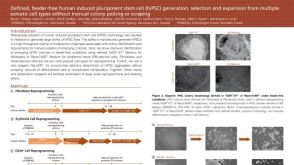 科学海报Defined, Feeder-Free Human Induced Pluripotent Stem Cell (hiPSC) Generation, Selection and Expansion from Multiple Somatic Cell Types



 沪公网安备31010102008431号