Yang J et al. (DEC 2010)
Journal of Biological Chemistry 285 51 40303--11
Induced pluripotent stem cells can be used to model the genomic imprinting disorder Prader-Willi syndrome.
The recent discovery of induced pluripotent stem cell (iPSC) technology provides an invaluable tool for creating in vitro representations of human genetic conditions. This is particularly relevant for those diseases that lack adequate animal models or where the species comparison is difficult,e.g. imprinting diseases such as the neurogenetic disorder Prader-Willi syndrome (PWS). However,recent reports have unveiled transcriptional and functional differences between iPSCs and embryonic stem cells that in cases are attributable to imprinting errors. This has suggested that human iPSCs may not be useful to model genetic imprinting diseases. Here,we describe the generation of iPSCs from a patient with PWS bearing a partial translocation of the paternally expressed chromosome 15q11-q13 region to chromosome 4. The resulting iPSCs match all standard criteria of bona fide reprogramming and could be readily differentiated into tissues derived from the three germ layers,including neurons. Moreover,these iPSCs retain a high level of DNA methylation in the imprinting center of the maternal allele and show concomitant reduced expression of the disease-associated small nucleolar RNA HBII-85/SNORD116. These results indicate that iPSCs may be a useful tool to study PWS and perhaps other genetic imprinting diseases as well.
View Publication
产品类型:
产品号#:
85850
85857
产品名:
mTeSR™1
mTeSR™1
Awad O et al. (JAN 2010)
PloS one 5 11 e13943
High ALDH activity identifies chemotherapy-resistant Ewing's sarcoma stem cells that retain sensitivity to EWS-FLI1 inhibition.
BACKGROUND: Cancer stem cells are a chemotherapy-resistant population capable of self-renewal and of regenerating the bulk tumor,thereby causing relapse and patient death. Ewing's sarcoma,the second most common form of bone tumor in adolescents and young adults,follows a clinical pattern consistent with the Cancer Stem Cell model - remission is easily achieved,even for patients with metastatic disease,but relapse remains frequent and is usually fatal. METHODOLOGY/PRINCIPAL FINDINGS: We have isolated a subpopulation of Ewing's sarcoma cells,from both human cell lines and human xenografts grown in immune deficient mice,which express high aldehyde dehydrogenase (ALDH(high)) activity and are enriched for clonogenicity,sphere-formation,and tumor initiation. The ALDH(high) cells are resistant to chemotherapy in vitro,but this can be overcome by the ATP binding cassette transport protein inhibitor,verapamil. Importantly,these cells are not resistant to YK-4-279,a small molecule inhibitor of EWS-FLI1 that is selectively toxic to Ewing's sarcoma cells both in vitro and in vivo. CONCLUSIONS/SIGNIFICANCE: Ewing's sarcoma contains an ALDH(high) stem-like population of chemotherapy-resistant cells that retain sensitivity to EWS-FLI1 inhibition. Inhibiting the EWS-FLI1 oncoprotein may prove to be an effective means of improving patient outcomes by targeting Ewing's sarcoma stem cells that survive standard chemotherapy.
View Publication
产品类型:
产品号#:
01700
01705
01702
产品名:
ALDEFLUOR™ 试剂盒
ALDEFLUOR™ DEAB试剂
ALDEFLUOR™测定缓冲液
Ma Y et al. (OCT 2006)
Blood 108 8 2726--35
SALL4, a novel oncogene, is constitutively expressed in human acute myeloid leukemia (AML) and induces AML in transgenic mice.
SALL4,a human homolog to Drosophila spalt,is a novel zinc finger transcriptional factor essential for development. We cloned SALL4 and its isoforms (SALL4A and SALL4B). Through immunohistochemistry and real-time reverse-transcription-polymerase chain reaction (RT-PCR),we demonstrated that SALL4 was constitutively expressed in human primary acute myeloid leukemia (AML,n = 81),and directly tested the leukemogenic potential of constitutive expression of SALL4 in a murine model. SALL4B transgenic mice developed myelodysplastic syndrome (MDS)-like features and subsequently AML that was transplantable. Increased apoptosis associated with dysmyelopoiesis was evident in transgenic mouse marrow and colony-formation (CFU) assays. Both isoforms could bind to beta-catenin and synergistically enhanced the Wnt/beta-catenin signaling pathway. Our data suggest that the constitutive expression of SALL4 causes MDS/AML,most likely through the Wnt/beta-catenin pathway. Our murine model provides a useful platform to study human MDS/AML transformation,as well as the Wnt/beta-catenin pathway's role in the pathogenesis of leukemia stem cells.
View Publication
产品类型:
产品号#:
03434
03444
产品名:
MethoCult™GF M3434
MethoCult™GF M3434
Kawamura M et al. (SEP 2012)
Circulation 126 11 Suppl 1 S29----37
Feasibility, safety, and therapeutic efficacy of human induced pluripotent stem cell-derived cardiomyocyte sheets in a porcine ischemic cardiomyopathy model.
BACKGROUND: Human induced pluripotent stem cell-derived cardiomyocytes (hiPS-CMs) are a promising source of cells for regenerating myocardium. However,several issues,especially the large-scale preparation of hiPS-CMs and elimination of undifferentiated iPS cells,must be resolved before hiPS cells can be used clinically. The cell-sheet technique is one of the useful methods for transplanting large numbers of cells. We hypothesized that hiPS-CM-sheet transplantation would be feasible,safe,and therapeutically effective for the treatment of ischemic cardiomyopathy.backslashnbackslashnMETHODS AND RESULTS: Human iPS cells were established by infecting human dermal fibroblasts with a retrovirus carrying Oct3/4,Sox2,Klf4,and c-Myc. Cardiomyogenic differentiation was induced by WNT signaling molecules,yielding hiPS-CMs that were almost 90% positive for α-actinin,Nkx2.5,and cardiac troponin T. hiPS-CM sheets were created using thermoresponsive dishes and transplanted over the myocardial infarcts in a porcine model of ischemic cardiomyopathy induced by ameroid constriction of the left anterior descending coronary artery (n=6 for the iPS group receiving sheet transplantation and the sham-operated group; both groups received tacrolimus daily). Transplantation significantly improved cardiac performance and attenuated left ventricular remodeling. hiPS-CMs were detectable 8 weeks after transplantation,but very few survived long term. No teratoma formation was observed in animals that received hiPS-CM sheets.backslashnbackslashnCONCLUSIONS: The culture system used yields a large number of highly pure hiPS-CMs,and hiPS-CM sheets could improve cardiac function after ischemic cardiomyopathy. This newly developed culture system and the hiPS-CM sheets may provide a basis for the clinical use of hiPS cells in cardiac regeneration therapy.
View Publication
产品类型:
产品号#:
85850
85857
产品名:
mTeSR™1
mTeSR™1
Lanfer B et al. (OCT 2009)
Biomaterials 30 30 5950--8
The growth and differentiation of mesenchymal stem and progenitor cells cultured on aligned collagen matrices.
Cell-matrix interactions are paramount for the successful repair and regeneration of damaged and diseased tissue. Since many tissues have an anisotropic architecture,it has been proposed that aligned extracellular matrix (ECM) structures in particular could guide and support the differentiation of resident mesenchymal stem and progenitor cells (MSCs). We therefore created aligned collagen type I structures using a microfluidic set-up with the aim to assess their impact on MSC growth and differentiation. In addition,we refined our aligned collagen matrices by incorporating the glycosaminoglycan (GAG) heparin to demonstrate the versatility of the applied methodology to study multiple ECM components in a single system. Our reconstituted,aligned ECM structures maintained and allowed multilineage (osteogenic/adipogenic/chondrogenic) differentiation of MSCs. Most noticeable was the observation that during osteogenesis,aligned collagen substrates choreographed ordered matrix mineralization. Likewise,myotube assembly of C2C12 cells was profoundly influenced by aligned topographic features resulting in enhanced myotube organization and length. Our results shed light on the regulation of MSCs through directional ECM structures and demonstrate the versatility of these cell culture platforms for guiding the morphogenesis of tissue types with anisotropic structures.
View Publication
产品类型:
产品号#:
05401
产品名:
MesenCult™ MSC基础培养基 (人)
Sekimoto E et al. (FEB 2007)
Cancer research 67 3 1184--92
A single-chain Fv diabody against human leukocyte antigen-A molecules specifically induces myeloma cell death in the bone marrow environment.
Cross-linked human leukocyte antigen (HLA) class I molecules have been shown to mediate cell death in neoplastic lymphoid cells. However,clinical application of an anti-HLA class I antibody is limited by possible side effects due to widespread expression of HLA class I molecules in normal tissues. To reduce the unwanted Fc-mediated functions of the therapeutic antibody,we have developed a recombinant single-chain Fv diabody (2D7-DB) specific to the alpha2 domain of HLA-A. Here,we show that 2D7-DB specifically induces multiple myeloma cell death in the bone marrow environment. Both multiple myeloma cell lines and primary multiple myeloma cells expressed HLA-A at higher levels than normal myeloid cells,lymphocytes,or hematopoietic stem cells. 2D7-DB rapidly induced Rho activation and robust actin aggregation that led to caspase-independent death in multiple myeloma cells. This cell death was completely blocked by Rho GTPase inhibitors,suggesting that Rho-induced actin aggregation is crucial for mediating multiple myeloma cell death. Conversely,2D7-DB neither triggered Rho-mediated actin aggregation nor induced cell death in normal bone marrow cells despite the expression of HLA-A. Treatment with IFNs,melphalan,or bortezomib enhanced multiple myeloma cell death induced by 2D7-DB. Furthermore,administration of 2D7-DB resulted in significant tumor regression in a xenograft model of human multiple myeloma. These results indicate that 2D7-DB acts on multiple myeloma cells differently from other bone marrow cells and thus provide the basis for a novel HLA class I-targeting therapy against multiple myeloma.
View Publication
Bruserud &O et al. (JUN 2002)
Haematologica 87 6 584--95
Leptin in human acute myelogenous leukemia: studies of in vivo levels and in vitro effects on native functional leukemia blasts.
BACKGROUND AND OBJECTIVES: Leptin receptors can be expressed by acute myelogenous leukemia (AML) cells,but the functional effects of leptin on native AML blasts have not been characterized in detail. We investigated systemic leptin levels in AML patients and in vitro effects of leptin on cultured AML blasts. DESIGN AND METHODS: Serum leptin levels were compared for patients with untreated AML and healthy controls. Native AML blasts were derived from a large group of consecutive patients,and effects of leptin on proliferation (suspension cultures and colony formation),constitutive cytokine secretion,differentiation and apoptosis regulation were assayed in vitro. RESULTS: Systemic leptin levels were decreased in patients with untreated AML,and leptin levels in acute leukemia patients were not altered during severe chemotherapy-induced cytopenia and complicating febrile neutropenia. In vitro studies demonstrated that leptin increased AML blast release of interleukin (IL) 1beta,IL6,tumor necrosis factor (TNF) alpha and granulocyte-macrophage colony-stimulating factor (GM-CSF). This enhancing effect showed no correlation with CD34 expression and was not dependent on the presence of serum,induction of differentiation or alteration of caspase 3 activity with decreased in vitro apoptosis. Leptin also increased spontaneous AML blast proliferation,whereas divergent effects on blast proliferation were observed in the presence of exogenous cytokines. The in vitro effects were usually observed at concentrations exceeding the systemic levels. INTERPRETATION AND CONCLUSIONS: Our results suggest that systemic leptin levels alone do not have a major influence on native AML blasts,but the systemic levels in combination with local leptin release in the bone marrow may affect the functional characteristics of these cells.
View Publication
产品类型:
产品号#:
04230
09600
09650
产品名:
MethoCult™H4230
StemSpan™ SFEM
StemSpan™ SFEM
Close JL et al. (MAR 2017)
Neuron 93 5 1035--1048.e5
Single-Cell Profiling of an In Vitro Model of Human Interneuron Development Reveals Temporal Dynamics of Cell Type Production and Maturation.
GABAergic interneurons are essential for neural circuit function,and their loss or dysfunction is implicated in human neuropsychiatric disease. In vitro methods for interneuron generation hold promise for studying human cellular and functional properties and,ultimately,for therapeutic cell replacement. Here we describe a protocol for generating cortical interneurons from hESCs and analyze the properties and maturation time course of cell types using single-cell RNA-seq. We find that the cell types produced mimic in vivo temporal patterns of neuron and glial production,with immature progenitors and neurons observed early and mature cortical neurons and glial cell types produced late. By comparing the transcriptomes of immature interneurons to those of more mature neurons,we identified genes important for human interneuron differentiation. Many of these genes were previously implicated in neurodevelopmental and neuropsychiatric disorders.
View Publication
产品类型:
产品号#:
85850
85857
产品名:
mTeSR™1
mTeSR™1
Zhang S et al. (MAR 2017)
Stem cell research 19 34--36
Characterization of human induced pluripotent stem cell (iPSC) line from a 72year old male patient with later onset Alzheimer's disease.
Peripheral blood was collected from a clinically diagnosed 72-year old male patient with later onset Alzheimer's disease. Peripheral blood mononuclear cells (PBMCs) were reprogrammed with the Yamanaka KMOS reprogramming factors using the Sendai-virus reprogramming system. The transgene-free iPSC line showed pluripotency verified by immunofluorescent staining for pluripotency markers,and the iPSC line was able to differentiate into the 3 germ layers in vivo. The iPSC line also showed normal karyotype. This in vitro cellular model will be useful for studying the pathological mechanism of Alzheimer's disease.
View Publication
产品类型:
产品号#:
85850
85857
产品名:
mTeSR™1
mTeSR™1
Venu P et al. (APR 2010)
In vitro cellular & developmental biology. Animal 46 3-4 200--5
Analysis of long-term culture properties and pluripotent character of two sibling human embryonic stem cell lines derived from discarded embryos
We had earlier reported the derivation and characterization of two new sibling human embryonic stem cell lines BJNhem19 and BJNhem20,from discarded grade III embryos of Indian origin. We report here the characteristics of the two sibling cell lines after long-term continuous culture for over 2 yr during which they have been passaged over 200 times. We show that both cell lines adapt well to culture on various mouse and human feeders as well as in feeder-free conditions. The cells show normal diploid karyotype and continue to express all pluripotency markers. Both cell lines differentiate to derivatives of all three germ layers in vitro. However as reported earlier,BJNhem19 is unable to generate teratomas in nude or SCID mice or differentiate to beating cardiomyocytes when tested over several passages during long-term stable culture. On the other hand,the cardiac differentiation capacity of BJNhem20 is greatly increased,and it can generate beating cardiomyocytes that proliferate when isolated and cultured further. In conclusion,the two cell lines have maintained a stable phenotype for over 2 yr and are indeed immortal. Their derivation from grade III embryos does not seem to have any adverse effect on their long-term phenotype. The cells can be obtained for research purposes from the UK Stem Cell Bank and from the authors.
View Publication
产品类型:
产品号#:
85850
85857
产品名:
mTeSR™1
mTeSR™1
Sheridan SD et al. (OCT 2011)
PLoS ONE 6 10 e26203
Epigenetic characterization of the FMR1 gene and aberrant neurodevelopment in human induced pluripotent stem cell models of fragile X syndrome
Fragile X syndrome (FXS) is the most common inherited cause of intellectual disability. In addition to cognitive deficits,FXS patients exhibit hyperactivity,attention deficits,social difficulties,anxiety,and other autistic-like behaviors. FXS is caused by an expanded CGG trinucleotide repeat in the 5' untranslated region of the Fragile X Mental Retardation (FMR1) gene leading to epigenetic silencing and loss of expression of the Fragile X Mental Retardation protein (FMRP). Despite the known relationship between FMR1 CGG repeat expansion and FMR1 silencing,the epigenetic modifications observed at the FMR1 locus,and the consequences of the loss of FMRP on human neurodevelopment and neuronal function remain poorly understood. To address these limitations,we report on the generation of induced pluripotent stem cell (iPSC) lines from multiple patients with FXS and the characterization of their differentiation into post-mitotic neurons and glia. We show that clones from reprogrammed FXS patient fibroblast lines exhibit variation with respect to the predominant CGG-repeat length in the FMR1 gene. In two cases,iPSC clones contained predominant CGG-repeat lengths shorter than measured in corresponding input population of fibroblasts. In another instance,reprogramming a mosaic patient having both normal and pre-mutation length CGG repeats resulted in genetically matched iPSC clonal lines differing in FMR1 promoter CpG methylation and FMRP expression. Using this panel of patient-specific,FXS iPSC models,we demonstrate aberrant neuronal differentiation from FXS iPSCs that is directly correlated with epigenetic modification of the FMR1 gene and a loss of FMRP expression. Overall,these findings provide evidence for a key role for FMRP early in human neurodevelopment prior to synaptogenesis and have implications for modeling of FXS using iPSC technology. By revealing disease-associated cellular phenotypes in human neurons,these iPSC models will aid in the discovery of novel therapeutics for FXS and other autism-spectrum disorders sharing common pathophysiology.
View Publication


 EasySep™小鼠TIL(CD45)正选试剂盒




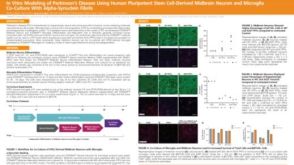 科学海报In Vitro Modeling of Parkinson’s Disease Using Human Pluripotent Stem Cell-Derived Midbrain Neuron and Microglia Co-Culture with Alpha-Synuclein Fibrils
 沪公网安备31010102008431号