Itahana Y et al. ( 2016)
Scientific reports 6 28112
Histone modifications and p53 binding poise the p21 promoter for activation in human embryonic stem cells.
The high proliferation rate of embryonic stem cells (ESCs) is thought to arise partly from very low expression of p21. However,how p21 is suppressed in ESCs has been unclear. We found that p53 binds to the p21 promoter in human ESCs (hESCs) as efficiently as in differentiated human mesenchymal stem cells,however it does not promote p21 transcription in hESCs. We observed an enrichment for both the repressive histone H3K27me3 and activating histone H3K4me3 chromatin marks at the p21 locus in hESCs,suggesting it is a suppressed,bivalent domain which overrides activation by p53. Reducing H3K27me3 methylation in hESCs rescued p21 expression,and ectopic expression of p21 in hESCs triggered their differentiation. Further,we uncovered a subset of bivalent promoters bound by p53 in hESCs that are similarly induced upon differentiation in a p53-dependent manner,whereas p53 promotes the transcription of other target genes which do not show an enrichment of H3K27me3 in ESCs. Our studies reveal a unique epigenetic strategy used by ESCs to poise undesired p53 target genes,thus balancing the maintenance of pluripotency in the undifferentiated state with a robust response to differentiation signals,while utilizing p53 activity to maintain genomic stability and homeostasis in ESCs.
View Publication
产品类型:
产品号#:
05850
05857
05870
05875
85850
85857
85870
85875
产品名:
mTeSR™1
mTeSR™1
Miranda C et al. (DEC 2016)
Biotechnology journal 11 12 1628--1638
Scaling up a chemically-defined aggregate-based suspension culture system for neural commitment of human pluripotent stem cells.
The demand of high cell numbers for applications in cellular therapies and drug screening requires the development of scalable platforms capable to generating highly pure populations of tissue-specific cells from human pluripotent stem cells. In this work,we describe the scaling-up of an aggregate-based culture system for neural induction of human induced pluripotent stem cells (hiPSCs) under chemically-defined conditions. A combination of non-enzymatic dissociation and rotary agitation was successfully used to produce homogeneous populations of hiPSC aggregates with an optimal (140 μm) and narrow distribution of diameters (coefficient of variation of 21.6%). Scalable neural commitment of hiPSCs as 3D aggregates was performed in 50 mL spinner flasks,and the process was optimized using a factorial design approach,involving parameters such as agitation rate and seeding density. We were able to produce neural progenitor cell cultures,that at the end of a 6-day neural induction process contained less than 3% of Oct4-positive cells and that,after replating,retained more than 60% of Pax6-positive neural cells. The results here presented should set the stage for the future generation of a clinically relevant number of human neural progenitors for transplantation and other biomedical applications using controlled,automated and reproducible large-scale bioreactor culture systems.
View Publication
产品类型:
产品号#:
05850
05857
05870
05875
85850
85857
85870
85875
产品名:
mTeSR™1
mTeSR™1
Lei Y et al. (JUN 2014)
Cellular and Molecular Bioengineering 7 2 172--183
Developing defined and scalable 3D culture systems for culturing human pluripotent stem cells at high densities
Human pluripotent stem cells (hPSCs) - including embryonic stem cells (hESCs) and induced pluripotent stem cells (hiPSCs) - are very promising candidates for cell therapies,tissue engineering,high throughput pharmacology screens,and toxicity testing. These applications require large numbers of high quality cells; however,scalable production of human pluripotent stem cells and their derivatives at a high density and under well-defined conditions has been a challenge. We recently reported a simple,efficient,fully defined,scalable,and good manufacturing practice (GMP) compatible 3D culture system based on a thermoreversible hydrogel for hPSC expansion and differentiation. Here,we describe additional design rationale and characterization of this system. For instance,we have determined that culturing hPSCs as a suspension in a liquid medium can exhibit lower volumetric yields due to cell agglomeration and possible shear force-induced cell loss. By contrast,using hydrogels as 3D scaffolds for culturing hPSCs reduces aggregation and may insulate from shear forces. Additionally,hydrogel-based 3D culture systems can support efficient hPSC expansion and differentiation at a high density if compatible with hPSC biology. Finally,there are considerable opportunities for future development to further enhance hydrogel-based 3D culture systems for producing hPSCs and their progeny.
View Publication
Perry BC et al. (JUN 2008)
Tissue engineering. Part C,Methods 14 2 149--56
Collection, cryopreservation, and characterization of human dental pulp-derived mesenchymal stem cells for banking and clinical use.
Recent studies have shown that mesenchymal stem cells (MSC) with the potential for cell-mediated therapies and tissue engineering applications can be isolated from extracted dental tissues. Here,we investigated the collection,processing,and cryobiological characteristics of MSC from human teeth processed under current good tissue practices (cGTP). Viable dental pulp-derived MSC (DPSC) cultures were isolated from 31 of 40 teeth examined. Of eight DPSC cultures examined more thoroughly,all expressed appropriate cell surface markers and underwent osteogenic,adipogenic,and chondrogenic differentiation in appropriate differentiation medium,thus meeting criteria to be called MSC. Viable DPSC were obtained up to 120 h postextraction. Efficient recovery of DPSC from cryopreserved intact teeth and second-passage DPSC cultures was achieved. These studies indicate that DPSC isolation is feasible for at least 5 days after tooth extraction,and imply that processing immediately after extraction may not be required for successful banking of DPSC. Further,the recovery of viable DPSC after cryopreservation of intact teeth suggests that minimal processing may be needed for the banking of samples with no immediate plans for expansion and use. These initial studies will facilitate the development of future cGTP protocols for the clinical banking of MSC.
View Publication
产品类型:
产品号#:
05401
05402
05404
05411
产品名:
MesenCult™ MSC 基础培养基(人)
MesenCult™ MSC 刺激补充剂(人)
MesenCult™ 增殖试剂盒(人)
Li Z et al. (JAN 2009)
PLoS ONE 4 12 e8443
Functional and transcriptional characterization of human embryonic stem cell-derived endothelial cells for treatment of myocardial infarction
BACKGROUND: Differentiation of human embryonic stem cells into endothelial cells (hESC-ECs) has the potential to provide an unlimited source of cells for novel transplantation therapies of ischemic diseases by supporting angiogenesis and vasculogenesis. However,the endothelial differentiation efficiency of the conventional embryoid body (EB) method is low while the 2-dimensional method of co-culturing with mouse embryonic fibroblasts (MEFs) require animal product,both of which can limit the future clinical application of hESC-ECs. Moreover,to fully understand the beneficial effects of stem cell therapy,investigators must be able to track the functional biology and physiology of transplanted cells in living subjects over time. METHODOLOGY: In this study,we developed an extracellular matrix (ECM) culture system for increasing endothelial differentiation and free from contaminating animal cells. We investigated the transcriptional changes that occur during endothelial differentiation of hESCs using whole genome microarray,and compared to human umbilical vein endothelial cells (HUVECs). We also showed functional vascular formation by hESC-ECs in a mouse dorsal window model. Moreover,our study is the first so far to transplant hESC-ECs in a myocardial infarction model and monitor cell fate using molecular imaging methods. CONCLUSION: Taken together,we report a more efficient method for derivation of hESC-ECs that express appropriate patterns of endothelial genes,form functional vessels in vivo,and improve cardiac function. These studies suggest that hESC-ECs may provide a novel therapy for ischemic heart disease in the future.
View Publication
产品类型:
产品号#:
05850
05857
05870
05875
09500
85850
85857
85870
85875
产品名:
BIT 9500血清替代物
mTeSR™1
mTeSR™1
Nagano M et al. (AUG 2010)
Stem cells and development 19 8 1195--210
Hypoxia responsive mesenchymal stem cells derived from human umbilical cord blood are effective for bone repair.
Mesenchymal stem cells (MSCs) are highly useful in a variety of cell therapies owing to their multipotential differentiation capability. MSCs derived from umbilical cord blood are generally isolated by their plastic adherence without using specific cell surface markers and examined for their osteogenic,adipogenic,and chondrogenic differentiation properties retrospectively. Here,we report 2 subpopulations of MSCs,separated based on aldehyde dehydrogenase (ALDH) activity. MSCs with a high ALDH activity (Alde-High) proliferated more than those with a low ALDH activity (Alde-Low). Alde-High MSCs had a greater ability to differentiate than Alde-Low MSCs in in vitro culture. Transplantation of Alde-High MSCs into fractured mouse femurs enabled early repair of tissues and rapid bone substitution. Alde-High MSCs were also more responsive to hypoxia than Alde-Low MSCs,with the upregulation of Flt-1,CXCR4,and Angiopoietin-2. Thus,MSCs with a high ALDH activity might serve as an effective therapeutic tool for healing fractures within a short period of time.
View Publication
产品类型:
产品号#:
01700
01705
01701
01702
产品名:
ALDEFLUOR™ 试剂盒
ALDEFLUOR™ DEAB试剂, 1.5 mM, 1 mL
ALDEFLUOR™检测缓冲液
Kamei K-i et al. (MAY 2010)
Lab on a chip 10 9 1113--9
Microfluidic image cytometry for quantitative single-cell profiling of human pluripotent stem cells in chemically defined conditions.
Microfluidic image cytometry (MIC) has been developed to study phenotypes of various hPSC lines by screening several chemically defined serum/feeder-free conditions. A chemically defined hPSC culture was established using 20 ng mL(-1) of bFGF on 20 microg mL(-1) of Matrigel to grow hPSCs over a week in an undifferentiated state. Following hPSC culture,we conducted quantitative MIC to perform a single cell profiling of simultaneously detected protein expression (OCT4 and SSEA1). Using clustering analysis,we were able to systematically compare the characteristics of various hPSC lines in different conditions.
View Publication
产品类型:
产品号#:
05850
05857
05870
05875
85850
85857
85870
85875
产品名:
mTeSR™1
mTeSR™1
Shimakura Y et al. (JAN 2000)
Stem cells (Dayton,Ohio) 18 3 183--9
Murine stromal cell line HESS-5 maintains reconstituting ability of Ex vivo-generated hematopoietic stem cells from human bone marrow and cytokine-mobilized peripheral blood.
Human bone marrow (BM) or mobilized peripheral blood (mPB) CD34(+) cells have been shown to loose their stem cell quality during culture period more easily than those from cord blood (CB). We previously reported that human umbilical CB stem cells could effectively be expanded in the presence of human recombinant cytokines and a newly established murine bone marrow stromal cell line HESS-5. In this study we assessed the efficacy of this xenogeneic coculture system using human BM and mPB CD34(+) cells as materials. We measured the generation of CD34(+)CD38(-) cells and colony-forming units,and assessed severe-combined immunodeficient mouse-repopulating cell (SRC) activity using cells five days after serum-free cytokine-containing culture in the presence or the absence of a direct contact with HESS-5 cells. As compared with the stroma-free culture,the xenogeneic coculture was significantly superior on expansion of CD34(+)CD38(-) cells and colony-forming cells and on maintenance of SRC activity. The PKH26 study demonstrated that cell division was promoted faster in cells cocultured with HESS-5 cells than in cells cultured without HESS-5 cells. These results indicate that HESS-5 supports rapid generation of primitive progenitor cells (PPC) and maintains reconstituting ability of newly generated stem cells during ex vivo culture irrespective of the source of samples. This xenogeneic coculture system will be useful for ex vivo manipulation such as gene transduction to promote cell division and the generation of PPC and to prevent loss of stem cell quality.
View Publication
产品类型:
产品号#:
04064
04034
04044
产品名:
MethoCult™ H4034 Optimum 入门试剂盒
MethoCult™ H4034 Optimum
MethoCult™ H4034 Optimum
Raffaghello L et al. (JAN 2008)
Stem cells (Dayton,Ohio) 26 1 151--62
Human mesenchymal stem cells inhibit neutrophil apoptosis: a model for neutrophil preservation in the bone marrow niche.
Mesenchymal stem cells (MSC) establish close interactions with bone marrow sinusoids in a putative perivascular niche. These vessels contain a large storage pool of mature nonproliferating neutrophils. Here,we have investigated the effects of human bone marrow MSC on neutrophil survival and effector functions. MSC from healthy donors,at very low MSC:neutrophil ratios (up to 1:500),significantly inhibited apoptosis of resting and interleukin (IL)-8-activated neutrophils and dampened N-formyl-l-methionin-l-leucyl-l-phenylalanine (f-MLP)-induced respiratory burst. The antiapoptotic activity of MSC did not require cell-to-cell contact,as shown by transwell experiments. Antibody neutralization experiments demonstrated that the key MSC-derived soluble factor responsible for neutrophil protection from apoptosis was IL-6,which signaled by activating STAT-3 transcription factor. Furthermore,IL-6 expression was detected in MSC by real-time reverse transcription-polymerase chain reaction and enzyme-linked immunosorbent assay. Finally,recombinant IL-6 was found to protect neutrophils from apoptosis in a dose-dependent manner. MSC had no effect on neutrophil phagocytosis,expression of adhesion molecules,and chemotaxis in response to IL-8,f-MLP,or C5a. These results support the following conclusions: (a) in the bone marrow niche,MSC likely protect neutrophils of the storage pool from apoptosis,preserving their effector functions and preventing the excessive or inappropriate activation of the oxidative metabolism,and (b) a novel mechanism whereby the inflammatory potential of activated neutrophils is harnessed by inhibition of apoptosis and reactive oxygen species production without impairing phagocytosis and chemotaxis has been identified.
View Publication
产品类型:
产品号#:
05401
05402
05411
产品名:
MesenCult™ MSC 基础培养基(人)
MesenCult™ MSC 刺激补充剂(人)
MesenCult™ 增殖试剂盒(人)
Gadkari R et al. (JUL 2014)
Regenerative medicine 9 4 453--465
Human embryonic stem cell derived-mesenchymal stem cells: an alternative mesenchymal stem cell source for regenerative medicine therapy.
AIM To enumerate and characterize mesenchymal stem cells (MSC) derived from human embryonic stem cells (hESC) for clinical application. MATERIALS & METHODS hESC were differentiated into hESC-MSC and characterized by the expression of surface markers using flow cytometry. hESC-MSC were evaluated with respect to growth kinetics,colony-forming potential,as well as osteogenic and adipogenic differentiation capacity. Immunosuppressive effects were assessed using peripheral blood mononuclear cell (PBMC) proliferation and cytotoxicity assays. RESULTS hESC-MSC showed similar morphology,and cell surface markers as adipose (AMSC) and bone marrow-derived MSC (BMSC). hESC-MSC exhibited a higher growth rate during early in vitro expansion and equivalent adipogenic and osteogenic differentiation and colony-forming potential as AMSC and BMSC. hESC-MSC demonstrated similar immunosuppressive effects as AMSC and BMSC. CONCLUSION hESC-MSC were comparable to BMSC and AMSC and hence can be used as an alternative source of MSC for clinical applications.
View Publication


 EasySep™小鼠TIL(CD45)正选试剂盒




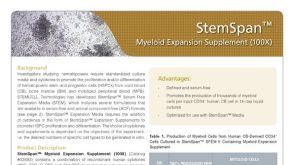 产品手册StemSpan™ Media and Supplements for the Expansion and Differentiation of Granulocytes and Monocytes
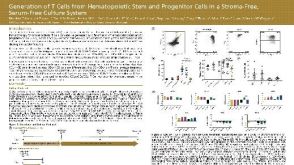 科学海报Generation of T Cells from Hematopoietic Stem and Progenitor Cells in a Stroma-Free, Serum-Free Culture System
 沪公网安备31010102008431号