Tripp A et al. (NOV 2005)
Journal of virology 79 22 14069--78
Induction of cell cycle arrest by human T-cell lymphotropic virus type 1 Tax in hematopoietic progenitor (CD34+) cells: modulation of p21cip1/waf1 and p27kip1 expression.
Human T-cell lymphotropic virus type 1 (HTLV-1) is the etiologic agent of adult T-cell leukemia,an aggressive CD4(+) malignancy. Although HTLV-2 is highly homologous to HTLV-1,infection with HTLV-2 has not been associated with lymphoproliferative disorders. Lentivirus-mediated transduction of CD34(+) cells with HTLV-1 Tax (Tax1) induced G(0)/G(1) cell cycle arrest and resulted in the concomitant suppression of multilineage hematopoiesis in vitro. Tax1 induced transcriptional upregulation of the cdk inhibitors p21(cip1/waf1) (p21) and p27(kip1) (p27),and marked suppression of hematopoiesis in immature (CD34(+)/CD38(-)) hematopoietic progenitor cells in comparison to CD34(+)/CD38(+) cells. HTLV-1 infection of CD34(+) cells also induced p21 and p27 expression. Tax1 also protected CD34(+) cells from serum withdrawal-mediated apoptosis. In contrast,HTLV-2 Tax (Tax2) did not detectably alter p21 or p27 gene expression,failed to induce cell cycle arrest,failed to suppress hematopoiesis in CD34(+) cells,and did not protect cells from programmed cell death. A Tax2/Tax1 chimera encoding the C-terminal 53 amino acids of Tax1 fused to Tax2 (Tax(221)) displayed a phenotype in CD34(+) cells similar to that of Tax1,suggesting that unique domains encoded within the C terminus of Tax1 may account for the phenotypes displayed in human hematopoietic progenitor cells. These remarkable differences in the activities of Tax1 and Tax2 in CD34(+) hematopoietic progenitor cells may underlie the sharp differences observed in the pathogenesis resulting from infection with HTLV-1 and HTLV-2.
View Publication
产品类型:
产品号#:
02690
产品名:
StemSpan™ CC100
Pijuan-Galitó et al. ( 2016)
Nature communications 7 12170
Human serum-derived protein removes the need for coating in defined human pluripotent stem cell culture.
Reliable,scalable and time-efficient culture methods are required to fully realize the clinical and industrial applications of human pluripotent stem (hPS) cells. Here we present a completely defined,xeno-free medium that supports long-term propagation of hPS cells on uncoated tissue culture plastic. The medium consists of the Essential 8 (E8) formulation supplemented with inter-α-inhibitor (IαI),a human serum-derived protein,recently demonstrated to activate key pluripotency pathways in mouse PS cells. IαI efficiently induces attachment and long-term growth of both embryonic and induced hPS cell lines when added as a soluble protein to the medium at seeding. IαI supplementation efficiently supports adaptation of feeder-dependent hPS cells to xeno-free conditions,clonal growth as well as single-cell survival in the absence of Rho-associated kinase inhibitor (ROCKi). This time-efficient and simplified culture method paves the way for large-scale,high-throughput hPS cell culture,and will be valuable for both basic research and commercial applications.
View Publication
产品类型:
产品号#:
05110
05850
05857
05870
05875
85850
85857
85870
85875
产品名:
STEMdiff™定型内胚层检测试剂盒
mTeSR™1
mTeSR™1
Zhang Z et al. (SEP 2003)
The EMBO journal 22 18 4759--69
Enforced expression of EBF in hematopoietic stem cells restricts lymphopoiesis to the B cell lineage.
Mice deficient in early B cell factor (EBF) are blocked at the progenitor B cell stage prior to immunoglobulin gene rearrangement. The EBF-dependent block in B cell development occurs near the onset of B-lineage commitment,which raises the possibility that EBF may act instructively to specify the B cell fate from uncommitted,multipotential progenitor cells. To test this hypothesis,we transduced enriched hematopoietic progenitor cells with a retroviral vector that coexpressed EBF and the green fluorescent protein (GFP). Mice reconstituted with EBF-expressing cells showed a near complete absence of T lymphocytes. Spleen and peripheral blood samples were textgreater95 and 90% GFP+EBF+ mature B cells,respectively. Both NK and lymphoid-derived dendritic cells were also significantly reduced compared with control-transplanted mice. These data suggest that EBF can restrict lymphopoiesis to the B cell lineage by blocking development of other lymphoid-derived cell pathways.
View Publication
产品类型:
产品号#:
03434
03444
产品名:
MethoCult™ GF M3434
MethoCult™ GF M3434
Ting S et al. (SEP 2014)
Stem Cell Research 13 2 202--213
An intermittent rocking platform for integrated expansion and differentiation of human pluripotent stem cells to cardiomyocytes in suspended microcarrier cultures
The development of novel platforms for large scale production of human embryonic stem cells (hESC) derived cardiomyocytes (CM) becomes more crucial as the demand for CMs in preclinical trials,high throughput cardio toxicity assays and future regenerative therapeutics rises. To this end,we have designed a microcarrier (MC) suspension agitated platform that integrates pluripotent hESC expansion followed by CM differentiation in a continuous,homogenous process.Hydrodynamic shear stresses applied during the hESC expansion and CM differentiation steps drastically reduced the capability of the cells to differentiate into CMs. Applying vigorous stirring during pluripotent hESC expansion on Cytodex 1 MC in spinner cultures resulted in low CM yields in the following differentiation step (cardiac troponin-T (cTnT): 22.83. ??. 2.56%; myosin heavy chain (MHC): 19.30. ??. 5.31%). Whereas the lower shear experienced in side to side rocker (wave type) platform resulted in higher CM yields (cTNT: 47.50. ??. 7.35%; MHC: 42.85. ??. 2.64%). The efficiency of CM differentiation is also affected by the hydrodynamic shear stress applied during the first 3. days of the differentiation stage. Even low shear applied continuously by side to side rocker agitation resulted in very low CM differentiation efficiency (cTnT. textless. 5%; MHC. textless. 2%). Simply by applying intermittent agitation during these 3. days followed by continuous agitation for the subsequent 9. days,CM differentiation efficiency can be substantially increased (cTNT: 65.73. ??. 10.73%; MHC: 59.73. ??. 9.17%). These yields are 38.3% and 39.3% higher (for cTnT and MHC respectively) than static culture control.During the hESC expansion phase,cells grew on continuously agitated rocker platform as pluripotent cell/MC aggregates (166??88??105??m2) achieving a cell concentration of 3.74??0.55??106cells/mL (18.89??2.82 fold expansion) in 7days. These aggregates were further differentiated into CMs using a WNT modulation differentiation protocol for the subsequent 12days on a rocking platform with an intermittent agitation regime during the first 3days. Collectively,the integrated MC rocker platform produced 190.5??58.8??106 CMs per run (31.75??9.74 CM/hESC seeded). The robustness of the system was demonstrated by using 2 cells lines,hESC (HES-3) and human induced pluripotent stem cell (hiPSC) IMR-90. The CM/MC aggregates formed extensive sarcomeres that exhibited cross-striations confirming cardiac ontogeny. Functionality of the CMs was demonstrated by monitoring the effect of inotropic drug,Isoproterenol on beating frequency.In conclusion,we have developed a simple robust and scalable platform that integrates both hESC expansion and CM differentiation in one unit process which is capable of meeting the need for large amounts of CMs. ?? 2014.
View Publication
产品类型:
产品号#:
05850
05857
05870
05875
85850
85857
85870
85875
产品名:
mTeSR™1
mTeSR™1
Mousa SA et al. (MAR 2010)
Cancer Letters 289 2 208--216
Stress resistant human embryonic stem cells as a potential source for the identification of novel cancer stem cell markers
Cancer stem cells are known for their inherent resistance to therapy. Here we investigated whether normal stem cells with acquired resistance to stress can be used to identify novel markers of cancer stem cells. For this,we generated a human embryonic stem cell line resistant to Trichostatin A and analyzed changes in its gene expression. The resistant cells over-expressed various genes associated with tumor aggressiveness,many of which are also expressed in the CD133+ glioma cancer stem cells. These findings suggest that stress-resistant stem cells generated in vitro may be useful for the discovery of novel markers of cancer stem cells.
View Publication
Pirson L et al. (JUL 2006)
Stem cells (Dayton,Ohio) 24 7 1814--21
Despite inhibition of hematopoietic progenitor cell growth in vitro, the tyrosine kinase inhibitor imatinib does not impair engraftment of human CD133+ cells into NOD/SCIDbeta2mNull mice.
There is potential interest for combining allogeneic hematopoietic cell transplantation (HCT),and particularly allogeneic HCT with a nonmyeloablative regimen,to the tyrosine kinase inhibitor imatinib (Glivec; Novartis,Basel,Switzerland,http://www.novartis.com) in order to maximize anti-leukemic activity against Philadelphia chromosome-positive leukemias. However,because imatinib inhibits c-kit,the stem cell factor receptor,it could interfere with bone marrow engraftment. In this study,we examined the impact of imatinib on normal progenitor cell function. Imatinib decreased the colony-forming capacity of mobilized peripheral blood human CD133(+) cells but not that of long-term culture-initiating cells. Imatinib also decreased the proliferation of cytokine-stimulated CD133(+) cells but did not induce apoptosis of these cells. Expression of very late antigen (VLA)-4,VLA-5,and CXCR4 of CD133(+) cells was not modified by imatinib,but imatinib decreased the ability of CD133(+) cells to migrate. Finally,imatinib did not decrease engraftment of CD133(+) cells into irradiated nonobese diabetic/severe combined immunodeficient/beta2m(null) mice conditioned with 3 or 1 Gy total body irradiation. In summary,our results suggest that,despite inhibition of hematopoietic progenitor cell growth in vitro,imatinib does not interfere with hematopoietic stem cell engraftment.
View Publication
产品类型:
产品号#:
05150
04435
04445
04960
04902
04900
04961
04901
04963
04962
04970
04971
产品名:
MyeloCult™ H5100
MethoCult™ H4435 Enriched
MethoCult™ H4435 Enriched
MegaCult™-C胶原和无细胞因子培养基
胶原蛋白溶液
MegaCult™-C无细胞因子培养基
MegaCult™-C胶原和含细胞因子培养基
MegaCult™-C含细胞因子培养基
双室载玻片套件
MegaCult™-C CFU-Mk染色试剂盒
MegaCult™-C无细胞因子全套试剂盒
MegaCult™-C含细胞因子全套试剂盒
Dambrot C et al. (AUG 2014)
Journal of Cellular and Molecular Medicine 18 8 1509--1518
Serum supplemented culture medium masks hypertrophic phenotypes in human pluripotent stem cell derived cardiomyocytes
It has been known for over 20 years that foetal calf serum can induce hypertrophy in cultured cardiomyocytes but this is rarely considered when examining cardiomyocytes derived from pluripotent stem cells (PSC). Here,we determined how serum affected cardiomyocytes from human embryonic- (hESC) and induced pluripotent stem cells (hiPSC) and hiPSC from patients with hypertrophic cardiomyopathy linked to a mutation in the MYBPC3 gene. We first confirmed previously published hypertrophic effects of serum on cultured neonatal rat cardiomyocytes demonstrated as increased cell surface area and beating frequency. We then found that serum increased the cell surface area of hESC- and hiPSC-derived cardiomyocytes and their spontaneous contraction rate. Phenylephrine,which normally induces cardiac hypertrophy,had no additional effects under serum conditions. Likewise,hiPSC-derived cardiomyocytes from three MYBPC3 patients which had a greater surface area than controls in the absence of serum as predicted by their genotype,did not show this difference in the presence of serum. Serum can thus alter the phenotype of human PSC derived cardiomyocytes under otherwise defined conditions such that the effects of hypertrophic drugs and gene mutations are underestimated. It is therefore pertinent to examine cardiac phenotypes in culture media without or in low concentrations of serum.
View Publication
产品类型:
产品号#:
05850
05857
05870
05875
85850
85857
85870
85875
产品名:
mTeSR™1
mTeSR™1
Dang SM et al. (MAY 2002)
Biotechnology and bioengineering 78 4 442--53
Efficiency of embryoid body formation and hematopoietic development from embryonic stem cells in different culture systems.
Embryonic stem (ES) cells have tremendous potential as a cell source for cell-based therapies. Realization of that potential will depend on our ability to understand and manipulate the factors that influence cell fate decisions and to develop scalable methods of cell production. We compared four standard ES cell differentiation culture systems by measuring aspects of embryoid body (EB) formation efficiency and cell proliferation,and by tracking development of a specific differentiated tissue type-blood-using functional (colony-forming cell) and phenotypic (Flk-1 and CD34 expression) assays. We report that individual murine ES cells form EBs with an efficiency of 42 +/- 9%,but this value is rarely obtained because of EB aggregation-a process whereby two or more individual ES cells or EBs fuse to form a single,larger cell aggregate. Regardless of whether EBs were generated from a single ES cell in methylcellulose or liquid suspension culture,or aggregates of ES cells in hanging drop culture,they grew to a similar maximum cell number of 28,000 +/- 9,000 cells per EB. Among the three methods for EB generation in suspension culture there were no differences in the kinetics or frequency of hematopoietic development. Thus,initiating EBs with a single ES cell and preventing EB aggregation should allow for maximum yield of differentiated cells in the EB system. EB differentiation cultures were also compared to attached differentiation culture using the same outputs. Attached colonies were not similarly limited in cell number; however,hematopoietic development in attached culture was impaired. The percentage of early Flk-1 and CD34 expressing cells was dramatically lower than in EBs cultured in suspension,whereas hematopoietic colony formation was almost completely inhibited. These results provide a foundation for development of efficient,scalable bioprocesses for ES cell differentiation,and inform novel methods for the production of hematopoietic tissues.
View Publication
Fibroblast growth factor-1 and -2 preserve long-term repopulating ability of hematopoietic stem cells in serum-free cultures.
In this study,we demonstrate that extended culture of unfractionated mouse bone marrow (BM) cells,in serum-free medium,supplemented only with fibroblast growth factor (FGF)-1,FGF-2,or FGF-1 +2 preserves long-term repopulating hematopoietic stem cells (HSCs). Using competitive repopulation assays,high levels of stem cell activity were detectable at 1,3,and 5 weeks after initiation of culture. FGFs as single growth factors failed to support cultures of highly purified Lin(-)Sca-1(+)c-Kit(+)(LSK) cells. However,cocultures of purified CD45.1 LSK cells with whole BM CD45.2 cells provided high levels of CD45.1 chimerism after transplant,showing that HSC activity originated from LSK cells. Subsequently,we tested the reconstituting potential of cells cultured in FGF-1 + 2 with the addition of early acting stimulatory molecules,stem cell factor +interleukin-11 + Flt3 ligand. The addition of these growth factors resulted in a strong mitogenic response,inducing rapid differentiation and thereby completely overriding FGF-dependent stem cell conservation. Importantly,although HSC activity is typically rapidly lost after short-term culture in vitro,our current protocol allows us to sustain stem cell repopulation potential for periods up to 5 weeks.
View Publication


 EasySep™小鼠TIL(CD45)正选试剂盒




 技术公告Generation of Erythroblasts from Pluripotent Stem Cells Using STEMdiff™ Media and Supplements
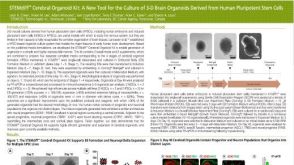 科学海报STEMdiff Cerebral Organoid Kit: A New Tool for the Culture of 3D Brain Organoids Derived from Human Pluripotent Stem Cells

 沪公网安备31010102008431号