Lu HF et al. (MAR 2014)
Biomaterials 35 9 2816--2826
A defined xeno-free and feeder-free culture system for the derivation, expansion and direct differentiation of transgene-free patient-specific induced pluripotent stem cells
A defined xeno-free system for patient-specific iPSC derivation and differentiation is required for translation to clinical applications. However,standard somatic cell reprogramming protocols rely on using MEFs and xenogeneic medium,imposing a significant obstacle to clinical translation. Here,we describe a well-defined culture system based on xeno-free media and LN521 substrate which supported i) efficient reprogramming of normal or diseased skin fibroblasts from human of different ages into hiPSCs with a 15-30 fold increase in efficiency over conventional viral vector-based method; ii) long-term self-renewal of hiPSCs; and iii) direct hiPSC lineage-specific differentiation. Using an excisable polycistronic vector and optimized culture conditions,we achieved up to 0.15%-0.3% reprogramming efficiencies. Subsequently,transgene-free hiPSCs were obtained by Cre-mediated excision of the reprogramming factors. The derived iPSCs maintained long-term self-renewal,normal karyotype and pluripotency,as demonstrated by the expression of stem cell markers and ability to form derivatives of three germ layers both in vitro and in vivo. Importantly,we demonstrated that Parkinson's patient transgene-free iPSCs derived using the same system could be directed towards differentiation into dopaminergic neurons under xeno-free culture conditions. Our approach provides a safe and robust platform for the generation of patient-specific iPSCs and derivatives for clinical and translational applications. textcopyright 2013 Elsevier Ltd.
View Publication
产品类型:
产品号#:
05860
05880
05850
05857
05870
05875
07923
07920
85850
85857
85870
85875
77003
77004
07922
200-0117
产品名:
Dispase (1 U/mL)
ACCUTASE™
mTeSR™1
mTeSR™1
CellAdhere™ Laminin-521
ACCUTASE™
CellAdhere™ Laminin-521
Fu X et al. (AUG 2010)
Tissue engineering. Part C,Methods 16 4 719--733
Autologous feeder cells from embryoid body outgrowth support the long-term growth of human embryonic stem cells more effectively than those from direct differentiation.
Autologous feeder cells have been developed by various methods to minimize the presence of xenogenic entities in human embryonic stem cell (hESC) cultures. However,there was no systematic comparison of supportive effects of the feeder cells on hESC growth,nor comparison to the supportive effects of various feeder-free culture systems and standard mouse feeder cells. In this study,we aimed to compare the supportive abilities of autologous feeders derived either directly from H9 hESCs (H9 dF) or from outgrowth of embryoid body predifferentiated in suspension from H9 hESCs (H9 ebF). Mouse feeder system and matrigel-mTeSR1 feeder-free system were used as controls. H9 ebF was found to secrete more basic fibroblast growth factor in the conditioned medium than H9 dF did. The undifferentiated state of H9 hESCs was sustained more stably on H9 ebF than on H9 dF,and the differentiation potential of H9 hESCs on H9 ebF was higher than on H9 dF. We concluded that H9 ebF was an optimal autologous feeder to maintain the long-term undifferentiated state of hESCs in our current culture system. This study helps to standardize the autologous culture of hESCs. It also suggests a more definite direction for future development of xeno-free culture system for hESCs.
View Publication
产品类型:
产品号#:
05850
05857
05870
05875
85850
85857
85870
85875
产品名:
mTeSR™1
mTeSR™1
Li S et al. (JAN 2014)
Heart Rhythm 11 1 133--140
Mechanistic basis of excitation-contraction coupling in human pluripotent stem cell-derived ventricular cardiomyocytes revealed by Ca2+ spark characteristics: Direct evidence of functional Ca2+-induced Ca 2+ release
Background Human embryonic stem cells (hESCs) serve as a potential unlimited ex vivo source of cardiomyocytes for disease modeling,cardiotoxicity screening,drug discovery,and cell-based therapies. Despite the fundamental importance of Ca2+-induced Ca2+ release in excitation-contraction coupling,the mechanistic basis of Ca2+ handling of hESC-derived ventricular cardiomyocytes (VCMs) remains elusive. Objectives To study Ca2+ sparks as unitary events of Ca2+ handling for mechanistic insights. Methods To avoid ambiguities owing to the heterogeneous nature,we experimented with hESC-VCMs,purified on the basis of zeocin resistance and signature ventricular action potential after LV-MLC2v-tdTomato-T2A-Zeo transduction. Results Ca2+ sparks that were sensitive to inhibitors of sarco/endoplasmic reticulum Ca2+-ATPase (thapsigargin and cyclopiazonic acid) and ryanodine receptor (RyR; ryanodine,tetracaine) but not inositol trisphosphate receptors (xestospongin C and 2-aminoethyl diphenylborinate) could be recorded. In a permeabilization model,we further showed that RyRs could be sensitized by Ca2+. Increasing external Ca2+ dramatically escalated the basal Ca2+ and spark frequency. Furthermore,RyR-mediated Ca2+ release sensitized nearby RyRs,leading to compound Ca2+ sparks. Depolarization or L-type Ca2+ channel agonist (FPL 64176 and Bay K8644) pretreatment induced an extracellular Ca2+-dependent cytosolic Ca2+ increase and reduced the sarcoplasmic reticulum content. By contrast,removal of external Na+ or the addition of the Na+-Ca2+ exchanger inhibitor (KB-R7943 and SN-6) had no effect,suggesting that the Na+-Ca2+ exchanger is not involved in triggering sparks. Inhibition of mitochondrial Ca2+ uptake by carbonyl cyanide m-chlorophenyl hydrazone promoted Ca2+ waves. Conclusion Taken collectively,our findings provide the first lines of direct evidence that hESC-VCMs have functional Ca2+-induced Ca2+ release. However,the sarcoplasmic reticulum is leaky and without a mature terminating mechanism in early development.
View Publication
Directed evolution of a recombinase that excises the provirus of most HIV-1 primary isolates with high specificity.
Current combination antiretroviral therapies (cART) efficiently suppress HIV-1 reproduction in humans,but the virus persists as integrated proviral reservoirs in small numbers of cells. To generate an antiviral agent capable of eradicating the provirus from infected cells,we employed 145 cycles of substrate-linked directed evolution to evolve a recombinase (Brec1) that site-specifically recognizes a 34-bp sequence present in the long terminal repeats (LTRs) of the majority of the clinically relevant HIV-1 strains and subtypes. Brec1 efficiently,precisely and safely removes the integrated provirus from infected cells and is efficacious on clinical HIV-1 isolates in vitro and in vivo,including in mice humanized with patient-derived cells. Our data suggest that Brec1 has potential for clinical application as a curative HIV-1 therapy.
View Publication
A synthetic, xeno-free peptide surface for expansion and directed differentiation of human induced pluripotent stem cells.
Human induced pluripotent stem cells have the potential to become an unlimited cell source for cell replacement therapy. The realization of this potential,however,depends on the availability of culture methods that are robust,scalable,and use chemically defined materials. Despite significant advances in hiPSC technologies,the expansion of hiPSCs relies upon the use of animal-derived extracellular matrix extracts,such as Matrigel,which raises safety concerns over the use of these products. In this work,we investigated the feasibility of expanding and differentiating hiPSCs on a chemically defined,xeno-free synthetic peptide substrate,i.e. Corning Synthemax(®) Surface. We demonstrated that the Synthemax Surface supports the attachment,spreading,and proliferation of hiPSCs,as well as hiPSCs' lineage-specific differentiation. hiPSCs colonies grown on Synthemax Surfaces exhibit less spread and more compact morphology compared to cells grown on Matrigel™. The cytoskeleton characterization of hiPSCs grown on the Synthemax Surface revealed formation of denser actin filaments in the cell-cell interface. The down-regulation of vinculin and up-regulation of zyxin expression were also observed in hiPSCs grown on the Synthemax Surface. Further examination of cell-ECM interaction revealed that hiPSCs grown on the Synthemax Surface primarily utilize α(v)β(5) integrins to mediate attachment to the substrate,whereas multiple integrins are involved in cell attachment to Matrigel. Finally,hiPSCs can be maintained undifferentiated on the Synthemax Surface for more than ten passages. These studies provide a novel approach for expansion of hiPSCs using synthetic peptide engineered surface as a substrate to avoid a potential risk of contamination and lot-to-lot variability with animal derived materials.
View Publication
产品类型:
产品号#:
05850
05857
05870
05875
07930
07931
07940
07955
07956
07959
07954
85850
85857
85870
85875
100-1061
07952
产品名:
CryoStor® CS10
CryoStor® CS10
CryoStor® CS10
CryoStor® CS10
CryoStor® CS10
mTeSR™1
mTeSR™1
CryoStor® CS10
CryoStor® CS10
Richardson T et al. (DEC 2013)
Tissue Engineering: Part A 20 23-24 Epub ahead of print
Alginate encapsulation of human embryonic stem cells to enhance directed differentiation to pancreatic islet-like cells
The pluripotent property of hESCs makes them attractive for treatment of degenerative diseases such as diabetes. We have developed a stage-wise directed differentiation protocol to produce alginate-encapsulated islet-like cells derived from hESCs,which can be directly implanted for diabetes therapy. The advantage of alginate encapsulation lies in its capability to immunoisolate,along with the added possibility of scalable culture. We have evaluated the possibility of encapsulating hESCs at different stages of differentiation. Encapsulation of predifferentiated cells resulted in insufficient cellular yield and differentiation. On the other hand,encapsulation of undifferentiated hESCs followed by differentiation induction upon encapsulation,resulted in the highest viability and differentiation. More striking was that alginate encapsulation resulted in a much stronger differentiation compared to parallel 2D cultures,resulting in 20-fold increase in c-peptide protein synthesis. To elucidate the mechanism contributing to encapsulation-mediated enhancement in hESC maturation,investigation of the signaling pathways revealed interesting insight. While the phospho-protein levels of all the tested signaling molecules were lower under encapsulation,the ratio of pSMAD/pAKT was significantly higher,indicating a more efficient signal transduction under encapsulation. These results clearly demonstrate that alginate encapsulation of hESCs and differentiation to islet-cells types provides a potentially translatable treatment option for type1 diabetes.
View Publication
产品类型:
产品号#:
05850
05857
05870
05875
85850
85857
85870
85875
产品名:
mTeSR™1
mTeSR™1
Yang L et al. ( 2014)
Current Protocols in Molecular Biology 107 31.1.1----17
CRISPR/Cas9-Directed Genome Editing of Cultured Cells.
Human genome engineering has been transformed by the introduction of the CRISPR (clustered regularly interspaced short palindromic repeats)/Cas (CRISPR-associated) system found in most bacteria and archaea. Type II CRISPR/Cas systems have been engineered to induce RNA-guided genome editing in human cells,where small RNAs function together with Cas9 nucleases for sequence-specific cleavage of target sequences. Here we describe the protocol for Cas9-mediated human genome engineering,including construct building and transfection methods necessary for delivering Cas9 and guide RNA (gRNA) into human-induced pluripotent stem cells (hiPSCs) and HEK293 cells. Following genome editing,we also describe methods to assess genome editing efficiency using next-generation sequencing and isolate monoclonal hiPSCs with the desired modifications for downstream applications.
View Publication
产品类型:
产品号#:
05850
05857
05870
05875
07903
85850
85857
85870
85875
产品名:
0.1% 明胶水溶液
mTeSR™1
mTeSR™1
Zhang P et al. (SEP 2014)
Journal of visualized experiments : JoVE 91 51737
Directed dopaminergic neuron differentiation from human pluripotent stem cells.
Dopaminergic (DA) neurons in the substantia nigra pars compacta (also known as A9 DA neurons) are the specific cell type that is lost in Parkinson's disease (PD). There is great interest in deriving A9 DA neurons from human pluripotent stem cells (hPSCs) for regenerative cell replacement therapy for PD. During neural development,A9 DA neurons originate from the floor plate (FP) precursors located at the ventral midline of the central nervous system. Here,we optimized the culture conditions for the stepwise differentiation of hPSCs to A9 DA neurons,which mimics embryonic DA neuron development. In our protocol,we first describe the efficient generation of FP precursor cells from hPSCs using a small molecule method,and then convert the FP cells to A9 DA neurons,which could be maintained in vitro for several months. This efficient,repeatable and controllable protocol works well in human embryonic stem cells (hESCs) and human induced pluripotent stem cells (hiPSCs) from normal persons and PD patients,in which one could derive A9 DA neurons to perform in vitro disease modeling and drug screening and in vivo cell transplantation therapy for PD.
View Publication
产品类型:
产品号#:
05850
05857
05870
05875
85850
85857
85870
85875
产品名:
mTeSR™1
mTeSR™1
Yan Y et al. (JUN 2016)
Acta Biomaterialia 42 114--126
Neural patterning of human induced pluripotent stem cells in 3-D cultures for studying biomolecule-directed differential cellular responses
Introduction Appropriate neural patterning of human induced pluripotent stem cells (hiPSCs) is critical to generate specific neural cells/tissues and even mini-brains that are physiologically relevant to model neurological diseases. However,the capacity of signaling factors that regulate 3-D neural tissue patterning in vitro and differential responses of the resulting neural populations to various biomolecules have not yet been fully understood. Methods By tuning neural patterning of hiPSCs with small molecules targeting sonic hedgehog (SHH) signaling,this study generated different 3-D neuronal cultures that were mainly comprised of either cortical glutamatergic neurons or motor neurons. Results Abundant glutamatergic neurons were observed following the treatment with an antagonist of SHH signaling,cyclopamine,while Islet-1 and HB9-expressing motor neurons were enriched by an SHH agonist,purmorphamine. In neurons derived with different neural patterning factors,whole-cell patch clamp recordings showed similar voltage-gated Na+/K+ currents,depolarization-evoked action potentials and spontaneous excitatory post-synaptic currents. Moreover,these different neuronal populations exhibited differential responses to three classes of biomolecules,including (1) matrix metalloproteinase inhibitors that affect extracellular matrix remodeling; (2) N-methyl-D-aspartate that induces general neurotoxicity; and (3) amyloid ?? (1???42) oligomers that cause neuronal subtype-specific neurotoxicity. Conclusions This study should advance our understanding of hiPSC self-organization and neural tissue development and provide a transformative approach to establish 3-D models for neurological disease modeling and drug discovery. Statement of Significance Appropriate neural patterning of human induced pluripotent stem cells (hiPSCs) is critical to generate specific neural cells,tissues and even mini-brains that are physiologically relevant to model neurological diseases. However,the capability of sonic hedgehog-related small molecules to tune different neuronal subtypes in 3-D differentiation from hiPSCs and the differential cellular responses of region-specific neuronal subtypes to various biomolecules have not been fully investigated. By tuning neural patterning of hiPSCs with small molecules targeting sonic hedgehog signaling,this study provides knowledge on the differential susceptibility of region-specific neuronal subtypes derived from hiPSCs to different biomolecules in extracellular matrix remodeling and neurotoxicity. The findings are significant for understanding 3-D neural patterning of hiPSCs for the applications in brain organoid formation,neurological disease modeling,and drug discovery.
View Publication
产品类型:
产品号#:
05850
05857
05870
05875
85850
85857
85870
85875
产品名:
mTeSR™1
mTeSR™1
Li H et al. (SEP 2016)
In vitro cellular & developmental biology. Animal 52 8 885--893
Directed differentiation of human embryonic stem cells into keratinocyte progenitors in vitro: an attempt with promise of clinical use.
Human embryonic stem cells (hESCs) can differentiate into all somatic lineages including stratified squamous epithelia. Thus,efficient methods are required to direct hESC differentiation to obtain a pure subpopulation for tissue engineering. The study aimed to assess the effects of retinoic acid (RA),bone morphogenetic protein-4 (BMP4),and ascorbic acid (AA) on the differentiation of hESCs into keratinocyte progenitors in vitro. The first media contained AA and BMP4; the second contained RA,AA,and BMP4; the third was commercial-defined keratinocyte serum-free medium,which was used to differentiate H9 hESCs (direct approach) or embryoid bodies (EBs) (indirect approach) into keratinocyte progenitors. Real-time RT-PCR,immunofluorescence,and flow-cytometry were used to characterize the differentiated cells. Cells induced by AA + BMP4 + RA showed the typical epithelial morphology,while cells induced by AA + BMP4 showed multiple appearances. CK14 and p63 messenger RNA (mRNA) expressions in the AA + BMP4 + RA-treated cells were higher than those of the AA + BMP4-treated cells (CK14: 22.4-fold; p63: 84.7-fold). Epithelial marker CK18 mRNA expressions at 14 d of differentiation and keratinocyte marker CK14 and transcription factor p63 mRNA expressions at 35 d of differentiation were higher in cells differentiated from hESCs compared with those differentiated from EBs (CK18 10.51 ± 3.26 vs. 6.67 ± 1.28; CK14 9.27 ± 3.61 vs. 5.32 ± 1.86; p63 0.73 ± 0.06 vs. 0.44 ± 0.12,all P textless 0.05) After hESC induction by AA+BMP4+RA,CK14 mRNA expression was upregulated after day 21,peaking by 35 d of differentiation. Combined RA,BMP4,and AA could effectively induce differentiation of hESCs into keratinocyte progenitors in vitro. These keratinocytes could be used for oral mucosa and skin tissue engineering.
View Publication


 EasySep™小鼠TIL(CD45)正选试剂盒




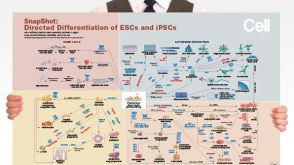 挂图Directed Differentiation of Pluripotent Stem Cells Strategies for differentiating ES and iPS cells into ectoderm, endoderm or mesoderm

 沪公网安备31010102008431号