Generation and characterization of patient-specific iPSC model for cardiovascular disease
Advances in differentiation of cardiomyocytes from human induced pluripotent stem cell (hiPSC) were emerged as a tool for modeling of cardiovascular disease that recapitulates the phenotype for the purpose of drug screening,biomarker discovery,and testing of single-nucleotide polymorphism (SNP) as a modifier for disease stratification. Here,we describe the (1) retroviral reprogramming strategies in the generation of human iPSC,(2) methodology in characterization of iPSC in order to identify the stem cell clones with the best quality,and (3) protocol of cardiac differentiation by modulation of Wnt signaling and $\$-catenin pathway.
View Publication
产品类型:
产品号#:
85850
85857
产品名:
mTeSR™1
mTeSR™1
Sproul Aa et al. (JAN 2014)
Acta Neuropathologica Communications 2 1 4
Generation of iPSC lines from archived non-cryoprotected biobanked dura mater
Induced pluripotent stem cells (iPSCs) derived from patients with neurodegenerative disease generally lack neuropathological confirmation,the gold standard for disease classification and grading of severity. The use of tissue with a definitive neuropathological diagnosis would be an ideal source for iPSCs. The challenge to this approach is that the majority of biobanked brain tissue was not meant for growing live cells,and thus was not frozen in the presence of cryoprotectants such as DMSO. PMID: 24398250
View Publication
产品类型:
产品号#:
85850
85857
产品名:
mTeSR™1
mTeSR™1
Chin EWM et al. (JUL 2016)
Neuromolecular medicine 18 3 364--377
Choline Ameliorates Disease Phenotypes in Human iPSC Models of Rett Syndrome.
Rett syndrome (RTT) is a postnatal neurodevelopmental disorder that primarily affects girls. Mutations in the methyl-CpG-binding protein 2 (MECP2) gene account for approximately 95 % of all RTT cases. To model RTT in vitro,we generated induced pluripotent stem cells (iPSCs) from fibroblasts of two RTT patients with different mutations (MECP2 (R306C) and MECP2 (1155$$32)) in their MECP2 gene. We found that these iPSCs were capable of differentiating into functional neurons. Compared to control neurons,the RTT iPSC-derived cells had reduced soma size and a decreased amount of synaptic input,evident both as fewer Synapsin 1-positive puncta and a lower frequency of spontaneous excitatory postsynaptic currents. Supplementation of the culture media with choline rescued all of these defects. Choline supplementation may act through changes in the expression of choline acetyltransferase,an important enzyme in cholinergic signaling,and also through alterations in the lipid metabolite profiles of the RTT neurons. Our study elucidates the possible mechanistic pathways for the effect of choline on human RTT cell models,thereby illustrating the potential for using choline as a nutraceutical to treat RTT.
View Publication
产品类型:
产品号#:
85850
85857
产品名:
mTeSR™1
mTeSR™1
M. R. Hildebrandt et al. (dec 2019)
Stem cell reports 13 6 1126--1141
Precision Health Resource of Control iPSC Lines for Versatile Multilineage Differentiation.
Induced pluripotent stem cells (iPSC) derived from healthy individuals are important controls for disease-modeling studies. Here we apply precision health to create a high-quality resource of control iPSCs. Footprint-free lines were reprogrammed from four volunteers of the Personal Genome Project Canada (PGPC). Multilineage-directed differentiation efficiently produced functional cortical neurons,cardiomyocytes and hepatocytes. Pilot users demonstrated versatility by generating kidney organoids,T lymphocytes,and sensory neurons. A frameshift knockout was introduced into MYBPC3 and these cardiomyocytes exhibited the expected hypertrophic phenotype. Whole-genome sequencing-based annotation of PGPC lines revealed on average 20 coding variants. Importantly,nearly all annotated PGPC and HipSci lines harbored at least one pre-existing or acquired variant with cardiac,neurological,or other disease associations. Overall,PGPC lines were efficiently differentiated by multiple users into cells from six tissues for disease modeling,and variant-preferred healthy control lines were identified for specific disease settings.
View Publication
产品类型:
产品号#:
05835
05839
05010
85850
85857
产品名:
STEMdiff™ 神经诱导培养基
STEMdiff™ 神经诱导培养基
STEMdiff™ 心室肌细胞分化试剂盒
mTeSR™1
mTeSR™1
Wang G et al. (JAN 2017)
Nature protocols 12 1 88--103
Efficient, footprint-free human iPSC genome editing by consolidation of Cas9/CRISPR and piggyBac technologies.
Genome editing of human induced pluripotent stem cells (hiPSCs) offers unprecedented opportunities for in vitro disease modeling and personalized cell replacement therapy. The introduction of Cas9-directed genome editing has expanded adoption of this approach. However,marker-free genome editing using standard protocols remains inefficient,yielding desired targeted alleles at a rate of ∼1-5%. We developed a protocol based on a doxycycline-inducible Cas9 transgene carried on a piggyBac transposon to enable robust and highly efficient Cas9-directed genome editing,so that a parental line can be expeditiously engineered to harbor many separate mutations. Treatment with doxycycline and transfection with guide RNA (gRNA),donor DNA and piggyBac transposase resulted in efficient,targeted genome editing and concurrent scarless transgene excision. Using this approach,in 7 weeks it is possible to efficiently obtain genome-edited clones with minimal off-target mutagenesis and with indel mutation frequencies of 40-50% and homology-directed repair (HDR) frequencies of 10-20%.
View Publication
产品类型:
产品号#:
85850
85857
产品名:
mTeSR™1
mTeSR™1
Pei Y et al. (MAR 2015)
Scientific reports 5 9205
A platform for rapid generation of single and multiplexed reporters in human iPSC lines.
Induced pluripotent stem cells (iPSC) are important tools for drug discovery assays and toxicology screens. In this manuscript,we design high efficiency TALEN and ZFN to target two safe harbor sites on chromosome 13 and 19 in a widely available and well-characterized integration-free iPSC line. We show that these sites can be targeted in multiple iPSC lines to generate reporter systems while retaining pluripotent characteristics. We extend this concept to making lineage reporters using a C-terminal targeting strategy to endogenous genes that express in a lineage-specific fashion. Furthermore,we demonstrate that we can develop a master cell line strategy and then use a Cre-recombinase induced cassette exchange strategy to rapidly exchange reporter cassettes to develop new reporter lines in the same isogenic background at high efficiency. Equally important we show that this recombination strategy allows targeting at progenitor cell stages,further increasing the utility of the platform system. The results in concert provide a novel platform for rapidly developing custom single or dual reporter systems for screening assays.
View Publication
产品类型:
产品号#:
85850
85857
产品名:
mTeSR™1
mTeSR™1
Tidball AM et al. (JUL 2017)
Stem cell reports
Rapid Generation of Human Genetic Loss-of-Function iPSC Lines by Simultaneous Reprogramming and Gene Editing.
Specifically ablating genes in human induced pluripotent stem cells (iPSCs) allows for studies of gene function as well as disease mechanisms in disorders caused by loss-of-function (LOF) mutations. While techniques exist for engineering such lines,we have developed and rigorously validated a method of simultaneous iPSC reprogramming while generating CRISPR/Cas9-dependent insertions/deletions (indels). This approach allows for the efficient and rapid formation of genetic LOF human disease cell models with isogenic controls. The rate of mutagenized lines was strikingly consistent across experiments targeting four different human epileptic encephalopathy genes and a metabolic enzyme-encoding gene,and was more efficient and consistent than using CRISPR gene editing of established iPSC lines. The ability of our streamlined method to reproducibly generate heterozygous and homozygous LOF iPSC lines with passage-matched isogenic controls in a single step provides for the rapid development of LOF disease models with ideal control lines,even in the absence of patient tissue.
View Publication
Phetfong J et al. (JUL 2016)
Cell and Tissue Research 365 1 101--112
Cell type of origin influences iPSC generation and differentiation to cells of the hematoendothelial lineage
The use of induced pluripotent stem cells (iPSCs) as a source of cells for cell-based therapy in regenerative medicine is hampered by the limited efficiency and safety of the reprogramming procedure and the low efficiency of iPSC differentiation to specialized cell types. Evidence suggests that iPSCs retain an epigenetic memory of their parental cells with a possible influence on their differentiation capacity in vitro. We reprogramme three cell types,namely human umbilical cord vein endothelial cells (HUVECs),endothelial progenitor cells (EPCs) and human dermal fibroblasts (HDFs),to iPSCs and compare their hematoendothelial differentiation capacity. HUVECs and EPCs were at least two-fold more efficient in iPSC reprogramming than HDFs. Both HUVEC- and EPC-derived iPSCs exhibited high potentiality toward endothelial cell differentiation compared with HDF-derived iPSCs. However,only HUVEC-derived iPSCs showed efficient differentiation to hematopoietic stem/progenitor cells. Examination of DNA methylation at promoters of hematopoietic and endothelial genes revealed evidence for the existence of epigenetic memory at the endothelial genes but not the hematopoietic genes in iPSCs derived from HUVECs and EPCs indicating that epigenetic memory involves an endothelial differentiation bias. Our findings suggest that endothelial cells and EPCs are better sources for iPSC derivation regarding their reprogramming efficiency and that the somatic cell type used for iPSC generation toward specific cell lineage differentiation is of importance.
View Publication
产品类型:
产品号#:
04435
04445
07923
85850
85857
产品名:
MethoCult™ H4435 Enriched
MethoCult™ H4435 Enriched
Dispase (1 U/mL)
mTeSR™1
mTeSR™1
Srinivasakumar N et al. (DEC 2013)
PeerJ 1 e224
Gammaretroviral vector encoding a fluorescent marker to facilitate detection of reprogrammed human fibroblasts during iPSC generation.
Induced pluripotent stem cells (iPSCs) are becoming mainstream tools to study mechanisms of development and disease. They have a broad range of applications in understanding disease processes,in vitro testing of novel therapies,and potential utility in regenerative medicine. Although the techniques for generating iPSCs are becoming more straightforward,scientists can expend considerable resources and time to establish this technology. A major hurdle is the accurate determination of valid iPSC-like colonies that can be selected for further cloning and characterization. In this study,we describe the use of a gammaretroviral vector encoding a fluorescent marker,mRFP1,to not only monitor the efficiency of initial transduction but also to identify putative iPSC colonies through silencing of mRFP1 gene as a consequence of successful reprogramming.
View Publication
Carcamo-Orive I et al. (APR 2017)
Cell stem cell 20 4 518--532.e9
Analysis of Transcriptional Variability in a Large Human iPSC Library Reveals Genetic and Non-genetic Determinants of Heterogeneity.
Variability in induced pluripotent stem cell (iPSC) lines remains a concern for disease modeling and regenerative medicine. We have used RNA-sequencing analysis and linear mixed models to examine the sources of gene expression variability in 317 human iPSC lines from 101 individuals. We found that ∼50% of genome-wide expression variability is explained by variation across individuals and identified a set of expression quantitative trait loci that contribute to this variation. These analyses coupled with allele-specific expression show that iPSCs retain a donor-specific gene expression pattern. Network,pathway,and key driver analyses showed that Polycomb targets contribute significantly to the non-genetic variability seen within and across individuals,highlighting this chromatin regulator as a likely source of reprogramming-based variability. Our findings therefore shed light on variation between iPSC lines and illustrate the potential for our dataset and other similar large-scale analyses to identify underlying drivers relevant to iPSC applications.
View Publication


 EasySep™小鼠TIL(CD45)正选试剂盒




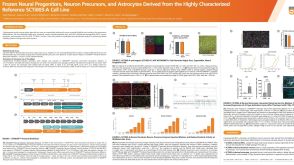 科学海报Frozen Neural Progenitors, Neuron Precursors, and Astrocytes Derived from the Highly Characterized Reference iPSC Line, SCTi003-A

 沪公网安备31010102008431号