Pijuan-Galitó et al. (NOV 2014)
Journal of Biological Chemistry 289 48 33492--33502
Serum Inter-$\$-inhibitor activates the Yes tyrosine kinase and YAP/TEAD transcriptional complex in mouse embryonic stem cells.
We have previously demonstrated that the Src family kinase Yes,the Yes-associated protein (YAP) and TEA domain TEAD2 transcription factor pathway are activated by leukemia inhibitory factor (LIF) and contribute to mouse embryonic stem (mES) cell maintenance of pluripotency and self-renewal. In addition,we have shown that fetal bovine serum (FBS) induces Yes auto-phosphorylation and activation. In the present study we confirm that serum also activates TEAD-dependent transcription in a time- and dose-dependent manner and we identify Inter-α-inhibitor (IαI) as a component in serum capable of activating the Yes/YAP/TEAD pathway by inducing Yes auto-phosphorylation,YAP nuclear localization and TEAD-dependent transcription. The cleaved heavy chain 2 (HC2) sub-component of IαI,is demonstrated to be responsible for this effect. Moreover,IαI is also shown to efficiently increase expression of TEAD-downstream target genes including well-known stem cell factors Nanog and Oct 3/4. IαI is not produced by the ES cells per se but is added to the cells via the cell culture medium containing serum or serum-derived components such as bovine serum albumin (BSA). In conclusion,we describe a novel function of IαI in activating key pluripotency pathways associated with ES cell maintenance and self-renewal.
View Publication
产品类型:
产品号#:
05850
05857
05870
05875
85850
85857
85870
85875
产品名:
mTeSR™1
mTeSR™1
Zhang J et al. (FEB 2007)
The Journal of clinical investigation 117 2 473--81
Primitive hematopoietic cells resist HIV-1 infection via p21.
Hematopoietic stem cells are resistant to HIV-1 infection. Here,we report a novel mechanism by which the cyclin-dependent kinase inhibitor (CKI) p21(Waf1/Cip1/Sdi1) (p21),a known regulator of stem cell pool size,restricts HIV-1 infection of primitive hematopoietic cells. Modifying p21 expression altered HIV-1 infection prior to changes in cell cycling and was selective for p21 since silencing the related CKIs,p27(Kip1) and p18(INK4C),had no effect on HIV-1. We show that p21 blocked viral infection by complexing with HIV-1 integrase and aborting chromosomal integration. A closely related lentivirus with a distinct integrase,SIVmac-251,and the other cell-intrinsic inhibitors of HIV-1,Trim5alpha,PML,Murr1,and IFN-alpha,were unaffected by p21. Therefore,p21 is an endogenous cellular component in stem cells that provides a unique molecular barrier to HIV-1 infection and may explain how these cells remain an uninfected sanctuary" in HIV disease."
View Publication
Rebel VI et al. (NOV 2002)
Proceedings of the National Academy of Sciences of the United States of America 99 23 14789--94
Distinct roles for CREB-binding protein and p300 in hematopoietic stem cell self-renewal.
Hematopoietic stem cells (HSC) are tightly regulated through,as yet,undefined mechanisms that balance self-renewal and differentiation. We have identified a role for the transcriptional coactivators CREB-binding protein (CBP) and p300 in such HSC fate decisions. A full dose of CBP,but not p300,is crucial for HSC self-renewal. Conversely,p300,but not CBP,is essential for proper hematopoietic differentiation. Furthermore,in chimeric mice,hematologic malignancies emerged from both CBP(-/-) and p300(-/-) cell populations. Thus,CBP and p300 play essential but distinct roles in maintaining normal hematopoiesis,and,in mice,both are required for preventing hematologic tumorigenesis.
View Publication
产品类型:
产品号#:
06902
06952
00321
00322
00323
00324
00325
产品名:
Denning-Kendall P et al. (JAN 2003)
Stem cells (Dayton,Ohio) 21 6 694--701
Cobblestone area-forming cells in human cord blood are heterogeneous and differ from long-term culture-initiating cells.
The long-term culture-initiating cell (LTC-IC) assay is a physiological approach to the quantitation of primitive human hematopoietic cells. The readout using identification of cobblestone area-forming cells (CAFC) has gained popularity over the LTC-IC readout where cells are subcultured in a colony-forming cell assay. However,comparing the two assays,cord blood (CB) mononuclear cell (MNC) samples were found to contain a higher frequency of CAFC than LTC-IC (126 +/- 83 versus 40 +/- 31 per 10(5) cells,p = 0.0001). Overall,60% of week-5 cobblestones produced by CB MNC were not functional LTC-IC and were classified as false." Separation of CB MNC using immunomagnetic columns showed that false cobblestones were CD34(-)/lineage(+). Purified CD34(+) cells�
View Publication
产品类型:
产品号#:
09500
09600
09650
产品名:
BIT 9500血清替代物
StemSpan™ SFEM
StemSpan™ SFEM
De Kock J et al. (SEP 2011)
Toxicology in vitro : an international journal published in association with BIBRA 25 6 1191--202
Evaluation of the multipotent character of human foreskin-derived precursor cells.
In the present study,the trilineage differentiation capacity of human foreskin-derived precursor cells (hSKP) was evaluated upon exposure to various (non)commercial (i and ii) ectodermal,(iii) mesodermal and (iv) endodermal differentiation media. (i) Upon sequential exposure of the cells to keratinocyte growth (CnT-07® or CnT-057®) and differentiation (CnT-02® or Epilife®) media,keratinocyte-like cells (filaggrin(+)/involucrin(+)) were obtained. The preferred keratinocyte differentiation strategy was exposure to CnT-07®. (ii) When hSKP were subsequently exposed to NeuroCult® media,cells underwent a weak neuro-ectodermal differentiation expressing nestin,myelin binding protein (MBP),vimentin and alpha-foetoprotein (AFP). Sequential exposure to NPMM® and NPDM® generated cells with an inferior neuro-ectodermal phenotype (nestin(+)/vimentin(+)/MBP(-)/AFP(-)). (iii) Upon exposure of hSKP to insulin-transferrin-selenite (ITS) and dexamethasone,small lipid droplets were observed,suggesting their differentiation potential towards adipocyte-like cells. (iv) Finally,after sequential exposure to hepatogenic growth factors and cytokines,an immature hepatic cell population was generated. The presence of pre-albumin suggests that a sequential exposure strategy is here superior to a cocktail approach. In summary,a considerable impact of different (non)commercial media on the lineage-specific differentiation efficiency of hSKP is shown. In addition,we demonstrate here for the first time that,in a suitable keratinocyte stimulating micro-environment,hSKP can generate keratinocyte-like progeny in vitro.
View Publication
产品类型:
产品号#:
05751
产品名:
NeuroCult™ NS-A 扩增试剂盒(人)
Lidonnici MR et al. (MAY 2008)
Blood 111 9 4771--9
Requirement of c-Myb for p210(BCR/ABL)-dependent transformation of hematopoietic progenitors and leukemogenesis.
The c-Myb gene encodes a transcription factor required for proliferation and survival of normal myeloid progenitors and leukemic blast cells. Targeting of c-Myb by antisense oligodeoxynucleotides has suggested that myeloid leukemia blasts (including chronic myelogenous leukemia [CML]-blast crisis cells) rely on c-Myb expression more than normal progenitors,but a genetic approach to assess the requirement of c-Myb by p210(BCR/ABL)-transformed hematopoietic progenitors has not been taken. We show here that loss of a c-Myb allele had modest effects (20%-28% decrease) on colony formation of nontransduced progenitors,while the effect on p210(BCR/ABL)-expressing Lin(-) Sca-1(+) and Lin(-) Sca-1(+)Kit(+) cells was more pronounced (50%-80% decrease). Using a model of CML-blast crisis,mice (n = 14) injected with p210(BCR/ABL)-transduced p53(-/-)c-Myb(w/w) marrow cells developed leukemia rapidly and had a median survival of 26 days,while only 67% of mice (n = 12) injected with p210(BCR/ABL)-transduced p53(-/-)c-Myb(w/d) marrow cells died of leukemia with a median survival of 96 days. p210(BCR/ABL)-transduced c-Myb(w/w) and c-Myb(w/d) marrow progenitors expressed similar levels of the c-Myb-regulated genes c-Myc and cyclin B1,while those of Bcl-2 were reduced. However,ectopic Bcl-2 expression did not enhance colony formation of p210(BCR/ABL)-transduced c-Myb(w/d) Lin(-)Sca-1(+)Kit(+) cells. Together,these studies support the requirement of c-Myb for p210(BCR/ABL)-dependent leukemogenesis.
View Publication
产品类型:
产品号#:
04230
产品名:
MethoCult™ H4230
Tang C et al. (SEP 2011)
Nature biotechnology 29 9 829--34
An antibody against SSEA-5 glycan on human pluripotent stem cells enables removal of teratoma-forming cells.
An important risk in the clinical application of human pluripotent stem cells (hPSCs),including human embryonic and induced pluripotent stem cells (hESCs and hiPSCs),is teratoma formation by residual undifferentiated cells. We raised a monoclonal antibody against hESCs,designated anti-stage-specific embryonic antigen (SSEA)-5,which binds a previously unidentified antigen highly and specifically expressed on hPSCs--the H type-1 glycan. Separation based on SSEA-5 expression through fluorescence-activated cell sorting (FACS) greatly reduced teratoma-formation potential of heterogeneously differentiated cultures. To ensure complete removal of teratoma-forming cells,we identified additional pluripotency surface markers (PSMs) exhibiting a large dynamic expression range during differentiation: CD9,CD30,CD50,CD90 and CD200. Immunohistochemistry studies of human fetal tissues and bioinformatics analysis of a microarray database revealed that concurrent expression of these markers is both common and specific to hPSCs. Immunodepletion with antibodies against SSEA-5 and two additional PSMs completely removed teratoma-formation potential from incompletely differentiated hESC cultures.
View Publication
Shevde NK and Mael AA ( 2013)
Methods Mol Biol 946 535--546
Techniques in embryoid body formation from human pluripotent stem cells
Embryoid bodies (EBs) can be generated by culturing human pluripotent stem cells in ultra-low attachment culture vessels,under conditions that are adverse to pluripotency and proliferation. EBs generated in suspension cultures are capable of differentiating into cells of the ectoderm,mesoderm,and endoderm. In this chapter,we describe techniques for generation of EBs from human pluripotent stem cells. Once formed,the EBs can then be dissociated using specific enzymes to acquire a single cell population that has the potential to differentiate into cells of all three germ layers. This population can then be cultured in specialized conditions to obtain progenitor cells of specific lineages. Pure populations of progenitor cells generated on a large scale basis can be used for research,drug discovery/development,and cellular transplantation therapy.
View Publication
产品类型:
产品号#:
05850
05857
05870
05875
85850
85857
85870
85875
产品名:
mTeSR™1
mTeSR™1
Eckardt S et al. (FEB 2007)
Genes & development 21 4 409--19
Hematopoietic reconstitution with androgenetic and gynogenetic stem cells.
Parthenogenetic embryonic stem (ES) cells with two oocyte-derived genomes (uniparental) have been proposed as a source of autologous tissue for transplantation. The therapeutic applicability of any uniparental cell type is uncertain due to the consequences of genomic imprinting that in mammalian uniparental tissues causes unbalanced expression of imprinted genes. We transplanted uniparental fetal liver cells into lethally irradiated adult mice to test their capacity to replace adult hematopoietic tissue. Both maternal (gynogenetic) and paternal (androgenetic) derived cells conveyed long-term,multilineage reconstitution of hematopoiesis in recipients,with no associated pathologies. We also establish that uniparental ES cells can differentiate into transplantable hematopoietic progenitors in vitro that contribute to long-term hematopoiesis in recipients. Hematopoietic tissue in recipients maintained fidelity of parent-of-origin methylation marks at the Igf2/H19 locus; however,variability occurred in the maintenance of parental-specific methylation marks at other loci. In summary,despite genomic imprinting and its consequences on development that are particularly evident in the androgenetic phenotype,uniparental cells of both parental origins can form adult-transplantable stem cells and can repopulate an adult organ.
View Publication
产品类型:
产品号#:
03434
03444
产品名:
MethoCult™ GF M3434
MethoCult™ GF M3434
Levenstein ME et al. (DEC 2008)
Stem cells (Dayton,Ohio) 26 12 3099--107
Secreted proteoglycans directly mediate human embryonic stem cell-basic fibroblast growth factor 2 interactions critical for proliferation.
Human embryonic stem (ES) cells can be maintained in an undifferentiated state if the culture medium is first conditioned on a layer of mouse embryonic fibroblast (MEF) feeder cells. Here we show that human ES cell proliferation is coordinated by MEF-secreted heparan sulfate proteoglycans (HSPG) in conditioned medium (CM). These HSPG and other heparinoids can stabilize basic fibroblast growth factor (FGF2) in unconditioned medium at levels comparable to those observed in CM. They also directly mediate binding of FGF2 to the human ES cell surface,and their removal from CM impairs proliferation. Finally,we have developed a purification scheme for MEF-secreted HSPG in CM. Using column chromatography,immunoblotting,and mass spectrometry-based proteomic analysis,we have identified multiple HSPG species in CM. The results demonstrate that HSPG are key signaling cofactors in CM-based human ES cell culture.
View Publication


 EasySep™小鼠TIL(CD45)正选试剂盒




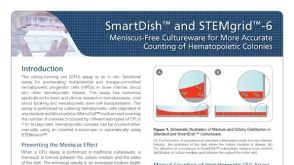 产品手册SmartDish™ and STEMgrid™-6 Meniscus-Free Cultureware for More Accurate Counting of Hematopoietic Colonies

 沪公网安备31010102008431号