DNA repair in human pluripotent stem cells is distinct from that in non-pluripotent human cells.
The potential for human disease treatment using human pluripotent stem cells,including embryonic stem cells and induced pluripotent stem cells (iPSCs),also carries the risk of added genomic instability. Genomic instability is most often linked to DNA repair deficiencies,which indicates that screening/characterization of possible repair deficiencies in pluripotent human stem cells should be a necessary step prior to their clinical and research use. In this study,a comparison of DNA repair pathways in pluripotent cells,as compared to those in non-pluripotent cells,demonstrated that DNA repair capacities of pluripotent cell lines were more heterogeneous than those of differentiated lines examined and were generally greater. Although pluripotent cells had high DNA repair capacities for nucleotide excision repair,we show that ultraviolet radiation at low fluxes induced an apoptotic response in these cells,while differentiated cells lacked response to this stimulus,and note that pluripotent cells had a similar apoptotic response to alkylating agent damage. This sensitivity of pluripotent cells to damage is notable since viable pluripotent cells exhibit less ultraviolet light-induced DNA damage than do differentiated cells that receive the same flux. In addition,the importance of screening pluripotent cells for DNA repair defects was highlighted by an iPSC line that demonstrated a normal spectral karyotype,but showed both microsatellite instability and reduced DNA repair capacities in three out of four DNA repair pathways examined. Together,these results demonstrate a need to evaluate DNA repair capacities in pluripotent cell lines,in order to characterize their genomic stability,prior to their pre-clinical and clinical use.
View Publication
产品类型:
产品号#:
85850
85857
产品名:
mTeSR™1
mTeSR™1
Dominici M et al. (JAN 2006)
Cytotherapy 8 4 315--7
Minimal criteria for defining multipotent mesenchymal stromal cells. The International Society for Cellular Therapy position statement.
The considerable therapeutic potential of human multipotent mesenchymal stromal cells (MSC) has generated markedly increasing interest in a wide variety of biomedical disciplines. However,investigators report studies of MSC using different methods of isolation and expansion,and different approaches to characterizing the cells. Thus it is increasingly difficult to compare and contrast study outcomes,which hinders progress in the field. To begin to address this issue,the Mesenchymal and Tissue Stem Cell Committee of the International Society for Cellular Therapy proposes minimal criteria to define human MSC. First,MSC must be plastic-adherent when maintained in standard culture conditions. Second,MSC must express CD105,CD73 and CD90,and lack expression of CD45,CD34,CD14 or CD11b,CD79alpha or CD19 and HLA-DR surface molecules. Third,MSC must differentiate to osteoblasts,adipocytes and chondroblasts in vitro. While these criteria will probably require modification as new knowledge unfolds,we believe this minimal set of standard criteria will foster a more uniform characterization of MSC and facilitate the exchange of data among investigators.
View Publication
Fibroblast growth factor-1 and -2 preserve long-term repopulating ability of hematopoietic stem cells in serum-free cultures.
In this study,we demonstrate that extended culture of unfractionated mouse bone marrow (BM) cells,in serum-free medium,supplemented only with fibroblast growth factor (FGF)-1,FGF-2,or FGF-1 +2 preserves long-term repopulating hematopoietic stem cells (HSCs). Using competitive repopulation assays,high levels of stem cell activity were detectable at 1,3,and 5 weeks after initiation of culture. FGFs as single growth factors failed to support cultures of highly purified Lin(-)Sca-1(+)c-Kit(+)(LSK) cells. However,cocultures of purified CD45.1 LSK cells with whole BM CD45.2 cells provided high levels of CD45.1 chimerism after transplant,showing that HSC activity originated from LSK cells. Subsequently,we tested the reconstituting potential of cells cultured in FGF-1 + 2 with the addition of early acting stimulatory molecules,stem cell factor +interleukin-11 + Flt3 ligand. The addition of these growth factors resulted in a strong mitogenic response,inducing rapid differentiation and thereby completely overriding FGF-dependent stem cell conservation. Importantly,although HSC activity is typically rapidly lost after short-term culture in vitro,our current protocol allows us to sustain stem cell repopulation potential for periods up to 5 weeks.
View Publication
产品类型:
产品号#:
09600
09650
产品名:
StemSpan™ SFEM
StemSpan™ SFEM
Schrenk-Siemens K et al. (JAN 2014)
Nature neuroscience 18 1 10--16
PIEZO2 is required for mechanotransduction in human stem cell-derived touch receptors.
Human sensory neurons are inaccessible for functional examination,and thus little is known about the mechanisms mediating touch sensation in humans. Here we demonstrate that the mechanosensitivity of human embryonic stem (hES) cell-derived touch receptors depends on PIEZO2. To recapitulate sensory neuron development in vitro,we established a multistep differentiation protocol and generated sensory neurons via the intermediate production of neural crest cells derived from hES cells or human induced pluripotent stem (hiPS) cells. The generated neurons express a distinct set of touch receptor-specific genes and convert mechanical stimuli into electrical signals,their most salient characteristic in vivo. Strikingly,mechanosensitivity is lost after CRISPR/Cas9-mediated PIEZO2 gene deletion. Our work establishes a model system that resembles human touch receptors,which may facilitate mechanistic analysis of other sensory subtypes and provide insight into developmental programs underlying sensory neuron diversity.
View Publication
产品类型:
产品号#:
85850
85857
产品名:
mTeSR™1
mTeSR™1
Caron NJ et al. (OCT 2013)
Biotechnology and Bioengineering 110 10 2706--2716
A human embryonic stem cell line adapted for high throughput screening
Human embryonic stem cells (hESCs) can be differentiated into multiple cell types with great therapeutic potential. However,optimizing the often multi-week cultures to obtain sufficient differentiated cell yields has been in part limited by the high variability of even parallel hESC differentiation cultures. We describe the isolation and features of a subline of CA1 hESCs (CA1S) that display a very high 25% cloning efficiency while retaining many properties of the parental hESCs,including being karyotypically normal and their ability to generate teratomas containing all three germ layers. Although more detailed analysis revealed that CA1S cells have a 3.8 Mb genomic duplication on chromosome 20,they remain highly useful. In particular,CA1S cells are readily expanded at high yields in culture and possess greatly reduced well-to-well variation even when seeded at 100 cells/well. Thus,108 CA1S cells can be generated within one week from 106 cells to seed 106 wells. We determined that CA1S cells have the capacity to follow established in vitro differentiation protocols to pancreatic progenitors and subsequent hormone-positive cell types and used CA1S cells to explore definitive endoderm induction in a high performance screen (Z-factor = 0.97). This system revealed that CA1S cells do not require WNT3A to efficiently form definitive endoderm,a finding that was confirmed with H1 hESCs,although H1 cells did show modest benefits of high WNT3A doses. Proliferative index measurements of CA1S cells were shown to rapidly reflect their differentiation status in a high throughput system. Though results obtained with CA1S cells will need to be confirmed using conventional hESC lines,these cells should ease the development of optimized hESC growth and differentiation protocols. In particular,they should limit the more arduous secondary screens using hESCs to a smaller number of variables and doses. Biotechnol. Bioeng. 2013;110: 2706–2716. textcopyright 2013 Wiley Periodicals,Inc.
View Publication
Zhang Z et al. (SEP 2003)
The EMBO journal 22 18 4759--69
Enforced expression of EBF in hematopoietic stem cells restricts lymphopoiesis to the B cell lineage.
Mice deficient in early B cell factor (EBF) are blocked at the progenitor B cell stage prior to immunoglobulin gene rearrangement. The EBF-dependent block in B cell development occurs near the onset of B-lineage commitment,which raises the possibility that EBF may act instructively to specify the B cell fate from uncommitted,multipotential progenitor cells. To test this hypothesis,we transduced enriched hematopoietic progenitor cells with a retroviral vector that coexpressed EBF and the green fluorescent protein (GFP). Mice reconstituted with EBF-expressing cells showed a near complete absence of T lymphocytes. Spleen and peripheral blood samples were textgreater95 and 90% GFP+EBF+ mature B cells,respectively. Both NK and lymphoid-derived dendritic cells were also significantly reduced compared with control-transplanted mice. These data suggest that EBF can restrict lymphopoiesis to the B cell lineage by blocking development of other lymphoid-derived cell pathways.
View Publication
Characterization of hematopoietic progenitor mobilization in protease-deficient mice.
Recent evidence suggests that protease release by neutrophils in the bone marrow may contribute to hematopoietic progenitor cell (HPC) mobilization. Matrix metalloproteinase-9 (MMP-9),neutrophil elastase (NE),and cathepsin G (CG) accumulate in the bone marrow during granulocyte colony-stimulating factor (G-CSF) treatment,where they are thought to degrade key substrates including vascular cell adhesion molecule-1 (VCAM-1) and CXCL12. To test this hypothesis,HPC mobilization was characterized in transgenic mice deficient in one or more hematopoietic proteases. Surprisingly,HPC mobilization by G-CSF was normal in MMP-9-deficient mice,NE x CG-deficient mice,or mice lacking dipeptidyl peptidase I,an enzyme required for the functional activation of many hematopoietic serine proteases. Moreover,combined inhibition of neutrophil serine proteases and metalloproteinases had no significant effect on HPC mobilization. VCAM-1 expression on bone marrow stromal cells decreased during G-CSF treatment of wild-type mice but not NE x CG-deficient mice,indicating that VCAM-1 cleavage is not required for efficient HPC mobilization. G-CSF induced a significant decrease in CXCL12 alpha protein expression in the bone marrow of Ne x CG-deficient mice,indicating that these proteases are not required to down-regulate CXCL12 expression. Collectively,these data suggest a complex model in which both protease-dependent and -independent pathways may contribute to HPC mobilization.
View Publication
Single-cell phospho-specific flow cytometric analysis demonstrates biochemical and functional heterogeneity in human hematopoietic stem and progenitor compartments.
The low frequency of hematopoietic stem and progenitor cells (HSPCs) in human BM has precluded analysis of the direct biochemical effects elicited by cytokines in these populations,and their functional consequences. Here,single-cell phospho-specific flow cytometry was used to define the signaling networks active in 5 previously defined human HSPC subsets. This analysis revealed that the currently defined HSC compartment is composed of biochemically distinct subsets with the ability to respond rapidly and directly in vitro to a broader array of cytokines than previously appreciated,including G-CSF. The G-CSF response was physiologically relevant-driving cell-cycle entry and increased proliferation in a subset of single cells within the HSC compartment. The heterogeneity in the single-cell signaling and proliferation responses prompted subfractionation of the adult BM HSC compartment by expression of CD114 (G-CSF receptor). Xenotransplantation assays revealed that HSC activity is significantly enriched in the CD114(neg/lo) compartment,and almost completely absent in the CD114(pos) subfraction. The single-cell analyses used here can be adapted for further refinement of HSPC surface immunophenotypes,and for examining the direct regulatory effects of other factors on the homeostasis of stem and progenitor populations in normal or diseased states.
View Publication


 EasySep™小鼠TIL(CD45)正选试剂盒




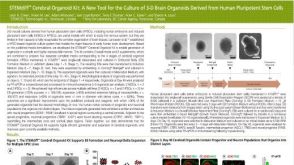 科学海报STEMdiff Cerebral Organoid Kit: A New Tool for the Culture of 3D Brain Organoids Derived from Human Pluripotent Stem Cells
 挂图Identification of Colonies Derived from Mouse Hematopoietic Progenitors Representative colony images and tips for identifying progenitor subtypes in CFU assays
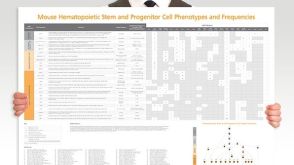 挂图Mouse Hematopoietic Stem and Progenitor Cell Phenotyping Overview of mouse HSPC subset surface markers and frequencies

 沪公网安备31010102008431号