Diekmann U et al. (JAN 2015)
Stem cells and development 24 2 190--204
A reliable and efficient protocol for human pluripotent stem cell differentiation into the definitive endoderm based on dispersed single cells.
Differentiation of pluripotent cells into endoderm-related cell types initially requires in vitro gastrulation into the definitive endoderm (DE). Most differentiation protocols are initiated from colonies of pluripotent cells complicating their adaption due to insufficiently defined starting conditions. The protocol described here was initiated from a defined cell number of dispersed single cells and tested on three different human embryonic stem cell lines and one human induced pluripotent stem cell line. Combined activation of ActivinA/Nodal signaling and GSK3 inhibition for the first 24 h,followed by ActivinA/Nodal signaling efficiently induced the DE state. Activation of ActivinA/Nodal signaling alone was not effective. Efficient GSK3 inhibition allowed the reduction of the ActivinA concentration during the entire protocol. A feeder-independent cultivation of pluripotent cells was preferred to achieve the high efficiency and robustness since feeder cells hindered the differentiation process. Additionally,inhibition of the phosphatidylinositol 3-kinase (PI3K) signaling pathway was not required,nonetheless yielding high cell numbers efficiently committed toward the DE. Finally,the endoderm generated could be differentiated further into PDX1-positive pan-pancreatic cells and NGN3-positive endocrine progenitors. Thus,this efficient and robust DE differentiation protocol is a step forward toward better reproducibility due to the well-defined conditions based on dispersed single cells from feeder-free-cultivated human pluripotent cells.
View Publication
Generation of human muscle fibers and satellite-like cells from human pluripotent stem cells in vitro.
Progress toward finding a cure for muscle diseases has been slow because of the absence of relevant cellular models and the lack of a reliable source of muscle progenitors for biomedical investigation. Here we report an optimized serum-free differentiation protocol to efficiently produce striated,millimeter-long muscle fibers together with satellite-like cells from human pluripotent stem cells (hPSCs) in vitro. By mimicking key signaling events leading to muscle formation in the embryo,in particular the dual modulation of Wnt and bone morphogenetic protein (BMP) pathway signaling,this directed differentiation protocol avoids the requirement for genetic modifications or cell sorting. Robust myogenesis can be achieved in vitro within 1 month by personnel experienced in hPSC culture. The differentiating culture can be subcultured to produce large amounts of myogenic progenitors amenable to numerous downstream applications. Beyond the study of myogenesis,this differentiation method offers an attractive platform for the development of relevant in vitro models of muscle dystrophies and drug screening strategies,as well as providing a source of cells for tissue engineering and cell therapy approaches.
View Publication
产品类型:
产品号#:
85850
85857
产品名:
mTeSR™1
mTeSR™1
Wen Y and Jin S (OCT 2014)
Journal of Biotechnology 188 122--129
Production of neural stem cells from human pluripotent stem cells
Despite significant advances in commercially available media and kits and the differentiation approaches for human neural stem cell (NSC) generation,NSC production from the differentiation of human pluripotent stem cell (hPSC) is complicated by its time-consuming procedure,complex medium composition,and purification step. In this study,we developed a convenient and simplified NSC production protocol to meet the demand of NSC production. We demonstrated that NSCs can be generated efficiently without requirement of specific small molecules or embryoid body formation stage. Our experimental results suggest that a short suspension culture period may facilitate ectoderm lineage specification rather than endoderm or mesoderm lineage specification from hPSCs. The method developed in this study shortens the turnaround time of NSC production from both human embryonic stem cells (hESCs) and induced pluripotent stem cells (iPSCs) differentiation. It provides a straightforward and useful strategy for generating NSCs that can benefit a wide range of research applications for human brain research.
View Publication
产品类型:
产品号#:
05832
07923
85850
85857
产品名:
STEMdiff™ 神经花环选择试剂
Dispase (1 U/mL)
mTeSR™1
mTeSR™1
Hanawa H et al. (JUN 2004)
Blood 103 11 4062--9
Efficient gene transfer into rhesus repopulating hematopoietic stem cells using a simian immunodeficiency virus-based lentiviral vector system.
High-titer,HIV-1-based lentiviral vector particles were found to transduce cytokine-mobilized rhesus macaque CD34(+) cells and clonogenic progenitors very poorly (textless 1%),reflecting the postentry restriction in rhesus cells to HIV infection. To overcome this barrier,we developed a simian immunodeficiency virus (SIV)-based vector system. A single exposure to a low concentration of amphotropic pseudotyped SIV vector particles encoding the green fluorescent protein (GFP) resulted in gene transfer into 68% +/- 1% of rhesus bulk CD34(+) cells and 75% +/- 1% of clonogenic progenitors. Polymerase chain reaction (PCR) analysis of DNA from individual hematopoietic colonies confirmed these relative transduction efficiencies. To evaluate SIV vector-mediated stem cell gene transfer in vivo,3 rhesus macaques underwent transplantation with transduced,autologous cytokine-mobilized peripheral blood CD34(+) cells following myeloablative conditioning. Hematopoietic reconstitution was rapid,and an average of 18% +/- 8% and 15% +/- 7% GFP-positive granulocytes and monocytes,respectively,were observed 4 to 6 months after transplantation,consistent with the average vector copy number of 0.19 +/- 0.05 in peripheral blood leukocytes as determined by real-time PCR. Vector insertion site analysis demonstrated polyclonal reconstitution with vector-containing cells. SIV vectors appear promising for evaluating gene therapy approaches in nonhuman primate models.
View Publication
产品类型:
产品号#:
04434
04444
产品名:
MethoCult™H4434经典
MethoCult™H4434经典
Ting S et al. (SEP 2014)
Stem Cell Research 13 2 202--213
An intermittent rocking platform for integrated expansion and differentiation of human pluripotent stem cells to cardiomyocytes in suspended microcarrier cultures
The development of novel platforms for large scale production of human embryonic stem cells (hESC) derived cardiomyocytes (CM) becomes more crucial as the demand for CMs in preclinical trials,high throughput cardio toxicity assays and future regenerative therapeutics rises. To this end,we have designed a microcarrier (MC) suspension agitated platform that integrates pluripotent hESC expansion followed by CM differentiation in a continuous,homogenous process.Hydrodynamic shear stresses applied during the hESC expansion and CM differentiation steps drastically reduced the capability of the cells to differentiate into CMs. Applying vigorous stirring during pluripotent hESC expansion on Cytodex 1 MC in spinner cultures resulted in low CM yields in the following differentiation step (cardiac troponin-T (cTnT): 22.83. ??. 2.56%; myosin heavy chain (MHC): 19.30. ??. 5.31%). Whereas the lower shear experienced in side to side rocker (wave type) platform resulted in higher CM yields (cTNT: 47.50. ??. 7.35%; MHC: 42.85. ??. 2.64%). The efficiency of CM differentiation is also affected by the hydrodynamic shear stress applied during the first 3. days of the differentiation stage. Even low shear applied continuously by side to side rocker agitation resulted in very low CM differentiation efficiency (cTnT. textless. 5%; MHC. textless. 2%). Simply by applying intermittent agitation during these 3. days followed by continuous agitation for the subsequent 9. days,CM differentiation efficiency can be substantially increased (cTNT: 65.73. ??. 10.73%; MHC: 59.73. ??. 9.17%). These yields are 38.3% and 39.3% higher (for cTnT and MHC respectively) than static culture control.During the hESC expansion phase,cells grew on continuously agitated rocker platform as pluripotent cell/MC aggregates (166??88??105??m2) achieving a cell concentration of 3.74??0.55??106cells/mL (18.89??2.82 fold expansion) in 7days. These aggregates were further differentiated into CMs using a WNT modulation differentiation protocol for the subsequent 12days on a rocking platform with an intermittent agitation regime during the first 3days. Collectively,the integrated MC rocker platform produced 190.5??58.8??106 CMs per run (31.75??9.74 CM/hESC seeded). The robustness of the system was demonstrated by using 2 cells lines,hESC (HES-3) and human induced pluripotent stem cell (hiPSC) IMR-90. The CM/MC aggregates formed extensive sarcomeres that exhibited cross-striations confirming cardiac ontogeny. Functionality of the CMs was demonstrated by monitoring the effect of inotropic drug,Isoproterenol on beating frequency.In conclusion,we have developed a simple robust and scalable platform that integrates both hESC expansion and CM differentiation in one unit process which is capable of meeting the need for large amounts of CMs. ?? 2014.
View Publication
产品类型:
产品号#:
85850
85857
产品名:
mTeSR™1
mTeSR™1
Alison MR et al. (DEC 2010)
The Journal of pathology 222 4 335--44
Finding cancer stem cells: are aldehyde dehydrogenases fit for purpose?
Despite many years of intensive effort,there is surprisingly little consensus on the most suitable markers with which to locate and isolate stem cells from adult tissues. By comparison,the study of cancer stem cells is still in its infancy; so,unsurprisingly,there is great uncertainty as to the identity of these cells. Stem cell markers can be broadly categorized into molecular determinants of self-renewal,clonogenicity,multipotentiality,adherence to the niche,and longevity. This review assesses the utility of recognizing cancer stem cells by virtue of high expression of aldehyde dehydrogenases (ALDHs),probably significant determinants of cell survival through their ability to detoxify many potentially cytotoxic molecules,and contributing to drug resistance. Antibodies are available against the ALDH enzyme family,but the vast majority of studies have used cell sorting techniques to enrich for cells expressing these enzymes. Live cells expressing high ALDH activity are usually identified by the ALDEFLUOR kit and sorted by fluorescence activated cell sorting (FACS). For many human tumours,but notably breast cancer,cell selection based upon ALDH activity appears to be a useful marker for enriching for cells with tumour-initiating activity (presumed cancer stem cells) in immunodeficient mice,and indeed the frequency of so-called ALDH(bri) cells in many tumours can be an independent prognostic indicator.
View Publication
产品类型:
产品号#:
01700
01705
01702
产品名:
ALDEFLUOR™ 试剂盒
ALDEFLUOR™ DEAB试剂
ALDEFLUOR™测定缓冲液
Bartulos O et al. (JUL 2016)
JCI insight 1 10
ISL1 cardiovascular progenitor cells for cardiac repair after myocardial infarction.
Cardiovascular progenitor cells (CPCs) expressing the ISL1-LIM-homeodomain transcription factor contribute developmentally to cardiomyocytes in all 4 chambers of the heart. Here,we show that ISL1-CPCs can be applied to myocardial regeneration following injury. We used a rapid 3D methylcellulose approach to form murine and human ISL1-CPC spheroids that engrafted after myocardial infarction in murine hearts,where they differentiated into cardiomyocytes and endothelial cells,integrating into the myocardium and forming new blood vessels. ISL1-CPC spheroid-treated mice exhibited reduced infarct area and increased blood vessel formation compared with control animals. Moreover,left ventricular (LV) contractile function was significantly better in mice transplanted with ISL1-CPCs 4 weeks after injury than that in control animals. These results provide proof-of-concept of a cardiac repair strategy employing ISL1-CPCs that,based on our previous lineage-tracing studies,are committed to forming heart tissue,in combination with a robust methylcellulose spheroid-based delivery approach.
View Publication
产品类型:
产品号#:
85850
85857
产品名:
mTeSR™1
mTeSR™1
Uchida N et al. (JUN 2004)
Blood 103 12 4487--95
ABC transporter activities of murine hematopoietic stem cells vary according to their developmental and activation status.
Primitive hematopoietic cells from several species are known to efflux both Hoechst 33342 and Rhodamine-123. We now show that murine hematopoietic stem cells (HSCs) defined by long-term multilineage repopulation assays efflux both dyes variably according to their developmental or activation status. In day 14.5 murine fetal liver,very few HSCs efflux Hoechst 33342 efficiently,and they are thus not detected as side population" (SP) cells. HSCs in mouse fetal liver also fail to efflux Rhodamine-123. Both of these features are retained by most of the HSCs present until 4 weeks after birth but are reversed by 8 weeks of age or after a new HSC population is regenerated in adult mice that receive transplants with murine fetal liver cells. Activation of adult HSCs in vivo following 5-fluorouracil treatment�
View Publication
Su YR et al. (AUG 2008)
Arteriosclerosis,thrombosis,and vascular biology 28 8 1439--46
Lentiviral transduction of apoAI into hematopoietic progenitor cells and macrophages: applications to cell therapy of atherosclerosis.
OBJECTIVE: We used genetically engineered mouse hematopoietic progenitor cells (HPCs) to investigate the therapeutic effects of human apoAI on atherosclerosis in apoE(-/-) mice. METHODS AND RESULTS: Lentiviral constructs expressing either human apoAI (LV-apoAI) or green fluorescent protein (LV-GFP) cDNA under a macrophage specific promoter (CD68) were generated and used for ex vivo transduction of mouse HPCs and macrophages. The transduction efficiency was textgreater25% for HPCs and textgreater70% for macrophages. ApoAI was found in the macrophage culture media,mostly associated with the HDL fraction. Interestingly,a significant increase in mRNA and protein levels for ATP binding cassette A1 (ABCA1) and ABCG1 were found in apoAI-expressing macrophages after acLDL loading. Expression of apoAI significantly increased cholesterol efflux in wild-type and apoE(-/-) macrophages. HPCs transduced with LV-apoAI ex vivo and then transplanted into apoE(-/-) mice caused a 50% reduction in atherosclerotic lesion area compared to GFP controls,without influencing plasma HDL-C levels. CONCLUSIONS: Lentiviral transduction of apoAI into HPCs reduces atherosclerosis in apoE(-/-) mice. Expression of apoAI in macrophages improves cholesterol trafficking in wild-type apoE-producing macrophages and causes upregulation of ABCA1 and ABCG1. These novel observations set the stage for a cell therapy approach to atherosclerosis regression,exploiting the cooperation between apoE and apoAI to maximize cholesterol exit from the plaque.
View Publication
产品类型:
产品号#:
09600
09650
18756
18756RF
18757
18757RF
产品名:
StemSpan™ SFEM
StemSpan™ SFEM
EasySep™小鼠SCA1正选试剂盒
RoboSep™ 小鼠SCA1正选试剂盒含滤芯吸头
EasySep™小鼠CD117(cKIT)正选试剂盒
RoboSep™ 小鼠CD117(cKIT)正选试剂盒含滤芯吸头
Hwang Y et al. (JUL 2011)
Regenerative medicine 6 4 505--24
Engineered microenvironments for self-renewal and musculoskeletal differentiation of stem cells.
Stem cells hold great promise for therapies aimed at regenerating damaged tissue,drug screening and studying in vitro models of human disease. However,many challenges remain before these applications can become a reality. One such challenge is developing chemically defined and scalable culture conditions for derivation and expansion of clinically viable human pluripotent stem cells,as well as controlling their differentiation with high specificity. Interaction of stem cells with their extracellular microenvironment plays an important role in determining their differentiation commitment and functions. Regenerative medicine approaches integrating cell-matrix and cell-cell interactions,and soluble factors could lead to development of robust microenvironments to control various cellular responses. Indeed,several of these recent developments have provided significant insight into the design of microenvironments that can elicit the targeted cellular response. In this article,we will focus on some of these developments with an emphasis on matrix-mediated expansion of human pluripotent stem cells while maintaining their pluripotency. We will also discuss the role of matrix-based cues and cell-cell interactions in the form of soluble signals in directing stem cell differentiation into musculoskeletal lineages.
View Publication
产品类型:
产品号#:
85850
85857
产品名:
mTeSR™1
mTeSR™1
Li C-S et al. (MAR 2016)
Biomaterials 83 194--206
Fibromodulin reprogrammed cells: A novel cell source for bone regeneration.
Pluripotent or multipotent cell-based therapeutics are vital for skeletal reconstruction in non-healing critical-sized defects since the local endogenous progenitor cells are not often adequate to restore tissue continuity or function. However,currently available cell-based regenerative strategies are hindered by numerous obstacles including inadequate cell availability,painful and invasive cell-harvesting procedures,and tumorigenesis. Previously,we established a novel platform technology for inducing a quiescent stem cell-like stage using only a single extracellular proteoglycan,fibromodulin (FMOD),circumventing gene transduction. In this study,we further purified and significantly increased the reprogramming rate of the yield multipotent FMOD reprogrammed (FReP) cells. We also exposed the 'molecular blueprint' of FReP cell osteogenic differentiation by gene profiling. Radiographic analysis showed that implantation of FReP cells into a critical-sized SCID mouse calvarial defect,contributed to the robust osteogenic capability of FReP cells in a challenging clinically relevant traumatic scenario in vivo. The persistence,engraftment,and osteogenesis of transplanted FReP cells without tumorigenesis in vivo were confirmed by histological and immunohistochemical staining. Taken together,we have provided an extended potency,safety,and molecular profile of FReP cell-based bone regeneration. Therefore,FReP cells present a high potential for cellular and gene therapy products for bone regeneration.
View Publication


 EasySep™小鼠TIL(CD45)正选试剂盒




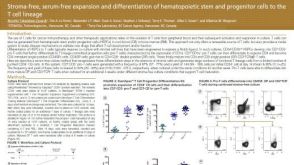 科学海报Stroma-Free, Serum-Free Expansion and Differentiation of Hematopoietic Stem and Progenitor Cells to the T Cell Lineage
 沪公网安备31010102008431号