Retinoblastoma-binding proteins 4 and 9 are important for human pluripotent stem cell maintenance.
OBJECTIVE: The molecular mechanisms that maintain human pluripotent stem (PS) cells are not completely understood. Here we sought to identify new candidate PS cell regulators to facilitate future improvements in their generation,expansion,and differentiation. MATERIALS AND METHODS: We used bioinformatic analyses of multiple serial-analysis-of-gene-expression libraries (generated from human PS cells and their differentiated derivatives),together with small interfering RNA (siRNA) screening to identify candidate pluripotency regulators. Validation of candidate regulators involved promoter analyses,Affymetrix profiling,real-time PCR,and immunoprecipitation. RESULTS: Promoter analysis of genes differentially expressed across multiple serial-analysis-of-gene-expression libraries identified E2F motifs in the promoters of many PS cell-specific genes (e.g.,POU5F1,NANOG,SOX2,FOXD3). siRNA analyses identified two retinoblastoma binding proteins (RBBP4,RBBP9) as required for maintenance of multiple human PS cell types. Both RBBPs were bound to RB in human PS cells,and E2F motifs were present in the promoters of genes whose expression was altered by decreasing RBBP4 and RBBP9 expression. Affymetrix and real-time PCR studies of siRNA-treated human PS cells showed that reduced RBBP4 or RBBP9 expression concomitantly decreased expression of POU5F1,NANOG,SOX2,and/or FOXD3 plus certain cell cycle genes (e.g.,CCNA2,CCNB1),while increasing expression of genes involved in organogenesis (particularly neurogenesis). CONCLUSIONS: These results reveal new candidate positive regulators of human PS cells,providing evidence of their ability to regulate expression of pluripotency,cell cycle,and differentiation genes in human PS cells. These data provide valuable new leads for further elucidating mechanisms of human pluripotency.
View Publication
Rodrigues G et al. (APR 2014)
Stem Cell Reviews and Reports 10 2 151--161
Integrated Platform for Production and Purification of Human Pluripotent Stem Cell-Derived Neural Precursors
Human pluripotent stem cells (hPSCs) are a promising source of cells for clinical applications,such as transplantation of clinically engineered tissues and organs,and drug discovery programs due to their ability to self-renew and to be differentiated into cells from the three embryonic germ layers. In this study,the differentiation of two hPSC-lines into neural precursors (NPs) was accomplished with more than 80 % efficiency,by means of the dual-SMAD inhibition protocol,based on the use of two small molecules (SB431542 and LDN193189) to generate Pax6 and Nestin-positive neural entities. One of the major hurdles related to the in vitro generation of PSC-derived populations is the tumorigenic potential of cells that remain undifferentiated. These remaining hPSCs have the potential to generate teratomas after being transplanted,and may interfere with the outcome of in vitro differentiation protocols. One strategy to tackle this problem is to deplete these contaminating" cells during the differentiation process. Magnetic activated cell sorting (MACS) was used for the first time for purification of hPSC-derived NPs after the neural commitment stage using anti-Tra-1-60 micro beads for negative selection of the unwanted hPSCs. The depletion had an average efficiency of 80.4 ± 5 % and less than 1.5 % of Tra-1-60 positive cells were present in the purified populations. After re-plating�
View Publication
产品类型:
产品号#:
85850
85857
产品名:
mTeSR™1
mTeSR™1
Xing J et al. (MAY 2015)
Scientific Reports 5 November 2014 10038
A method for human teratogen detection by geometrically confined cell differentiation and migration
Unintended exposure to teratogenic compounds can lead to various birth defects; however current animal-based testing is limited by time,cost and high inter-species variability. Here,we developed a human-relevant in vitro model,which recapitulated two cellular events characteristic of embryogenesis,to identify potentially teratogenic compounds. We spatially directed mesoendoderm differentiation,epithelial-mesenchymal transition and the ensuing cell migration in micropatterned human pluripotent stem cell (hPSC) colonies to collectively form an annular mesoendoderm pattern. Teratogens could disrupt the two cellular processes to alter the morphology of the mesoendoderm pattern. Image processing and statistical algorithms were developed to quantify and classify the compounds' teratogenic potential. We not only could measure dose-dependent effects but also correctly classify species-specific drug (Thalidomide) and false negative drug (D-penicillamine) in the conventional mouse embryonic stem cell test. This model offers a scalable screening platform to mitigate the risks of teratogen exposures in human.
View Publication
产品类型:
产品号#:
05270
05275
07923
85850
85857
产品名:
STEMdiff™ APEL™2 培养基
STEMdiff™ APEL™2 培养基
Dispase (1 U/mL)
mTeSR™1
mTeSR™1
Saha K et al. (NOV 2011)
Proceedings of the National Academy of Sciences of the United States of America 108 46 18714--9
Surface-engineered substrates for improved human pluripotent stem cell culture under fully defined conditions
The current gold standard for the culture of human pluripotent stem cells requires the use of a feeder layer of cells. Here,we develop a spatially defined culture system based on UV/ozone radiation modification of typical cell culture plastics to define a favorable surface environment for human pluripotent stem cell culture. Chemical and geometrical optimization of the surfaces enables control of early cell aggregation from fully dissociated cells,as predicted from a numerical model of cell migration,and results in significant increases in cell growth of undifferentiated cells. These chemically defined xeno-free substrates generate more than three times the number of cells than feeder-containing substrates per surface area. Further,reprogramming and typical gene-targeting protocols can be readily performed on these engineered surfaces. These substrates provide an attractive cell culture platform for the production of clinically relevant factor-free reprogrammed cells from patient tissue samples and facilitate the definition of standardized scale-up friendly methods for disease modeling and cell therapeutic applications.
View Publication
Myogenesis GRC 2017,Till and McCulloch Meeting 2017
产品号#:
05980
05982
05983
产品名:
MyoCult™-SF 扩增添加物试剂盒 (人)
MyoCult™-SF 扩增10X添加物(人)
MyoCult™-SF 贴附基质
Sugii S et al. (FEB 2010)
Proceedings of the National Academy of Sciences of the United States of America 107 8 3558--63
Human and mouse adipose-derived cells support feeder-independent induction of pluripotent stem cells.
Although adipose tissue is an expandable and readily attainable source of proliferating,multipotent stem cells,its potential for use in regenerative medicine has not been extensively explored. Here we report that adult human and mouse adipose-derived stem cells can be reprogrammed to induced pluripotent stem (iPS) cells with substantially higher efficiencies than those reported for human and mouse fibroblasts. Unexpectedly,both human and mouse iPS cells can be obtained in feeder-free conditions. We discovered that adipose-derived stem cells intrinsically express high levels of pluripotency factors such as basic FGF,TGFbeta,fibronectin,and vitronectin and can serve as feeders for both autologous and heterologous pluripotent cells. These results demonstrate a great potential for adipose-derived cells in regenerative therapeutics and as a model for studying the molecular mechanisms of feeder-free iPS generation and maintenance.
View Publication
产品类型:
产品号#:
85850
85857
产品名:
mTeSR™1
mTeSR™1
Chan AA et al. (FEB 2013)
PLoS ONE 8 2 e56831
Differentiation of Human Embryonic Stem Cells into Cells with Corneal Keratocyte Phenotype
Corneal transparency depends on a unique extracellular matrix secreted by stromal keratocytes,mesenchymal cells of neural crest lineage. Derivation of keratocytes from human embryonic stem (hES) cells could elucidate the keratocyte developmental pathway and open a potential for cell-based therapy for corneal blindness. This study seeks to identify conditions inducing differentiation of pluripotent hES cells to the keratocyte lineage. Neural differentiation of hES cell line WA01(H1) was induced by co-culture with mouse PA6 fibroblasts. After 6 days of co-culture,hES cells expressing cell-surface NGFR protein (CD271,p75NTR) were isolated by immunoaffinity adsorption,and cultured as a monolayer for one week. Keratocyte phenotype was induced by substratum-independent pellet culture in serum-free medium containing ascorbate. Gene expression,examined by quantitative RT-PCR,found hES cells co-cultured with PA6 cells for 6 days to upregulate expression of neural crest genes including NGFR,SNAI1,NTRK3,SOX9,and MSX1. Isolated NGFR-expressing cells were free of PA6 feeder cells. After expansion as a monolayer,mRNAs typifying adult stromal stem cells were detected,including BMI1,KIT,NES,NOTCH1,and SIX2. When these cells were cultured as substratum-free pellets keratocyte markers AQP1,B3GNT7,PTDGS,and ALDH3A1 were upregulated. mRNA for keratocan (KERA),a cornea-specific proteoglycan,was upregulated more than 10,000 fold. Culture medium from pellets contained high molecular weight keratocan modified with keratan sulfate,a unique molecular component of corneal stroma. These results show hES cells can be induced to differentiate into keratocytes in vitro. Pluripotent stem cells,therefore,may provide a renewable source of material for development of treatment of corneal stromal opacities.
View Publication
产品类型:
产品号#:
85850
85857
产品名:
mTeSR™1
mTeSR™1
Doyonnas R et al. (SEP 2004)
Proceedings of the National Academy of Sciences of the United States of America 101 37 13507--12
Hematopoietic contribution to skeletal muscle regeneration by myelomonocytic precursors.
Adult bone marrow-derived cells can participate in muscle regeneration after bone marrow transplantation. In recent studies a single hematopoietic stem cell (HSC) was shown to give rise to cells that not only reconstituted all of the lineages of the blood,but also contributed to mature muscle fibers. However,the relevant HSC derivative with this potential has not yet been definitively identified. Here we use fluorescence-activated cell sorter-based protocols to test distinct hematopoietic fractions and show that only fractions containing c-kit(+) immature myelomonocytic precursors are capable of contributing to muscle fibers after i.m. injection. Although these cells belong to the myeloid lineage,they do not include mature CD11b(+) myelomonocytic cells,such as macrophages. Of the four sources of mature macrophages tested that were derived either from monocytic culture,bone marrow,peripheral blood after granulocyte colony-stimulating factor mobilization,or injured muscle,none contributed to muscle. In addition,after transplantation of bone marrow isolated from CD11b-Cre-transgenic mice into the Cre-reporter strain (Z/EG),no GFP myofibers were detected,demonstrating that macrophages expressing CD11b do not fuse with myofibers. Irrespective of the underlying mechanisms,these data suggest that the HSC derivatives that integrate into regenerating muscle fibers exist in the pool of hematopoietic cells known as myelomonocytic progenitors.
View Publication
Kurian L et al. (JAN 2013)
Nature methods 10 1 77--83
Conversion of human fibroblasts to angioblast-like progenitor cells.
Lineage conversion of one somatic cell type to another is an attractive approach for generating specific human cell types. Lineage conversion can be direct,in the absence of proliferation and multipotent progenitor generation,or indirect,by the generation of expandable multipotent progenitor states. We report the development of a reprogramming methodology in which cells transition through a plastic intermediate state,induced by brief exposure to reprogramming factors,followed by differentiation. We use this approach to convert human fibroblasts to mesodermal progenitor cells,including by non-integrative approaches. These progenitor cells demonstrated bipotent differentiation potential and could generate endothelial and smooth muscle lineages. Differentiated endothelial cells exhibited neo-angiogenesis and anastomosis in vivo. This methodology for indirect lineage conversion to angioblast-like cells adds to the armamentarium of reprogramming approaches aimed at the study and treatment of ischemic pathologies.
View Publication


 EasySep™小鼠TIL(CD45)正选试剂盒




 实验方案How to Coat Cultureware with STEMmatrix™ BME for Human Pluripotent Stem Cell Culture
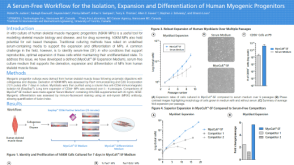 科学海报A Serum-Free Workflow for the Isolation, Expansion and Differentiation of Human Myogenic Progenitors

 沪公网安备31010102008431号