Moore JJC et al. (JAN 2010)
Stem Cell Research & Therapy 1 3 23
Efficient, high-throughput transfection of human embryonic stem cells.
Genetic manipulation of human embryonic stem cells (hESC) has been limited by their general resistance to common methods used to introduce exogenous DNA or RNA. Efficient and high throughput transfection of nucleic acids into hESC would be a valuable experimental tool to manipulate these cells for research and clinical applications. We investigated the ability of two commercially available electroporation systems,the Nucleofection® 96-well Shuttle® System from Lonza and the Neon™ Transfection System from Invitrogen to efficiently transfect hESC. Transfection efficiency was measured by flow cytometry for the expression of the green fluorescent protein and the viability of the transfected cells was determined by an ATP catalyzed luciferase reaction. The transfected cells were also analyzed by flow cytometry for common markers of pluripotency. Both systems are capable of transfecting hESC at high efficiencies with little loss of cell viability. However,the reproducibility and the ease of scaling for high throughput applications led us to perform more comprehensive tests on the Nucleofection® 96-well Shuttle® System. We demonstrate that this method yields a large fraction of transiently transfected cells with minimal loss of cell viability and pluripotency,producing protein expression from plasmid vectors in several different hESC lines. The method scales to a 96-well plate with similar transfection efficiencies at the start and end of the plate. We also investigated the efficiency with which stable transfectants can be generated and recovered under antibiotic selection. Finally,we found that this method is effective in the delivery of short synthetic RNA oligonucleotides (siRNA) into hESC for knockdown of translation activity via RNA interference. Our results indicate that these electroporation methods provide a reliable,efficient,and high-throughput approach to the genetic manipulation of hESC.
View Publication
产品类型:
产品号#:
85850
85857
产品名:
mTeSR™1
mTeSR™1
West PR et al. (AUG 2010)
Toxicology and Applied Pharmacology 247 1 18--27
Predicting human developmental toxicity of pharmaceuticals using human embryonic stem cells and metabolomics.
Teratogens,substances that may cause fetal abnormalities during development,are responsible for a significant number of birth defects. Animal models used to predict teratogenicity often do not faithfully correlate to human response. Here,we seek to develop a more predictive developmental toxicity model based on an in vitro method that utilizes both human embryonic stem (hES) cells and metabolomics to discover biomarkers of developmental toxicity. We developed a method where hES cells were dosed with several drugs of known teratogenicity then LC-MS analysis was performed to measure changes in abundance levels of small molecules in response to drug dosing. Statistical analysis was employed to select for specific mass features that can provide a prediction of the developmental toxicity of a substance. These molecules can serve as biomarkers of developmental toxicity,leading to better prediction of teratogenicity. In particular,our work shows a correlation between teratogenicity and changes of greater than 10% in the ratio of arginine to asymmetric dimethylarginine levels. In addition,this study resulted in the establishment of a predictive model based on the most informative mass features. This model was subsequently tested for its predictive accuracy in two blinded studies using eight drugs of known teratogenicity,where it correctly predicted the teratogenicity for seven of the eight drugs. Thus,our initial data shows that this platform is a robust alternative to animal and other in vitro models for the prediction of the developmental toxicity of chemicals that may also provide invaluable information about the underlying biochemical pathways. ?? 2010 Elsevier Inc.
View Publication
产品类型:
产品号#:
85850
85857
产品名:
mTeSR™1
mTeSR™1
Claassen DA et al. (AUG 2009)
Molecular Reproduction and Development 76 8 722--732
ROCK inhibition enhances the recovery and growth of cryopreserved human embryonic stem cells and human induced pluripotent stem cells
Poor recovery of cryopreserved human embryonic stem (hES) cells and induced pluripotent stem (iPS) cells is a significant impediment to progress with pluripotent stem cells. In this study,we demonstrate that Y-27632,a specific inhibitor of Rho kinase (ROCK) activity,significantly enhances recovery of hES cells from cryopreserved stocks when cultured with or without a growth inactivated feeder layer. Furthermore,treatment with the ROCK inhibitor for several days increased the number of colonies and colony size of hES cells compared to shorter exposures. Remarkably,hES cells that had formed relatively few colonies 5 days after thawing exhibited rapid growth upon addition of Y-27632. Additionally,we determined that Y-27632 significantly improves the recovery of cryopreserved human iPS cells and their growth upon subculture. Thus,Y-27632 provides a means to kick-start" slow-growing human pluripotent stem cells�
View Publication
Smad4 binds Hoxa9 in the cytoplasm and protects primitive hematopoietic cells against nuclear activation by Hoxa9 and leukemia transformation.
We studied leukemic stem cells (LSCs) in a Smad4(-/-) mouse model of acute myelogenous leukemia (AML) induced either by the HOXA9 gene or by the fusion oncogene NUP98-HOXA9. Although Hoxa9-Smad4 complexes accumulate in the cytoplasm of normal hematopoietic stem cells and progenitor cells (HSPCs) transduced with these oncogenes,there is no cytoplasmic stabilization of HOXA9 in Smad4(-/-) HSPCs,and as a consequence increased levels of Hoxa9 is observed in the nucleus leading to increased immortalization in vitro. Loss of Smad4 accelerates the development of leukemia in vivo because of an increase in transformation of HSPCs. Therefore,the cytoplasmic binding of Hoxa9 by Smad4 is a mechanism to protect Hoxa9-induced transformation of normal HSPCs. Because Smad4 is a potent tumor suppressor involved in growth control,we developed a strategy to modify the subcellular distribution of Smad4. We successfully disrupted the interaction between Hoxa9 and Smad4 to activate the TGF-β pathway and apoptosis,leading to a loss of LSCs. Together,these findings reveal a major role for Smad4 in the negative regulation of leukemia initiation and maintenance induced by HOXA9/NUP98-HOXA9 and provide strong evidence that antagonizing Smad4 stabilization by these oncoproteins might be a promising novel therapeutic approach in leukemia.
View Publication
产品类型:
产品号#:
03434
03444
03236
产品名:
MethoCult™GF M3434
MethoCult™GF M3434
MethoCult™SF M3236
Kamminga LM et al. (MAR 2006)
Blood 107 5 2170--9
The Polycomb group gene Ezh2 prevents hematopoietic stem cell exhaustion.
The molecular mechanism responsible for a decline of stem cell functioning after replicative stress remains unknown. We used mouse embryonic fibroblasts (MEFs) and hematopoietic stem cells (HSCs) to identify genes involved in the process of cellular aging. In proliferating and senescent MEFs one of the most differentially expressed transcripts was Enhancer of zeste homolog 2 (Ezh2),a Polycomb group protein (PcG) involved in histone methylation and deacetylation. Retroviral overexpression of Ezh2 in MEFs resulted in bypassing of the senescence program. More importantly,whereas normal HSCs were rapidly exhausted after serial transplantations,overexpression of Ezh2 completely conserved long-term repopulating potential. Animals that were reconstituted with 3 times serially transplanted control bone marrow cells all died due to hematopoietic failure. In contrast,similarly transplanted Ezh2-overexpressing stem cells restored stem cell quality to normal levels. In a genetic genomics" screen�
View Publication
产品类型:
产品号#:
09600
09650
产品名:
StemSpan™ SFEM
StemSpan™ SFEM
Nottingham WT et al. (DEC 2007)
Blood 110 13 4188--97
Runx1-mediated hematopoietic stem-cell emergence is controlled by a Gata/Ets/SCL-regulated enhancer.
The transcription factor Runx1/AML1 is an important regulator of hematopoiesis and is critically required for the generation of the first definitive hematopoietic stem cells (HSCs) in the major vasculature of the mouse embryo. As a pivotal factor in HSC ontogeny,its transcriptional regulation is of high interest but is largely undefined. In this study,we used a combination of comparative genomics and chromatin analysis to identify a highly conserved 531-bp enhancer located at position + 23.5 in the first intron of the 224-kb mouse Runx1 gene. We show that this enhancer contributes to the early hematopoietic expression of Runx1. Transcription factor binding in vivo and analysis of the mutated enhancer in transient transgenic mouse embryos implicate Gata2 and Ets proteins as critical factors for its function. We also show that the SCL/Lmo2/Ldb-1 complex is recruited to the enhancer in vivo. Importantly,transplantation experiments demonstrate that the intronic Runx1 enhancer targets all definitive HSCs in the mouse embryo,suggesting that it functions as a crucial cis-regulatory element that integrates the Gata,Ets,and SCL transcriptional networks to initiate HSC generation.
View Publication
Enhanced cytotoxicity of an anti-transferrin receptor IgG3-avidin fusion protein in combination with gambogic acid against human malignant hematopoietic cells: functional relevance of iron, the receptor, and reactive oxygen species.
The human transferrin receptor (hTfR) is a target for cancer immunotherapy due to its overexpression on the surface of cancer cells. We previously developed an antibody-avidin fusion protein that targets hTfR (anti-hTfR IgG3-Av) and exhibits intrinsic cytotoxicity against certain malignant cells. Gambogic acid (GA),a drug that also binds hTfR,induces cytotoxicity in several malignant cell lines. We now report that anti-hTfR IgG3-Av and GA induce cytotoxicity in a new broader panel of hematopoietic malignant cell lines. Our results show that the effect of anti-hTfR IgG3-Av is iron-dependent whereas that of GA is iron-independent in all cells tested. In addition,we observed that GA exerts a TfR-independent cytotoxicity. We also found that GA increases the generation of reactive oxygen species that may play a role in the cytotoxicity induced by this drug. Additive cytotoxicity was observed by simultaneous combination treatment with these drugs and synergy by using anti-hTfR IgG3-Av as a chemosensitizing agent. In addition,we found a concentration of GA that is toxic to malignant hematopoietic cells but not to human hematopoietic progenitor cells. Our results suggest that these two compounds may be effective,alone or in combination,for the treatment of human hematopoietic malignancies.
View Publication
产品类型:
产品号#:
04434
04444
产品名:
MethoCult™H4434经典
MethoCult™H4434经典
Pei Y et al. (MAR 2015)
Scientific reports 5 9205
A platform for rapid generation of single and multiplexed reporters in human iPSC lines.
Induced pluripotent stem cells (iPSC) are important tools for drug discovery assays and toxicology screens. In this manuscript,we design high efficiency TALEN and ZFN to target two safe harbor sites on chromosome 13 and 19 in a widely available and well-characterized integration-free iPSC line. We show that these sites can be targeted in multiple iPSC lines to generate reporter systems while retaining pluripotent characteristics. We extend this concept to making lineage reporters using a C-terminal targeting strategy to endogenous genes that express in a lineage-specific fashion. Furthermore,we demonstrate that we can develop a master cell line strategy and then use a Cre-recombinase induced cassette exchange strategy to rapidly exchange reporter cassettes to develop new reporter lines in the same isogenic background at high efficiency. Equally important we show that this recombination strategy allows targeting at progenitor cell stages,further increasing the utility of the platform system. The results in concert provide a novel platform for rapidly developing custom single or dual reporter systems for screening assays.
View Publication
产品类型:
产品号#:
85850
85857
产品名:
mTeSR™1
mTeSR™1
Douvaras P and Fossati V (AUG 2015)
Nature protocols 10 8 1143--1154
Generation and isolation of oligodendrocyte progenitor cells from human pluripotent stem cells.
In the CNS,oligodendrocytes act as the myelinating cells. Oligodendrocytes have been identified to be key players in several neurodegenerative disorders. This protocol describes a robust,fast and reproducible differentiation protocol to generate human oligodendrocytes from pluripotent stem cells (PSCs) using a chemically defined,growth factor-rich medium. Within 8 d,PSCs differentiate into paired box 6-positive (PAX6(+)) neural stem cells,which give rise to OLIG2(+) progenitors by day 12. Oligodendrocyte lineage transcription factor 2-positive (OLIG2(+)) cells begin to express the transcription factor NKX2.2 around day 18,followed by SRY-box 10 (SOX10) around day 40. Oligodendrocyte progenitor cells (OPCs) that are positive for the cell surface antigen recognized by the O4 antibody (O4(+)) appear around day 50 and reach,on average,43% of the cell population after 75 d of differentiation. O4(+) OPCs can be isolated by cell sorting for myelination studies,or they can be terminally differentiated to myelin basic protein-positive (MBP(+)) oligodendrocytes. This protocol also describes an alternative strategy for markedly reducing the length and the costs of the differentiation and generating ∼30% O4(+) cells after only 55 d of culture.
View Publication


 EasySep™小鼠TIL(CD45)正选试剂盒




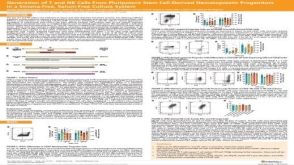 科学海报Generation of T and NK Cells From Pluripotent Stem Cell-Derived Hematopoietic Progenitors in a Stroma-Free, Serum-Free Culture System

 沪公网安备31010102008431号