Dumitriu B et al. (AUG 2006)
Blood 108 4 1198--207
Sox6 cell-autonomously stimulates erythroid cell survival, proliferation, and terminal maturation and is thereby an important enhancer of definitive erythropoiesis during mouse development.
Erythropoiesis,the essential process of hematopoietic stem cell development into erythrocytes,is controlled by lineage-specific transcription factors that determine cell fate and differentiation and by the hormone erythropoietin that stimulates cell survival and proliferation. Here we identify the Sry-related high-mobility-group (HMG) box transcription factor Sox6 as an important enhancer of definitive erythropoiesis. Sox6 is highly expressed in proerythroblasts and erythroblasts in the fetal liver,neonatal spleen,and bone marrow. Mouse fetuses and pups lacking Sox6 develop erythroid cells slowly and feature misshapen,short-lived erythrocytes. They compensate for anemia by elevating the serum level of erythropoietin and progressively enlarging their erythropoietic tissues. Erythroid-specific inactivation of Sox6 causes the same phenotype,demonstrating cell-autonomous roles for Sox6 in erythroid cells. Sox6 potentiates the ability of erythropoietin signaling to promote proerythroblast survival and has an effect additive to that of erythropoietin in stimulating proerythroblast and erythroblast proliferation. Sox6 also critically facilitates erythroblast and reticulocyte maturation,including hemoglobinization,cell condensation,and enucleation,and ensures erythrocyte cytoskeleton long-term stability. It does not control adult globin and erythrocyte cytoskeleton genes but acts by stabilizing filamentous actin (F-actin) levels. Sox6 thus enhances erythroid cell development at multiple levels and thereby ensures adequate production and quality of red blood cells.
View Publication
产品类型:
产品号#:
03334
产品名:
MethoCult™M3334
Senatus PB et al. (JAN 2006)
Molecular cancer therapeutics 5 1 20--8
Restoration of p53 function for selective Fas-mediated apoptosis in human and rat glioma cells in vitro and in vivo by a p53 COOH-terminal peptide.
We have shown that a COOH-terminal peptide of p53 (amino acids 361-382,p53p),linked to the truncated homeobox domain of Antennapedia (Ant) as a carrier for transduction,induced rapid apoptosis in human premalignant and malignant cell lines. Here,we report that human and rat glioma lines containing endogenous mutant p53 or wild-type (WT) p53 were induced into apoptosis by exposure to this peptide called p53p-Ant. The peptide was comparatively nontoxic to proliferating nonmalignant human and rat glial cell lines containing WT p53 and proliferating normal human peripheral marrow blood stem cells. Degree of sensitivity to the peptide correlated directly with the level of endogenous p53 expression and mutant p53 conformation. Apoptosis induction by p53p-Ant was quantitated by terminal deoxynucleotidyl transferase-mediated dUTP nick end labeling assay and Annexin V staining in human glioma cells in vitro and in a syngeneic orthotopic 9L glioma rat model using convection-enhanced delivery in vivo. The mechanism of cell death by this peptide was solely through the Fas extrinsic apoptotic pathway. p53p-Ant induced a 3-fold increase in extracellular membrane Fas expression in glioma cells but no significant increase in nonmalignant glial cells. These data suggest that p53 function for inducing Fas-mediated apoptosis in gliomas,which express sufficient quantities of endogenous mutant or WT p53,may be restored or activated,respectively,by a cell-permeable peptide derived from the p53 COOH-terminal regulatory domain (p53p-Ant). p53p-Ant may serve as a prototypic model for the development of new anticancer agents with unique selectivity for glioma cancer cells and it can be successfully delivered in vivo into a brain tumor by a convection-enhanced delivery system,which circumvents the blood-brain barrier.
View Publication
产品类型:
产品号#:
04434
04444
产品名:
MethoCult™H4434经典
MethoCult™H4434经典
Gallego MJ et al. (JUN 2009)
Stem cells and development 18 5 737--740
Opioid and progesterone signaling is obligatory for early human embryogenesis.
The growth factors that drive the division and differentiation of stem cells during early human embryogenesis are unknown. The secretion of endorphins,progesterone (P(4)),human chorionic gonadotropin,17beta-estradiol,and gonadotropin-releasing hormone by trophoblasts that lie adjacent to the embryoblast in the blastocyst suggests that these pregnancy-associated factors may directly signal the growth and development of the embryoblast. To test this hypothesis,we treated embryoblast-derived human embryonic stem cells (hESCs) with ICI 174,864,a delta-opioid receptor antagonist,and RU-486 (mifepristone),a P(4) receptor competitive antagonist. Both antagonists potently inhibited the differentiation of hESC into embryoid bodies,an in vitro structure akin to the blastocyst containing all three germ layers. Furthermore,these agents prevented the differentiation of hESC aggregates into columnar neuroectodermal cells and their organization into neural tube-like rosettes as determined morphologically. Immunoblot analyses confirmed the obligatory role of these hormones; both antagonists inhibited nestin expression,an early marker of neural precursor cells normally detected during rosette formation. Conversely,addition of P(4) to hESC aggregates induced nestin expression and the formation of neuroectodermal rosettes. These results demonstrate that trophoblast-associated hormones induce blastulation and neurulation during early human embryogenesis.
View Publication
产品类型:
产品号#:
85850
85857
产品名:
mTeSR™1
mTeSR™1
Lin M et al. (AUG 2012)
PLoS ONE 7 8 e44017
Allele-biased expression in differentiating human neurons: implications for neuropsychiatric disorders.
Stochastic processes and imprinting,along with genetic factors,lead to monoallelic or allele-biased gene expression. Stochastic monoallelic expression fine-tunes information processing in immune cells and the olfactory system,and imprinting plays an important role in development. Recent studies suggest that both stochastic events and imprinting may be more widespread than previously considered. We are interested in allele-biased gene expression occurring in the brain because parent-of-origin effects suggestive of imprinting appear to play a role in the transmission of schizophrenia (SZ) and autism spectrum disorders (ASD) in some families. In addition,allele-biased expression could help explain monozygotic (MZ) twin discordance and reduced penetrance. The ability to study allele-biased expression in human neurons has been transformed with the advent of induced pluripotent stem cell (iPSC) technology and next generation sequencing. Using transcriptome sequencing (RNA-Seq) we identified 801 genes in differentiating neurons that were expressed in an allele-biased manner. These included a number of putative SZ and ASD candidates,such as A2BP1 (RBFOX1),ERBB4,NLGN4X,NRG1,NRG3,NRXN1,and NLGN1. Overall,there was a modest enrichment for SZ and ASD candidate genes among those that showed evidence for allele-biased expression (chi-square,p = 0.02). In addition to helping explain MZ twin discordance and reduced penetrance,the capacity to group many candidate genes affecting a variety of molecular and cellular pathways under a common regulatory process - allele-biased expression - could have therapeutic implications.
View Publication
A TALEN genome-editing system for generating human stem cell-based disease models.
Transcription activator-like effector nucleases (TALENs) are a new class of engineered nucleases that are easier to design to cleave at desired sites in a genome than previous types of nucleases. We report here the use of TALENs to rapidly and efficiently generate mutant alleles of 15 genes in cultured somatic cells or human pluripotent stem cells,the latter for which we differentiated both the targeted lines and isogenic control lines into various metabolic cell types. We demonstrate cell-autonomous phenotypes directly linked to disease - dyslipidemia,insulin resistance,hypoglycemia,lipodystrophy,motor-neuron death,and hepatitis C infection. We found little evidence of TALEN off-target effects,but each clonal line nevertheless harbors a significant number of unique mutations. Given the speed and ease with which we were able to derive and characterize these cell lines,we anticipate TALEN-mediated genome editing of human cells becoming a mainstay for the investigation of human biology and disease. textcopyright 2013 Elsevier Inc.
View Publication
产品类型:
产品号#:
85850
85857
产品名:
mTeSR™1
mTeSR™1
Deng Y et al. (JAN 2014)
Carbohydrate Polymers 101 1 36--39
Peptide-decorated polyvinyl alcohol/hyaluronan nanofibers for human induced pluripotent stem cell culture
Realization of the full potential of human induced pluripotent stem cells (hiPSCs) in clinical applications requires development of well-defined conditions for their growth and differentiation. A novel fully defined polyvinyl alcohol/hyaluronan (PVA/HA) polysaccharide nanofiber was developed for hiPSCs culture in commercially available xeno-free,chemically defined medium. Vitronectin peptide (VP) was immobilized to PVA/HA nanofibers through NHS/EDC chemistry. The hiPSCs successfully grew and proliferated on the VP-decorated PVA/HA nanofibers,similar to those on MatrigelTM. Such well-defined,xeno-free and safe nanofiber substrate that supports culture of hiPSCs will not only help to accelerate the translational perspectives of hiPSCs,but also provide a platform to investigate the cell-nanofiber interaction mechanisms that regulate stem cell proliferation and differentiation. ?? 2013 Elsevier Ltd. All rights reserved.
View Publication
产品类型:
产品号#:
85850
85857
产品名:
mTeSR™1
mTeSR™1
Ikeda Y et al. (MAR 2015)
Gene therapy 23 November 2015 256--262
A novel intranuclear RNA vector system for long-term stem cell modification.
Genetically modified stem and progenitor cells have emerged as a promising regenerative platform in the treatment of genetic and degenerative disorders,highlighted by their successful therapeutic use in inherent immunodeficiencies. However,biosafety concerns over insertional mutagenesis resulting from integrating recombinant viral vectors have overshadowed the widespread clinical applications of genetically modified stem cells. Here,we report an RNA-based episomal vector system,amenable for long-term transgene expression in stem cells. Specifically,we used a unique intranuclear RNA virus,Borna disease virus (BDV),as the gene transfer vehicle,capable of persistent infections in various cell types. BDV-based vectors allowed for long-term transgene expression in mesenchymal stem cells (MSCs) without affecting cellular morphology,cell surface CD105 expression,or the adipogenicity of MSCs. Similarly,replication-defective BDV vectors achieved long-term transduction of human induced pluripotent stem cells (iPSCs),while maintaining the ability to differentiate into three embryonic germ layers. Thus,the BDV-based vectors offer a genomic modification-free,episomal RNA delivery system for sustained stem cell transduction.Gene Therapy accepted article preview online,03 December 2015. doi:10.1038/gt.2015.108.
View Publication
产品类型:
产品号#:
85850
85857
产品名:
mTeSR™1
mTeSR™1
Kumar S et al. ( 2016)
Stem Cells International 2016 1--20
Utility of Lymphoblastoid Cell Lines for Induced Pluripotent Stem Cell Generation
A large number of EBV immortalized LCLs have been generated and maintained in genetic/epidemiological studies as a perpetual source of DNA and as a surrogate in vitro cell model. Recent successes in reprograming LCLs into iPSCs have paved the way for generating more relevant in vitro disease models using this existing bioresource. However,the overall reprogramming efficiency and success rate remain poor and very little is known about the mechanistic changes that take place at the transcriptome and cellular functional level during LCL-to-iPSC reprogramming. Here,we report a new optimized LCL-to-iPSC reprogramming protocol using episomal plasmids encoding pluripotency transcription factors and mouse p53DD (p53 carboxy-terminal dominant-negative fragment) and commercially available reprogramming media. We achieved a consistently high reprogramming efficiency and 100% success rate using this optimized protocol. Further,we investigated the transcriptional changes in mRNA and miRNA levels,using FC-abs ≥ 2.0 and FDR ≤ 0.05 cutoffs; 5,228 mRNAs and 77 miRNAs were differentially expressed during LCL-to-iPSC reprogramming. The functional enrichment analysis of the upregulated genes and activation of human pluripotency pathways in the reprogrammed iPSCs showed that the generated iPSCs possess transcriptional and functional profiles very similar to those of human ESCs.
View Publication
A viral strategy for targeting and manipulating interneurons across vertebrate species.
A fundamental impediment to understanding the brain is the availability of inexpensive and robust methods for targeting and manipulating specific neuronal populations. The need to overcome this barrier is pressing because there are considerable anatomical,physiological,cognitive and behavioral differences between mice and higher mammalian species in which it is difficult to specifically target and manipulate genetically defined functional cell types. In particular,it is unclear the degree to which insights from mouse models can shed light on the neural mechanisms that mediate cognitive functions in higher species,including humans. Here we describe a novel recombinant adeno-associated virus that restricts gene expression to GABAergic interneurons within the telencephalon. We demonstrate that the viral expression is specific and robust,allowing for morphological visualization,activity monitoring and functional manipulation of interneurons in both mice and non-genetically tractable species,thus opening the possibility to study GABAergic function in virtually any vertebrate species.
View Publication
产品类型:
产品号#:
05790
05792
05793
05794
05795
85850
85857
产品名:
BrainPhys™神经元培养基
BrainPhys™神经元培养基和SM1试剂盒
BrainPhys™ 神经元培养基N2-A和SM1试剂盒
BrainPhys™原代神经元试剂盒
BrainPhys™ hPSC 神经元试剂盒
mTeSR™1
mTeSR™1
Rim JS et al. (JAN 2011)
Methods in molecular biology (Clifton,N.J.) 702 299--316
Screening for Epigenetic Target Genes that Enhance Reprogramming Using Lentiviral-Delivered shRNA
Small molecules will need to be identified and/or developed that target protein classes limiting reprogramming efficiency. A specific class of proteins includes epigenetic regulators that silence,or minimize expression,of pluripotency genes in differentiated cells. To better understand the role of specific epigenetic modulators in reprogramming,we have used shRNA delivered by lentivirus to assess the significance of individual epi-proteins in reprogramming pluripotent gene expression.
View Publication
产品类型:
产品号#:
85850
85857
产品名:
mTeSR™1
mTeSR™1
M. R. Hildebrandt et al. (dec 2019)
Stem cell reports 13 6 1126--1141
Precision Health Resource of Control iPSC Lines for Versatile Multilineage Differentiation.
Induced pluripotent stem cells (iPSC) derived from healthy individuals are important controls for disease-modeling studies. Here we apply precision health to create a high-quality resource of control iPSCs. Footprint-free lines were reprogrammed from four volunteers of the Personal Genome Project Canada (PGPC). Multilineage-directed differentiation efficiently produced functional cortical neurons,cardiomyocytes and hepatocytes. Pilot users demonstrated versatility by generating kidney organoids,T lymphocytes,and sensory neurons. A frameshift knockout was introduced into MYBPC3 and these cardiomyocytes exhibited the expected hypertrophic phenotype. Whole-genome sequencing-based annotation of PGPC lines revealed on average 20 coding variants. Importantly,nearly all annotated PGPC and HipSci lines harbored at least one pre-existing or acquired variant with cardiac,neurological,or other disease associations. Overall,PGPC lines were efficiently differentiated by multiple users into cells from six tissues for disease modeling,and variant-preferred healthy control lines were identified for specific disease settings.
View Publication


 EasySep™小鼠TIL(CD45)正选试剂盒




 30:53
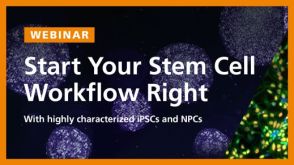
线上讲座Highly Characterized Human iPSCs and NPCs for Downstream Differentiation Applications发布日期: 07/19/2023
30:53
线上讲座Highly Characterized Human iPSCs and NPCs for Downstream Differentiation Applications发布日期: 07/19/2023

 沪公网安备31010102008431号