Hudson J et al. (JUN 2012)
Stem cells and development 21 9 1513--23
Primitive cardiac cells from human embryonic stem cells.
Pluripotent stem cell-derived cardiomyocytes are currently being investigated for in vitro human heart models and as potential therapeutics for heart failure. In this study,we have developed a differentiation protocol that minimizes the need for specific human embryonic stem cell (hESC) line optimization. We first reduced the heterogeneity that exists within the starting population of bulk cultured hESCs by using cells adapted to single-cell passaging in a 2-dimensional (2D) culture format. Compared with bulk cultures,single-cell cultures comprised larger fractions of TG30(hi)/OCT4(hi) cells,corresponding to an increased expression of pluripotency markers OCT4 and NANOG,and reduced expression of early lineage-specific markers. A 2D temporal differentiation protocol was then developed,aimed at reducing the inherent heterogeneity and variability of embryoid body-based protocols,with induction of primitive streak cells using bone morphogenetic protein 4 and activin A,followed by cardiogenesis via inhibition of Wnt signaling using the small molecules IWP-4 or IWR-1. IWP-4 treatment resulted in a large percentage of cells expressing low amounts of cardiac myosin heavy chain and expression of early cardiac progenitor markers ISL1 and NKX2-5,thus indicating the production of large numbers of immature cardiomyocytes (˜65,000/cm(2) or ˜1.5 per input hESC). This protocol was shown to be effective in HES3,H9,and,to a lesser,extent,MEL1 hESC lines. In addition,we observed that IWR-1 induced predominantly atrial myosin light chain (MLC2a) expression,whereas IWP-4 induced expression of both atrial (MLC2a) and ventricular (MLC2v) forms. The intrinsic flexibility and scalability of this 2D protocol mean that the output population of primitive cardiomyocytes will be particularly accessible and useful for the investigation of molecular mechanisms driving terminal cardiomyocyte differentiation,and potentially for the future treatment of heart failure.
View Publication
产品类型:
产品号#:
72552
72554
85850
85857
产品名:
IWP-4
IWP-4
mTeSR™1
mTeSR™1
Kovarova M and Koller B (APR 2012)
Current protocols in immunology / edited by John E. Coligan ... [et al.] Chapter 22 Unit 22F.10.1--16
Differentiation of mast cells from embryonic stem cells.
In this unit,we describe a simple coculture-free method for obtaining mast cells from mouse and human embryonic stem (ES) cells. Much of our knowledge regarding the mechanisms by which mast cells are activated comes from studies of mouse bone marrow-derived mast cells. Studies of human mast cells have been hampered by the limited sources from which they can be cultured,the difficulty in introducing specific genetic changes into these cells,and differences between established cultures that reflect the unique genetic makeup of the tissue donor. Derivation of mast cells from embryonic stem cells addresses these limitations. ES-derived mast cells can be generated in numbers sufficient for studies of the pathways involved in mast cell effector functions. These ES cell-derived mast cells respond to antigens and other stimuli by releasing histamine,cytokines,lipids,and other bioactive mediators. The derivation of human mast cells from ES cells carrying mutations introduced by homologous recombination should provide a novel means of testing the function of genes in both the development and the effector functions of mast cells.
View Publication
产品类型:
产品号#:
85850
85857
产品名:
mTeSR™1
mTeSR™1
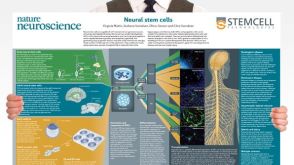
挂图
Neural Stem Cells
Overview of the types of NSCs and their potential use as therapeutic agents for disease
Lei IL et al. (JAN 2015)
Journal of visualized experiments : JoVE January 52047. doi: 10.3791/52047.
Derivation of cardiac progenitor cells from embryonic stem cells.
Cardiac progenitor cells (CPCs) have the capacity to differentiate into cardiomyocytes,smooth muscle cells (SMC),and endothelial cells and hold great promise in cell therapy against heart disease. Among various methods to isolate CPCs,differentiation of embryonic stem cell (ESC) into CPCs attracts great attention in the field since ESCs can provide unlimited cell source. As a result,numerous strategies have been developed to derive CPCs from ESCs. In this protocol,differentiation and purification of embryonic CPCs from both mouse and human ESCs is described. Due to the difficulty of using cell surface markers to isolate embryonic CPCs,ESCs are engineered with fluorescent reporters activated by CPC-specific cre recombinase expression. Thus,CPCs can be enriched by fluorescence-activated cell sorting (FACS). This protocol illustrates procedures to form embryoid bodies (EBs) from ESCs for CPC specification and enrichment. The isolated CPCs can be subsequently cultured for cardiac lineage differentiation and other biological assays. This protocol is optimized for robust and efficient derivation of CPCs from both mouse and human ESCs.
View Publication
产品类型:
产品号#:
85850
85857
产品名:
mTeSR™1
mTeSR™1
Volpe DA and Warren MK (JUN 2003)
Toxicology in vitro : an international journal published in association with BIBRA 17 3 271--7
Myeloid clonogenic assays for comparison of the in vitro toxicity of alkylating agents.
A battery of clonal assays for myeloid progenitor cells (HPP-CFC,CFU-gemm,CFU-gm,CFU-g) was utilized to evaluate the myelotoxicity of a series of alkylating agents representing the spectrum of clinical times to nadir. Bone marrow aspirates from normal volunteers were incubated with mechlorethamine,busulfan,melphalan,carmustine or lomustine for 1 h and then cultured in methylcellulose with 30% serum and cytokines. There was a concentration-dependent inhibition of colony formation and often a differential toxicity to the myeloid progenitors with the alkylators tested. On a molar basis,mechlorethamine and melphalan were the most toxic of the alkylator drugs to the myeloid precursors. The most sensitive progenitor was CFU-gemm with the lowest inhibitory concentration IC(70) concentrations for mechlorethamine,melphalan,carmustine and lomustine. Generally,there was great similarity for drug effects between CFU-g and CFU-gm with overlapping inhibition curves. HPP-CFC proved to be the least sensitive of the progenitors to the toxic actions of the drugs. While there was no correlation between the time to clinical neutropenic nadir and the most sensitive progenitor in the clonal assays,the CFU-gm assay remains a suitable method for determining the myelotoxic potential of cytotoxic agents.
View Publication
产品类型:
产品号#:
04535
04545
产品名:
MethoCult™H4535富集无EPO
MethoCult™ H4535 Enriched,不含EPO
Prowse A et al. (JUL 2009)
BioTechniques 47 1 599--606
A rapid, cost-effective method for counting human embryonic stem cell numbers as clumps.
Enumeration of human embryonic stem cell (hESC) numbers through single cell digestion can be time consuming especially in high-throughput or multi-factorial analysis containing 50+ samples. We have developed a reproducible,cost-effective method of counting hESCs in clumps circumventing the need to manually dissociate each sample to single cells. The method is based on the DNA binding capacity of propidium iodide (PI) and subsequent fluorescent signal detection. Standard curves generated for cell numbers versus PI fluorescence as single cells or clumps showed an almost identical relationship in the lines of best fit. The reproducibility of the assay was first demonstrated by seeding hESC clumps at specific cell densities ranging 0.05[x02013]2x10⁵ cells/well and then secondly by using the assay to count cell numbers after different growth conditions. Validation tests showed that consistent seeding densities are important in maintaining undifferentiated hESC culture and that the assay can be used to estimate relative cell numbers and growth curves with high accuracy.
View Publication
产品类型:
产品号#:
85850
85857
产品名:
mTeSR™1
mTeSR™1
Thirukkumaran CM et al. (JUL 2003)
Blood 102 1 377--87
Reovirus oncolysis as a novel purging strategy for autologous stem cell transplantation.
Hematologic stem cell rescue after high-dose cytotoxic therapy is extensively used for the treatment of many hematopoietic and solid cancers. Gene marking studies suggest that occult tumor cells within the autograft may contribute to clinical relapse. To date purging of autografts contaminated with cancer cells has been unsuccessful. The selective oncolytic property of reovirus against myriad malignant histologies in in vitro,in vivo,and ex vivo systems has been previously demonstrated. In the present study we have shown that reovirus can successfully purge cancer cells within autografts. Human monocytic and myeloma cell lines as well as enriched ex vivo lymphoma,myeloma,and Waldenström macroglobulinemia patient tumor specimens were used in an experimental purging model. Viability of the cell lines or purified ex vivo tumor cells of diffuse large B-cell lymphoma,chronic lymphocytic leukemia,Waldenström macroglobulinemia,and small lymphocytic lymphoma was significantly reduced after reovirus treatment. Further,[35S]-methionine labeling and sodium dodecyl sulfate-polyacrylamide gel electrophoresis (SDS-PAGE) of cellular proteins demonstrated reovirus protein synthesis and disruption of host cell protein synthesis as early as 24 hours. Admixtures of apheresis product with the abovementioned tumor cells and cell lines treated with reovirus showed complete purging of disease. In contrast,reovirus purging of enriched ex vivo multiple myeloma,Burkitt lymphoma,and follicular lymphoma was incomplete. The oncolytic action of reovirus did not affect CD34+ stem cells or their long-term colony-forming assays even after granulocyte colony-stimulating factor (G-CSF) stimulation. Our results indicate the ex vivo use of an unattenuated oncolytic virus as an attractive purging strategy for autologous stem cell transplantations.
View Publication
产品类型:
产品号#:
04434
04444
09600
09650
产品名:
MethoCult™H4434经典
MethoCult™H4434经典
StemSpan™ SFEM
StemSpan™ SFEM
Krug AK et al. (JAN 2013)
Archives of Toxicology 87 1 123--143
Human embryonic stem cell-derived test systems for developmental neurotoxicity: A transcriptomics approach
Developmental neurotoxicity (DNT) and many forms of reproductive toxicity (RT) often manifest themselves in functional deficits that are not necessarily based on cell death,but rather on minor changes relating to cell differentiation or communication. The fields of DNT/RT would greatly benefit from in vitro tests that allow the identification of toxicant-induced changes of the cellular proteostasis,or of its underlying transcriptome network. Therefore,the ‘human embryonic stem cell (hESC)-derived novel alternative test systems (ESNATS)' European commission research project established RT tests based on defined differentiation protocols of hESC and their progeny. Valproic acid (VPA) and methylmercury (MeHg) were used as positive control compounds to address the following fundamental questions: (1) Does transcriptome analysis allow discrimination of the two compounds? (2) How does analysis of enriched transcription factor binding sites (TFBS) and of individual probe sets (PS) distinguish between test systems? (3) Can batch effects be controlled? (4) How many DNA microarrays are needed? (5) Is the highest non-cytotoxic concentration optimal and relevant for the study of transcriptome changes? VPA triggered vast transcriptional changes,whereas MeHg altered fewer transcripts. To attenuate batch effects,analysis has been focused on the 500 PS with highest variability. The test systems differed significantly in their responses (backslashtextless20 % overlap). Moreover,within one test system,little overlap between the PS changed by the two compounds has been observed. However,using TFBS enrichment,a relatively large ‘common response' to VPA and MeHg could be distinguished from ‘compound-specific' responses. In conclusion,the ESNATS assay battery allows classification of human DNT/RT toxicants on the basis of their transcriptome profiles.
View Publication
产品类型:
产品号#:
85850
85857
产品名:
mTeSR™1
mTeSR™1
Jiang J et al. (SEP 2010)
Cancer research 70 18 7242--52
Crucial roles for protein kinase C isoforms in tumor-specific killing by apoptin.
The chicken anemia virus-derived protein apoptin induces apoptosis in a variety of human malignant and transformed cells but not in normal cells. However,the mechanisms through which apoptin achieves its selective killing effects are not well understood. We developed a lentiviral vector encoding a green fluorescent protein-apoptin fusion gene (LV-GFP-AP) that can efficiently deliver apoptin into hematopoietic cells. Apoptin selectively killed the human multiple myeloma cell lines MM1.R and MM1.S,and the leukemia cell lines K562,HL60,U937,KG1,and NB4. In contrast,normal CD34(+) cells were not killed and maintained their differentiation potential in multilineage colony formation assays. In addition,dexamethasone-resistant MM1.R cells were found to be more susceptible to apoptin-induced cell death than the parental matched MM1.S cells. Death susceptibility correlated with increased phosphorylation and activation of the apoptin protein in MM1.R cells. Expression array profiling identified differential kinase profiles between MM1.R and MM1.S cells. Among these kinases,protein kinase Cβ (PKCβ) was found by immunoprecipitation and in vitro kinase studies to be a candidate kinase responsible for apoptin phosphorylation. Indeed,shRNA knockdown or drug-mediated inhibition of PKCβ significantly reduced apoptin phosphorylation. Furthermore,apoptin-mediated cell death proceeded through the upregulation of PKCβ,activation of caspase-9/3,cleavage of the PKCδ catalytic domain,and downregulation of the MERTK and AKT kinases. Collectively,these results elucidate a novel pathway for apoptin activation involving PKCβ and PKCδ. Further,they highlight the potential of apoptin and its cellular regulators to purge bone marrow used in autologous transplantation for multiple myeloma.
View Publication
产品类型:
产品号#:
04434
04444
09600
09650
产品名:
MethoCult™H4434经典
MethoCult™H4434经典
StemSpan™ SFEM
StemSpan™ SFEM
Jo SY et al. (MAY 2011)
Blood 117 18 4759--68
Requirement for Dot1l in murine postnatal hematopoiesis and leukemogenesis by MLL translocation.
Disruptor of telomeric silencing 1-like (Dot1l) is a histone 3 lysine 79 methyltransferase. Studies of constitutive Dot1l knockout mice show that Dot1l is essential for embryonic development and prenatal hematopoiesis. DOT1L also interacts with translocation partners of Mixed Lineage Leukemia (MLL) gene,which is commonly translocated in human leukemia. However,the requirement of Dot1l in postnatal hematopoiesis and leukemogenesis of MLL translocation proteins has not been conclusively shown. With a conditional Dot1l knockout mouse model,we examined the consequences of Dot1l loss in postnatal hematopoiesis and MLL translocation leukemia. Deletion of Dot1l led to pancytopenia and failure of hematopoietic homeostasis,and Dot1l-deficient cells minimally reconstituted recipient bone marrow in competitive transplantation experiments. In addition,MLL-AF9 cells required Dot1l for oncogenic transformation,whereas cells with other leukemic oncogenes,such as Hoxa9/Meis1 and E2A-HLF,did not. These findings illustrate a crucial role of Dot1l in normal hematopoiesis and leukemogenesis of specific oncogenes.
View Publication
Friedel T et al. (MAR 2016)
Stem cells and development 25 9 729--39
CD30 Receptor-Targeted Lentiviral Vectors for Human Induced Pluripotent Stem Cell-Specific Gene Modification.
Cultures of induced pluripotent stem cells (iPSCs) often contain cells of varying grades of pluripotency. We present novel lentiviral vectors targeted to the surface receptor CD30 (CD30-LV) to transfer genes into iPSCs that are truly pluripotent as demonstrated by marker gene expression. We demonstrate that CD30 expression is restricted to SSEA4high cells of human iPSC cultures and a human embryonic stem cell line. When CD30-LV was added to iPSCs during routine cultivation,efficient and exclusive transduction of cells positive for the pluripotency marker Oct-4 was achieved,while retaining their pluripotency. When added during the reprogramming process,CD30-LV solely transduced cells that became fully reprogrammed iPSCs as confirmed by co-expression of endogenous Nanog and the reporter gene. Thus,CD30-LV may serve as novel tool for the selective gene transfer into pluripotent stem cells with broad applications in basic and therapeutic research.
View Publication


 EasySep™小鼠TIL(CD45)正选试剂盒




 挂图Neural Stem Cells Overview of the types of NSCs and their potential use as therapeutic agents for disease

 沪公网安备31010102008431号