Xing J et al. (MAY 2015)
Scientific Reports 5 November 2014 10038
A method for human teratogen detection by geometrically confined cell differentiation and migration
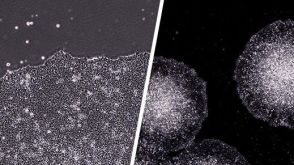
Unintended exposure to teratogenic compounds can lead to various birth defects; however current animal-based testing is limited by time,cost and high inter-species variability. Here,we developed a human-relevant in vitro model,which recapitulated two cellular events characteristic of embryogenesis,to identify potentially teratogenic compounds. We spatially directed mesoendoderm differentiation,epithelial-mesenchymal transition and the ensuing cell migration in micropatterned human pluripotent stem cell (hPSC) colonies to collectively form an annular mesoendoderm pattern. Teratogens could disrupt the two cellular processes to alter the morphology of the mesoendoderm pattern. Image processing and statistical algorithms were developed to quantify and classify the compounds' teratogenic potential. We not only could measure dose-dependent effects but also correctly classify species-specific drug (Thalidomide) and false negative drug (D-penicillamine) in the conventional mouse embryonic stem cell test. This model offers a scalable screening platform to mitigate the risks of teratogen exposures in human.
View Publication
产品类型:
产品号#:
05850
05857
05870
05875
07923
85850
85857
85870
85875
05270
05275
产品名:
Dispase (1 U/mL)
mTeSR™1
mTeSR™1
STEMdiff™ APEL™2 培养基
STEMdiff™ APEL™2 培养基
Saha K et al. (NOV 2011)
Proceedings of the National Academy of Sciences of the United States of America 108 46 18714--9
Surface-engineered substrates for improved human pluripotent stem cell culture under fully defined conditions
The current gold standard for the culture of human pluripotent stem cells requires the use of a feeder layer of cells. Here,we develop a spatially defined culture system based on UV/ozone radiation modification of typical cell culture plastics to define a favorable surface environment for human pluripotent stem cell culture. Chemical and geometrical optimization of the surfaces enables control of early cell aggregation from fully dissociated cells,as predicted from a numerical model of cell migration,and results in significant increases in cell growth of undifferentiated cells. These chemically defined xeno-free substrates generate more than three times the number of cells than feeder-containing substrates per surface area. Further,reprogramming and typical gene-targeting protocols can be readily performed on these engineered surfaces. These substrates provide an attractive cell culture platform for the production of clinically relevant factor-free reprogrammed cells from patient tissue samples and facilitate the definition of standardized scale-up friendly methods for disease modeling and cell therapeutic applications.
View Publication
APELIN promotes hematopoiesis from human embryonic stem cells.
Transcriptional profiling of differentiating human embryonic stem cells (hESCs) revealed that MIXL1-positive mesodermal precursors were enriched for transcripts encoding the G-protein-coupled APELIN receptor (APLNR). APLNR-positive cells,identified by binding of the fluoresceinated peptide ligand,APELIN (APLN),or an anti-APLNR mAb,were found in both posterior mesoderm and anterior mesendoderm populations and were enriched in hemangioblast colony-forming cells (Bl-CFC). The addition of APLN peptide to the media enhanced the growth of embryoid bodies (EBs),increased the expression of hematoendothelial genes in differentiating hESCs,and increased the frequency of Bl-CFCs by up to 10-fold. Furthermore,APLN peptide also synergized with VEGF to promote the growth of hESC-derived endothelial cells. These studies identified APLN as a novel growth factor for hESC-derived hematopoietic and endothelial cells.
View Publication
产品类型:
产品号#:
04436
产品名:
MethoCult™ SF H4436
Milsom MD et al. (MAY 2009)
Blood 113 21 5111--20
Ectopic HOXB4 overcomes the inhibitory effect of tumor necrosis factor-alpha on Fanconi anemia hematopoietic stem and progenitor cells.
Ectopic delivery of HOXB4 elicits the expansion of engrafting hematopoietic stem cells (HSCs). We hypothesized that inhibition of tumor necrosis factor-alpha (TNF-alpha) signaling may be central to the self-renewal signature of HOXB4. Because HSCs derived from Fanconi anemia (FA) knockout mice are hypersensitive to TNF-alpha,we studied Fancc(-/-) HSCs to determine the physiologic effects of HOXB4 on TNF-alpha sensitivity and the relationship of these effects to the engraftment defect of FA HSCs. Overexpression of HOXB4 reversed the in vitro hypersensitivity to TNF-alpha of Fancc(-/-) HSCs and progenitors (P) and partially rescued the engraftment defect of these cells. Coexpression of HOXB4 and the correcting FA-C protein resulted in full correction compared with wild-type (WT) HSCs. Ectopic expression of HOXB4 resulted in a reduction in both apoptosis and reactive oxygen species in Fancc(-/-) but not WT HSC/P. HOXB4 overexpression was also associated with a significant reduction in surface expression of TNF-alpha receptors on Fancc(-/-) HSC/P. Finally,enhanced engraftment was seen even when HOXB4 was expressed in a time-limited fashion during in vivo reconstitution. Thus,the HOXB4 engraftment signature may be related to its effects on TNF-alpha signaling,and this pathway may be a molecular target for timed pharmacologic manipulation of HSC during reconstitution.
View Publication
Retinoblastoma-binding proteins 4 and 9 are important for human pluripotent stem cell maintenance.
OBJECTIVE: The molecular mechanisms that maintain human pluripotent stem (PS) cells are not completely understood. Here we sought to identify new candidate PS cell regulators to facilitate future improvements in their generation,expansion,and differentiation. MATERIALS AND METHODS: We used bioinformatic analyses of multiple serial-analysis-of-gene-expression libraries (generated from human PS cells and their differentiated derivatives),together with small interfering RNA (siRNA) screening to identify candidate pluripotency regulators. Validation of candidate regulators involved promoter analyses,Affymetrix profiling,real-time PCR,and immunoprecipitation. RESULTS: Promoter analysis of genes differentially expressed across multiple serial-analysis-of-gene-expression libraries identified E2F motifs in the promoters of many PS cell-specific genes (e.g.,POU5F1,NANOG,SOX2,FOXD3). siRNA analyses identified two retinoblastoma binding proteins (RBBP4,RBBP9) as required for maintenance of multiple human PS cell types. Both RBBPs were bound to RB in human PS cells,and E2F motifs were present in the promoters of genes whose expression was altered by decreasing RBBP4 and RBBP9 expression. Affymetrix and real-time PCR studies of siRNA-treated human PS cells showed that reduced RBBP4 or RBBP9 expression concomitantly decreased expression of POU5F1,NANOG,SOX2,and/or FOXD3 plus certain cell cycle genes (e.g.,CCNA2,CCNB1),while increasing expression of genes involved in organogenesis (particularly neurogenesis). CONCLUSIONS: These results reveal new candidate positive regulators of human PS cells,providing evidence of their ability to regulate expression of pluripotency,cell cycle,and differentiation genes in human PS cells. These data provide valuable new leads for further elucidating mechanisms of human pluripotency.
View Publication
Moore JJC et al. (JAN 2010)
Stem Cell Research & Therapy 1 3 23
Efficient, high-throughput transfection of human embryonic stem cells.
Genetic manipulation of human embryonic stem cells (hESC) has been limited by their general resistance to common methods used to introduce exogenous DNA or RNA. Efficient and high throughput transfection of nucleic acids into hESC would be a valuable experimental tool to manipulate these cells for research and clinical applications. We investigated the ability of two commercially available electroporation systems,the Nucleofection® 96-well Shuttle® System from Lonza and the Neon™ Transfection System from Invitrogen to efficiently transfect hESC. Transfection efficiency was measured by flow cytometry for the expression of the green fluorescent protein and the viability of the transfected cells was determined by an ATP catalyzed luciferase reaction. The transfected cells were also analyzed by flow cytometry for common markers of pluripotency. Both systems are capable of transfecting hESC at high efficiencies with little loss of cell viability. However,the reproducibility and the ease of scaling for high throughput applications led us to perform more comprehensive tests on the Nucleofection® 96-well Shuttle® System. We demonstrate that this method yields a large fraction of transiently transfected cells with minimal loss of cell viability and pluripotency,producing protein expression from plasmid vectors in several different hESC lines. The method scales to a 96-well plate with similar transfection efficiencies at the start and end of the plate. We also investigated the efficiency with which stable transfectants can be generated and recovered under antibiotic selection. Finally,we found that this method is effective in the delivery of short synthetic RNA oligonucleotides (siRNA) into hESC for knockdown of translation activity via RNA interference. Our results indicate that these electroporation methods provide a reliable,efficient,and high-throughput approach to the genetic manipulation of hESC.
View Publication
产品类型:
产品号#:
05850
05857
05870
05875
85850
85857
85870
85875
产品名:
mTeSR™1
mTeSR™1
Zhao Z et al. ( 2016)
Frontiers in cellular neuroscience 10 291
Effects of Feeder Cells on Dopaminergic Differentiation of Human Embryonic Stem Cells.
Mouse embryonic fibroblasts (MEFs) and human foreskin fibroblasts (HFFs) are used for the culture of human embryonic stem cells (hESCs). MEFs and HFFs differed in their capacity to support the proliferation and pluripotency of hESCs and could affect cardiac differentiation potential of hESCs. The aim of this study was to evaluate the effect of MEFs and HFFs feeders on dopaminergic differentiation of hESCs lines. To minimize the impact of culture condition variation,two hESCs lines were cultured on mixed feeder cells (MFCs,MEFs: HFFs = 1:1) and HFFs feeder,respectively,and then were differentiated into dopaminergic (DA) neurons under the identical protocol. Dopaminergic differentiation was evaluated by immunocytochemistry,quantitative fluorescent real-time PCR,transmission and scanning electron microscopy,and patch clamp. Our results demonstrated that these hESCs-derived neurons were genuine and functional DA neurons. However,compared to hESCs line on MFCs feeder,hESCs line on HFFs feeder had a higher proportion of tyrosine hydroxylase (TH) positive cells and expressed higher levels of FOXA2,PITX3,NURR1,and TH genes. In addition,the values of threshold intensity and threshold membrane potential of DA neurons from hESCs line on HFFs feeder were lower than those of DA neurons from hESCs line on the MFCs feeder. In conclusion,HFFs feeder not only facilitated the differentiation of hESCs cells into dopaminergic neurons,but also induced hESCs-derived DA neurons to express higher electrophysiological excitability. Therefore,feeder cells could affect not only dopaminergic differentiation potential of different hESCs lines,but also electrophysiological properties of hESCs-derived DA neurons.
View Publication
产品类型:
产品号#:
05850
05857
05870
05875
85850
85857
85870
85875
产品名:
mTeSR™1
mTeSR™1
West PR et al. (AUG 2010)
Toxicology and Applied Pharmacology 247 1 18--27
Predicting human developmental toxicity of pharmaceuticals using human embryonic stem cells and metabolomics.
Teratogens,substances that may cause fetal abnormalities during development,are responsible for a significant number of birth defects. Animal models used to predict teratogenicity often do not faithfully correlate to human response. Here,we seek to develop a more predictive developmental toxicity model based on an in vitro method that utilizes both human embryonic stem (hES) cells and metabolomics to discover biomarkers of developmental toxicity. We developed a method where hES cells were dosed with several drugs of known teratogenicity then LC-MS analysis was performed to measure changes in abundance levels of small molecules in response to drug dosing. Statistical analysis was employed to select for specific mass features that can provide a prediction of the developmental toxicity of a substance. These molecules can serve as biomarkers of developmental toxicity,leading to better prediction of teratogenicity. In particular,our work shows a correlation between teratogenicity and changes of greater than 10% in the ratio of arginine to asymmetric dimethylarginine levels. In addition,this study resulted in the establishment of a predictive model based on the most informative mass features. This model was subsequently tested for its predictive accuracy in two blinded studies using eight drugs of known teratogenicity,where it correctly predicted the teratogenicity for seven of the eight drugs. Thus,our initial data shows that this platform is a robust alternative to animal and other in vitro models for the prediction of the developmental toxicity of chemicals that may also provide invaluable information about the underlying biochemical pathways. ?? 2010 Elsevier Inc.
View Publication
产品类型:
产品号#:
05850
05857
05870
05875
85850
85857
85870
85875
产品名:
mTeSR™1
mTeSR™1
Tasnim F et al. (MAY 2016)
Molecular Pharmaceutics 13 6 1947--1957
Functionally Enhanced Human Stem Cell Derived Hepatocytes in Galactosylated Cellulosic Sponges for Hepatotoxicity Testing.
Pluripotent stem cell derived hepatocyte-like cells (hPSC-HLCs) are an attractive alternative to primary human hepatocytes (PHHs) used in applications ranging from therapeutics to drug safety testing studies. It would be critical to improve and maintain mature hepatocyte functions of the hPSC-HLCs,especially for long-term studies. If 3D culture systems were to be used for such purposes,it would be important that the system can support formation and maintenance of optimal-sized spheroids for long periods of time,and can also be directly deployed in liver drug testing assays. We report the use of 3-dimensional (3D) cellulosic scaffold system for the culture of hPSC-HLCs. The scaffold has a macroporous network which helps to control the formation and maintenance of the spheroids for weeks. Our results show that culturing hPSC-HLCs in 3D cellulosic scaffolds increases functionality,as demonstrated by improved urea production and hepatic marker expression. In addition,hPSC-HLCs in the scaffolds exhibit a more mature phenotype,as shown by enhanced cytochrome P450 activity and induction. This enables the system to show a higher sensitivity to hepatotoxicants and a higher degree of similarity to PHHs when compared to conventional 2D systems. These results suggest that 3D cellulosic scaffolds are ideal for the long-term cultures needed to mature hPSC-HLCs. The mature hPSC-HLCs with improved cellular function can be continually maintained in the scaffolds and directly used for hepatotoxicity assays,making this system highly attractive for drug testing applications.
View Publication


 EasySep™小鼠TIL(CD45)正选试剂盒




 实验方案How to Coat Cultureware with STEMmatrix™ BME for Human Pluripotent Stem Cell Culture

 沪公网安备31010102008431号