A Micropatterned Human Pluripotent Stem Cell-Based Ventricular Cardiac Anisotropic Sheet for Visualizing Drug-Induced Arrhythmogenicity.
A novel cardiomimetic biohybrid material,termed as the human ventricular cardiac anisotropic sheet (hvCAS) is reported. Well-characterized human pluripotent stem-cell-derived ventricular cardiomyocytes are strategically aligned to reproduce key electrophysiological features of native human ventricle,which,along with specific selection criteria,allows for a direct visualization of arrhythmic spiral re-entry and represents a revolutionary tool to assess preclinical drug-induced arrhythmogenicity.
View Publication
产品类型:
产品号#:
85850
85857
产品名:
mTeSR™1
mTeSR™1
Xing J et al. (MAY 2015)
Scientific Reports 5 November 2014 10038
A method for human teratogen detection by geometrically confined cell differentiation and migration
Unintended exposure to teratogenic compounds can lead to various birth defects; however current animal-based testing is limited by time,cost and high inter-species variability. Here,we developed a human-relevant in vitro model,which recapitulated two cellular events characteristic of embryogenesis,to identify potentially teratogenic compounds. We spatially directed mesoendoderm differentiation,epithelial-mesenchymal transition and the ensuing cell migration in micropatterned human pluripotent stem cell (hPSC) colonies to collectively form an annular mesoendoderm pattern. Teratogens could disrupt the two cellular processes to alter the morphology of the mesoendoderm pattern. Image processing and statistical algorithms were developed to quantify and classify the compounds' teratogenic potential. We not only could measure dose-dependent effects but also correctly classify species-specific drug (Thalidomide) and false negative drug (D-penicillamine) in the conventional mouse embryonic stem cell test. This model offers a scalable screening platform to mitigate the risks of teratogen exposures in human.
View Publication
产品类型:
产品号#:
05270
05275
07923
85850
85857
产品名:
STEMdiff™ APEL™2 培养基
STEMdiff™ APEL™2 培养基
Dispase (1 U/mL)
mTeSR™1
mTeSR™1
Saha K et al. (NOV 2011)
Proceedings of the National Academy of Sciences of the United States of America 108 46 18714--9
Surface-engineered substrates for improved human pluripotent stem cell culture under fully defined conditions
The current gold standard for the culture of human pluripotent stem cells requires the use of a feeder layer of cells. Here,we develop a spatially defined culture system based on UV/ozone radiation modification of typical cell culture plastics to define a favorable surface environment for human pluripotent stem cell culture. Chemical and geometrical optimization of the surfaces enables control of early cell aggregation from fully dissociated cells,as predicted from a numerical model of cell migration,and results in significant increases in cell growth of undifferentiated cells. These chemically defined xeno-free substrates generate more than three times the number of cells than feeder-containing substrates per surface area. Further,reprogramming and typical gene-targeting protocols can be readily performed on these engineered surfaces. These substrates provide an attractive cell culture platform for the production of clinically relevant factor-free reprogrammed cells from patient tissue samples and facilitate the definition of standardized scale-up friendly methods for disease modeling and cell therapeutic applications.
View Publication
Repression of Id2 expression by Gfi-1 is required for B-cell and myeloid development.
The development of mature blood cells from hematopoietic stem cells requires coordinated activities of transcriptional networks. Transcriptional repressor growth factor independence 1 (Gfi-1) is required for the development of B cells,T cells,neutrophils,and for the maintenance of hematopoietic stem cell function. However,the mechanisms by which Gfi-1 regulates hematopoiesis and how Gfi-1 integrates into transcriptional networks remain unclear. Here,we provide evidence that Id2 is a transcriptional target of Gfi-1,and repression of Id2 by Gfi-1 is required for B-cell and myeloid development. Gfi-1 binds to 3 conserved regions in the Id2 promoter and represses Id2 promoter activity in transient reporter assays. Increased Id2 expression was observed in multipotent progenitors,myeloid progenitors,T-cell progenitors,and B-cell progenitors in Gfi-1(-/-) mice. Knockdown of Id2 expression or heterozygosity at the Id2 locus partially rescues the B-cell and myeloid development but not the T-cell development in Gfi-1(-/-) mice. These studies demonstrate a role of Id2 in mediating Gfi-1 functions in B-cell and myeloid development and provide a direct link between Gfi-1 and the B-cell transcriptional network by its ability to repress Id2 expression.
View Publication
产品类型:
产品号#:
03234
产品名:
MethoCult™M3234
Chang M-J et al. (DEC 2010)
Cancer research 70 24 10234--42
Histone H3 lysine 79 methyltransferase Dot1 is required for immortalization by MLL oncogenes.
Chimeric oncoproteins resulting from fusion of MLL to a wide variety of partnering proteins cause biologically distinctive and clinically aggressive acute leukemias. However,the mechanism of MLL-mediated leukemic transformation is not fully understood. Dot1,the only known histone H3 lysine 79 (H3K79) methyltransferase,has been shown to interact with multiple MLL fusion partners including AF9,ENL,AF10,and AF17. In this study,we utilize a conditional Dot1l deletion model to investigate the role of Dot1 in hematopoietic progenitor cell immortalization by MLL fusion proteins. Western blot and mass spectrometry show that Dot1-deficient cells are depleted of the global H3K79 methylation mark. We find that loss of Dot1 activity attenuates cell viability and colony formation potential of cells immortalized by MLL oncoproteins but not by the leukemic oncoprotein E2a-Pbx1. Although this effect is most pronounced for MLL-AF9,we find that Dot1 contributes to the viability of cells immortalized by other MLL oncoproteins that are not known to directly recruit Dot1. Cells immortalized by MLL fusions also show increased apoptosis,suggesting the involvement of Dot1 in survival pathways. In summary,our data point to a pivotal requirement for Dot1 in MLL fusion protein-mediated leukemogenesis and implicate Dot1 as a potential therapeutic target.
View Publication
产品类型:
产品号#:
03234
18757
18757RF
产品名:
MethoCult™M3234
EasySep™小鼠CD117(cKIT)正选试剂盒
RoboSep™ 小鼠CD117(cKIT)正选试剂盒含滤芯吸头
Staron M et al. (JUN 2011)
Blood 117 26 7136--44
Heat-shock protein gp96/grp94 is an essential chaperone for the platelet glycoprotein Ib-IX-V complex.
The platelet glycoprotein Ib-IX-V complex (GPIb-IX-IV) is the receptor for VWF and is responsible for VWF-mediated platelet activation and aggregation. Loss of the GPIb-IX-V complex is pathogenic for Bernard-soulier Syndrome (BSS),which is characterized by macrothrombocytopenia and impaired platelet function. It remains unclear how the GPIb-IX-V complex is assembled and whether there is a role for a specific molecular chaperone in the process. In the present study,we report that the assembly of the GPIb-IX-V complex depends critically on a molecular chaperone in the endoplasmic reticulum (ER): gp96 (also known as grp94 and HSP90b1). gp96/grp94 deletion in the murine hematopoietic system results in thrombocytopenia,prolonged bleeding time,and giant platelets that are clinically indistinguishable from human BSS. Loss of gp96/grp94 in vivo and in vitro leads to the concomitant reduction in GPIb-IX complex expression due to ER-associated degradation. We further demonstrate that gp96/grp94 binds selectively to the GPIX subunit,but not to gpIbα or gpIbβ. Therefore,we identify the platelet GPIX subunit of the GPIb-IX-V complex as an obligate and novel client of gp96/grp94.
View Publication
产品类型:
产品号#:
03434
03444
产品名:
MethoCult™GF M3434
MethoCult™GF M3434
Khatib MME et al. (MAY 2016)
Stem Cells Translational Medicine 5 5 694--702
Tumor-Free Transplantation of Patient-Derived Induced Pluripotent Stem Cell Progeny for Customized Islet Regeneration
Human induced pluripotent stem cells (iPSCs) and derived progeny provide invaluable regenerative platforms,yet their clinical translation has been compromised by their biosafety concern. Here,we assessed the safety of transplanting patient-derived iPSC-generated pancreatic endoderm/ progenitor cells. Transplantation of progenitors from iPSCs reprogrammed by lentiviral vectors (LV-iPSCs) led to the formation of invasive teratocarcinoma-like tumors in more than 90% of immu-nodeficient mice. Moreover,removal of primary tumors from LV-iPSC progeny-transplanted hosts generated secondary and metastatic tumors. Combined transgene-free (TGF) reprogramming and elimination of residual pluripotent cells by enzymatic dissociation ensured tumor-free transplanta-tion,ultimately enabling regeneration of type 1 diabetes-specific human islet structures in vivo. The incidence of tumor formation in TGF-iPSCs was titratable,depending on the oncogenic load,with reintegration of the cMYC expressing vector abolishing tumor-free transplantation. Thus,transgene-free cMYC-independent reprogramming and elimination of residual pluripotent cells are mandatory steps in achieving transplantation of iPSC progeny for customized and safe islet regeneration in vivo. STEM CELLS TRANSLATIONAL MEDICINE 2016;5:694–702 SIGNIFICANCE Pluripotent stem cell therapy for diabetes relies on the safety as well as the quality of derived insulin-producing cells. Data from this study highlight prominent tumorigenic risks of induced pluripotent stem cell (iPSC) products,especially when reprogrammed with integrating vectors. Two major under-lying mechanisms in iPSC tumorigenicity are residual pluripotent cells and cMYC overload by vector integration. This study also demonstrated that combined transgene-free reprogramming and enzy-matic dissociation allows teratoma-free transplantation of iPSC progeny in the mouse model in test-ing the tumorigenicity of iPSC products. Further safety assessment and improvement in iPSC specification into a mature b cell phenotype would lead to safe islet replacement therapy for diabetes.
View Publication
Rodrigues G et al. (APR 2014)
Stem Cell Reviews and Reports 10 2 151--161
Integrated Platform for Production and Purification of Human Pluripotent Stem Cell-Derived Neural Precursors
Human pluripotent stem cells (hPSCs) are a promising source of cells for clinical applications,such as transplantation of clinically engineered tissues and organs,and drug discovery programs due to their ability to self-renew and to be differentiated into cells from the three embryonic germ layers. In this study,the differentiation of two hPSC-lines into neural precursors (NPs) was accomplished with more than 80 % efficiency,by means of the dual-SMAD inhibition protocol,based on the use of two small molecules (SB431542 and LDN193189) to generate Pax6 and Nestin-positive neural entities. One of the major hurdles related to the in vitro generation of PSC-derived populations is the tumorigenic potential of cells that remain undifferentiated. These remaining hPSCs have the potential to generate teratomas after being transplanted,and may interfere with the outcome of in vitro differentiation protocols. One strategy to tackle this problem is to deplete these contaminating" cells during the differentiation process. Magnetic activated cell sorting (MACS) was used for the first time for purification of hPSC-derived NPs after the neural commitment stage using anti-Tra-1-60 micro beads for negative selection of the unwanted hPSCs. The depletion had an average efficiency of 80.4 ± 5 % and less than 1.5 % of Tra-1-60 positive cells were present in the purified populations. After re-plating�
View Publication
产品类型:
产品号#:
85850
85857
产品名:
mTeSR™1
mTeSR™1
Su CTE et al. (FEB 2015)
Journal of visualized experiments : JoVE 96 1--9
An Optogenetic Approach for Assessing Formation of Neuronal Connections in a Co-culture System.
Here we describe a protocol to generate a co-culture consisting of 2 different neuronal populations. Induced pluripotent stem cells (iPSCs) are reprogrammed from human fibroblasts using episomal vectors. Colonies of iPSCs can be observed 30 days after initiation of fibroblast reprogramming. Pluripotent colonies are manually picked and grown in neural induction medium to permit differentiation into neural progenitor cells (NPCs). iPSCs rapidly convert into neuroepithelial cells within 1 week and retain the capability to self-renew when maintained at a high culture density. Primary mouse NPCs are differentiated into astrocytes by exposure to a serum-containing medium for 7 days and form a monolayer upon which embryonic day 18 (E18) rat cortical neurons (transfected with channelrhodopsin-2 (ChR2)) are added. Human NPCs tagged with the fluorescent protein,tandem dimer Tomato (tdTomato),are then seeded onto the astrocyte/cortical neuron culture the following day and allowed to differentiate for 28 to 35 days. We demonstrate that this system forms synaptic connections between iPSC-derived neurons and cortical neurons,evident from an increase in the frequency of synaptic currents upon photostimulation of the cortical neurons. This co-culture system provides a novel platform for evaluating the ability of iPSC-derived neurons to create synaptic connections with other neuronal populations.
View Publication


 EasySep™小鼠TIL(CD45)正选试剂盒




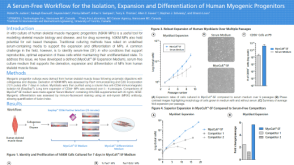 科学海报A Serum-Free Workflow for the Isolation, Expansion and Differentiation of Human Myogenic Progenitors

 沪公网安备31010102008431号