Reprogramming of human somatic cells to pluripotency with defined factors.
Pluripotency pertains to the cells of early embryos that can generate all of the tissues in the organism. Embryonic stem cells are embryo-derived cell lines that retain pluripotency and represent invaluable tools for research into the mechanisms of tissue formation. Recently,murine fibroblasts have been reprogrammed directly to pluripotency by ectopic expression of four transcription factors (Oct4,Sox2,Klf4 and Myc) to yield induced pluripotent stem (iPS) cells. Using these same factors,we have derived iPS cells from fetal,neonatal and adult human primary cells,including dermal fibroblasts isolated from a skin biopsy of a healthy research subject. Human iPS cells resemble embryonic stem cells in morphology and gene expression and in the capacity to form teratomas in immune-deficient mice. These data demonstrate that defined factors can reprogramme human cells to pluripotency,and establish a method whereby patient-specific cells might be established in culture.
View Publication
产品类型:
产品号#:
04434
04444
05860
05880
05850
05857
05870
05875
85850
85857
85870
85875
产品名:
MethoCult™ H4434 Classic
MethoCult™ H4434 Classic
mTeSR™1
mTeSR™1
Sullivan JP et al. (DEC 2010)
Cancer research 70 23 9937--48
Aldehyde dehydrogenase activity selects for lung adenocarcinoma stem cells dependent on notch signaling.
Aldehyde dehydrogenase (ALDH) is a candidate marker for lung cancer cells with stem cell-like properties. Immunohistochemical staining of a large panel of primary non-small cell lung cancer (NSCLC) samples for ALDH1A1,ALDH3A1,and CD133 revealed a significant correlation between ALDH1A1 (but not ALDH3A1 or CD133) expression and poor prognosis in patients including those with stage I and N0 disease. Flow cytometric analysis of a panel of lung cancer cell lines and patient tumors revealed that most NSCLCs contain a subpopulation of cells with elevated ALDH activity,and that this activity is associated with ALDH1A1 expression. Isolated ALDH(+) lung cancer cells were observed to be highly tumorigenic and clonogenic as well as capable of self-renewal compared with their ALDH(-) counterparts. Expression analysis of sorted cells revealed elevated Notch pathway transcript expression in ALDH(+) cells. Suppression of the Notch pathway by treatment with either a γ-secretase inhibitor or stable expression of shRNA against NOTCH3 resulted in a significant decrease in ALDH(+) lung cancer cells,commensurate with a reduction in tumor cell proliferation and clonogenicity. Taken together,these findings indicate that ALDH selects for a subpopulation of self-renewing NSCLC stem-like cells with increased tumorigenic potential,that NSCLCs harboring tumor cells with ALDH1A1 expression have inferior prognosis,and that ALDH1A1 and CD133 identify different tumor subpopulations. Therapeutic targeting of the Notch pathway reduces this ALDH(+) component,implicating Notch signaling in lung cancer stem cell maintenance.
View Publication
产品类型:
产品号#:
01700
01705
01702
产品名:
ALDEFLUOR™ 试剂盒
ALDEFLUOR™ DEAB试剂, 1.5 mM, 1 mL
ALDEFLUOR™检测缓冲液
Zhu F et al. (SEP 2014)
Stem cells and development 23 17 2119--2125
A modified method for implantation of pluripotent stem cells under the rodent kidney capsule.
Teratoma formation,the standard in vivo pluripotency assay,is also frequently used as a tumorigenicity assay. A common concern in therapeutic stem cell applications is the tumorigenicity potential of a small number of cell impurities in the final product. Estimation of this small number is hampered by the inaccurate methodology of the tumorigenicity assay. Hence,a protocol for tumorigenicity assay that can deliver a defined number of cells,without error introduced by leakage or migration of cells is needed. In this study,we tested our modified transplantation method that allows for transplant of small numbers of pluripotent stem cells (PSCs) under the kidney capsule with minimal cell leakage. A glass capillary with a finely shaped tip and an attached mouth pipette was used to inject PSCs into the rodent kidney capsule. H9 embryonic and induced PSCs were tagged with Fluc and green fluorescence protein reporter genes and divided in different cell doses for transplantation. Bioluminescence imaging (BLI) on the day of surgery showed that the cell signal was confined to the kidney and signal intensity correlated with increasing transplant cell numbers. The overall cell leakage rate was 17% and the rodent survival rate was 96%. Teratoma formation was observed in rodents transplanted with cell numbers between 1 × 10(5)-2 × 10(6). We conclude that this modified procedure for transplanting PSCs under the kidney capsule allows for transplantation of a defined number of PSCs with significant reduction of error associated with cell leakage from the transplant site.
View Publication
Huang K et al. (JAN 2014)
Science China Life Sciences 57 2 162--70
Neural progenitor cells from human induced pluripotent stem cells generated less autogenous immune response
The breakthrough development of induced pluripotent stem cells (iPSCs) raises the prospect of patient-specific treatment for many diseases through the replacement of affected cells. However,whether iPSC-derived functional cell lineages generate a deleterious immune response upon auto-transplantation remains unclear. In this study,we differentiated five human iPSC lines from skin fibroblasts and urine cells into neural progenitor cells (NPCs) and analyzed their immunogenicity. Through co-culture with autogenous peripheral blood mononuclear cells (PBMCs),we showed that both somatic cells and iPSC-derived NPCs do not stimulate significant autogenous PBMC proliferation. However,a significant immune reaction was detected when these cells were co-cultured with allogenous PBMCs. Furthermore,no significant expression of perforin or granzyme B was detected following stimulation of autogenous immune effector cells (CD3+CD8− T cells,CD3+CD8+ T cells or CD3−CD56+ NK cells) by NPCs in both PBMC and T cell co-culture systems. These results suggest that human iPSC-derived NPCs may not initiate an immune response in autogenous transplants,and thus set a base for further preclinical evaluation of human iPSCs.
View Publication
Directed Differentiation of Human Pluripotent Stem Cells to Microglia.
Microglia,the immune cells of the brain,are crucial to proper development and maintenance of the CNS,and their involvement in numerous neurological disorders is increasingly being recognized. To improve our understanding of human microglial biology,we devised a chemically defined protocol to generate human microglia from pluripotent stem cells. Myeloid progenitors expressing CD14/CX3CR1 were generated within 30 days of differentiation from both embryonic and induced pluripotent stem cells (iPSCs). Further differentiation of the progenitors resulted in ramified microglia with highly motile processes,expressing typical microglial markers. Analyses of gene expression and cytokine release showed close similarities between iPSC-derived (iPSC-MG) and human primary microglia as well as clear distinctions from macrophages. iPSC-MG were able to phagocytose and responded to ADP by producing intracellular Ca(2+) transients,whereas macrophages lacked such response. The differentiation protocol was highly reproducible across several pluripotent stem cell lines.
View Publication
产品类型:
产品号#:
05850
05857
05870
05875
85850
85857
85870
85875
产品名:
mTeSR™1
mTeSR™1
Park Y et al. (MAR 2014)
Journal of Biotechnology 174 1 39--48
Hepatic differentiation of human embryonic stem cells on microcarriers
Translation of stem cell research to industrial and clinical settings mostly requires large quantities of cells,especially those involving large organs such as the liver. A scalable reactor system is desirable to ensure a reliable supply of sufficient quantities of differentiated cells. To increase the culture efficiency in bioreactor system,high surface to volume ratio needs to be achieved. We employed a microcarrier culture system for the expansion of undifferentiated human embryonic stem cells (hESCs) as well as for directed differentiation of these cells to hepatocyte-like cells. Cells in single cell suspension were attached to the bead surface in even distribution and were expanded to 1??106cells/ml within 2 days of hESC culture with maintenance of the level of pluripotency markers. Directed differentiation into hepatocyte-like cells on microcarriers,both in static culture and stirred bioreactors,induced similar levels of hepatocyte-like cell differentiation as observed with cells cultured in conventional tissue culture plates. The cells expressed both immature and mature hepatocyte-lineage genes and proteins such as asialoglycoprotein receptor-1 (ASGPR-1) and albumin. Differentiated cells exhibited functional characteristics such as secretion of albumin and urea,and CYP3A4 activity could be detected. Microcarriers thus offer the potential for large-scale expansion and differentiation of hESCs induced hepatocyte-like cells in a more controllable bioreactor environment. ?? 2014.
View Publication
产品类型:
产品号#:
05850
05857
05870
05875
85850
85857
85870
85875
产品名:
mTeSR™1
mTeSR™1
Genga RM et al. (MAY 2016)
Methods 101 36--42
Controlling transcription in human pluripotent stem cells using CRISPR-effectors
The ability to manipulate transcription in human pluripotent stem cells (hPSCs) is fundamental for the discovery of key genes and mechanisms governing cellular state and differentiation. Recently developed CRISPR-effector systems provide a systematic approach to rapidly test gene function in mammalian cells,including hPSCs. In this review,we discuss recent advances in CRISPR-effector technologies that have been employed to control transcription through gene activation,gene repression,and epigenome engineering. We describe an application of CRISPR-effector mediated transcriptional regulation in hPSCs by targeting a synthetic promoter driving a GFP transgene,demonstrating the ease and effectiveness of CRISPR-effector mediated transcriptional regulation in hPSCs.
View Publication
产品类型:
产品号#:
05850
05857
05870
05875
85850
85857
85870
85875
产品名:
mTeSR™1
mTeSR™1
Castañ et al. (FEB 2016)
PLoS ONE 11 2 e0149502
SETD7 regulates the differentiation of human embryonic stem cells
The successful use of specialized cells in regenerative medicine requires an optimization in the differentiation protocols that are currently used. Understanding the molecular events that take place during the differentiation of human pluripotent cells is essential for the improvement of these protocols and the generation of high quality differentiated cells. In an effort to understand the molecular mechanisms that govern differentiation we identify the methyltransferase SETD7 as highly induced during the differentiation of human embryonic stem cells and differentially expressed between induced pluripotent cells and somatic cells. Knock-down of SETD7 causes differentiation defects in human embryonic stem cell including delay in both the silencing of pluripotency-related genes and the induction of differentiation genes. We show that SETD7 methylates linker histone H1 in vitro causing conformational changes in H1. These effects correlate with a decrease in the recruitment of H1 to the pluripotency genes OCT4 and NANOG during differentiation in the SETD7 knock down that might affect the proper silencing of these genes during differentiation.
View Publication
产品类型:
产品号#:
05850
05857
05870
05875
85850
85857
85870
85875
产品名:
mTeSR™1
mTeSR™1
Zhang J et al. (NOV 2011)
Stem Cell Reviews and Reports 7 4 987--996
Electrically Guiding Migration of Human Induced Pluripotent Stem Cells
A major road-block in stem cell therapy is the poor homing and integration of transplanted stem cells with the targeted host tissue. Human induced pluripotent stem (hiPS) cells are considered an excellent alternative to embryonic stem (ES) cells and we tested the feasibility of using small,physiological electric fields (EFs) to guide hiPS cells to their target. Applied EFs stimulated and guided migration of cultured hiPS cells toward the anode,with a stimulation threshold of textless30 mV/mm; in three-dimensional (3D) culture hiPS cells remained stationary,whereas in an applied EF they migrated directionally. This is of significance as the therapeutic use of hiPS cells occurs in a 3D environment. EF exposure did not alter expression of the pluripotency markers SSEA-4 and Oct-4 in hiPS cells. We compared EF-directed migration (galvanotaxis) of hiPS cells and hES cells and found that hiPS cells showed greater sensitivity and directedness than those of hES cells in an EF,while hES cells migrated toward cathode. Rho-kinase (ROCK) inhibition,a method to aid expansion and survival of stem cells,significantly increased the motility,but reduced directionality of iPS cells in an EF by 70-80%. Thus,our study has revealed that physiological EF is an effective guidance cue for the migration of hiPS cells in either 2D or 3D environments and that will occur in a ROCK-dependent manner. Our current finding may lead to techniques for applying EFs in vivo to guide migration of transplanted stem cells.
View Publication
产品类型:
产品号#:
05850
05857
05870
05875
85850
85857
85870
85875
产品名:
mTeSR™1
mTeSR™1
Lu Y et al. (FEB 2012)
Stem cells and development 21 3 394--403
Avian-Induced Pluripotent Stem Cells Derived Using Human Reprogramming Factors
Avian species are important model animals for developmental biology and disease research. However,unlike in mice,where clonal lines of pluripotent stem cells have enabled researchers to study mammalian gene function,clonal and highly proliferative pluripotent avian cell lines have been an elusive goal. Here we demonstrate the generation of avian induced pluripotent stem cells (iPSCs),the first nonmammalian iPSCs,which were clonally isolated and propagated,important attributes not attained in embryo-sourced avian cells. This was accomplished using human pluripotency genes rather than avian genes,indicating that the process in which mammalian and nonmammalian cells are reprogrammed is a conserved process. Quail iPSCs (qiPSCs) were capable of forming all 3 germ layers in vitro and were directly differentiated in culture into astrocytes,oligodendrocytes,and neurons. Ultimately,qiPSCs were capable of generating live chimeric birds and incorporated into tissues from all 3 germ layers,extraembryonic tissues,and potentially the germline. These chimera competent qiPSCs and in vitro differentiated cells offer insight into the conserved nature of reprogramming and genetic tools that were only previously available in mammals.
View Publication


 EasySep™小鼠TIL(CD45)正选试剂盒




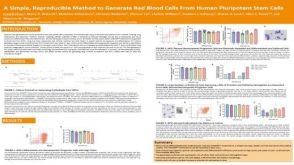 科学海报A Simple, Reproducible Method to Generate Red Blood Cells From Human Pluripotent Stem Cells

 沪公网安备31010102008431号