Kreitzer FR et al. (JUN 2013)
American journal of stem cells 2 2 119--31
A robust method to derive functional neural crest cells from human pluripotent stem cells.
Neural crest (NC) cells contribute to the development of many complex tissues of all three germ layers during embryogenesis,and its abnormal development accounts for several congenital birth defects. Generating NC cells-including specific subpopulations such as cranial,cardiac,and trunk NC cells-from human pluripotent stem cells will provide a valuable model system to study human development and disease. Here,we describe a rapid and robust NC differentiation method called LSB-short" that is based on dual SMAD pathway inhibition. This protocol yields high percentages of NC cell populations from multiple human induced pluripotent stem and human embryonic stem cell lines in 8 days. The resulting cells can be propagated easily�
View Publication
Yang L et al. ( 2014)
Current Protocols in Molecular Biology 107 31.1.1----17
CRISPR/Cas9-Directed Genome Editing of Cultured Cells.
Human genome engineering has been transformed by the introduction of the CRISPR (clustered regularly interspaced short palindromic repeats)/Cas (CRISPR-associated) system found in most bacteria and archaea. Type II CRISPR/Cas systems have been engineered to induce RNA-guided genome editing in human cells,where small RNAs function together with Cas9 nucleases for sequence-specific cleavage of target sequences. Here we describe the protocol for Cas9-mediated human genome engineering,including construct building and transfection methods necessary for delivering Cas9 and guide RNA (gRNA) into human-induced pluripotent stem cells (hiPSCs) and HEK293 cells. Following genome editing,we also describe methods to assess genome editing efficiency using next-generation sequencing and isolate monoclonal hiPSCs with the desired modifications for downstream applications.
View Publication
Fusion with stem cell makes the hepatocellular carcinoma cells similar to liver tumor-initiating cells.
BACKGROUND Cell fusion is a fast and highly efficient technique for cells to acquire new properties. The fusion of somatic cells with stem cells can reprogram somatic cells to a pluripotent state. Our research on the fusion of stem cells and cancer cells demonstrates that the fused cells can exhibit stemness and cancer cell-like characteristics. Thus,tumor-initiating cell-like cells are generated. METHODS We employed laser-induced single-cell fusion technique to fuse the hepatocellular carcinoma cells and human embryonic stem cells (hESC). Real-time RT-PCR,flow cytometry and in vivo tumorigenicity assay were adopted to identify the gene expression difference. RESULTS We successfully produced a fused cell line that coalesces the gene expression information of hepatocellular carcinoma cells and stem cells. Experimental results showed that the fused cells expressed cancer and stemness markers as well as exhibited increased resistance to drug treatment and enhanced tumorigenesis. CONCLUSIONS Fusion with stem cells transforms liver cancer cells into tumor initiating-like cells. Results indicate that fusion between cancer cell and stem cell may generate tumor initiating-like cells.
View Publication
产品类型:
产品号#:
85850
85857
产品名:
mTeSR™1
mTeSR™1
Kim J-HHH et al. (MAR 2016)
ACS nano 10 3 3342--3355
Nanotopography Promotes Pancreatic Differentiation of Human Embryonic Stem Cells and Induced Pluripotent Stem Cells.
Although previous studies suggest that nanotopographical features influence properties and behaviors of stem cells,only a few studies have attempted to derive clinically useful somatic cells from human pluripotent stem cells using nanopatterned surfaces. In the present study,we report that polystyrene nanopore-patterned surfaces significantly promote the pancreatic differentiation of human embryonic and induced pluripotent stem cells. We compared different diameters of nanopores and showed that 200 nm nanopore-patterned surfaces highly upregulated the expression of PDX1,a critical transcription factor for pancreatic development,leading to an approximately 3-fold increase in the percentage of differentiating PDX1(+) pancreatic progenitors compared with control flat surfaces. Furthermore,in the presence of biochemical factors,200 nm nanopore-patterned surfaces profoundly enhanced the derivation of pancreatic endocrine cells producing insulin,glucagon,or somatostatin. We also demonstrate that nanopore-patterned surface-induced upregulation of PDX1 is associated with downregulation of TAZ,suggesting the potential role of TAZ in nanopore-patterned surface-mediated mechanotransduction. Our study suggests that appropriate cytokine treatments combined with nanotopographical stimulation could be a powerful tool for deriving a high purity of desired cells from human pluripotent stem cells.
View Publication
产品类型:
产品号#:
85850
85857
产品名:
mTeSR™1
mTeSR™1
Duelen R et al. ( 2017)
Stem cells international 2017 4651238
Activin A Modulates CRIPTO-1/HNF4α(+) Cells to Guide Cardiac Differentiation from Human Embryonic Stem Cells.
The use of human pluripotent stem cells in basic and translational cardiac research requires efficient differentiation protocols towards cardiomyocytes. In vitro differentiation yields heterogeneous populations of ventricular-,atrial-,and nodal-like cells hindering their potential applications in regenerative therapies. We described the effect of the growth factor Activin A during early human embryonic stem cell fate determination in cardiac differentiation. Addition of high levels of Activin A during embryoid body cardiac differentiation augmented the generation of endoderm derivatives,which in turn promoted cardiomyocyte differentiation. Moreover,a dose-dependent increase in the coreceptor expression of the TGF-β superfamily member CRIPTO-1 was observed in response to Activin A. We hypothesized that interactions between cells derived from meso- and endodermal lineages in embryoid bodies contributed to improved cell maturation in early stages of cardiac differentiation,improving the beating frequency and the percentage of contracting embryoid bodies. Activin A did not seem to affect the properties of cardiomyocytes at later stages of differentiation,measuring action potentials,and intracellular Ca(2+) dynamics. These findings are relevant for improving our understanding on human heart development,and the proposed protocol could be further explored to obtain cardiomyocytes with functional phenotypes,similar to those observed in adult cardiac myocytes.
View Publication
Hughes CS et al. (FEB 2011)
Proteomics 11 4 675--90
Proteomics of human embryonic stem cells.
Human embryonic stem cells (hESCs) offer exciting potential in regenerative medicine for the treatment of a host of diseases including cancer,Alzheimer's and Parkinson's disease. They also provide insight into human development and disease and can be used as models for drug discovery and toxicity analyses. The key properties of hESCs that make them so promising for medical use are that they have the ability to self-renew indefinitely in culture and they are pluripotent,which means that they can differentiate into any of more than 200 human cell types. Since proteins are the effectors of cellular processes,it is important to investigate hESC expression at the protein level as well as at the transcript level. In addition,post-translational modifications,such as phosphorylation,may influence the activity of pivotal proteins in hESCs,and this information can only be determined by studying the proteome. In this review,we summarize the results obtained from several proteomics analyses of hESCs that have been reported in the last few years.
View Publication
Tang C et al. (SEP 2011)
Nature biotechnology 29 9 829--34
An antibody against SSEA-5 glycan on human pluripotent stem cells enables removal of teratoma-forming cells.
An important risk in the clinical application of human pluripotent stem cells (hPSCs),including human embryonic and induced pluripotent stem cells (hESCs and hiPSCs),is teratoma formation by residual undifferentiated cells. We raised a monoclonal antibody against hESCs,designated anti-stage-specific embryonic antigen (SSEA)-5,which binds a previously unidentified antigen highly and specifically expressed on hPSCs--the H type-1 glycan. Separation based on SSEA-5 expression through fluorescence-activated cell sorting (FACS) greatly reduced teratoma-formation potential of heterogeneously differentiated cultures. To ensure complete removal of teratoma-forming cells,we identified additional pluripotency surface markers (PSMs) exhibiting a large dynamic expression range during differentiation: CD9,CD30,CD50,CD90 and CD200. Immunohistochemistry studies of human fetal tissues and bioinformatics analysis of a microarray database revealed that concurrent expression of these markers is both common and specific to hPSCs. Immunodepletion with antibodies against SSEA-5 and two additional PSMs completely removed teratoma-formation potential from incompletely differentiated hESC cultures.
View Publication
产品类型:
产品号#:
85850
85857
产品名:
mTeSR™1
mTeSR™1
Luo LZ et al. (JAN 2012)
PLoS ONE 7 3 e30541
DNA repair in human pluripotent stem cells is distinct from that in non-pluripotent human cells.
The potential for human disease treatment using human pluripotent stem cells,including embryonic stem cells and induced pluripotent stem cells (iPSCs),also carries the risk of added genomic instability. Genomic instability is most often linked to DNA repair deficiencies,which indicates that screening/characterization of possible repair deficiencies in pluripotent human stem cells should be a necessary step prior to their clinical and research use. In this study,a comparison of DNA repair pathways in pluripotent cells,as compared to those in non-pluripotent cells,demonstrated that DNA repair capacities of pluripotent cell lines were more heterogeneous than those of differentiated lines examined and were generally greater. Although pluripotent cells had high DNA repair capacities for nucleotide excision repair,we show that ultraviolet radiation at low fluxes induced an apoptotic response in these cells,while differentiated cells lacked response to this stimulus,and note that pluripotent cells had a similar apoptotic response to alkylating agent damage. This sensitivity of pluripotent cells to damage is notable since viable pluripotent cells exhibit less ultraviolet light-induced DNA damage than do differentiated cells that receive the same flux. In addition,the importance of screening pluripotent cells for DNA repair defects was highlighted by an iPSC line that demonstrated a normal spectral karyotype,but showed both microsatellite instability and reduced DNA repair capacities in three out of four DNA repair pathways examined. Together,these results demonstrate a need to evaluate DNA repair capacities in pluripotent cell lines,in order to characterize their genomic stability,prior to their pre-clinical and clinical use.
View Publication


 EasySep™小鼠TIL(CD45)正选试剂盒




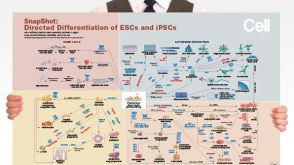 挂图Directed Differentiation of Pluripotent Stem Cells Strategies for differentiating ES and iPS cells into ectoderm, endoderm or mesoderm
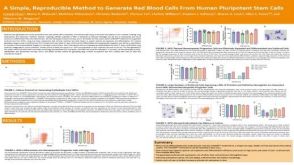 科学海报A Simple, Reproducible Method to Generate Red Blood Cells From Human Pluripotent Stem Cells
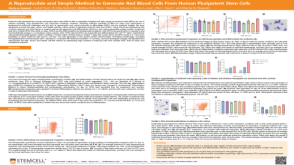 科学海报A Reproducible and Simple Method to Generate Red Blood Cells From Human Pluripotent Stem Cells
 沪公网安备31010102008431号