Quintarelli C et al. (MAR 2011)
Blood 117 12 3353--62
High-avidity cytotoxic T lymphocytes specific for a new PRAME-derived peptide can target leukemic and leukemic-precursor cells.
The cancer testis antigen (CTA) preferentially expressed antigen of melanoma (PRAME) is overexpressed by many hematologic malignancies,but is absent on normal tissues,including hematopoietic progenitor cells,and may therefore be an appropriate candidate for T cell-mediated immunotherapy. Because it is likely that an effective antitumor response will require high-avidity,PRAME-specific cytotoxic T lymphocytes (CTLs),we attempted to generate such CTLs using professional and artificial antigen-presenting cells loaded with a peptide library spanning the entire PRAME protein and consisting of 125 synthetic pentadecapeptides overlapping by 11 amino acids. We successfully generated polyclonal,PRAME-specific CTL lines and elicited high-avidity CTLs,with a high proportion of cells recognizing a previously uninvestigated HLA-A*02-restricted epitope,P435-9mer (NLTHVLYPV). These PRAME-CTLs could be generated both from normal donors and from subjects with PRAME(+) hematologic malignancies. The cytotoxic activity of our PRAME-specific CTLs was directed not only against leukemic blasts,but also against leukemic progenitor cells as assessed by colony-forming-inhibition assays,which have been implicated in leukemia relapse. These PRAME-directed CTLs did not affect normal hematopoietic progenitors,indicating that this approach may be of value for immunotherapy of PRAME(+) hematologic malignancies.
View Publication
产品类型:
产品号#:
产品名:
Liu Y et al. (APR 2013)
Cellular reprogramming 15 2 107--116
$\$-1,3-Galactosyltransferase knockout pig induced pluripotent stem cells: a cell source for the production of xenotransplant pigs.
The shortage of human organs and tissues for transplant has led to significant interest in xenotransplantation of pig tissues for human patients. However,transplantation of pig organs results in an acute immune rejection,leading to death of the organ within minutes. The $\$-1,3-galactosyltransferase (GALT) gene has been knocked out in pigs to reduce rejection,yet additional genes need to be modified to ultimately make pig tissue immunocompatible with humans. The development of pig induced pluripotent stem cells (piPSCs) from GALT knockout (GALT-KO) tissue would provide an excellent cell source for complex genetic manipulations (e.g.,gene targeting) that often require highly robust and proliferative cells. In this report,we generated GALT-KO piPSCs by the overexpression of POU5F1,SOX2,NANOG,LIN28,KLF-4,and C-MYC reprogramming genes. piPSCs showed classical stem cell morphology and characteristics,expressing integrated reprogramming genes in addition to the pluripotent markers AP,SSEA1,and SSEA4. GALT-KO piPSCs were highly proliferative and possessed doubling times and telomerase activity similar to human embryonic stem cells. These results demonstrated successful reprogramming of GALT-KO fibroblasts into GALT-KO piPSCs. GALT-KO piPSCs are potentially an excellent immortal cell source for the generation of pigs with complex genetic modifications for xenotransplantation,somatic cell nuclear transfer,or chimera formation.
View Publication
Suehiro Y et al. (NOV 1999)
Experimental hematology 27 11 1637--45
Macrophage inflammatory protein 1alpha enhances in a different manner adhesion of hematopoietic progenitor cells from bone marrow, cord blood, and mobilized peripheral blood.
Regulatory mechanisms governing adhesion of hematopoietic progenitor cells to the stromal nische are poorly understood. Growth factors such as stem cell factor (SCF),granulocyte-macrophage colony-stimulating factor,and thrombopoietin were reported to upregulate the adhesion of hematopoietic progenitors to immobilized fibronectin through activation of integrin alpha4beta1 and alpha5beta1. Macrophage inflammatory protein (MIP)-1alpha is a C-C chemokine that suppresses colony formation by stem/progenitor cells in vitro. We asked if MIP-1alpha would modulate the adhesive phenotype of colony-forming cells (CFCs) obtained from healthy donor bone marrow (BM),cord blood (CB),and mobilized peripheral blood (mPB) CD34+ cells,in comparison with SCF,using immobilized fibronectin. SCF significantly increased the level of adhesion of CFCs from BM,CB,and mPB. On the other hand,MIP-1alpha significantly increased the level of adhesion of CFCs from BM and CB,but less so from mPB. The effects of MIP-1alpha were inhibited by blocking antibodies to integrin alpha4,alpha5,or beta1,and polymerization plus rearrangement of F-actin were observed in affected cells by labeling with rhodamine-conjugated phalloidine. These data indicate that the effect of MIP-1alpha on the adhesive phenotype of CFCs is mediated by modulation of the organization of integrin. The amount of MIP-1alpha receptor on mPB was less than for BM or CB,which may explain the distinct characteristics in the adhesive response induced by MIP-1alpha. We suggest that hematopoietic progenitor cells from different sources may be heterogeneous with respect to maturation,integrin affinity,MIP-1alpha receptor expression,and regulation of MIP-1alpha signaling. Our data indicate that MIP-1alpha may affect migration,homing,and mobilization of hematopoietic progenitors by modulating the adhesive phenotype of these cells.
View Publication
产品类型:
产品号#:
产品名:
Dambrot C et al. (OCT 2014)
Experimental Cell Research 327 2 297--306
Strategies for rapidly mapping proviral integration sites and assessing cardiogenic potential of nascent human induced pluripotent stem cell clones
Recent methodological advances have improved the ease and efficiency of generating human induced pluripotent stem cells (hiPSCs),but this now typically results in a greater number of hiPSC clones being derived than can be wholly characterized. It is therefore imperative that methods are developed which facilitate rapid selection of hiPSC clones most suited for the downstream research aims. Here we describe a combination of procedures enabling the simultaneous screening of multiple clones to determine their genomic integrity as well as their cardiac differentiation potential within two weeks of the putative reprogrammed colonies initially appearing. By coupling splinkerette-PCR with Ion Torrent sequencing,we could ascertain the number and map the proviral integration sites in lentiviral-reprogrammed hiPSCs. In parallel,we developed an effective cardiac differentiation protocol that generated functional cardiomyocytes within 10 days without requiring line-specific optimization for any of the six independent human pluripotent stem cell lines tested. Finally,to demonstrate the scalable potential of these procedures,we picked 20 nascent iPSC clones and performed these independent assays concurrently. Before the clones required passaging,we were able to identify clones with a single integrated copy of the reprogramming vector and robust cardiac differentiation potential for further analysis.
View Publication
产品类型:
产品号#:
85850
85857
产品名:
mTeSR™1
mTeSR™1
Shetty DK and Inamdar MS (MAR 2016)
Stem Cell Research 16 2 207--209
Generation of a heterozygous knockout human embryonic stem cell line for the OCIAD1 locus using CRISPR/CAS9 mediated targeting: BJNhem20-OCIAD1-CRISPR-20.
Ovarian carcinoma immuno-reactive antigen domain containing 1(OCIAD1) single copy was knocked out generating an OCIAD1 heterozygous knockout human embryonic stem line named BJNhem20-OCIAD1-CRISPR-20. The line was generated using CRISPR-Cas9D10A double nickase knockout strategy (Mali et al.,2013).
View Publication
产品类型:
产品号#:
85850
85857
产品名:
mTeSR™1
mTeSR™1
Palmer DJ et al. ( 2016)
Molecular therapy. Nucleic acids 5 e372
Homology Requirements for Efficient, Footprintless Gene Editing at the CFTR Locus in Human iPSCs with Helper-dependent Adenoviral Vectors.
Helper-dependent adenoviral vectors mediate high efficiency gene editing in induced pluripotent stem cells without needing a designer nuclease thereby avoiding off-target cleavage. Because of their large cloning capacity of 37 kb,helper-dependent adenoviral vectors with long homology arms are used for gene editing. However,this makes vector construction and recombinant analysis difficult. Conversely,insufficient homology may compromise targeting efficiency. Thus,we investigated the effect of homology length on helper-dependent adenoviral vector targeting efficiency at the cystic fibrosis transmembrane conductance regulator locus in induced pluripotent stem cells and found a positive correlation. With 23.8 and 21.4 kb of homology,the frequencies of targeted recombinants were 50-64.6% after positive selection for vector integration,and 97.4-100% after negative selection against random integrations. With 14.8 kb,the frequencies were 26.9-57.1% after positive selection and 87.5-100% after negative selection. With 9.6 kb,the frequencies were 21.4 and 75% after positive and negative selection,respectively. With only 5.6 kb,the frequencies were 5.6-16.7% after positive selection and 50% after negative selection,but these were more than high enough for efficient identification and isolation of targeted clones. Furthermore,we demonstrate helper-dependent adenoviral vector-mediated footprintless correction of cystic fibrosis transmembrane conductance regulator mutations through piggyBac excision of the selectable marker. However,low frequencies (≤ 1 × 10(-3)) necessitated negative selection for piggyBac-excision product isolation.
View Publication
产品类型:
产品号#:
85850
85857
产品名:
mTeSR™1
mTeSR™1
Yap MS et al. (DEC 2016)
Virology journal 13 1 5
Pluripotent Human embryonic stem cell derived neural lineages for in vitro modelling of enterovirus 71 infection and therapy.
BACKGROUND The incidence of neurological complications and fatalities associated with Hand,Foot & Mouth disease has increased over recent years,due to emergence of newly-evolved strains of Enterovirus 71 (EV71). In the search for new antiviral therapeutics against EV71,accurate and sensitive in vitro cellular models for preliminary studies of EV71 pathogenesis is an essential prerequisite,before progressing to expensive and time-consuming live animal studies and clinical trials. METHODS This study thus investigated whether neural lineages derived from pluripotent human embryonic stem cells (hESC) can fulfil this purpose. EV71 infection of hESC-derived neural stem cells (NSC) and mature neurons (MN) was carried out in vitro,in comparison with RD and SH-SY5Y cell lines. RESULTS Upon assessment of post-infection survivability and EV71 production by the various types,it was observed that NSC were significantly more susceptible to EV71 infection compared to MN,RD (rhabdomyosarcoma) and SH-SY5Y cells,which was consistent with previous studies on mice. The SP81 peptide had significantly greater inhibitory effect on EV71 production by NSC and MN compared to the cancer-derived RD and SH-SY5Y cell lines. CONCLUSIONS Hence,this study demonstrates that hESC-derived neural lineages can be utilized as in vitro models for studying EV71 pathogenesis and for screening of antiviral therapeutics.
View Publication
Sivarapatna A et al. (JUN 2015)
Biomaterials 53 621--633
Arterial specification of endothelial cells derived from human induced pluripotent stem cells in a biomimetic flow bioreactor.
Endothelial cells (ECs) exist in different microenvironments in vivo,including under different levels of shear stress in arteries versus veins. Standard stem cell differentiation protocols to derive ECs and EC-subtypes from human induced pluripotent stem cells (hiPSCs) generally use growth factors or other soluble factors in an effort to specify cell fate. In this study,a biomimetic flow bioreactor was used to subject hiPSC-derived ECs (hiPSC-ECs) to shear stress to determine the impacts on phenotype and upregulation of markers associated with an anti-thrombotic,anti-inflammatory,arterial-like phenotype. The in vitro bioreactor system was able to efficiently mature hiPSC-ECs into arterial-like cells in 24 h,as demonstrated by qRT-PCR for arterial markers EphrinB2,CXCR4,Conexin40 and Notch1,as well protein-level expression of Notch1 intracellular domain (NICD). Furthermore,the exogenous addition of soluble factors was not able to fully recapitulate this phenotype that was imparted by shear stress exposure. The induction of these phenotypic changes was biomechanically mediated in the shear stress bioreactor. This biomimetic flow bioreactor is an effective means for the differentiation of hiPSC-ECs toward an arterial-like phenotype,and is amenable to scale-up for culturing large quantities of cells for tissue engineering applications.
View Publication
产品类型:
产品号#:
07913
07920
07922
85850
85857
产品名:
Dispase(5 U/mL)
ACCUTASE™
ACCUTASE™
mTeSR™1
mTeSR™1
Lungova V et al. ( 2014)
1307 237--243
Derivation of Epithelial Cells from Human Embryonic Stem Cells as an In Vitro Model of Vocal Mucosa
Vocal fold epithelial cells are very difficult to study as the vocal fold epithelial cell lines do not exist and they cannot be removed from the healthy larynx without engendering a significant and unacceptable risk to vocal fold function. Here,we describe the procedure to create an engineered vocal fold tissue construct consisting of the scaffold composed of the collagen 1 gel seeded with human fibroblasts and simple epithelial progenitors seeded on the scaffold and cultivated at air-liquid interface for 19-21 days to derive the stratified squamous epithelium. This model of vocal fold mucosa is very similar in morphology,gene expression,and phenotypic characteristics to native vocal fold epithelial cells and the underlying lamina propria and,therefore,offers a promising approach to studying vocal fold biology and biomechanics in health and disease.
View Publication


 EasySep™小鼠TIL(CD45)正选试剂盒




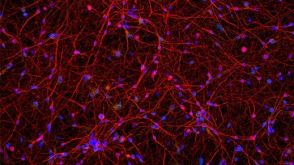 实验方案How to Culture Human Pluripotent Stem Cell (hPSC)-Derived Forebrain Neurons for MEA Analysis Using the Maestro MEA™ System

 沪公网安备31010102008431号