Richardson T et al. (DEC 2013)
Tissue Engineering: Part A 20 23-24 Epub ahead of print
Alginate encapsulation of human embryonic stem cells to enhance directed differentiation to pancreatic islet-like cells
The pluripotent property of hESCs makes them attractive for treatment of degenerative diseases such as diabetes. We have developed a stage-wise directed differentiation protocol to produce alginate-encapsulated islet-like cells derived from hESCs,which can be directly implanted for diabetes therapy. The advantage of alginate encapsulation lies in its capability to immunoisolate,along with the added possibility of scalable culture. We have evaluated the possibility of encapsulating hESCs at different stages of differentiation. Encapsulation of predifferentiated cells resulted in insufficient cellular yield and differentiation. On the other hand,encapsulation of undifferentiated hESCs followed by differentiation induction upon encapsulation,resulted in the highest viability and differentiation. More striking was that alginate encapsulation resulted in a much stronger differentiation compared to parallel 2D cultures,resulting in 20-fold increase in c-peptide protein synthesis. To elucidate the mechanism contributing to encapsulation-mediated enhancement in hESC maturation,investigation of the signaling pathways revealed interesting insight. While the phospho-protein levels of all the tested signaling molecules were lower under encapsulation,the ratio of pSMAD/pAKT was significantly higher,indicating a more efficient signal transduction under encapsulation. These results clearly demonstrate that alginate encapsulation of hESCs and differentiation to islet-cells types provides a potentially translatable treatment option for type1 diabetes.
View Publication
产品类型:
产品号#:
85850
85857
产品名:
mTeSR™1
mTeSR™1
Ji H et al. (JAN 2015)
The Journal of allergy and clinical immunology 135 1 236--244
Dynamic transcriptional and epigenomic reprogramming from pediatric nasal epithelial cells to induced pluripotent stem cells
BACKGROUND Induced pluripotent stem cells (iPSCs) hold tremendous potential,both as a biological tool to uncover the pathophysiology of disease by creating relevant human cell models and as a source of cells for cell-based therapeutic applications. Studying the reprogramming process will also provide significant insight into tissue development. OBJECTIVE We sought to characterize the derivation of iPSC lines from nasal epithelial cells (NECs) isolated from nasal mucosa samples of children,a highly relevant and easily accessible tissue for pediatric populations. METHODS We performed detailed comparative analysis on the transcriptomes and methylomes of NECs,iPSCs derived from NECs (NEC-iPSCs),and embryonic stem cells (ESCs). RESULTS NEC-iPSCs express pluripotent cell markers,can differentiate into all 3 germ layers in vivo and in vitro,and have a transcriptome and methylome remarkably similar to those of ESCs. However,residual DNA methylation marks exist,which are differentially methylated between NEC-iPSCs and ESCs. A subset of these methylation markers related to epithelium development and asthma and specific to NEC-iPSCs persisted after several passages in vitro,suggesting the retention of an epigenetic memory of their tissue of origin. Our analysis also identified novel candidate genes with dynamic gene expression and DNA methylation changes during reprogramming,which are indicative of possible roles in airway epithelium development. CONCLUSION NECs are an excellent tissue source to generate iPSCs in pediatric asthmatic patients,and detailed characterization of the resulting iPSC lines would help us better understand the reprogramming process and retention of epigenetic memory.
View Publication
产品类型:
产品号#:
85850
85857
产品名:
mTeSR™1
mTeSR™1
Slukvin II et al. (MAR 2006)
Journal of immunology (Baltimore,Md. : 1950) 176 5 2924--32
Directed differentiation of human embryonic stem cells into functional dendritic cells through the myeloid pathway.
We have established a system for directed differentiation of human embryonic stem (hES) cells into myeloid dendritic cells (DCs). As a first step,we induced hemopoietic differentiation by coculture of hES cells with OP9 stromal cells,and then,expanded myeloid cells with GM-CSF using a feeder-free culture system. Myeloid cells had a CD4+CD11b+CD11c+CD16+CD123(low)HLA-DR- phenotype,expressed myeloperoxidase,and included a population of M-CSFR+ monocyte-lineage committed cells. Further culture of myeloid cells in serum-free medium with GM-CSF and IL-4 generated cells that had typical dendritic morphology; expressed high levels of MHC class I and II molecules,CD1a,CD11c,CD80,CD86,DC-SIGN,and CD40; and were capable of Ag processing,triggering naive T cells in MLR,and presenting Ags to specific T cell clones through the MHC class I pathway. Incubation of DCs with A23187 calcium ionophore for 48 h induced an expression of mature DC markers CD83 and fascin. The combination of GM-CSF with IL-4 provided the best conditions for DC differentiation. DCs obtained with GM-CSF and TNF-alpha coexpressed a high level of CD14,and had low stimulatory capacity in MLR. These data clearly demonstrate that hES cells can be used as a novel and unique source of hemopoietic and DC precursors as well as DCs at different stages of maturation to address essential questions of DC development and biology. In addition,because ES cells can be expanded without limit,they can be seen as a potential scalable source of cells for DC vaccines or DC-mediated induction of immune tolerance.
View Publication
产品类型:
产品号#:
09600
09650
产品名:
StemSpan™ SFEM
StemSpan™ SFEM
De Giorgi U et al. (MAY 2011)
Cancer biology & therapy 11 9 812--5
Mesenchymal stem cells expressing GD2 and CD271 correlate with breast cancer-initiating cells in bone marrow.
Purpose: The bone marrow microenvironment is considered a critical component in the dissemination and fate of cancer cells in the metastatic process. We explored the possible correlation between bone marrow mesenchymal stem cells (BM-MSC) and disseminated breast cancer-initiating cells (BCIC) in primary breast cancer patients. Experimental design: Bone marrow mononuclear cells (BM-MNC) were collected at the time of primary surgery in 12 breast cancer patients. BM-MNC was immunophenotyped and BCIC was defined as epithelial cells (CD326+CD45-) with a stem-like" phenotype (CD44+CD24low/-�
View Publication
产品类型:
产品号#:
01700
01705
01702
产品名:
ALDEFLUOR™ 试剂盒
ALDEFLUOR™ DEAB试剂
ALDEFLUOR™测定缓冲液
Denning-Kendall P et al. (JAN 2003)
Stem cells (Dayton,Ohio) 21 6 694--701
Cobblestone area-forming cells in human cord blood are heterogeneous and differ from long-term culture-initiating cells.
The long-term culture-initiating cell (LTC-IC) assay is a physiological approach to the quantitation of primitive human hematopoietic cells. The readout using identification of cobblestone area-forming cells (CAFC) has gained popularity over the LTC-IC readout where cells are subcultured in a colony-forming cell assay. However,comparing the two assays,cord blood (CB) mononuclear cell (MNC) samples were found to contain a higher frequency of CAFC than LTC-IC (126 +/- 83 versus 40 +/- 31 per 10(5) cells,p = 0.0001). Overall,60% of week-5 cobblestones produced by CB MNC were not functional LTC-IC and were classified as false." Separation of CB MNC using immunomagnetic columns showed that false cobblestones were CD34(-)/lineage(+). Purified CD34(+) cells�
View Publication
产品类型:
产品号#:
09500
09600
09650
产品名:
BIT 9500血清替代物
StemSpan™ SFEM
StemSpan™ SFEM
Gualandi C et al. (JUN 2016)
Macromolecular Bioscience
Poly-l-Lactic Acid Nanofiber-Polyamidoamine Hydrogel Composites: Preparation, Properties, and Preliminary Evaluation as Scaffolds for Human Pluripotent Stem Cell Culturing
Electrospun poly-l-lactic acid (PLLA) nanofiber mats carrying surface amine groups,previously introduced by nitrogen atmospheric pressure nonequilibrium plasma,are embedded into aqueous solutions of oligomeric acrylamide-end capped AGMA1,a biocompatible polyamidoamine with arg-gly-asp (RGD)-reminiscent repeating units. The resultant mixture is finally cured giving PLLA-AGMA1 hydrogel composites that absorb large amounts of water and,in the swollen state,are translucent,soft,and pliable,yet as strong as the parent PLLA mat. They do not split apart from each other when swollen in water and remain highly flexible and resistant,since the hydrogel portion is covalently grafted onto the PLLA nanofibers via the addition reaction of the surface amine groups to a part of the terminal acrylic double bonds of AGMA1 oligomers. Preliminary tested as scaffolds,the composites prove capable of maintaining short-term undifferentiated cultures of human pluripotent stem cells in feeder-free conditions.
View Publication
产品类型:
产品号#:
85850
85857
产品名:
mTeSR™1
mTeSR™1
Bhinge A et al. (JAN 2016)
Stem cells (Dayton,Ohio) 34 1 124--134
MiR-375 is Essential for Human Spinal Motor Neuron Development and May Be Involved in Motor Neuron Degeneration.
The transcription factor REST is a key suppressor of neuronal genes in non-neuronal tissues. REST has been shown to suppress proneuronal microRNAs in neural progenitors indicating that REST-mediated neurogenic suppression may act in part via microRNAs. We used neural differentiation of Rest-null mouse ESC to identify dozens of microRNAs regulated by REST during neural development. One of the identified microRNAs,miR-375,was upregulated during human spinal motor neuron development. We found that miR-375 facilitates spinal motor neurogenesis by targeting the cyclin kinase CCND2 and the transcription factor PAX6. Additionally,miR-375 inhibits the tumor suppressor p53 and protects neurons from apoptosis in response to DNA damage. Interestingly,motor neurons derived from a spinal muscular atrophy patient displayed depressed miR-375 expression and elevated p53 protein levels. Importantly,SMA motor neurons were significantly more susceptible to DNA damage induced apoptosis suggesting that miR-375 may play a protective role in motor neurons.
View Publication
产品类型:
产品号#:
85850
85857
产品名:
mTeSR™1
mTeSR™1
Yeo HC et al. (AUG 2016)
Scientific reports 6 31068
Genome-Wide Transcriptome and Binding Sites Analyses Identify Early FOX Expressions for Enhancing Cardiomyogenesis Efficiency of hESC Cultures.
The differentiation efficiency of human embryonic stem cells (hESCs) into heart muscle cells (cardiomyocytes) is highly sensitive to culture conditions. To elucidate the regulatory mechanisms involved,we investigated hESCs grown on three distinct culture platforms: feeder-free Matrigel,mouse embryonic fibroblast feeders,and Matrigel replated on feeders. At the outset,we profiled and quantified their differentiation efficiency,transcriptome,transcription factor binding sites and DNA-methylation. Subsequent genome-wide analyses allowed us to reconstruct the relevant interactome,thereby forming the regulatory basis for implicating the contrasting differentiation efficiency of the culture conditions. We hypothesized that the parental expressions of FOXC1,FOXD1 and FOXQ1 transcription factors (TFs) are correlative with eventual cardiomyogenic outcome. Through WNT induction of the FOX TFs,we observed the co-activation of WNT3 and EOMES which are potent inducers of mesoderm differentiation. The result strengthened our hypothesis on the regulatory role of the FOX TFs in enhancing mesoderm differentiation capacity of hESCs. Importantly,the final proportions of cells expressing cardiac markers were directly correlated to the strength of FOX inductions within 72 hours after initiation of differentiation across different cell lines and protocols. Thus,we affirmed the relationship between early FOX TF expressions and cardiomyogenesis efficiency.
View Publication
产品类型:
产品号#:
85850
85857
产品名:
mTeSR™1
mTeSR™1
Gu Q et al. (MAY 2017)
Advanced healthcare materials
3D Bioprinting Human Induced Pluripotent Stem Cell Constructs for In Situ Cell Proliferation and Successive Multilineage Differentiation.
The ability to create 3D tissues from induced pluripotent stem cells (iPSCs) is poised to revolutionize stem cell research and regenerative medicine,including individualized,patient-specific stem cell-based treatments. There are,however,few examples of tissue engineering using iPSCs. Their culture and differentiation is predominantly planar for monolayer cell support or induction of self-organizing embryoids (EBs) and organoids. Bioprinting iPSCs with advanced biomaterials promises to augment efforts to develop 3D tissues,ideally comprising direct-write printing of cells for encapsulation,proliferation,and differentiation. Here,such a method,employing a clinically amenable polysaccharide-based bioink,is described as the first example of bioprinting human iPSCs for in situ expansion and sequential differentiation. Specifically,There are extrusion printed the bioink including iPSCs,alginate (Al; 5% weight/volume [w/v]),carboxymethyl-chitosan (5% w/v),and agarose (Ag; 1.5% w/v),crosslinked the bioink in calcium chloride for a stable and porous construct,proliferated the iPSCs within the construct and differentiated the same iPSCs into either EBs comprising cells of three germ lineages-endoderm,ectoderm,and mesoderm,or more homogeneous neural tissues containing functional migrating neurons and neuroglia. This defined,scalable,and versatile platform is envisaged being useful in iPSC research and translation for pharmaceuticals development and regenerative medicine.
View Publication
产品类型:
产品号#:
85850
85857
产品名:
mTeSR™1
mTeSR™1
Ruiz S et al. (JAN 2011)
Current biology : CB 21 1 45--52
A high proliferation rate is required for cell reprogramming and maintenance of human embryonic stem cell identity.
Human embryonic stem (hES) cells show an atypical cell-cycle regulation characterized by a high proliferation rate and a short G1 phase. In fact,a shortened G1 phase might protect ES cells from external signals inducing differentiation,as shown for certain stem cells. It has been suggested that self-renewal and pluripotency are intimately linked to cell-cycle regulation in ES cells,although little is known about the overall importance of the cell-cycle machinery in maintaining ES cell identity. An appealing model to address whether the acquisition of stem cell properties is linked to cell-cycle regulation emerged with the ability to generate induced pluripotent stem (iPS) cells by expression of defined transcription factors. Here,we show that the characteristic cell-cycle signature of hES cells is acquired as an early event in cell reprogramming. We demonstrate that induction of cell proliferation increases reprogramming efficiency,whereas cell-cycle arrest inhibits successful reprogramming. Furthermore,we show that cell-cycle arrest is sufficient to drive hES cells toward irreversible differentiation. Our results establish a link that intertwines the mechanisms of cell-cycle control with the mechanisms underlying the acquisition and maintenance of ES cell identity.
View Publication
Deonarain R et al. (NOV 2003)
Proceedings of the National Academy of Sciences of the United States of America 100 23 13453--8
Critical roles for IFN-beta in lymphoid development, myelopoiesis, and tumor development: links to tumor necrosis factor alpha.
We have generated mice null for IFN-beta and report the diverse consequences of IFN-beta for both the innate and adaptive arms of immunity. Despite no abnormalities in the proportional balance of CD4 and CD8 T cell populations in the peripheral blood,thymus,and spleen of IFN-beta-/- mice,activated lymph node and splenic T lymphocytes exhibit enhanced T cell proliferation and decreased tumor necrosis factor alpha production,relative to IFN-beta+/+ mice. Notably,constitutive and induced expression of tumor necrosis factor alpha is reduced in the spleen and bone marrow (BM) macrophages,respectively,of IFN-beta-/- mice. We also observe an altered splenic architecture in IFN-beta-/- mice and a reduction in resident macrophages. We identify a potential defect in B cell maturation in IFN-beta-/- mice,associated with a decrease in B220+ve/high/CD43-ve BM-derived cells and a reduction in BP-1,IgM,and CD23 expression. Circulating IgM-,Mac-1-,and Gr-1-positive cells are also substantially decreased in IFN-beta-/- mice. The decrease in the numbers of circulating macrophages and granulocytes likely reflects defective maturation of primitive BM hematopoiesis in mice,shown by the reduction of colony-forming units,granulocyte-macrophage. We proceeded to evaluate the in vivo growth of malignant cells in the IFN-beta-/- background and give evidence that Lewis lung carcinoma-specific tumor growth is more aggressive in IFN-beta-/- mice. Taken altogether,our data suggest that,in addition to the direct growth-inhibitory effects on tumor cells,IFN-beta is required during different stages of maturation in the development of the immune system.
View Publication


 EasySep™小鼠TIL(CD45)正选试剂盒




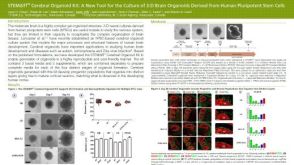 科学海报STEMdiff™ Cerebral Organoid Kit: A New Tool for the Culture of 3D Brain Organoids Derived from hPSCs
 沪公网安备31010102008431号