Steward CG et al. (FEB 2005)
Biology of blood and marrow transplantation : journal of the American Society for Blood and Marrow Transplantation 11 2 115--21
High peripheral blood progenitor cell counts enable autologous backup before stem cell transplantation for malignant infantile osteopetrosis.
Autosomal recessive osteopetrosis (OP) is a rare,lethal disorder in which osteoclasts are absent or nonfunctional,resulting in a bone marrow cavity insufficient to support hematopoiesis. Because osteoclasts are derived from hematopoietic precursors,allogeneic hematopoietic cell transplantation can cure the bony manifestations of the disorder. However,high rates of graft failure have been observed in this population. It is not possible to harvest bone marrow from these patients for reinfusion should graft failure be observed. We report that 8 of 10 patients with OP had high numbers of circulating CD34(+) cells (3% +/- 0.9%). This increased proportion of peripheral CD34(+) cells made it possible to harvest 2 x 10(6) CD34(+) cells per kilogram with a total volume of blood ranging from 8.3 to 83.7 mL (1.3-11.6 mL/kg). In addition,colony-forming assays documented significantly more colony-forming unit-granulocyte-macrophage and burst-forming unit-erythroid in the blood of osteopetrotic patients compared with controls; the numbers of colony-forming units approximated those found in control marrow. We conclude that OP patients with high levels of circulating CD34(+) are candidates for peripheral blood autologous harvest by limited exchange transfusion. These cells are then available for reinfusion should graft failure be observed in patients for whom retransplantation is impractical.
View Publication
产品类型:
产品号#:
05401
05402
05411
产品名:
MesenCult™ MSC基础培养基 (人)
MesenCult™ MSC 刺激补充剂(人)
MesenCult™ 增殖试剂盒(人)
Ramos P et al. (JAN 2011)
Blood 117 4 1379--89
Enhanced erythropoiesis in Hfe-KO mice indicates a role for Hfe in the modulation of erythroid iron homeostasis.
In hereditary hemochromatosis,mutations in HFE lead to iron overload through abnormally low levels of hepcidin. In addition,HFE potentially modulates cellular iron uptake by interacting with transferrin receptor,a crucial protein during erythropoiesis. However,the role of HFE in this process was never explored. We hypothesize that HFE modulates erythropoiesis by affecting dietary iron absorption and erythroid iron intake. To investigate this,we used Hfe-KO mice in conditions of altered dietary iron and erythropoiesis. We show that Hfe-KO mice can overcome phlebotomy-induced anemia more rapidly than wild-type mice (even when iron loaded). Second,we evaluated mice combining the hemochromatosis and β-thalassemia phenotypes. Our results suggest that lack of Hfe is advantageous in conditions of increased erythropoietic activity because of augmented iron mobilization driven by deficient hepcidin response. Lastly,we demonstrate that Hfe is expressed in erythroid cells and impairs iron uptake,whereas its absence exclusively from the hematopoietic compartment is sufficient to accelerate recovery from phlebotomy. In summary,we demonstrate that Hfe influences erythropoiesis by 2 distinct mechanisms: limiting hepcidin expression under conditions of simultaneous iron overload and stress erythropoiesis,and impairing transferrin-bound iron uptake by erythroid cells. Moreover,our results provide novel suggestions to improve the treatment of hemochromatosis.
View Publication
产品类型:
产品号#:
03334
产品名:
MethoCult™M3334
Dambrot C et al. (OCT 2014)
Experimental Cell Research 327 2 297--306
Strategies for rapidly mapping proviral integration sites and assessing cardiogenic potential of nascent human induced pluripotent stem cell clones
Recent methodological advances have improved the ease and efficiency of generating human induced pluripotent stem cells (hiPSCs),but this now typically results in a greater number of hiPSC clones being derived than can be wholly characterized. It is therefore imperative that methods are developed which facilitate rapid selection of hiPSC clones most suited for the downstream research aims. Here we describe a combination of procedures enabling the simultaneous screening of multiple clones to determine their genomic integrity as well as their cardiac differentiation potential within two weeks of the putative reprogrammed colonies initially appearing. By coupling splinkerette-PCR with Ion Torrent sequencing,we could ascertain the number and map the proviral integration sites in lentiviral-reprogrammed hiPSCs. In parallel,we developed an effective cardiac differentiation protocol that generated functional cardiomyocytes within 10 days without requiring line-specific optimization for any of the six independent human pluripotent stem cell lines tested. Finally,to demonstrate the scalable potential of these procedures,we picked 20 nascent iPSC clones and performed these independent assays concurrently. Before the clones required passaging,we were able to identify clones with a single integrated copy of the reprogramming vector and robust cardiac differentiation potential for further analysis.
View Publication
产品类型:
产品号#:
85850
85857
产品名:
mTeSR™1
mTeSR™1
Agosti V et al. (MAR 2004)
The Journal of experimental medicine 199 6 867--78
Critical role for Kit-mediated Src kinase but not PI 3-kinase signaling in pro T and pro B cell development.
The Kit receptor functions in hematopoiesis,lymphocyte development,gastrointestinal tract motility,melanogenesis,and gametogenesis. To investigate the roles of different Kit signaling pathways in vivo,we have generated knock-in mice in which docking sites for PI 3-kinase (KitY719) or Src kinase (KitY567) have been mutated. Whereas steady-state hematopoiesis is normal in KitY719F/Y719F and KitY567F/Y567F mice,lymphopoiesis is affected differentially. The KitY567F mutation,but not the KitY719F mutation,blocks pro T cell and pro B cell development in an age-dependent manner. Thus,the Src family kinase,but not the PI 3-kinase docking site in Kit,mediates a critical signal for lymphocyte development. In agreement with these results,treatment of normal mice with the Kit tyrosine kinase inhibitor imatinib (Gleevec) leads to deficits in pro T and pro B cell development,similar to those seen in KitY567F/Y567F and KitW/W mice. The two mutations do not affect embryonic gametogenesis but the KitY719F mutation blocks spermatogenesis at the spermatogonial stages and in contrast the KitY567F mutation does not affect this process. Therefore,Kit-mediated PI 3-kinase signaling and Src kinase family signaling is highly specific for different cellular contexts in vivo.
View Publication
产品类型:
产品号#:
09600
09650
产品名:
StemSpan™ SFEM
StemSpan™ SFEM
Shetty DK and Inamdar MS (MAR 2016)
Stem Cell Research 16 2 207--209
Generation of a heterozygous knockout human embryonic stem cell line for the OCIAD1 locus using CRISPR/CAS9 mediated targeting: BJNhem20-OCIAD1-CRISPR-20.
Ovarian carcinoma immuno-reactive antigen domain containing 1(OCIAD1) single copy was knocked out generating an OCIAD1 heterozygous knockout human embryonic stem line named BJNhem20-OCIAD1-CRISPR-20. The line was generated using CRISPR-Cas9D10A double nickase knockout strategy (Mali et al.,2013).
View Publication
产品类型:
产品号#:
85850
85857
产品名:
mTeSR™1
mTeSR™1
Yap MS et al. (DEC 2016)
Virology journal 13 1 5
Pluripotent Human embryonic stem cell derived neural lineages for in vitro modelling of enterovirus 71 infection and therapy.
BACKGROUND The incidence of neurological complications and fatalities associated with Hand,Foot & Mouth disease has increased over recent years,due to emergence of newly-evolved strains of Enterovirus 71 (EV71). In the search for new antiviral therapeutics against EV71,accurate and sensitive in vitro cellular models for preliminary studies of EV71 pathogenesis is an essential prerequisite,before progressing to expensive and time-consuming live animal studies and clinical trials. METHODS This study thus investigated whether neural lineages derived from pluripotent human embryonic stem cells (hESC) can fulfil this purpose. EV71 infection of hESC-derived neural stem cells (NSC) and mature neurons (MN) was carried out in vitro,in comparison with RD and SH-SY5Y cell lines. RESULTS Upon assessment of post-infection survivability and EV71 production by the various types,it was observed that NSC were significantly more susceptible to EV71 infection compared to MN,RD (rhabdomyosarcoma) and SH-SY5Y cells,which was consistent with previous studies on mice. The SP81 peptide had significantly greater inhibitory effect on EV71 production by NSC and MN compared to the cancer-derived RD and SH-SY5Y cell lines. CONCLUSIONS Hence,this study demonstrates that hESC-derived neural lineages can be utilized as in vitro models for studying EV71 pathogenesis and for screening of antiviral therapeutics.
View Publication
Mallanna SK and Duncan SA ( 2013)
26 SUPPL.26 Unit 1G.4.
Differentiation of hepatocytes from pluripotent stem cells.
Differentiation of human embryonic stem (ES) and induced pluripotent stem (iPS) cells into hepatocyte-like cells provides a platform to study the molecular basis of human hepatocyte differentiation,to develop cell culture models of liver disease,and to potentially provide hepatocytes for treatment of end-stage liver disease. Additionally,hepatocyte-like cells generated from human pluripotent stem cells could serve as platforms for drug discovery,determination of pharmaceutical-induced hepatotoxicity,and evaluation of idiosyncratic drug-drug interactions. Here,we describe a step-wise protocol previously developed in our laboratory that facilitates the highly efficient and reproducible differentiation of human pluripotent stem cells into hepatocyte-like cells. Our protocol uses defined culture conditions and closely recapitulates key developmental events that are found to occur during hepatogenesis.
View Publication
产品类型:
产品号#:
07920
07922
85850
85857
产品名:
ACCUTASE™
ACCUTASE™
mTeSR™1
mTeSR™1
T. E. Ludwig et al. (aug 2006)
Nature methods 3 8 637--46
Feeder-independent culture of human embryonic stem cells.
Feeder-independent culture of human embryonic stem cells.
View Publication
产品类型:
产品号#:
85850
85857
产品名:
mTeSR™1
mTeSR™1
Wilson KD et al. (JUN 2009)
Stem cells and development 18 5 749--58
MicroRNA profiling of human-induced pluripotent stem cells.
MicroRNAs (miRNAs) are a newly discovered endogenous class of small noncoding RNAs that play important posttranscriptional regulatory roles by targeting mRNAs for cleavage or translational repression. Accumulating evidence now supports the importance of miRNAs for human embryonic stem cell (hESC) self-renewal,pluripotency,and differentiation. However,with respect to induced pluripotent stem cells (iPSC),in which embryonic-like cells are reprogrammed from adult cells using defined factors,the role of miRNAs during reprogramming has not been well-characterized. Determining the miRNAs that are associated with reprogramming should yield significant insight into the specific miRNA expression patterns that are required for pluripotency. To address this lack of knowledge,we use miRNA microarrays to compare the microRNA-omes" of human iPSCs�
View Publication


 EasySep™小鼠TIL(CD45)正选试剂盒




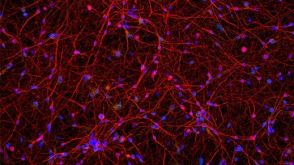 实验方案How to Culture Human Pluripotent Stem Cell (hPSC)-Derived Forebrain Neurons for MEA Analysis Using the Maestro MEA™ System

 沪公网安备31010102008431号