Recapitulation of premature ageing with iPSCs from Hutchinson-Gilford progeria syndrome.
Hutchinson-Gilford progeria syndrome (HGPS) is a rare and fatal human premature ageing disease,characterized by premature arteriosclerosis and degeneration of vascular smooth muscle cells (SMCs). HGPS is caused by a single point mutation in the lamin A (LMNA) gene,resulting in the generation of progerin,a truncated splicing mutant of lamin A. Accumulation of progerin leads to various ageing-associated nuclear defects including disorganization of nuclear lamina and loss of heterochromatin. Here we report the generation of induced pluripotent stem cells (iPSCs) from fibroblasts obtained from patients with HGPS. HGPS-iPSCs show absence of progerin,and more importantly,lack the nuclear envelope and epigenetic alterations normally associated with premature ageing. Upon differentiation of HGPS-iPSCs,progerin and its ageing-associated phenotypic consequences are restored. Specifically,directed differentiation of HGPS-iPSCs to SMCs leads to the appearance of premature senescence phenotypes associated with vascular ageing. Additionally,our studies identify DNA-dependent protein kinase catalytic subunit (DNAPKcs,also known as PRKDC) as a downstream target of progerin. The absence of nuclear DNAPK holoenzyme correlates with premature as well as physiological ageing. Because progerin also accumulates during physiological ageing,our results provide an in vitro iPSC-based model to study the pathogenesis of human premature and physiological vascular ageing.
View Publication
Baarine M et al. (NOV 2015)
PLoS ONE 10 11 e0143238
Functional characterization of IPSC-derived brain cells as a model for X-linked adrenoleukodystrophy
X-ALD is an inherited neurodegenerative disorder where mutations in the ABCD1 gene result in clinically diverse phenotypes: the fatal disorder of cerebral childhood ALD (cALD) or a milder disorder of adrenomyeloneuropathy (AMN). The various models used to study the pathobiology of X-ALD disease lack the appropriate presentation for different phenotypes of cALD vs AMN. This study demonstrates that induced pluripotent stem cells (IPSC) derived brain cells astrocytes (Ast),neurons and oligodendrocytes (OLs) express morphological and functional activities of the respective brain cell types. The excessive accumulation of saturated VLCFA,a hallmark" of X-ALD�
View Publication
产品类型:
产品号#:
05850
05857
05870
05875
05940
85850
85857
85870
85875
27845
27945
27840
27865
27940
27965
05835
05839
08581
08582
产品名:
mTeSR™1
mTeSR™1
STEMdiff™ 神经诱导培养基
STEMdiff™ 神经诱导培养基
STEMdiff™SMADi神经诱导试剂盒
STEMdiff™SMADi神经诱导试剂盒,2套
Ja KPMM et al. (FEB 2016)
Journal of cellular and molecular medicine 20 2 323--332
iPSC-derived human cardiac progenitor cells improve ventricular remodelling via angiogenesis and interstitial networking of infarcted myocardium.
We investigate the effects of myocardial transplantation of human induced pluripotent stem cell (iPSC)-derived progenitors and cardiomyocytes into acutely infarcted myocardium in severe combined immune deficiency mice. A total of 2 × 10(5) progenitors,cardiomyocytes or cell-free saline were injected into peri-infarcted anterior free wall. Sham-operated animals received no injection. Myocardial function was assessed at 2-week and 4-week post-infarction by using echocardiography and pressure-volume catheterization. Early myocardial remodelling was observed at 2-week with echocardiography derived stroke volume (SV) in saline (20.45 ± 7.36 $\$,P textless 0.05) and cardiomyocyte (19.52 ± 3.97 $\$,P textless 0.05) groups,but not in progenitor group (25.65 ± 3.61 $\$),significantly deteriorated as compared to sham control group (28.41 ± 4.41 $\$). Consistently,pressure-volume haemodynamic measurements showed worsening chamber dilation in saline (EDV: 23.24 ± 5.01 $\$,P textless 0.05; ESV: 17.08 ± 5.82 $\$,P textless 0.05) and cardiomyocyte (EDV: 26.45 ± 5.69 $\$,P textless 0.05; ESV: 18.03 ± 6.58 $\$,P textless 0.05) groups by 4-week post-infarction as compared to control (EDV: 15.26 ± 2.96 $\$; ESV: 8.41 ± 2.94 $\$). In contrast,cardiac progenitors (EDV: 20.09 ± 7.76 $\$; ESV: 13.98 ± 6.74 $\$) persistently protected chamber geometry against negative cardiac remodelling. Similarly,as compared to sham control (54.64 ± 11.37%),LV ejection fraction was preserved in progenitor group from 2-(38.68 ± 7.34%) to 4-week (39.56 ± 13.26%) while cardiomyocyte (36.52 ± 11.39%,P textless 0.05) and saline (35.34 ± 11.86%,P textless 0.05) groups deteriorated early at 2-week. Improvements of myocardial function in the progenitor group corresponded to increased vascularization (16.12 ± 1.49/mm(2) to 25.48 ± 2.08/mm(2) myocardial tissue,P textless 0.05) and coincided with augmented networking of cardiac telocytes in the interstitial space of infarcted zone.
View Publication
产品类型:
产品号#:
05850
05857
05870
05875
85850
85857
85870
85875
产品名:
mTeSR™1
mTeSR™1
Lee Y-KK et al. (JAN 2016)
International journal of cardiology 203 964--971
Efficient attenuation of Friedreich's ataxia (FRDA) cardiomyopathy by modulation of iron homeostasis-human induced pluripotent stem cell (hiPSC) as a drug screening platform for FRDA.
BACKGROUND Friedreich's ataxia (FRDA),a recessive neurodegenerative disorder commonly associated with hypertrophic cardiomyopathy,is caused by silencing of the frataxin (FXN) gene encoding the mitochondrial protein involved in iron-sulfur cluster biosynthesis. METHODS Application of our previously established FRDA human induced pluripotent stem cell (hiPSC) derived cardiomyocytes model as a platform to assess the efficacy of treatment with either the antioxidant coenzyme Q10 analog,idebenone (IDE) or the iron chelator,deferiprone (DFP),which are both under clinical trial. RESULTS DFP was able to more significantly suppress synthesis of reactive oxygen species (ROS) than IDE at the dosages of 25 $\$ and 10nM respectively which agreed with the reduced rate of intracellular accumulation of iron by DFP treatment from 25 to 50 $\$ With regard to cardiac electrical-contraction (EC) coupling function,decay velocity of calcium handling kinetics in FRDA-hiPSC-cardiomyocytes was significantly improved by DFP treatment but not by IDE. Further mechanistic studies revealed that DFP also modulated iron induced mitochondrial stress as reflected by mitochondria network disorganization and decline level of respiratory chain protein,succinate dehydrogenase (CxII) and cytochrome c oxidase (COXIV). In addition,iron-response protein (IRP-1) regulatory loop was overridden by DFP as reflected by resumed level of ferritin (FTH) back to basal level and the attenuated transferrin receptor (TSFR) mRNA level suppression thereby reducing further iron uptake. CONCLUSIONS DFP modulated iron homeostasis in FRDA-hiPSC-cardiomyocytes and effectively relieved stress-stimulation related to cardiomyopathy. The resuming of redox condition led to the significantly improved cardiac prime events,cardiac electrical-coupling during contraction.
View Publication
产品类型:
产品号#:
05850
05857
05870
05875
85850
85857
85870
85875
产品名:
mTeSR™1
mTeSR™1
Suzuki S et al. (JAN 2016)
Molecular therapy. Nucleic acids 5 1 e273
TALENs Facilitate Single-step Seamless SDF Correction of F508del CFTR in Airway Epithelial Submucosal Gland Cell-derived CF-iPSCs.
Cystic fibrosis (CF) is a recessive inherited disease associated with multiorgan damage that compromises epithelial and inflammatory cell function. Induced pluripotent stem cells (iPSCs) have significantly advanced the potential of developing a personalized cell-based therapy for diseases like CF by generating patient-specific stem cells that can be differentiated into cells that repair tissues damaged by disease pathology. The F508del mutation in airway epithelial cell-derived CF-iPSCs was corrected with small/short DNA fragments (SDFs) and sequence-specific TALENs. An allele-specific PCR,cyclic enrichment strategy gave ˜100-fold enrichment of the corrected CF-iPSCs after six enrichment cycles that facilitated isolation of corrected clones. The seamless SDF-based gene modification strategy used to correct the CF-iPSCs resulted in pluripotent cells that,when differentiated into endoderm/airway-like epithelial cells showed wild-type (wt) airway epithelial cell cAMP-dependent Cl ion transport or showed the appropriate cell-type characteristics when differentiated along mesoderm/hematopoietic inflammatory cell lineage pathways.
View Publication
产品类型:
产品号#:
05850
05857
05870
05875
07923
85850
85857
85870
85875
产品名:
Dispase (1 U/mL)
mTeSR™1
mTeSR™1
Liu J et al. (JAN 2016)
Translational Psychiatry 6 1 e703
CRISPR/Cas9 facilitates investigation of neural circuit disease using human iPSCs: mechanism of epilepsy caused by an SCN1A loss-of-function mutation
Mutations in SCN1A,the gene encoding the α subunit of Nav1.1 channel,can cause epilepsies with wide ranges of clinical phenotypes,which are associated with the contrasting effects of channel loss-of-function or gain-of-function. In this project,CRISPR/Cas9- and TALEN-mediated genome-editing techniques were applied to induced pluripotent stem cell (iPSC)-based-disease model to explore the mechanism of epilepsy caused by SCN1A loss-of-function mutation. By fluorescently labeling GABAergic subtype in iPSC-derived neurons using CRISPR/Cas9,we for the first time performed electrophysiological studies on SCN1A-expressing neural subtype and monitored the postsynaptic activity of both inhibitory and excitatory types. We found that the mutation c.A5768G,which led to no current of Nav1.1 in exogenously transfected system,influenced the properties of not only Nav current amount,but also Nav activation in Nav1.1-expressing GABAergic neurons. The two alterations in Nav further reduced the amplitudes and enhanced the thresholds of action potential in patient-derived GABAergic neurons,and led to weakened spontaneous inhibitory postsynaptic currents (sIPSCs) in the patient-derived neuronal network. Although the spontaneous excitatory postsynaptic currents (sEPSCs) did not change significantly,when the frequencies of both sIPSCs and sEPSCs were further analyzed,we found the whole postsynaptic activity transferred from the inhibition-dominated state to excitation in patient-derived neuronal networks,suggesting that changes in sIPSCs alone were sufficient to significantly reverse the excitatory level of spontaneous postsynaptic activity. In summary,our findings fill the gap of our knowledge regarding the relationship between SCN1A mutation effect recorded on exogenously transfected cells and on Nav1.1-expressing neurons,and reveal the physiological basis underlying epileptogenesis caused by SCN1A loss-of-function mutation.
View Publication
产品类型:
产品号#:
05850
05857
05870
05875
85850
85857
85870
85875
产品名:
mTeSR™1
mTeSR™1
Fuller HR et al. (JAN 2015)
Frontiers in cellular neuroscience 9 January 506
Spinal Muscular Atrophy Patient iPSC-Derived Motor Neurons Have Reduced Expression of Proteins Important in Neuronal Development.
Spinal muscular atrophy (SMA) is an inherited neuromuscular disease primarily characterized by degeneration of spinal motor neurons,and caused by reduced levels of the SMN protein. Previous studies to understand the proteomic consequences of reduced SMN have mostly utilized patient fibroblasts and animal models. We have derived human motor neurons from type I SMA and healthy controls by creating their induced pluripotent stem cells (iPSCs). Quantitative mass spectrometry of these cells revealed increased expression of 63 proteins in control motor neurons compared to respective fibroblasts,whereas 30 proteins were increased in SMA motor neurons vs. their fibroblasts. Notably,UBA1 was significantly decreased in SMA motor neurons,supporting evidence for ubiquitin pathway defects. Subcellular distribution of UBA1 was predominantly cytoplasmic in SMA motor neurons in contrast to nuclear in control motor neurons; suggestive of neurodevelopmental abnormalities. Many of the proteins that were decreased in SMA motor neurons,including beta III-tubulin and UCHL1,were associated with neurodevelopment and differentiation. These neuron-specific consequences of SMN depletion were not evident in fibroblasts,highlighting the importance of iPSC technology. The proteomic profiles identified here provide a useful resource to explore the molecular consequences of reduced SMN in motor neurons,and for the identification of novel biomarker and therapeutic targets for SMA.
View Publication
产品类型:
产品号#:
05832
05850
05857
05870
05875
85850
85857
85870
85875
产品名:
STEMdiff™ 神经花环选择试剂
mTeSR™1
mTeSR™1
Zhang Z-N et al. (MAR 2016)
Proceedings of the National Academy of Sciences 113 12 201521255
Layered hydrogels accelerate iPSC-derived neuronal maturation and reveal migration defects caused by MeCP2 dysfunction
Probing a wide range of cellular phenotypes in neurodevelopmental disorders using patient-derived neural progenitor cells (NPCs) can be facilitated by 3D assays,as 2D systems cannot entirely recapitulate the arrangement of cells in the brain. Here,we developed a previously unidentified 3D migration and differentiation assay in layered hydrogels to examine how these processes are affected in neurodevelopmental disorders,such as Rett syndrome. Our soft 3D system mimics the brain environment and accelerates maturation of neurons from human induced pluripotent stem cell (iPSC)-derived NPCs,yielding electrophysiologically active neurons within just 3 wk. Using this platform,we revealed a genotype-specific effect of methyl-CpG-binding protein-2 (MeCP2) dysfunction on iPSC-derived neuronal migration and maturation (reduced neurite outgrowth and fewer synapses) in 3D layered hydrogels. Thus,this 3D system expands the range of neural phenotypes that can be studied in vitro to include those influenced by physical and mechanical stimuli or requiring specific arrangements of multiple cell types.
View Publication
产品类型:
产品号#:
05850
05857
05870
05875
85850
85857
85870
85875
产品名:
mTeSR™1
mTeSR™1
Saxena P et al. ( 2016)
Nature communications 7 11247
A programmable synthetic lineage-control network that differentiates human IPSCs into glucose-sensitive insulin-secreting beta-like cells.
Synthetic biology has advanced the design of standardized transcription control devices that programme cellular behaviour. By coupling synthetic signalling cascade- and transcription factor-based gene switches with reverse and differential sensitivity to the licensed food additive vanillic acid,we designed a synthetic lineage-control network combining vanillic acid-triggered mutually exclusive expression switches for the transcription factors Ngn3 (neurogenin 3; OFF-ON-OFF) and Pdx1 (pancreatic and duodenal homeobox 1; ON-OFF-ON) with the concomitant induction of MafA (V-maf musculoaponeurotic fibrosarcoma oncogene homologue A; OFF-ON). This designer network consisting of different network topologies orchestrating the timely control of transgenic and genomic Ngn3,Pdx1 and MafA variants is able to programme human induced pluripotent stem cells (hIPSCs)-derived pancreatic progenitor cells into glucose-sensitive insulin-secreting beta-like cells,whose glucose-stimulated insulin-release dynamics are comparable to human pancreatic islets. Synthetic lineage-control networks may provide the missing link to genetically programme somatic cells into autologous cell phenotypes for regenerative medicine.
View Publication


 EasySep™小鼠TIL(CD45)正选试剂盒




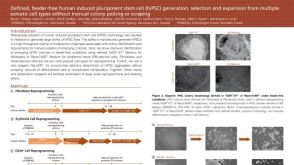 科学海报Defined, Feeder-Free Human Induced Pluripotent Stem Cell (hiPSC) Generation, Selection and Expansion from Multiple Somatic Cell Types

 沪公网安备31010102008431号