Kurian L et al. (JAN 2013)
Nature methods 10 1 77--83
Conversion of human fibroblasts to angioblast-like progenitor cells.
Lineage conversion of one somatic cell type to another is an attractive approach for generating specific human cell types. Lineage conversion can be direct,in the absence of proliferation and multipotent progenitor generation,or indirect,by the generation of expandable multipotent progenitor states. We report the development of a reprogramming methodology in which cells transition through a plastic intermediate state,induced by brief exposure to reprogramming factors,followed by differentiation. We use this approach to convert human fibroblasts to mesodermal progenitor cells,including by non-integrative approaches. These progenitor cells demonstrated bipotent differentiation potential and could generate endothelial and smooth muscle lineages. Differentiated endothelial cells exhibited neo-angiogenesis and anastomosis in vivo. This methodology for indirect lineage conversion to angioblast-like cells adds to the armamentarium of reprogramming approaches aimed at the study and treatment of ischemic pathologies.
View Publication
产品类型:
产品号#:
85850
85857
产品名:
mTeSR™1
mTeSR™1
Ben-David U and Benvenisty N (MAR 2014)
Nature protocols 9 3 729--740
Chemical ablation of tumor-initiating human pluripotent stem cells.
The tumorigenicity of human pluripotent stem cells (hPSCs) is widely acknowledged as a major obstacle that withholds their application in regenerative medicine. This protocol describes two efficient and robust ways to chemically eliminate the tumor-initiating hPSCs from monolayer culture. The protocol details how to maintain and differentiate hPSCs,how to apply chemical inhibitors to cultures of hPSCs and their differentiated progeny,and how to assess the purity of the resultant cell cultures using in vitro and in vivo assays. It also describes how to rescue the cytotoxic effect. The elimination and the rescue assay can be completed within 3-5 d,the in vitro assessment requires another day,and the in vivo assessment requires up to 12 additional weeks.
View Publication
产品类型:
产品号#:
85850
85857
产品名:
mTeSR™1
mTeSR™1
Ichida JK et al. (AUG 2014)
Nature chemical biology 10 8 632--9
Notch inhibition allows oncogene-independent generation of iPS cells.
The reprogramming of somatic cells to pluripotency using defined transcription factors holds great promise for biomedicine. However,human reprogramming remains inefficient and relies either on the use of the potentially dangerous oncogenes KLF4 and CMYC or the genetic inhibition of the tumor suppressor gene p53. We hypothesized that inhibition of signal transduction pathways that promote differentiation of the target somatic cells during development might relieve the requirement for non-core pluripotency factors during induced pluripotent stem cell (iPSC) reprogramming. Here,we show that inhibition of Notch greatly improves the efficiency of iPSC generation from mouse and human keratinocytes by suppressing p21 in a p53-independent manner and thereby enriching for undifferentiated cells capable of long-term self-renewal. Pharmacological inhibition of Notch enabled routine production of human iPSCs without KLF4 and CMYC while leaving p53 activity intact. Thus,restricting the development of somatic cells by altering intercellular communication enables the production of safer human iPSCs.
View Publication
产品类型:
产品号#:
73092
85850
85857
产品名:
DBZ
mTeSR™1
mTeSR™1
Ma R et al. (APR 2015)
Thyroid 25 4 455--461
Human embryonic stem cells form functional thyroid follicles.
OBJECTIVE: The molecular events that lead to human thyroid cell speciation remain incompletely characterized. It has been shown that overexpression of the regulatory transcription factors Pax8 and Nkx2-1 (ttf-1) directs murine embryonic stem (mES) cells to differentiate into thyroid follicular cells by initiating a transcriptional regulatory network. Such cells subsequently organized into three-dimensional follicular structures in the presence of extracellular matrix. In the current study,human embryonic stem (hES) cells were studied with the aim of recapitulating this scenario and producing functional human thyroid cell lines. METHODS: Reporter gene tagged pEZ-lentiviral vectors were used to express human PAX8-eGFP and NKX2-1-mCherry in the H9 hES cell line followed by differentiation into thyroid cells directed by Activin A and thyrotropin (TSH). RESULTS: Both transcription factors were expressed efficiently in hES cells expressing either PAX8,NKX2-1,or in combination in the hES cells,which had low endogenous expression of these transcription factors. Further differentiation of the double transfected cells showed the expression of thyroid-specific genes,including thyroglobulin (TG),thyroid peroxidase (TPO),the sodium/iodide symporter (NIS),and the TSH receptor (TSHR) as assessed by reverse transcription polymerase chain reaction and immunostaining. Most notably,the Activin/TSH-induced differentiation approach resulted in thyroid follicle formation and abundant TG protein expression within the follicular lumens. On stimulation with TSH,these hES-derived follicles were also capable of dose-dependent cAMP generation and radioiodine uptake,indicating functional thyroid epithelial cells. CONCLUSION: The induced expression of PAX8 and NKX2-1 in hES cells was followed by differentiation into thyroid epithelial cells and their commitment to form functional three-dimensional neo-follicular structures. The data provide proof of principal that hES cells can be committed to thyroid cell speciation under appropriate conditions.
View Publication
产品类型:
产品号#:
85850
85857
产品名:
mTeSR™1
mTeSR™1
Ward E et al. (MAY 2017)
Stem cells and development
Feeder-Free Derivation of Naïve Human Pluripotent Stem Cells.
Human pluripotent stem cells (HPSCs) cultured in conditions that maintain pluripotency via FGF and TGFβ signaling have been described as being in a primed state. These cells have been shown to exhibit characteristics more closely related to mouse epiblast-derived stem cells than to so called naïve mouse PSCs said to possess a more ground state pluripotency that mimics the early mouse embryo inner cell mass. Initial attempts to create culture conditions favorable for generation of naïve HPSCs from primed HPSCs has required the use of mouse embryonic fibroblasts as a feeder layer to support this transition. A protocol for the routine derivation and maintenance of naïve HPSCs in completely defined conditions is highly desirable for stem cell researchers to enhance the study and clinical translation of naïve HPSCs. Here we describe a standard protocol for transitioning primed HPSCs to a naïve state using commercial RSet media and xeno-free recombinant vitronectin.
View Publication
产品类型:
产品号#:
05230
产品名:
STEMdiff™ 三谱系分化试剂盒
Wray J et al. (AUG 2009)
Blood 114 9 1852--8
Metnase mediates chromosome decatenation in acute leukemia cells.
After DNA replication,sister chromatids must be untangled,or decatenated,before mitosis so that chromatids do not tear during anaphase. Topoisomerase IIalpha (Topo IIalpha) is the major decatenating enzyme. Topo IIalpha inhibitors prevent decatenation,causing cells to arrest during mitosis. Here we report that acute myeloid leukemia cells fail to arrest at the mitotic decatenation checkpoint,and their progression through this checkpoint is regulated by the DNA repair component Metnase (also termed SETMAR). Metnase contains a SET histone methylase and transposase nuclease domain,and is a component of the nonhomologous end-joining DNA double-strand break repair pathway. Metnase interacts with Topo IIalpha and enhances its decatenation activity. Here we show that multiple types of acute leukemia cells have an attenuated mitotic arrest when decatenation is inhibited and that in an acute myeloid leukemia (AML) cell line this is mediated by Metnase. Of further importance,Metnase permits continued proliferation of these AML cells even in the presence of the clinical Topo IIalpha inhibitor VP-16. In vitro,purified Metnase prevents VP-16 inhibition of Topo IIalpha decatenation of tangled DNA. Thus,Metnase expression levels may predict AML resistance to Topo IIalpha inhibitors,and Metnase is a potential therapeutic target for small molecule interference.
View Publication
产品类型:
产品号#:
02690
产品名:
StemSpan™CC100
Miyoshi N et al. (JAN 2010)
Proceedings of the National Academy of Sciences of the United States of America 107 1 40--5
Defined factors induce reprogramming of gastrointestinal cancer cells.
Although cancer is a disease with genetic and epigenetic origins,the possible effects of reprogramming by defined factors remain to be fully understood. We studied the effects of the induction or inhibition of cancer-related genes and immature status-related genes whose alterations have been reported in gastrointestinal cancer cells. Retroviral-mediated introduction of induced pluripotent stem (iPS) cell genes was necessary for inducing the expression of immature status-related proteins,including Nanog,Ssea4,Tra-1-60,and Tra-1-80 in esophageal,stomach,colorectal,liver,pancreatic,and cholangiocellular cancer cells. Induced cells,but not parental cells,possessed the potential to express morphological patterns of ectoderm,mesoderm,and endoderm,which was supported by epigenetic studies,indicating methylation of DNA strands and the histone H3 protein at lysine 4 in promoter regions of pluripotency-associated genes such as NANOG. In in vitro analysis induced cells showed slow proliferation and were sensitized to differentiation-inducing treatment,and in vivo tumorigenesis was reduced in NOD/SCID mice. This study demonstrated that pluripotency was manifested in induced cells,and that the induced pluripotent cancer (iPC) cells were distinct from natural cancer cells with regard to their sensitivity to differentiation-inducing treatment. Retroviral-mediated introduction of iPC cells confers higher sensitivity to chemotherapeutic agents and differentiation-inducing treatment.
View Publication
Intrinsic Immunity Shapes Viral Resistance of Stem Cells.
Stem cells are highly resistant to viral infection compared to their differentiated progeny; however,the mechanism is mysterious. Here,we analyzed gene expression in mammalian stem cells and cells at various stages of differentiation. We find that,conserved across species,stem cells express a subset of genes previously classified as interferon (IFN) stimulated genes (ISGs) but that expression is intrinsic,as stem cells are refractory to interferon. This intrinsic ISG expression varies in a cell-type-specific manner,and many ISGs decrease upon differentiation,at which time cells become IFN responsive,allowing induction of a broad spectrum of ISGs by IFN signaling. Importantly,we show that intrinsically expressed ISGs protect stem cells against viral infection. We demonstrate the in vivo importance of intrinsic ISG expression for protecting stem cells and their differentiation potential during viral infection. These findings have intriguing implications for understanding stem cell biology and the evolution of pathogen resistance.
View Publication
Moore JJC et al. (JAN 2010)
Stem Cell Research & Therapy 1 3 23
Efficient, high-throughput transfection of human embryonic stem cells.
Genetic manipulation of human embryonic stem cells (hESC) has been limited by their general resistance to common methods used to introduce exogenous DNA or RNA. Efficient and high throughput transfection of nucleic acids into hESC would be a valuable experimental tool to manipulate these cells for research and clinical applications. We investigated the ability of two commercially available electroporation systems,the Nucleofection® 96-well Shuttle® System from Lonza and the Neon™ Transfection System from Invitrogen to efficiently transfect hESC. Transfection efficiency was measured by flow cytometry for the expression of the green fluorescent protein and the viability of the transfected cells was determined by an ATP catalyzed luciferase reaction. The transfected cells were also analyzed by flow cytometry for common markers of pluripotency. Both systems are capable of transfecting hESC at high efficiencies with little loss of cell viability. However,the reproducibility and the ease of scaling for high throughput applications led us to perform more comprehensive tests on the Nucleofection® 96-well Shuttle® System. We demonstrate that this method yields a large fraction of transiently transfected cells with minimal loss of cell viability and pluripotency,producing protein expression from plasmid vectors in several different hESC lines. The method scales to a 96-well plate with similar transfection efficiencies at the start and end of the plate. We also investigated the efficiency with which stable transfectants can be generated and recovered under antibiotic selection. Finally,we found that this method is effective in the delivery of short synthetic RNA oligonucleotides (siRNA) into hESC for knockdown of translation activity via RNA interference. Our results indicate that these electroporation methods provide a reliable,efficient,and high-throughput approach to the genetic manipulation of hESC.
View Publication


 EasySep™小鼠TIL(CD45)正选试剂盒




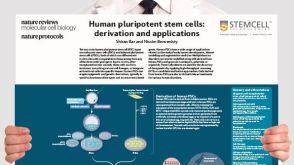 挂图Derivation and Applications of Human Pluripotent Stem Cells Overview of the derivation of human embryonic stem cells (hESCs) and induced pluripotent stem cells (iPSCs)

 沪公网安备31010102008431号