Ko J-Y et al. (AUG 2014)
Stem cells and development 23 15 1788--1797
Osteogenesis from human induced pluripotent stem cells: an in vitro and in vivo comparison with mesenchymal stem cells.
The purpose of this study was to examine the in vitro and in vivo osteogenic potential of human induced pluripotent stem cells (hiPSCs) against that of human bone marrow mesenchymal stem cells (hBMMSCs). Embryoid bodies (EBs),which were formed from undifferentiated hiPSCs,were dissociated into single cells and underwent osteogenic differentiation using the same medium as hBMMSCs for 14 days. Osteoinduced hiPSCs were implanted on the critical-size calvarial defects and long bone segmental defects in rats. The healing of defects was evaluated after 8 weeks and 12 weeks of implantation,respectively. Osteoinduced hiPSCs showed relatively lower and delayed in vitro expressions of the osteogenic marker COL1A1 and bone sialoprotein,as well as a weaker osteogenic differentiation through alkaline phosphatase staining and mineralization through Alizarin red staining compared with hBMMSCs. Calvarial defects treated with osteoinduced hiPSCs had comparable quality of new bone formation,including full restoration of bone width and robust formation of trabeculae,to those treated with hBMMSCs. Both osteoinduced hiPSCs and hBMMSCs persisted in regenerated bone after 8 weeks of implantation. In critical-size long bone segmental defects,osteoinduced hiPSC treatment also led to healing of segmental defects comparable to osteoinduced hBMMSC treatment after 12 weeks. In conclusion,despite delayed in vitro osteogenesis,hiPSCs have an in vivo osteogenic potential as good as hBMMSCs.
View Publication
产品类型:
产品号#:
85850
85857
产品名:
mTeSR™1
mTeSR™1
Lee J-HJBJH et al. (APR 2015)
Stem Cells 33 4 1142--1152
Reversible lineage-specific priming of human embryonic stem cells can be exploited to optimize the yield of differentiated cells.
The clinical use of human embryonic stem cells (hESCs) requires efficient cellular expansion that must be paired with an ability to generate specialized progeny through differentiation. Self-renewal and differentiation are deemed inherent hallmarks of hESCs and a growing body of evidence suggests that initial culture conditions dictate these two aspects of hESC behavior. Here,we reveal that defined culture conditions using commercial mTeSR1 media augment the expansion of hESCs and enhance their capacity for neural differentiation at the expense of hematopoietic lineage competency without affecting pluripotency. This culture-induced modification was shown to be reversible,as culture in mouse embryonic fibroblast-conditioned media (MEF-CM) in subsequent passages allowed mTeSR1-expanded hESCs to re-establish hematopoietic differentiation potential. Optimal yield of hematopoietic cells can be achieved by expansion in mTeSR1 followed by a recovery period in MEF-CM. Furthermore,the lineage propensity to hematopoietic and neural cell types could be predicted via analysis of surrogate markers expressed by hESCs cultured in mTeSR1 versus MEF-CM,thereby circumventing laborious in vitro differentiation assays. Our study reveals that hESCs exist in a range of functional states and balance expansion with differentiation potential,which can be modulated by culture conditions in a predictive and quantitative manner. Stem Cells 2015;33:1142-1152.
View Publication
Kang H et al. (DEC 2015)
Molecular therapy. Nucleic acids 4 October e268
CCR5 Disruption in Induced Pluripotent Stem Cells Using CRISPR/Cas9 Provides Selective Resistance of Immune Cells to CCR5-tropic HIV-1 Virus.
The chemokine (C-C motif) receptor 5 (CCR5) serves as an HIV-1 co-receptor and is essential for cell infection with CCR5-tropic viruses. Loss of functional receptor protects against HIV infection. Here,we report the successful targeting of CCR5 in GFP-marked human induced pluripotent stem cells (iPSCs) using CRISPR/Cas9 with single and dual guide RNAs (gRNAs). Following CRISPER/Cas9-mediated gene editing using a single gRNA,12.5% of cell colonies demonstrated CCR5 editing,of which 22.2% showed biallelic editing as determined by a Surveyor nuclease assay and direct sequencing. The use of dual gRNAs significantly increased the efficacy of CCR5 editing to 27% with a biallelic gene alteration frequency of 41%. To ensure the homogeneity of gene editing within cells,we used single cell sorting to establish clonal iPSC lines. Single cell-derived iPSC lines with homozygous CCR5 mutations displayed the typical characteristics of pluripotent stem cells and differentiated efficiently into hematopoietic cells,including macrophages. Although macrophages from both wild-type and CCR5-edited iPSCs supported CXCR4-tropic virus replication,macrophages from CCR5-edited iPSCs were uniquely resistant to CCR5-tropic virus challenge. This study demonstrates the feasibility of applying iPSC technology for the study of the role of CCR5 in HIV infection in vitro,and generation of HIV-resistant cells for potential therapeutic applications.
View Publication
产品类型:
产品号#:
85850
85857
产品名:
mTeSR™1
mTeSR™1
Wang X et al. (DEC 2010)
Blood 116 26 5972--82
Sequential treatment of CD34+ cells from patients with primary myelofibrosis with chromatin-modifying agents eliminate JAK2V617F-positive NOD/SCID marrow repopulating cells.
Because primary myelofibrosis (PMF) originates at the level of the pluripotent hematopoietic stem cell (HSC),we examined the effects of various therapeutic agents on the in vitro and in vivo behavior of PMF CD34(+) cells. Treatment of PMF CD34(+) cells with chromatin-modifying agents (CMAs) but not hydroxyurea,Janus kinase 2 (JAK2) inhibitors,or low doses of interferon-α led to the generation of greater numbers of CD34(+) chemokine (C-X-C motif) receptor (CXCR)4(+) cells,which were capable of migrating in response to chemokine (C-X-C motif) ligand (CXCL)12 and resulted in a reduction in the proportion of hematopoietic progenitor cells (HPCs) that were JAK2V617F(+). Furthermore,sequential treatment of PMF CD34(+) cells but not normal CD34(+) cells with decitabine (5-aza-2'-deoxycytidine [5azaD]),followed by suberoylanilide hydroxamic acid (SAHA; 5azaD/SAHA),or trichostatin A (5azaD/TSA) resulted in a higher degree of apoptosis. Two to 6 months after the transplantation of CMAs treated JAK2V617F(+) PMF CD34(+) cells into nonobese diabetic/severe combined immunodeficient (SCID)/IL-2Rγ(null) mice,the percentage of JAK2V617F/JAK2(total) in human CD45(+) marrow cells was dramatically reduced. These findings suggest that both PMF HPCs,short-term and long-term SCID repopulating cells (SRCs),are JAK2V617F(+) and that JAK2V617F(+) HPCs and SRCs can be eliminated by sequential treatment with CMAs. Sequential treatment with CMAs,therefore,represents a possible effective means of treating PMF at the level of the malignant SRC.
View Publication
产品类型:
产品号#:
04230
产品名:
MethoCult™H4230
Hu K et al. (APR 2011)
Blood 117 14 e109--19
Efficient generation of transgene-free induced pluripotent stem cells from normal and neoplastic bone marrow and cord blood mononuclear cells.
Reprogramming blood cells to induced pluripotent stem cells (iPSCs) provides a novel tool for modeling blood diseases in vitro. However,the well-known limitations of current reprogramming technologies include low efficiency,slow kinetics,and transgene integration and residual expression. In the present study,we have demonstrated that iPSCs free of transgene and vector sequences could be generated from human BM and CB mononuclear cells using non-integrating episomal vectors. The reprogramming described here is up to 100 times more efficient,occurs 1-3 weeks faster compared with the reprogramming of fibroblasts,and does not require isolation of progenitors or multiple rounds of transfection. Blood-derived iPSC lines lacked rearrangements of IGH and TCR,indicating that their origin is non-B- or non-T-lymphoid cells. When cocultured on OP9,blood-derived iPSCs could be differentiated back to the blood cells,albeit with lower efficiency compared to fibroblast-derived iPSCs. We also generated transgene-free iPSCs from the BM of a patient with chronic myeloid leukemia (CML). CML iPSCs showed a unique complex chromosomal translocation identified in marrow sample while displaying typical embryonic stem cell phenotype and pluripotent differentiation potential. This approach provides an opportunity to explore banked normal and diseased CB and BM samples without the limitations associated with virus-based methods.
View Publication
产品类型:
产品号#:
09600
09650
72252
72254
100-0247
产品名:
StemSpan™ SFEM
StemSpan™ SFEM
Thiazovivin
Thiazovivin
Thiazovivin
Smith GH (JAN 1996)
Breast cancer research and treatment 39 1 21--31
Experimental mammary epithelial morphogenesis in an in vivo model: evidence for distinct cellular progenitors of the ductal and lobular phenotype.
An in vivo transplantation system has been used to evaluate the developmental capacities of specific mouse mammary epithelial cell populations. Specifically,mouse mammary epithelial cells with distinctly limited developmental potentials have been identified using this procedure. Two distinct epithelial cell progenitors have been identified by experiments designed to determine whether basal lobular and ductal phenotypes could develop independently under conditions imposed by a limiting dilution. The prediction that these separate epithelial progenitors must exist was based upon the results from transplantation experiments carried out in epithelium-divested mammary fat pads of syngeneic mice with mammary epithelium from two different transgenic mouse models. The results presented here demonstrate the following points: 1) lobular,i.e. secretory,progenitor cells are present as distinct entities among the mammary epithelial cells found in immature virgin female mice; 2) similarly,ductal epithelial progenitors are present within the same population; 3) lobular progenitors are present in greater numbers,although both cell populations are extremely small; 4) as expected,some inocula produce outgrowths with simultaneous development of both lobular and ductal phenotypes--it is not known whether this indicates cooperative interaction between the two epithelial progenitors or signals the presence of a third progenitor type capable of producing both ductular and lobular committed daughters; 5) these findings have important consequences in the design of experiments aimed at testing the effects of known and putative mammary oncogenes and tumor suppressor genes,using techniques which include cellular transformation in vitro followed by in vivo cultivation and evaluation.
View Publication
产品类型:
产品号#:
01700
01705
05601
05610
05620
01702
产品名:
ALDEFLUOR™ 试剂盒
ALDEFLUOR™ DEAB试剂
EpiCult™-B 人培养基
EpiCult™-B 小鼠培养基试剂盒
MammoCult™人培养基试剂盒
ALDEFLUOR™测定缓冲液
Keung W et al. (SEP 2016)
Scientific reports 6 34154
Non-cell autonomous cues for enhanced functionality of human embryonic stem cell-derived cardiomyocytes via maturation of sarcolemmal and mitochondrial KATP channels.
Human embryonic stem cells (hESCs) is a potential unlimited ex vivo source of ventricular (V) cardiomyocytes (CMs),but hESC-VCMs and their engineered tissues display immature traits. In adult VCMs,sarcolemmal (sarc) and mitochondrial (mito) ATP-sensitive potassium (KATP) channels play crucial roles in excitability and cardioprotection. In this study,we aim to investigate the biological roles and use of sarcKATP and mitoKATP in hESC-VCM. We showed that SarcIK,ATP in single hESC-VCMs was dormant under baseline conditions,but became markedly activated by cyanide (CN) or the known opener P1075 with a current density that was ˜8-fold smaller than adult; These effects were reversible upon washout or the addition of GLI or HMR1098. Interestingly,sarcIK,ATP displayed a ˜3-fold increase after treatment with hypoxia (5% O2). MitoIK,ATP was absent in hESC-VCMs. However,the thyroid hormone T3 up-regulated mitoIK,ATP,conferring diazoxide protective effect on T3-treated hESC-VCMs. When assessed using a multi-cellular engineered 3D ventricular cardiac micro-tissue (hvCMT) system,T3 substantially enhanced the developed tension by 3-folds. Diazoxide also attenuated the decrease in contractility induced by simulated ischemia (1% O2). We conclude that hypoxia and T3 enhance the functionality of hESC-VCMs and their engineered tissues by selectively acting on sarc and mitoIK,ATP.
View Publication
产品类型:
产品号#:
85850
85857
产品名:
mTeSR™1
mTeSR™1
Nguyen HX et al. (AUG 2014)
Journal of Comparative Neurology 522 12 2767--2783
Induction of early neural precursors and derivation of tripotent neural stem cells from human pluripotent stem cells under xeno-free conditions
Human embryonic stem cells (hESC) and induced pluripotent stem cells (hiPSC) can differentiate into many cell types and are important for regenerative medicine; however,further work is needed to reliably differentiate hESC and hiPSC into neural-restricted multipotent derivatives or specialized cell types under conditions that are free from animal products. Toward this goal,we tested the transition of hESC and hiPSC lines onto xeno-free (XF) / feeder-free conditions and evaluated XF substrate preference,pluripotency,and karyotype. Critically,XF transitioned H9 hESC,Shef4 hESC,and iPS6-9 retained pluripotency (Oct-4 and NANOG),proliferation (MKI67 and PCNA),and normal karyotype. Subsequently,XF transitioned hESC and hiPSC were induced with epidermal growth factor (EGF) and basic fibroblast growth factor (bFGF) to generate neuralized spheres containing primitive neural precursors,which could differentiate into astrocytes and neurons,but not oligoprogenitors. Further neuralization of spheres via LIF supplementation and attachment selection on CELLstart substrate generated adherent human neural stem cells (hNSC) with normal karyotype and high proliferation potential under XF conditions. Interestingly,adherent hNSC derived from H9,Shef4,and iPS6-9 differentiated into significant numbers of O4+ oligoprogenitors (∼20-30%) with robust proliferation; however,very few GalC+ cells were observed (∼2-4%),indicative of early oligodendrocytic lineage commitment. Overall,these data demonstrate the transition of multiple hESC and hiPSC lines onto XF substrate and media conditions,and a reproducible neuralization method that generated neural derivatives with multipotent cell fate potential and normal karyotype.
View Publication
产品类型:
产品号#:
85850
85857
产品名:
mTeSR™1
mTeSR™1
Danet G et al. (JUL 2003)
The Journal of clinical investigation 112 1 126--35
Expansion of human SCID-repopulating cells under hypoxic conditions.
It has been proposed that bone marrow (BM) hematopoietic stem and progenitor cells are distributed along an oxygen (O2) gradient,where stem cells reside in the most hypoxic areas and proliferating progenitors are found in O2-rich areas. However,the effects of hypoxia on human hematopoietic stem cells (HSCs) have not been characterized. Our objective was to evaluate the functional and molecular responses of human BM progenitors and stem cells to hypoxic conditions. BM lineage-negative (Lin-) CD34+CD38- cells were cultured in serum-free medium under 1.5% O2 (hypoxia) or 20% O2 (normoxia) for 4 days. Using limiting dilution analysis,we demonstrate that the absolute number of SCID-repopulating cells (SRCs) increased by 5.8-fold in hypoxic cultures compared with normoxia,and by 4.2-fold compared with freshly isolated Lin-CD34+CD38- cells. The observed increase in BM-repopulating activity was associated with a preferential expansion of Lin-CD34+CD38- cells. We also demonstrate that,in response to hypoxia,hypoxia-inducible factor-1alpha protein was stabilized,surface expression of angiogenic receptors was upregulated,and VEGF secretion increased in BM Lin-CD34+ cultures. The use of low O2 levels to enhance the survival and/or self-renewal of human BM HSCs in vitro represents an important advance and could have valuable clinical implications.
View Publication
产品类型:
产品号#:
05150
09500
09600
09650
产品名:
MyeloCult™H5100
BIT 9500血清替代物
StemSpan™ SFEM
StemSpan™ SFEM
Xu C (JAN 2006)
Methods in enzymology 420 18--37
Characterization and evaluation of human embryonic stem cells.
Human embryonic stem cells (hESCs) provide great opportunities for regenerative medicine,pharmacological and toxicological investigation,and the study of human embryonic development. These applications require proper derivation,maintenance,and extensive characterization of undifferentiated cells before being used for differentiation into cells of interest. Undifferentiated hESCs possess several unique features,including their extensive proliferation capacity in the undifferentiated state,ability to maintain a normal karyotype after long-term culture,expression of markers characteristic of stem cells,high constitutive telomerase activity,and capacity to differentiate into essentially all somatic cell types. This chapter will summarize the current development in culture conditions and provide technical details for the evaluation and characterization of hESCs.
View Publication
产品类型:
产品号#:
85850
85857
产品名:
mTeSR™1
mTeSR™1
Yu QC et al. (JUN 2012)
Blood 119 26 6243--54
APELIN promotes hematopoiesis from human embryonic stem cells.
Transcriptional profiling of differentiating human embryonic stem cells (hESCs) revealed that MIXL1-positive mesodermal precursors were enriched for transcripts encoding the G-protein-coupled APELIN receptor (APLNR). APLNR-positive cells,identified by binding of the fluoresceinated peptide ligand,APELIN (APLN),or an anti-APLNR mAb,were found in both posterior mesoderm and anterior mesendoderm populations and were enriched in hemangioblast colony-forming cells (Bl-CFC). The addition of APLN peptide to the media enhanced the growth of embryoid bodies (EBs),increased the expression of hematoendothelial genes in differentiating hESCs,and increased the frequency of Bl-CFCs by up to 10-fold. Furthermore,APLN peptide also synergized with VEGF to promote the growth of hESC-derived endothelial cells. These studies identified APLN as a novel growth factor for hESC-derived hematopoietic and endothelial cells.
View Publication


 EasySep™小鼠TIL(CD45)正选试剂盒




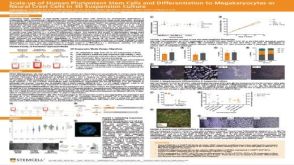 科学海报Scale-up of Human Pluripotent Stem Cells and Differentiation to Megakaryocytes or Neural Crest Cells in 3D Suspension Culture
 沪公网安备31010102008431号