Su H et al. (JUL 2013)
Stem Cell Research 11 1 529--539
Transplanted motoneurons derived from human induced pluripotent stem cells form functional connections with target muscle
Induced pluripotent stem cells (iPSCs) hold promise for the treatment of motoneuron diseases because of their distinct features including pluripotency,self-derivation and potential ability to differentiate into motoneurons. However,it is still unknown whether human iPSC-derived motoneurons can functionally innervate target muscles in vivo,which is the definitive sign of successful cell therapy for motoneuron diseases. In the present study,we demonstrated that human iPSCs derived from mesenchymal cells of the umbilical cord possessed a high yield in neural differentiation. Using a chemically-defined in vitro system,human iPSCs efficiently differentiated into motoneurons which displayed typical morphology,expressed specific molecules,and generated repetitive trains of action potentials. When transplanted into the injured musculocutaneous nerve of rats,they survived robustly,extended axons along the nerve,and formed functional connections with the target muscle (biceps brachii),thereby protecting the muscle from atrophy. Our study provides evidence for the first time that human iPSC-derived motoneurons are truly functional not only in vitro but also in vivo,and they have potential for stem cell-based therapies for motoneuron diseases. textcopyright 2013 Elsevier B.V.
View Publication
产品类型:
产品号#:
85850
85857
产品名:
mTeSR™1
mTeSR™1
Jang J et al. (OCT 2014)
Stem Cells 32 10 2616--2625
Nrf2, a regulator of the proteasome, controls self-renewal and pluripotency in human embryonic stem cells
Nuclear factor,erythroid 2-like 2 (Nrf2) is a master transcription factor for cellular defense against endogenous and exogenous stresses by regulating expression of many antioxidant and detoxification genes. Here,we show that Nrf2 acts as a key pluripotency gene and a regulator of proteasome activity in human embryonic stem cells (hESCs). Nrf2 expression is highly enriched in hESCs and dramatically decreases upon differentiation. Nrf2 inhibition impairs both the self-renewal ability of hESCs and re-establishment of pluripotency during cellular reprogramming. Nrf2 activation can delay differentiation. During early hESC differentiation,Nrf2 closely colocalizes with OCT4 and NANOG. As an underlying mechanism,our data show that Nrf2 regulates proteasome activity in hESCs partially through proteasome maturation protein (POMP),a proteasome chaperone,which in turn controls the proliferation of self-renewing hESCs,three germ layer differentiation and cellular reprogramming. Even modest proteasome inhibition skews the balance of early differentiation toward mesendoderm at the expense of an ectodermal fate by decreasing the protein level of cyclin D1 and delaying the degradation of OCT4 and NANOG proteins. Taken together,our findings suggest a new potential link between environmental stress and stemness with Nrf2 and the proteasome coordinately positioned as key mediators.
View Publication
产品类型:
产品号#:
85850
85857
产品名:
mTeSR™1
mTeSR™1
Liu Y et al. (JUL 2014)
PLoS ONE 9 7 e100885
Modulating notochordal differentiation of human induced pluripotent stem cells using natural nucleus pulposus tissue matrix
Human induced pluripotent stem cells (hiPSCs) can differentiate into notochordal cell (NC)-like cells when cultured in the presence of natural porcine nucleus pulposus (NP) tissue matrix. The method promises massive production of high-quality,functional cells to treat degenerative intervertebral discs (IVDs). Based on our previous work,we further examined the effect of cell-NP matrix contact and culture medium on the differentiation,and further assessed the functional differentiation ability of the generated NC-like. The study showed that direct contact between hiPSCs and NP matrix can promote the differentiation yield,whilst both the contact and non-contact cultures can generate functional NC-like cells. The generated NC-like cells are highly homogenous regarding the expression of notochordal marker genes. A culture medium containing a cocktail of growth factors (FGF,EGF,VEGF and IGF-1) also supported the notochordal differentiation in the presence of NP matrix. The NC-like cells showed excellent functional differentiation ability to generate NP-like tissue which was rich in aggrecan and collagen type II; and particularly,the proteoglycan to collagen content ratio was as high as 12.5-17.5 which represents a phenotype close to NP rather than hyaline cartilage. Collectively,the present study confirmed the effectiveness and flexibility of using natural NP tissue matrix to direct notochordal differentiation of hiPSCs,and the potential of using the generated NC-like cells for treating IVD degeneration.
View Publication
Miyoshi H et al. (JAN 1999)
Science (New York,N.Y.) 283 5402 682--6
Transduction of human CD34+ cells that mediate long-term engraftment of NOD/SCID mice by HIV vectors.
Efficient gene transfer into human hematopoietic stem cells (HSCs) is an important goal in the study of the hematopoietic system as well as for gene therapy of hematopoietic disorders. A lentiviral vector based on the human immunodeficiency virus (HIV) was able to transduce human CD34+ cells capable of stable,long-term reconstitution of nonobese diabetic/severe combined immunodeficient (NOD/SCID) mice. High-efficiency transduction occurred in the absence of cytokine stimulation and resulted in transgene expression in multiple lineages of human hematopoietic cells for up to 22 weeks after transplantation.
View Publication
产品类型:
产品号#:
09500
产品名:
BIT 9500血清替代物
Hwang GH et al. (DEC 2017)
Journal of cellular physiology 232 12 3384--3395
Purification of small molecule-induced cardiomyocytes from human induced pluripotent stem cells using a reporter system.
In order to realize the practical use of human pluripotent stem cell (hPSC)-derived cardiomyocytes for the purpose of clinical use or cardiovascular research,the generation of large numbers of highly purified cardiomyocytes should be achieved. Here,we show an efficient method for cardiac differentiation of human induced pluripotent stem cells (hiPSCs) in chemically defined conditions and purification of hiPSC-derived cardiomyocytes using a reporter system. Regulation of the Wnt/β-catenin signaling pathway is implicated in the induction of the cardiac differentiation of hPSCs. We increased cardiac differentiation efficiency of hiPSCs in chemically defined conditions through combined treatment with XAV939,a tankyrase inhibitor and IWP2,a porcupine inhibitor and optimized concentrations. Although cardiac differentiation efficiency was high (>80%),it was difficult to suppress differentiation into non-cardiac cells,Therefore,we applied a lentiviral reporter system,wherein green fluorescence protein (GFP) and Zeocin-resistant gene are driven by promoter activation of a gene (TNNT2) encoding cardiac troponin T (cTnT),a cardiac-specific protein,to exclude non-cardiomyocytes from differentiated cell populations. We transduced this reporter construct into differentiated cells using a lentiviral vector and then obtained highly purified hiPSC-derived cardiomyocytes by treatment with the lowest effective dose of Zeocin. We significantly increased transgenic efficiency through manipulation of the cells in which the differentiated cells were simultaneously infected with virus and re-plated after single-cell dissociation. Purified cells specifically expressed GFP,cTnT,displayed typical properties of cardiomyocytes. This study provides an efficient strategy for obtaining large quantities of highly purified hPSC-derived cardiomyocytes for application in regenerative medicine and biomedical research.
View Publication
产品类型:
产品号#:
85850
85857
产品名:
mTeSR™1
mTeSR™1
Abuljadayel IS (JAN 2003)
Current medical research and opinion 19 5 355--75
Induction of stem cell-like plasticity in mononuclear cells derived from unmobilised adult human peripheral blood.
Undifferentiated pluripotent stem cells with flexible developmental potentials are not normally found in peripheral blood. However,such cells have recently been reported to reside in the bone marrow. Herein are reported methods of inducing pluripotency in cells derived from unmobilised adult human peripheral blood. In response to the inclusion of purified CR3/43 monoclonal antibody (mAb) to well-established culture conditions,mononuclear cells (MNC) obtained from a single blood donor are converted into pluripotent haematopoietic,neuronal and cardiomyogenic progenitor stem cells or undifferentiated stem cells. The haematopoietic stem cells are CD34+,clonogenic and have been shown to repopulate non-obese diabetic/severe combined immunodeficient (NOD/SCID) mice. The neuronal precursors transcribe the primitive stem cell markers OCT-4 and nestin,and on maturation,differentially stain positive for neuronal,glial or oligodendrocyte-specific antigens. The cardiomyogenic progenitor stem cells form large bodies of asynchronously beating cells and differentiate into mature cardiomyocytes which transcribe GATA-4. The undifferentiated stem cells do not express haematopoietic-associated markers,are negative for major histocompatibility complex (MHC) class I and II antigens,transcribe high levels of OCT-4 and form embryoid body (EB)-like structures. This induction of stem cell-like plasticity in MNC may have proceeded by a process of retrodifferentiation but,in any case,could have profound clinical and pharmacological implications. Finally,the flexibility and the speed by which a variety of stem cell classes can be generated ex vivo from donor blood could potentially transfer this novel process into a less invasive automated clinical procedure.
View Publication
产品类型:
产品号#:
04434
04444
产品名:
MethoCult™H4434经典
MethoCult™H4434经典
Zhou J et al. (MAY 2009)
Proceedings of the National Academy of Sciences of the United States of America 106 19 7840--5
mTOR supports long-term self-renewal and suppresses mesoderm and endoderm activities of human embryonic stem cells.
Despite the recent identification of the transcriptional regulatory circuitry involving SOX2,NANOG,and OCT-4,the intracellular signaling networks that control pluripotency of human embryonic stem cells (hESCs) remain largely undefined. Here,we demonstrate an essential role for the serine/threonine protein kinase mammalian target of rapamycin (mTOR) in regulating hESC long-term undifferentiated growth. Inhibition of mTOR impairs pluripotency,prevents cell proliferation,and enhances mesoderm and endoderm activities in hESCs. At the molecular level,mTOR integrates signals from extrinsic pluripotency-supporting factors and represses the transcriptional activities of a subset of developmental and growth-inhibitory genes,as revealed by genome-wide microarray analyses. Repression of the developmental genes by mTOR is necessary for the maintenance of hESC pluripotency. These results uncover a novel signaling mechanism by which mTOR controls fate decisions in hESCs. Our findings may contribute to effective strategies for tissue repair and regeneration.
View Publication
产品类型:
产品号#:
85850
85857
产品名:
mTeSR™1
mTeSR™1
Warren L et al. (NOV 2010)
Cell stem cell 7 5 618--630
Highly efficient reprogramming to pluripotency and directed differentiation of human cells with synthetic modified mRNA
Clinical application of induced pluripotent stem cells (iPSCs) is limited by the low efficiency of iPSC derivation and the fact that most protocols modify the genome to effect cellular reprogramming. Moreover,safe and effective means of directing the fate of patient-specific iPSCs toward clinically useful cell types are lacking. Here we describe a simple,nonintegrating strategy for reprogramming cell fate based on administration of synthetic mRNA modified to overcome innate antiviral responses. We show that this approach can reprogram multiple human cell types to pluripotency with efficiencies that greatly surpass established protocols. We further show that the same technology can be used to efficiently direct the differentiation of RNA-induced pluripotent stem cells (RiPSCs) into terminally differentiated myogenic cells. This technology represents a safe,efficient strategy for somatic cell reprogramming and directing cell fate that has broad applicability for basic research,disease modeling,and regenerative medicine. ?? 2010 Elsevier Inc.
View Publication
产品类型:
产品号#:
04434
04444
07913
27100
27150
85850
85857
产品名:
MethoCult™H4434经典
MethoCult™H4434经典
Dispase(5 U/mL)
35 mm培养皿
35 mm培养皿
mTeSR™1
mTeSR™1
Miki T et al. (MAY 2011)
Tissue engineering. Part C,Methods 17 5 557--68
Hepatic differentiation of human embryonic stem cells is promoted by three-dimensional dynamic perfusion culture conditions.
The developmental potential of human embryonic stem cells (hESCs) holds great promise to provide a source of human hepatocytes for use in drug discovery,toxicology,hepatitis research,and extracorporeal bioartificial liver support. There are,however,limitations to induce fully functional hepatocytes on conventional two-dimensional (2D) static culture. It had been shown that dynamic three-dimensional (3D) perfusion culture is superior to induce maturation in fetal hepatocytes and prolong hepatic functions of primary adult hepatocytes. We investigated the potential of using a four-compartment 3D perfusion culture to induce hepatic differentiation in hESC. Undifferentiated hESC were inoculated into hollow fiber-based 3D perfusion bioreactors with integral oxygenation. Hepatic differentiation was induced with a multistep growth factor cocktail protocol. Parallel controls were operated under equal perfusion conditions without the growth factor supplementations to allow for spontaneous differentiation,as well as in conventional 2D static conditions using growth factors. Metabolism,hepatocyte-specific gene expression,protein expression,and hepatic function were evaluated after 20 days. Significantly upregulated hepatic gene expression was observed in the hepatic differentiation 3D culture group. Ammonia metabolism activity and albumin production was observed in the 3D directed differentiation culture. Drug-induced cytochrome P450 gene expression was increased with rifampicin induction. Using flow cytometry analysis the mature hepatocyte marker asialoglycoprotein receptor was found on up to 30% of the cells in the 3D system with directed hepatic differentiation. Histological and immunohistochemical analysis revealed structural formation of hepatic and biliary marker-positive cells. In contrast to 2D culture,the 3D perfusion culture induced more functional maturation in hESC-derived hepatic cells. 3D perfusion bioreactor technologies may be useful for further studies on generating hESC-derived hepatic cells.
View Publication
产品类型:
产品号#:
85850
85857
产品名:
mTeSR™1
mTeSR™1
Kallas A et al. (APR 2011)
PLoS ONE 6 4 e19114
Nocodazole treatment decreases expression of pluripotency markers nanog and Oct4 in human embryonic stem cells
Nocodazole is a known destabiliser of microtubule dynamics and arrests cell-cycle at the G2/M phase. In the context of the human embryonic stem cell (hESC) it is important to understand how this arrest influences the pluripotency of cells. Here we report for the first time the changes in the expression of transcription markers Nanog and Oct4 as well as SSEA-3 and SSEA-4 in human embryonic cells after their treatment with nocodazole. Multivariate permeabilised-cell flow cytometry was applied for characterising the expression of Nanog and Oct4 during different cell cycle phases. Among untreated hESC we detected Nanog-expressing cells,which also expressed Oct4,SSEA-3 and SSEA-4. We also found another population expressing SSEA-4,but without Nanog,Oct4 and SSEA-3 expression. Nocodazole treatment resulted in a decrease of cell population positive for all four markers Nanog,Oct4,SSEA-3,SSEA-4. Nocodazole-mediated cell-cycle arrest was accompanied by higher rate of apoptosis and upregulation of p53. Twenty-four hours after the release from nocodazole block,the cell cycle of hESC normalised,but no increase in the expression of transcription markers Nanog and Oct4 was detected. In addition,the presence of ROCK-2 inhibitor Y-27632 in the medium had no effect on increasing the expression of pluripotency markers Nanog and Oct4 or decreasing apoptosis or the level of p53. The expression of SSEA-3 and SSEA-4 increased in Nanog-positive cells after wash-out of nocodazole in the presence and in the absence of Y-27632. Our data show that in hESC nocodazole reversible blocks cell cycle,which is accompanied by irreversible loss of expression of pluripotency markers Nanog and Oct4.
View Publication


 EasySep™小鼠TIL(CD45)正选试剂盒




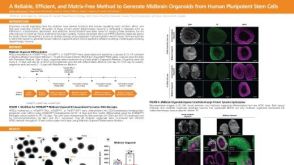 科学海报A Reliable, Efficient, and Matrix-Free Method to Generate Midbrain Organoids from Human Pluripotent Stem Cells

 沪公网安备31010102008431号