Sarugaser R et al. ( 2009)
Methods in molecular biology (Clifton,N.J.) 482 269--79
Isolation, propagation, and characterization of human umbilical cord perivascular cells (HUCPVCs).
Current sources of mesenchymal cells,including bone marrow,fat and muscle,all require invasive procurement procedures,and provide relatively low frequencies of progenitors. Here,we describe the non-invasive isolation,and characterization,of a rich source of mesenchymal progenitor cells,which we call human umbilical cord perivascular cells (HUCPVCs). HUCPVCs show a similar immunological phenotype to bone marrow-derived mesenchymal stromal cells (BM-MSCs),since they are non-alloreactive,exhibit immunosuppression,and significantly reduce lymphocyte activation,in vitro. They present a non-hematopoietic myofibroblastic mesenchymal phenotype (CD45-,CD34-,CD105+,CD73+,CD90+,CD44+,CD106+,3G5+,CD146+); with a 1:300 frequency at harvest,a short-doubling time,and a clonogenic frequency of textgreater1:3 in culture. Furthermore,in addition to robust quinti-potential differentiation capacity in vitro,HUCPVCs have been shown to contribute to both musculo-skeletal and dermal wound healing in vivo.
View Publication
产品类型:
产品号#:
07930
07931
07940
07952
07955
07959
100-1061
产品名:
CryoStor® CS10
CryoStor® CS10
CryoStor® CS10
CryoStor® CS10
CryoStor® CS10
CryoStor® CS10
CryoStor® CS10
Agarwal S et al. (MAR 2010)
Nature 464 7286 292--6
Telomere elongation in induced pluripotent stem cells from dyskeratosis congenita patients.
Patients with dyskeratosis congenita (DC),a disorder of telomere maintenance,suffer degeneration of multiple tissues. Patient-specific induced pluripotent stem (iPS) cells represent invaluable in vitro models for human degenerative disorders like DC. A cardinal feature of iPS cells is acquisition of indefinite self-renewal capacity,which is accompanied by induction of the telomerase reverse transcriptase gene (TERT). We investigated whether defects in telomerase function would limit derivation and maintenance of iPS cells from patients with DC. Here we show that reprogrammed DC cells overcome a critical limitation in telomerase RNA component (TERC) levels to restore telomere maintenance and self-renewal. We discovered that TERC upregulation is a feature of the pluripotent state,that several telomerase components are targeted by pluripotency-associated transcription factors,and that in autosomal dominant DC,transcriptional silencing accompanies a 3' deletion at the TERC locus. Our results demonstrate that reprogramming restores telomere elongation in DC cells despite genetic lesions affecting telomerase,and show that strategies to increase TERC expression may be therapeutically beneficial in DC patients.
View Publication
产品类型:
产品号#:
85850
85857
产品名:
mTeSR™1
mTeSR™1
Kunisato A et al. (JAN 2011)
Stem cells and development 20 1 159--168
Direct generation of induced pluripotent stem cells from human nonmobilized blood.
The use of induced pluripotent stem cells (iPSCs) is an exciting frontier in the study and treatment of human diseases through the generation of specific cell types. Here we show the derivation of iPSCs from human nonmobilized peripheral blood (PB) and bone marrow (BM) mononuclear cells (MNCs) by retroviral transduction of OCT3/4,SOX2,KLF4,and c-MYC. The PB- and BM-derived iPSCs were quite similar to human embryonic stem cells with regard to morphology,expression of surface antigens and pluripotency-associated transcription factors,global gene expression profiles,and differentiation potential in vitro and in vivo. Infected PB and BM MNCs gave rise to iPSCs in the presence of several cytokines,although transduction efficiencies were not high. We found that 5 × 10(5) PB MNCs,which corresponds to less than 1 mL of PB,was enough for the generation of several iPSC colonies. Generation of iPSCs from MNCs of nonmobilized PB,with its relative efficiency and ease of harvesting,could enable the therapeutic use of patient-specific pluripotent stem cells.
View Publication
产品类型:
产品号#:
85850
85857
产品名:
mTeSR™1
mTeSR™1
Deville L et al. (MAY 2011)
Molecular cancer therapeutics 10 5 711--9
Imatinib mesylate has shown remarkable efficacy in the treatment of patients in the chronic phase of chronic myeloid leukemia. However,despite an overall significant hematological and cytogenetic response,imatinib therapy may favor the emergence of drug-resistant clones,ultimately leading to relapse. Some imatinib resistance mechanisms had not been fully elucidated yet. In this study we used sensitive and resistant sublines from a Bcr-Abl positive cell line to investigate the putative involvement of telomerase in the promotion of imatinib resistance. We showed that sensitivity to imatinib can be partly restored in imatinib-resistant cells by targeting telomerase expression,either by the introduction of a dominant-negative form of the catalytic protein subunit of the telomerase (hTERT) or by the treatment with all-trans-retinoic acid,a clinically used drug. Furthermore,we showed that hTERT overexpression favors the development of imatinib resistance through both its antiapoptotic and telomere maintenance functions. Therefore,combining antitelomerase strategies to imatinib treatment at the beginning of the treatment should be promoted to reduce the risk of imatinib resistance development and increase the probability of eradicating the disease.
View Publication
产品类型:
产品号#:
04230
产品名:
MethoCult™H4230
Olmer R et al. (OCT 2012)
Tissue engineering. Part C,Methods 18 10 772--784
Suspension culture of human pluripotent stem cells in controlled, stirred bioreactors
Therapeutic and industrial applications of pluripotent stem cells and their derivatives require large cell quantities generated in defined conditions. To this end,we have translated single cell-inoculated suspension cultures of human pluripotent stem cells (hPSCs; including human induced pluripotent stem cells [hiPS] and human embryonic stem cells [hESC]) to stirred tank bioreactors. These systems that are widely used in biopharmaceutical industry allow straightforward scale up and detailed online monitoring of key process parameters. To ensure minimum medium consumption,but in parallel functional integration of all probes mandatory for process monitoring,that is,for pO₂ and pH,experiments were performed in 100 mL culture volume in a mini reactor platform" consisting of four independently controlled vessels. By establishing defined parameters for tightly controlled cell inoculation and aggregate formation up to 2×10�?� hiPSCs/100 mL were generated in a single process run in 7 days. Expression of pluripotency markers and ability of cells to differentiate into derivates of all three germ layers in vitro was maintained�
View Publication
产品类型:
产品号#:
85850
85857
产品名:
mTeSR™1
mTeSR™1
Deng F et al. ( 2012)
Molecular vision 18 2871
Generation of induced pluripotent stem cells from human Tenon's capsule fibroblasts.
PURPOSE This study aimed to develop a feasible and efficient method for generating embryonic stem cell (ESC)-like induced pluripotent stem (iPS) cells from human Tenon's capsule fibroblasts (HTFs) through the expression of a defined set of transcription factors,which will have significant application value for ophthalmic personalized regenerative medicine. METHODS HTFs were harvested from fresh samples,and reprogramming was induced by the exogenous expression of the four classic transcription factors,OCT-3/4,SOX-2,KLF-4,and C-MYC. The HTF-derived iPS (TiPS) cells were analyzed with phase contrast microscopy,real-time PCR,immunofluorescence,FACS analysis,alkaline phosphatase activity analysis,and a teratoma formation assay. Human ESC colonies were used as the positive control. RESULTS The resulting HTF-derived iPS cell colonies were indistinguishable from human ESC colonies regarding morphology,gene expression levels,pluripotent gene expression,alkaline phosphatase activity,and the ability to generate all three embryonic germ layers. CONCLUSIONS This study presents a simple,efficient,practical procedure for generating patient-tailored iPS cells from HTFs. These cells will serve as a valuable and preferred candidate donor cell population for ophthalmological regenerative medicine.
View Publication
产品类型:
产品号#:
85850
85857
产品名:
mTeSR™1
mTeSR™1
Bershteyn M et al. (MAR 2014)
Nature 507 7490 99--103
Cell-autonomous correction of ring chromosomes in human induced pluripotent stem cells.
Ring chromosomes are structural aberrations commonly associated with birth defects,mental disabilities and growth retardation. Rings form after fusion of the long and short arms of a chromosome,and are sometimes associated with large terminal deletions. Owing to the severity of these large aberrations that can affect multiple contiguous genes,no possible therapeutic strategies for ring chromosome disorders have been proposed. During cell division,ring chromosomes can exhibit unstable behaviour leading to continuous production of aneuploid progeny with low viability and high cellular death rate. The overall consequences of this chromosomal instability have been largely unexplored in experimental model systems. Here we generated human induced pluripotent stem cells (iPSCs) from patient fibroblasts containing ring chromosomes with large deletions and found that reprogrammed cells lost the abnormal chromosome and duplicated the wild-type homologue through the compensatory uniparental disomy (UPD) mechanism. The karyotypically normal iPSCs with isodisomy for the corrected chromosome outgrew co-existing aneuploid populations,enabling rapid and efficient isolation of patient-derived iPSCs devoid of the original chromosomal aberration. Our results suggest a fundamentally different function for cellular reprogramming as a means of /`chromosome therapy/' to reverse combined loss-of-function across many genes in cells with large-scale aberrations involving ring structures. In addition,our work provides an experimentally tractable human cellular system for studying mechanisms of chromosomal number control,which is of critical relevance to human development and disease.
View Publication
产品类型:
产品号#:
85850
85857
产品名:
mTeSR™1
mTeSR™1
Lee Y-KK et al. (JAN 2016)
International journal of cardiology 203 964--971
Efficient attenuation of Friedreich's ataxia (FRDA) cardiomyopathy by modulation of iron homeostasis-human induced pluripotent stem cell (hiPSC) as a drug screening platform for FRDA.
BACKGROUND Friedreich's ataxia (FRDA),a recessive neurodegenerative disorder commonly associated with hypertrophic cardiomyopathy,is caused by silencing of the frataxin (FXN) gene encoding the mitochondrial protein involved in iron-sulfur cluster biosynthesis. METHODS Application of our previously established FRDA human induced pluripotent stem cell (hiPSC) derived cardiomyocytes model as a platform to assess the efficacy of treatment with either the antioxidant coenzyme Q10 analog,idebenone (IDE) or the iron chelator,deferiprone (DFP),which are both under clinical trial. RESULTS DFP was able to more significantly suppress synthesis of reactive oxygen species (ROS) than IDE at the dosages of 25 $\$ and 10nM respectively which agreed with the reduced rate of intracellular accumulation of iron by DFP treatment from 25 to 50 $\$ With regard to cardiac electrical-contraction (EC) coupling function,decay velocity of calcium handling kinetics in FRDA-hiPSC-cardiomyocytes was significantly improved by DFP treatment but not by IDE. Further mechanistic studies revealed that DFP also modulated iron induced mitochondrial stress as reflected by mitochondria network disorganization and decline level of respiratory chain protein,succinate dehydrogenase (CxII) and cytochrome c oxidase (COXIV). In addition,iron-response protein (IRP-1) regulatory loop was overridden by DFP as reflected by resumed level of ferritin (FTH) back to basal level and the attenuated transferrin receptor (TSFR) mRNA level suppression thereby reducing further iron uptake. CONCLUSIONS DFP modulated iron homeostasis in FRDA-hiPSC-cardiomyocytes and effectively relieved stress-stimulation related to cardiomyopathy. The resuming of redox condition led to the significantly improved cardiac prime events,cardiac electrical-coupling during contraction.
View Publication
产品类型:
产品号#:
85850
85857
产品名:
mTeSR™1
mTeSR™1
Wiedemann A et al. (DEC 2012)
Cellular reprogramming 14 6 485--496
Induced pluripotent stem cells generated from adult bone marrow-derived cells of the nonhuman primate (Callithrix jacchus) using a novel quad-cistronic and excisable lentiviral vector.
Regenerative medicine is in need of solid,large animal models as a link between rodents and humans to evaluate the functionality,immunogenicity,and clinical safety of stem cell-derived cell types. The common marmoset (Callithrix jacchus) is an excellent large animal model,genetically close to humans and readily used worldwide in clinical research. Until now,only two groups showed the generation of induced pluripotent stem cells (iPSCs) from the common marmoset using integrating retroviral vectors. Therefore,we reprogrammed bone marrow-derived mesenchymal cells (MSCs) of adult marmosets in the presence of TAV,SB431542,PD0325901,and ascorbic acid via a novel,excisable lentiviral spleen focus-forming virus (SFFV)-driven quad-cistronic vector system (OCT3/4,KLF4,SOX2,C-MYC). Endogenous pluripotency markers like OCT3/4,KLF4,SOX2,C-MYC,LIN28,NANOG,and strong alkaline phosphatase signals were detected. Exogenous genes were silenced and additionally the cassette was removed with a retroviral Gag precursor system. The cell line could be cultured in absence of leukemia inhibitory factor (LIF) and basic fibroblast growth factor (bFGF) and could be successfully differentiated into embryoid bodies and teratomas with presence of all three germ layers. Directed differentiation generated neural progenitors,megakaryocytes,adipocytes,chondrocytes,and osteogenic cells. Thus,all criteria for fully reprogrammed bone marrow-MSCs of a nonhuman primate with a genetically sophisticated construct could be demonstrated. These cells will be a promising tool for future autologous transplantations.
View Publication
Lin H et al. (JAN 2003)
Stem cells (Dayton,Ohio) 21 2 152--61
Multilineage potential of homozygous stem cells derived from metaphase II oocytes.
Human stem cells derived from human fertilized oocytes,fetal primordial germ cells,umbilical cord blood,and adult tissues provide potential cell-based therapies for repair of degenerating or damaged tissues. However,the diversity of major histocompatibility complex (MHC) antigens in the general population and the resultant risk of immune-mediated rejection complicates the allogenic use of established stem cells. We assessed an alternative approach,employing chemical activation of nonfertilized metaphase II oocytes for producing stem cells homozygous for MHC. By using F1 hybrid mice (H-2-B/D),we established stem cell lines homozygous for H-2-B and H-2-D,respectively. The undifferentiated cells retained a normal karyotype,expressed stage-specific embryonic antigen-1 and Oct4,and were positive for alkaline phosphatase and telomerase. Teratomatous growth of these cells displayed the development of a variety of tissue types encompassing all three germ layers. In addition,these cells demonstrated the potential for in vitro differentiation into endoderm,neuronal,and hematopoietic lineages. We also evaluated this homozygous stem cell approach in human tissue. Five unfertilized blastocysts were derived from a total of 25 human oocytes,and cells from one of the five hatched blastocysts proliferated and survived beyond two passages. Our studies demonstrate a plausible homozygous stem cell" approach for deriving pluripotent stem cells that can overcome the immune-mediated rejection response common in allotransplantation�
View Publication
产品类型:
产品号#:
03434
03444
产品名:
MethoCult™GF M3434
MethoCult™GF M3434
O'Reilly D et al. (FEB 2013)
Genome Research 23 2 281--291
Differentially expressed, variant U1 snRNAs regulate gene expression in human cells
Human U1 small nuclear (sn)RNA,required for splicing of pre-mRNA,is encoded by genes on chromosome 1 (1p36). Imperfect copies of these U1 snRNA genes,also located on chromosome 1 (1q12-21),were thought to be pseudogenes. However,many of these variant" (v)U1 snRNA genes produce fully processed transcripts. Using antisense oligonucleotides to block the activity of a specific vU1 snRNA in HeLa cells�
View Publication


 EasySep™小鼠TIL(CD45)正选试剂盒




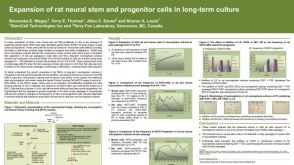 科学海报Expansion of Rat Neural Stem and Progenitor Cells in Long-Term Culture
 沪公网安备31010102008431号