Yang L et al. (NOV 2014)
Nature communications 5 5507
Targeted and genome-wide sequencing reveal single nucleotide variations impacting specificity of Cas9 in human stem cells.
CRISPR/Cas9 has demonstrated a high-efficiency in site-specific gene targeting. However,potential off-target effects of the Cas9 nuclease represent a major safety concern for any therapeutic application. Here,we knock out the Tafazzin gene by CRISPR/Cas9 in human-induced pluripotent stem cells with 54% efficiency. We combine whole-genome sequencing and deep-targeted sequencing to characterise the off-target effects of Cas9 editing. Whole-genome sequencing of Cas9-modified hiPSC clones detects neither gross genomic alterations nor elevated mutation rates. Deep sequencing of in silico predicted off-target sites in a population of Cas9-treated cells further confirms high specificity of Cas9. However,we identify a single high-efficiency off-target site that is generated by a common germline single-nucleotide variant (SNV) in our experiment. Based on in silico analysis,we estimate a likelihood of SNVs creating off-target sites in a human genome to be ˜1.5-8.5%,depending on the genome and site-selection method,but also note that mutations might be generated at these sites only at low rates and may not have functional consequences. Our study demonstrates the feasibility of highly specific clonal ex vivo gene editing using CRISPR/Cas9 and highlights the value of whole-genome sequencing before personalised CRISPR design.
View Publication
Vanneaux V et al. (JAN 2010)
Cell transplantation 19 9 1143--55
In vitro and in vivo analysis of endothelial progenitor cells from cryopreserved umbilical cord blood: are we ready for clinical application?
Umbilical cord blood (CB) represents a main source of circulating endothelial progenitor cells (cEPCs). In view of their clinical use,in either the autologous or allogeneic setting,cEPCs should likely be expanded from CB kept frozen in CB banks. In this study,we compared the expansion,functional features,senescence pattern over culture,and in vivo angiogenic potential of cEPCs isolated from fresh or cryopreserved CB (cryoCB). cEPCs could be isolated in only 59% of cryoCB compared to 94% for fresh CB,while CB units were matched in terms of initial volume,nucleated and CD34(+) cell number. Moreover,the number of endothelial colony-forming cells was significantly decreased when using cryoCB. Once cEPCs culture was established,the proliferation,migration,tube formation,and acetylated-LDL uptake potentials were similar in both groups. In addition,cEPCs derived from cryoCB displayed the same senescence status and telomeres length as that of cEPCs derived from fresh CB. Karyotypic aberrations were found in cells obtained from both fresh and cryoCB. In vivo,in a hind limb ischemia murine model,cEPCs from fresh and cryoCB were equally efficient to induce neovascularization. Thus,cEPCs isolated from cryoCB exhibited similar properties to those of fresh CB in vitro and in vivo. However,the low frequency of cEPCs colony formation after cryopreservation shed light on the need for specific freezing conditions adapted to cEPCs in view of their future clinical use.
View Publication
产品类型:
产品号#:
15026
15066
产品名:
RosetteSep™ 人造血祖细胞富集抗体混合物
RosetteSep™人造血祖细胞富集抗体混合物
Zhang J et al. ( 2016)
International Journal of Biological Sciences 12 6 639--652
Dimethyloxaloylglycine promotes the angiogenic activity of mesenchymal stem cells derived from iPSCs via activation of the PI3K/Akt pathway for bone regeneration
The vascularization of tissue-engineered bone is a prerequisite step for the successful repair of bone defects. Hypoxia inducible factor-1$$ (HIF-1$$) plays an essential role in angiogenesis-osteogenesis coupling during bone regeneration and can activate the expression of angiogenic factors in mesenchymal stem cells (MSCs). Dimethyloxaloylglycine (DMOG) is an angiogenic small molecule that can inhibit prolyl hydroxylase (PHD) enzymes and thus regulate the stability of HIF-1$$ in cells at normal oxygen tension. Human induced pluripotent stem cell-derived MSCs (hiPSC-MSCs) are promising alternatives for stem cell therapy. In this study,we evaluated the effect of DMOG on promoting hiPSC-MSCs angiogenesis in tissue-engineered bone and simultaneously explored the underlying mechanisms in vitro. The effectiveness of DMOG in improving the expression of HIF-1$$ and its downstream angiogenic genes in hiPSC-MSCs demonstrated that DMOG significantly enhanced the gene and protein expression profiles of angiogenic-related factors in hiPSC-MSCs by sustaining the expression of HIF-1$$. Further analysis showed that DMOG-stimulated hiPSC-MSCs angiogenesis was associated with the phosphorylation of protein kinase B (Akt) and with an increase in VEGF production. The effects could be blocked by the addition of the phosphatidylinositol 3-kinase (PI3K) inhibitor LY294002. In a critical-sized calvarial defect model in rats,DMOG-treated hiPSC-MSCs showed markedly improved angiogenic capacity in the tissue-engineered bone,leading to bone regeneration. Collectively,the results indicate that DMOG,via activation of the PI3K/Akt pathway,promotes the angiogenesis of hiPSC-MSCs in tissue-engineered bone for bone defect repair and that DMOG-treated hiPSC-MSCs can be exploited as a potential therapeutic tool in bone regeneration.
View Publication
产品类型:
产品号#:
85850
85857
产品名:
mTeSR™1
mTeSR™1
Khan M et al. (JUL 2013)
Biomaterials 34 21 5336--5343
Delivery of reprogramming factors into fibroblasts for generation of non-genetic induced pluripotent stem cells using a cationic bolaamphiphile as a non-viral vector
Protein delivery allows a clinical effect to be directly realized without genetic modification of the host cells. We have developed a cationic bolaamphiphile as a non-viral vector for protein delivery application. The relatively low toxicity and efficient protein delivery by the cationic bolaamphiphile prompted us to test the system for the generation of induced pluripotent stem cells (iPSCs) as an alternative to the conventional vector-based genetic approach. Studies on the kinetics and cytotoxicity of the protein delivery system led us to use an optimized cationic bolaamphiphile-protein complex ratio of 7:1 (wt/wt) and a 3 h period of incubation with human fibroblasts,to ensure complete and non-toxic protein delivery of the reprogramming proteins. The reprogrammed cells were shown to exhibit the characteristics of embryonic stem cells,including expression of pluripotent markers,teratoma formation in SCID mice,and ability to be differentiated into a specific lineage,as exemplified by neuronal differentiation.
View Publication
Xu L et al. (SEP 2010)
Stem cell reviews 6 3 398--404
The iPS technique provides hope for Parkinson's disease treatment.
More recently,reprogramming of somatic cells to an embryonic stem cell-like state presents a milestone in the realm of stem cells,making it possible to derive all cell types from any patients bearing specific genetic mutations. With the development of induced pluripotent stem (iPS) cells,we are now able to use the derivatives of iPS cells to study the mechanisms of disease and to perform drug screening and toxicology testing. In addition,differentiated iPS cells are now close to be used in clinical practice. Here we review the progress of iPS technique and the possible application in the area of Parkinson's disease treatment.
View Publication
产品类型:
产品号#:
85850
85857
产品名:
mTeSR™1
mTeSR™1
Nguyen AT et al. (JUN 2011)
Blood 117 25 6912--22
DOT1L, the H3K79 methyltransferase, is required for MLL-AF9-mediated leukemogenesis.
Chromosomal translocations of the mixed lineage leukemia (MLL) gene are a common cause of acute leukemias. The oncogenic function of MLL fusion proteins is,in part,mediated through aberrant activation of Hoxa genes and Meis1,among others. Here we demonstrate using a tamoxifen-inducible Cre-mediated loss of function mouse model that DOT1L,an H3K79 methyltransferase,is required for both initiation and maintenance of MLL-AF9-induced leukemogenesis in vitro and in vivo. Through gene expression and chromatin immunoprecipitation analysis we demonstrate that mistargeting of DOT1L,subsequent H3K79 methylation,and up-regulation of Hoxa and Meis1 genes underlie the molecular mechanism of how DOT1L contributes to MLL-AF9-mediated leukemogenesis. Our study not only provides the first in vivo evidence for the function of DOT1L in leukemia,but also reveals the molecular mechanism for DOT1L in MLL-AF9 mediated leukemia. Thus,DOT1L may serve as a potential therapeutic target for the treatment of leukemia caused by MLL translocations.
View Publication
产品类型:
产品号#:
03534
产品名:
MethoCult™GF M3534
Fu X et al. (AUG 2010)
Tissue engineering. Part C,Methods 16 4 719--733
Autologous feeder cells from embryoid body outgrowth support the long-term growth of human embryonic stem cells more effectively than those from direct differentiation.
Autologous feeder cells have been developed by various methods to minimize the presence of xenogenic entities in human embryonic stem cell (hESC) cultures. However,there was no systematic comparison of supportive effects of the feeder cells on hESC growth,nor comparison to the supportive effects of various feeder-free culture systems and standard mouse feeder cells. In this study,we aimed to compare the supportive abilities of autologous feeders derived either directly from H9 hESCs (H9 dF) or from outgrowth of embryoid body predifferentiated in suspension from H9 hESCs (H9 ebF). Mouse feeder system and matrigel-mTeSR1 feeder-free system were used as controls. H9 ebF was found to secrete more basic fibroblast growth factor in the conditioned medium than H9 dF did. The undifferentiated state of H9 hESCs was sustained more stably on H9 ebF than on H9 dF,and the differentiation potential of H9 hESCs on H9 ebF was higher than on H9 dF. We concluded that H9 ebF was an optimal autologous feeder to maintain the long-term undifferentiated state of hESCs in our current culture system. This study helps to standardize the autologous culture of hESCs. It also suggests a more definite direction for future development of xeno-free culture system for hESCs.
View Publication
产品类型:
产品号#:
85850
85857
产品名:
mTeSR™1
mTeSR™1
Sareen D et al. (AUG 2014)
Journal of Comparative Neurology 522 12 2707--2728
Human induced pluripotent stem cells are a novel source of neural progenitor cells (iNPCs) that migrate and integrate in the rodent spinal cord
Transplantation of human neural progenitor cells (NPCs) into the brain or spinal cord to replace lost cells,modulate the injury environment,or create a permissive milieu to protect and regenerate host neurons is a promising therapeutic strategy for neurological diseases. Deriving NPCs from human fetal tissue is feasible,although problematic issues include limited sources and ethical concerns. Here we describe a new and abundant source of NPCs derived from human induced pluripotent stem cells (iPSCs). A novel chopping technique was used to transform adherent iPSCs into free-floating spheres that were easy to maintain and were expandable (EZ spheres) (Ebert et al. [2013] Stem Cell Res 10:417–427). These EZ spheres could be differentiated towards NPC spheres with a spinal cord phenotype using a combination of all-trans retinoic acid (RA) and epidermal growth factor (EGF) and fibroblast growth factor-2 (FGF-2) mitogens. Suspension cultures of NPCs derived from human iPSCs or fetal tissue have similar characteristics,although they were not similar when grown as adherent cells. In addition,iPSC-derived NPCs (iNPCs) survived grafting into the spinal cord of athymic nude rats with no signs of overgrowth and with a very similar profile to human fetal-derived NPCs (fNPCs). These results suggest that human iNPCs behave like fNPCs and could thus be a valuable alternative for cellular regenerative therapies of neurological diseases. J. Comp. Neurol. 522:2707–2728,2014. textcopyright 2014 Wiley Periodicals,Inc.
View Publication
产品类型:
产品号#:
85850
85857
产品名:
mTeSR™1
mTeSR™1
Karagiannidou A et al. (FEB 2014)
Cellular reprogramming 16 1 1--8
Mesenchymal Derivatives of Genetically Unstable Human Embryonic Stem Cells Are Maintained Unstable but Undergo Senescence in Culture As Do Bone Marrow–Derived Mesenchymal Stem Cells
Recurrent chromosomal alterations have been repeatedly reported in cultured human embryonic stem cells (hESCs). The effects of these alterations on the capability of pluripotent cells to differentiate and on growth potential of their specific differentiated derivatives remain unclear. Here,we report that the hESC lines HUES-7 and -9 carrying multiple chromosomal alterations produce in vitro mesenchymal stem cells (MSCs) that show progressive growth arrest and enter senescence after 15 and 16 passages,respectively. There was no difference in their proliferative potential when compared with bone marrow-derived MSCs. Array comparative genomic hybridization analysis (aCGH) of hESCs and their mesenchymal derivatives revealed no significant differences in chromosomal alterations,suggesting that genetically altered hESCs are not selected out during differentiation. Our findings indicate that genetically unstable hESCs maintain their capacity to differentiate in vitro into MSCs,which exhibit an in vitro growth pattern of normal MSCs and not that of transformed cells.
View Publication


 EasySep™小鼠TIL(CD45)正选试剂盒




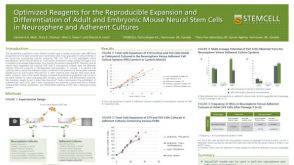 科学海报Optimized Reagents for the Reproducible Expansion and Differentiation of Adult and Embryonic Mouse Neural Stem Cells in Neurosphere and Adherent Cultures
 产品手册NeuroCult™: Reagents for Brain Tumor Stem Cell Research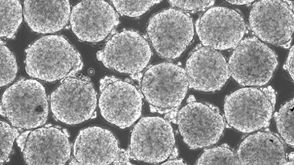

 沪公网安备31010102008431号