In Vitro Modeling of Alcohol-Induced Liver Injury using Human-Induced Pluripotent Stem Cells
Alcohol consumption has long been associated with a majority of liver diseases and has been found to influence both fetal and adult liver functions. In spite of being one of the major causes of morbidity and mortality in the world,currently,there are no effective strategies that can prevent or treat alcoholic liver disease (ALD),due to a lack of human-relevant research models. Recent success in generation of functionally active mature hepatocyte-like cells from human-induced pluripotent cells (iPSCs) enables us to better understand the effects of alcohol on liver functions. Here,we describe the method and effect of alcohol exposure on multistage hepatic cell types derived from human iPSCs,in an attempt to recapitulate the early stages of liver tissue injury associated with ALD. We exposed different stages of iPSC-induced hepatic cells to ethanol at a pathophysiological concentration. In addition to stage-specific molecular markers,we measured several key cellular parameters of hepatocyte injury,including apoptosis,proliferation,and lipid accumulation.
View Publication
Formation of embryoid bodies from human pluripotent stem cells using AggreWell™ plates.
Many human embryonic stem (hES) and induced pluripotent stem (hiPS) cell differentiation protocols begin with the formation of three-dimensional aggregates of cells called embryoid bodies (EBs). Traditional EB formation methods result in a heterogeneous population of EB sizes and shapes,which then undergo heterogeneous differentiation efficiencies. AggreWell(TM)400 and AggreWell(TM)800 use the spin-EB method to force the aggregation of a defined number of cells,thereby controlling EB size and generating a population of uniform EBs. Moreover,the dense array of microwells on the bottom surface of AggreWell(TM)400 provide for the rapid and simple production of thousands of EBs at a time.
View Publication
产品类型:
产品号#:
85850
85857
产品名:
mTeSR™1
mTeSR™1
Thatava T et al. (JAN 2013)
Molecular therapy : the journal of the American Society of Gene Therapy 21 1 228--239
Intrapatient variations in type 1 diabetes-specific iPS cell differentiation into insulin-producing cells.
Nuclear reprogramming of adult somatic tissue enables embryo-independent generation of autologous,patient-specific induced pluripotent stem (iPS) cells. Exploiting this emergent regenerative platform for individualized medicine applications requires the establishment of bioequivalence criteria across derived pluripotent lines and lineage-specified derivatives. Here,from individual patients with type 1 diabetes (T1D) multiple human iPS clones were produced and prospectively screened using a battery of developmental markers to assess respective differentiation propensity and proficiency in yielding functional insulin (INS)-producing progeny. Global gene expression profiles,pluripotency expression patterns,and the capacity to differentiate into SOX17- and FOXA2-positive definitive endoderm (DE)-like cells were comparable among individual iPS clones. However,notable intrapatient variation was evident upon further guided differentiation into HNF4α- and HNF1β-expressing primitive gut tube,and INS- and glucagon (GCG)-expressing islet-like cells. Differential dynamics of pluripotency-associated genes and pancreatic lineage-specifying genes underlined clonal variance. Successful generation of glucose-responsive INS-producing cells required silencing of stemness programs as well as the induction of stage-specific pancreatic transcription factors. Thus,comprehensive fingerprinting of individual clones is mandatory to secure homogenous pools amenable for diagnostic and therapeutic applications of iPS cells from patients with T1D.
View Publication
产品类型:
产品号#:
85850
85857
产品名:
mTeSR™1
mTeSR™1
Kearns Na et al. (JAN 2014)
Development (Cambridge,England) 141 1 219--223
Cas9 effector-mediated regulation of transcription and differentiation in human pluripotent stem cells.
The identification of the trans-acting factors and cis-regulatory modules that are involved in human pluripotent stem cell (hPSC) maintenance and differentiation is necessary to dissect the operating regulatory networks in these processes and thereby identify nodes where signal input will direct desired cell fate decisions in vitro or in vivo. To deconvolute these networks,we established a method to influence the differentiation state of hPSCs with a CRISPR-associated catalytically inactive dCas9 fused to an effector domain. In human embryonic stem cells,we find that the dCas9 effectors can exert positive or negative regulation on the expression of developmentally relevant genes,which can influence cell differentiation status when impinging on a key node in the regulatory network that governs the cell state. This system provides a platform for the interrogation of the underlying regulators governing specific differentiation decisions,which can then be employed to direct cellular differentiation down desired pathways.
View Publication
产品类型:
产品号#:
85850
85857
产品名:
mTeSR™1
mTeSR™1
Wang X et al. (APR 2014)
PLoS ONE 9 4 e93575
Precise gene modification mediated by TALEN and single-stranded oligodeoxynucleotides in human cells.
The development of human embryonic stem cells (ESCs) and induced pluripotent stem cells (iPSCs) facilitates in vitro studies of human disease mechanisms,speeds up the process of drug screening,and raises the feasibility of using cell replacement therapy in clinics. However,the study of genotype-phenotype relationships in ESCs or iPSCs is hampered by the low efficiency of site-specific gene editing. Transcription activator-like effector nucleases (TALENs) spurred interest due to the ease of assembly,high efficiency and faithful gene targeting. In this study,we optimized the TALEN design to maximize its genomic cutting efficiency. We showed that using optimized TALENs in conjunction with single-strand oligodeoxynucleotide (ssODN) allowed efficient gene editing in human cells. Gene mutations and gene deletions for up to 7.8 kb can be accomplished at high efficiencies. We established human tumor cell lines and H9 ESC lines with homozygous deletion of the microRNA-21 (miR-21) gene and miR-9-2 gene. These cell lines provide a robust platform to dissect the roles these genes play during cell differentiation and tumorigenesis. We also observed that the endogenous homologous chromosome can serve as a donor template for gene editing. Overall,our studies demonstrate the versatility of using ssODN and TALEN to establish genetically modified cells for research and therapeutic application.
View Publication
产品类型:
产品号#:
85850
85857
产品名:
mTeSR™1
mTeSR™1
Lu Q et al. (DEC 2014)
PLoS ONE 9 12 e114949
Negligible immunogenicity of induced pluripotent stem cells derived from human skin fibroblasts
Human induced pluripotent stem cells (hiPSCs) have potential applications in cell replacement therapy and regenerative medicine. However,limited information is available regarding the immunologic features of iPSCs. In this study,expression of MHC and T cell co-stimulatory molecules in hiPSCs,and the effects on activation,proliferation and cytokine production in allogeneic human peripheral blood mononuclear cells were examined. We found that no-integrate hiPSCs had no MHC-II and T cell co-stimulatory molecules expressions but had moderate level of MHC-I and HLA-G expressions. In contrast to human skin fibroblasts (HSFs) which significantly induced allogeneic T cell activation and proliferation,hiPSCs failed to induce allogeneic CD45+ lymphocyte and CD8+ T cell activation and proliferation but could induce a low level of allogeneic CD4+ T cell proliferation. Unlike HSFs which induced allogeneic lymphocytes to produce high levels of IFN-γ,TNF-α and IL-17,hiPSCs only induced allogeneic lymphocytes to produce IL-2 and IL-10,and promote IL-10-secreting regulatory T cell (Treg) generation. Our study suggests that the integration-free hiPSCs had low or negligible immunogenicity,which may result from their induction of IL-10-secreting Treg.
View Publication
产品类型:
产品号#:
85850
85857
产品名:
mTeSR™1
mTeSR™1
Abdelwahab SF et al. (DEC 2003)
Proceedings of the National Academy of Sciences of the United States of America 100 25 15006--10
HIV-1-suppressive factors are secreted by CD4+ T cells during primary immune responses.
CD4+ T cells are required for immunity against many viral infections,including HIV-1 where a positive correlation has been observed between strong recall responses and low HIV-1 viral loads. Some HIV-1-specific CD4+ T cells are preferentially infected with HIV-1,whereas others escape infection by unknown mechanisms. One possibility is that some CD4+ T cells are protected from infection by the secretion of soluble HIV-suppressive factors,although it is not known whether these factors are produced during primary antigen-specific responses. Here,we show that soluble suppressive factors are produced against CXCR4 and CCR5 isolates of HIV-1 during the primary immune response of human CD4+ T cells. This activity requires antigenic stimulation of naïve CD4+ T cells. One anti-CXCR4 factor is macrophage-derived chemokine (chemokine ligand 22,CCL22),and anti-CCR5 factors include macrophage inflammatory protein-1 alpha (CCL3),macrophage inflammatory protein-1 beta (CCL4),and RANTES (regulated upon activation of normal T cells expressed and secreted) (CCL5). Intracellular staining confirms that CD3+CD4+ T cells are the source of the prototype HIV-1-inhibiting chemokines CCL22 and CCL4. These results show that CD4+ T cells secrete an evolving HIV-1-suppressive activity during the primary immune response and that this activity is comprised primarily of CC chemokines. The data also suggest that production of such factors should be considered in the design of vaccines against HIV-1 and as a mechanism whereby the host can control infections with this virus.
View Publication
产品类型:
产品号#:
09500
09600
09650
产品名:
BIT 9500血清替代物
StemSpan™ SFEM
StemSpan™ SFEM
Valenti MT et al. (DEC 2008)
Bone 43 6 1084--92
Gene expression analysis in osteoblastic differentiation from peripheral blood mesenchymal stem cells.
MSCs are known to have an extensive proliferative potential and ability to differentiate in various cell types. Osteoblastic differentiation from mesenchymal progenitor cells is an important step of bone formation,though the pattern of gene expression during differentiation is not yet well understood. Here,to investigate the possibility to obtain a model for in vitro bone differentiation using mesenchymal stem cells (hMSCs) from human subjects non-invasively,we developed a method to obtain hMSCs-like cells from peripheral blood by a two step method that included an enrichment of mononuclear cells followed by depletion of unwanted cells. Using these cells,we analyzed the expression of transcription factor genes (runt-related transcription factor 2 (RUNX2) and osterix (SP7)) and bone related genes (osteopontin (SPP1),osteonectin (SPARC) and collagen,type I,alpha 1 (COLIA1)) during osteoblastic differentiation. Our results demonstrated that hMSCs can be obtained from peripheral blood and that they are able to generate CFU-F and to differentiate in osteoblast and adipocyte; in this study,we also identified a possible gene expression timing during osteoblastic differentiation that provided a powerful tool to study bone physiology.
View Publication
产品类型:
产品号#:
15128
15168
产品名:
RosetteSep™人间充质干细胞富集抗体混合物
RosetteSep™人间充质干细胞富集抗体混合物
Li X et al. (MAR 2009)
Human reproduction (Oxford,England) 24 3 580--9
ROCK inhibitor improves survival of cryopreserved serum/feeder-free single human embryonic stem cells.
BACKGROUND Efficient slow freezing protocols within serum-free and feeder-free culture systems are crucial for the clinical application of human embryonic stem (hES) cells. Frequently,however,hES cells must be cryopreserved as clumps when using conventional slow freezing protocols,leading to lower survival rates during freeze-thaw and limiting their recovery and growth efficiency after thawing,as well as limiting downstream applications that require single cell suspensions. We describe a novel method to increase freeze-thaw survival and proliferation rate of single hES cells in serum-free and feeder-free culture conditions. METHODS hES cells maintained on Matrigel-coated dishes were dissociated into single cells with Accutase and slow freezing. After thawing at 37 degrees C,cells were cultured in mTeSR medium supplemented with 10 microM of Rho-associated kinase inhibitor Y-27632 for 1 day. RESULTS The use of Y-27632 and Accutase significantly increases the survival of single hES cells after thawing compared with a control group (P textless 0.01). Furthermore,by treatment of hES cell aggregates with EGTA to disrupt cell-cell interaction,we show that Y-27632 treatment does not directly affect hES cell apoptosis. Even in the presence of Y-27632,hES cells deficient in cell-cell interaction undergo apoptosis. Y-27632-treated freeze-thawed hES cells retain typical morphology,stable karyotype,expression of pluripotency markers and the potential to differentiate into derivatives of all three germ layers after long-term culture. CONCLUSIONS The method described here allows for cryopreservation of single hES cells in serum-free and feeder-free conditions and therefore we believe this method will be ideal for current and future hES cell applications that are targeted towards a therapeutic end-point.
View Publication
产品类型:
产品号#:
100-1044
72302
72304
72307
72308
85850
85857
产品名:
Y-27632(二盐酸盐)
Y-27632(二盐酸盐)
Y-27632(二盐酸盐)
Y-27632(二盐酸盐)
Y-27632(二盐酸盐)
mTeSR™1
mTeSR™1
Guan X et al. (JUL 2015)
Human gene therapy. Clinical development 150715074418003
Use of adeno-associated virus to enrich cardiomyocytes derived from human stem cells.
Cardiomyocytes derived from human induced pluripotent stem cells (iPSC) show great promise as autologous donor cells to treat heart disease. A major technical obstacle to this approach is that available induction methods often produce heterogeneous cell population with low percentage of cardiomyocytes. Here we describe a cardiac enrichment approach using non-integrating adeno-associated virus (AAV). We first examined several AAV serotypes for their ability to selectively transduce iPSC-derived cardiomyocytes. Result showed that AAV1 demonstrated the highest in vitro transduction efficiency among seven widely used serotypes. Next differentiated iPSC derivatives were transduced with drug-selectable AAV1 expressing neomycin resistance gene. Selection with G418 enriched the cardiac cell fraction from 27% to 57% in two weeks. Compared to other enrichment strategies such as integrative genetic selection,mitochondria labeling or surface marker cell sorting,this simple AAV method described herein bypasses antibody or dye labeling. These findings provide proof-of-concept for large-scale cardiomyocyte enrichment by exploiting AAV's intrinsic tissue tropism.
View Publication
产品类型:
产品号#:
85850
85857
产品名:
mTeSR™1
mTeSR™1
Marchetto MC BH et al. (JUL 2016)
Molecular psychiatry Mol Psychiatry.
Altered proliferation and networks in neural cells derived from idiopathic autistic individuals
Autism spectrum disorders (ASD) are common,complex and heterogeneous neurodevelopmental disorders. Cellular and molecular mechanisms responsible for ASD pathogenesis have been proposed based on genetic studies,brain pathology and imaging,but a major impediment to testing ASD hypotheses is the lack of human cell models. Here,we reprogrammed fibroblasts to generate induced pluripotent stem cells,neural progenitor cells (NPCs) and neurons from ASD individuals with early brain overgrowth and non-ASD controls with normal brain size. ASD-derived NPCs display increased cell proliferation because of dysregulation of a β-catenin/BRN2 transcriptional cascade. ASD-derived neurons display abnormal neurogenesis and reduced synaptogenesis leading to functional defects in neuronal networks. Interestingly,defects in neuronal networks could be rescued by insulin growth factor 1 (IGF-1),a drug that is currently in clinical trials for ASD. This work demonstrates that selection of ASD subjects based on endophenotypes unraveled biologically relevant pathway disruption and revealed a potential cellular mechanism for the therapeutic effect of IGF-1
View Publication


 EasySep™小鼠TIL(CD45)正选试剂盒




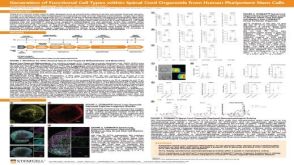 科学海报Generation of Functional 3D Spinal Cord Organoids from Human Pluripotent Stem Cells
 沪公网安备31010102008431号