Cassidy L et al. (MAY 2013)
Journal of Biomarkers 2013 3 1--7
Immunoreactivity of Pluripotent Markers SSEA-5 and L1CAM in Human Tumors, Teratomas, and Induced Pluripotent Stem Cells
Pluripotent stem cell markers can be useful for diagnostic evaluation of human tumors. The novel pluripotent marker stage-specific embryonic antigen-5 (SSEA-5) is expressed in undifferentiated human induced pluripotent cells (iPSCs),but little is known about SSEA-5 expression in other primitive tissues (e.g.,human tumors). We evaluated SSEA-5 immunoreactivity patterns in human tumors,cell lines,teratomas,and iPS cells together with another pluripotent cell surface marker L1 cell adhesion molecule (L1CAM). We tested two hypotheses: (1) SSEA-5 and L1CAM would be immunoreactive and colocalized in human tumors; (2) SSEA-5 and L1CAM immunoreactivity would persist in iPSCs following retinal differentiating treatment. SSEA-5 immunofluorescence was most pronounced in primitive tumors,such as embryonal carcinoma. In tumor cell lines,SSEA-5 was highly immunoreactive in Capan-1 cells,while L1CAM was highly immunoreactive in U87MG cells. SSEA-5 and L1CAM showed colocalization in undifferentiated iPSCs,with immunopositive iPSCs remaining after 20 days of retinal differentiating treatment. This is the first demonstration of SSEA-5 immunoreactivity in human tumors and the first indication of SSEA-5 and L1CAM colocalization. SSEA-5 and L1CAM warrant further investigation as potentially useful tumor markers for histological evaluation or as markers to monitor the presence of undifferentiated cells in iPSC populations prior to therapeutic use.
View Publication
产品类型:
产品号#:
85850
85857
产品名:
mTeSR™1
mTeSR™1
Chou S-J et al. ( 2016)
Scientific reports 6 23661
Impaired ROS Scavenging System in Human Induced Pluripotent Stem Cells Generated from Patients with MERRF Syndrome.
Myoclonus epilepsy associated with ragged-red fibers (MERRF) is a mitochondrial disorder characterized by myoclonus epilepsy,generalized seizures,ataxia and myopathy. MERRF syndrome is primarily due to an A to G mutation at mtDNA 8344 that disrupts the mitochondrial gene for tRNA(Lys). However,the detailed mechanism by which this tRNA(Lys) mutation causes mitochondrial dysfunction in cardiomyocytes or neurons remains unclear. In this study,we generated human induced pluripotent stem cells (hiPSCs) that carry the A8344G genetic mutation from patients with MERRF syndrome. Compared with mutation-free isogenic hiPSCs,MERRF-specific hiPSCs (MERRF-hiPSCs) exhibited reduced oxygen consumption,elevated reactive oxygen species (ROS) production,reduced growth,and fragmented mitochondrial morphology. We sought to investigate the induction ability and mitochondrial function of cardiomyocyte-like cells differentiated from MERRF-hiPSCs. Our data demonstrate that that cardiomyocyte-like cells (MERRF-CMs) or neural progenitor cells (MERRF-NPCs) differentiated from MERRF-iPSCs also exhibited increased ROS levels and altered antioxidant gene expression. Furthermore,MERRF-CMs or -NPCs contained fragmented mitochondria,as evidenced by MitoTracker Red staining and transmission electron microscopy. Taken together,these findings showed that MERRF-hiPSCs and MERRF-CM or -NPC harboring the A8344G genetic mutation displayed contained mitochondria with an abnormal ultrastructure,produced increased ROS levels,and expressed upregulated antioxidant genes.
View Publication
产品类型:
产品号#:
85850
85857
产品名:
mTeSR™1
mTeSR™1
Begum AN et al. (SEP 2016)
Neurotoxicology 57 45--53
Silver nanoparticles exhibit coating and dose-dependent neurotoxicity in glutamatergic neurons derived from human embryonic stem cells.
Silver nanoparticles (AgNPs) are used extensively as anti-microbial agents in various products,but little is known about their potential neurotoxic effects. In this study,we used glutamatergic neurons derived from human embryonic stem cells as a cellular model to study 20nm citrate-coated AgNPs (AgSCs) and Polyvinylpyrrolidone-coated AgNPs (AgSPs) induced neurotoxicity. AgSCs significantly damaged neurite outgrowths; increased the production of reactive oxygen species and Ca(2+) influxes; reduced the expression of MAP2,PSD95,vGlut1 and NMDA receptor proteins at concentrations as low as 0.1μg/ml. In contrast,AgSPs exhibited neurotoxicity only at higher concentration. Furthermore,our results showed that AgSCs induced glutamate excitotoxicity by the activation of calmodulin and the induction of nitric oxide synthase; increased the phosphorylation of glycogen synthase kinase-3 α/β at Tyr(216) and Tau at Ser(396) and reduced the expression of Tau46,which are typically observed in Alzheimer's disease. This study indicated that stem cells can provide an excellent platform for studying nanoparticle induced neurotoxicity.
View Publication
产品类型:
产品号#:
85850
85857
产品名:
mTeSR™1
mTeSR™1
Speidel A et al. ( 2016)
PloS one 11 11 e0165949
Leucine-Rich Repeat Kinase 2 Influences Fate Decision of Human Monocytes Differentiated from Induced Pluripotent Stem Cells.
Mutations in Leucine-rich repeat kinase 2 (LRRK2) are strongly associated with familial Parkinson's disease (PD). High expression levels in immune cells suggest a role of LRRK2 in regulating the immune system. In this study,we investigated the effect of the LRRK2 (G2019S) mutation in monocytes,using a human stem cell-derived model expressing LRRK2 at endogenous levels. We discovered alterations in the differentiation pattern of LRRK2 mutant,compared to non-mutant isogenic controls,leading to accelerated monocyte production and a reduction in the non-classical CD14+CD16+ monocyte subpopulation in the LRRK2 mutant cells. LPS-treatment of the iPSC-derived monocytes significantly increased the release of pro-inflammatory cytokines,demonstrating a functional response without revealing any significant differences between the genotypes. Assessment of the migrational capacity of the differentiated monocytes revealed moderate deficits in LRRK2 mutant cells,compared to their respective controls. Our findings indicate a pivotal role of LRRK2 in hematopoietic fate decision,endorsing the involvement of the immune system in the development of PD.
View Publication
产品类型:
产品号#:
85850
85857
产品名:
mTeSR™1
mTeSR™1
Capoccia BJ et al. (MAY 2009)
Blood 113 21 5340--51
Revascularization of ischemic limbs after transplantation of human bone marrow cells with high aldehyde dehydrogenase activity.
The development of cell therapies to treat peripheral vascular disease has proven difficult because of the contribution of multiple cell types that coordinate revascularization. We characterized the vascular regenerative potential of transplanted human bone marrow (BM) cells purified by high aldehyde dehydrogenase (ALDH(hi)) activity,a progenitor cell function conserved between several lineages. BM ALDH(hi) cells were enriched for myelo-erythroid progenitors that produced multipotent hematopoietic reconstitution after transplantation and contained nonhematopoietic precursors that established colonies in mesenchymal-stromal and endothelial culture conditions. The regenerative capacity of human ALDH(hi) cells was assessed by intravenous transplantation into immune-deficient mice with limb ischemia induced by femoral artery ligation/transection. Compared with recipients injected with unpurified nucleated cells containing the equivalent of 2- to 4-fold more ALDH(hi) cells,mice transplanted with purified ALDH(hi) cells showed augmented recovery of perfusion and increased blood vessel density in ischemic limbs. ALDH(hi) cells transiently recruited to ischemic regions but did not significantly integrate into ischemic tissue,suggesting that transient ALDH(hi) cell engraftment stimulated endogenous revascularization. Thus,human BM ALDH(hi) cells represent a progenitor-enriched population of several cell lineages that improves perfusion in ischemic limbs after transplantation. These clinically relevant cells may prove useful in the treatment of critical ischemia in humans.
View Publication
产品类型:
产品号#:
01700
01702
01705
20119
20155
21000
产品名:
ALDEFLUOR™ 试剂盒
ALDEFLUOR™测定缓冲液
ALDEFLUOR™ DEAB试剂
RoboSep™ 吸头组件抛光剂
RoboSep™分选试管套装(9个塑料管+吸头保护器)
RoboSep™- S
Tsuneyoshi N et al. (NOV 2012)
Genes and Development 26 22 2471--2476
The SMAD2/3 corepressor SNON maintains pluripotency through selective repression of mesendodermal genes in human ES cells
Activin/Nodal signaling via SMAD2/3 maintains human embryonic stem cell (hESC) pluripotency by direct transcriptional regulation of NANOG or,alternatively,induces mesoderm and definitive endoderm (DE) formation. In search of an explanation for these contrasting effects,we focused on SNON (SKIL),a potent SMAD2/3 corepressor that is expressed in hESCs but rapidly down-regulated upon differentiation. We show that SNON predominantly associates with SMAD2 at the promoters of primitive streak (PS) and early DE marker genes. Knockdown of SNON results in premature activation of PS and DE genes and loss of hESC morphology. In contrast,enforced SNON expression inhibits DE formation and diverts hESCs toward an extraembryonic fate. Thus,our findings provide novel mechanistic insight into how a single signaling pathway both regulates pluripotency and directs lineage commitment.
View Publication
产品类型:
产品号#:
85850
85857
产品名:
mTeSR™1
mTeSR™1
Awe JP et al. (JUL 2013)
Stem cell research & therapy 4 4 87
Generation and characterization of transgene-free human induced pluripotent stem cells and conversion to putative clinical-grade status
INTRODUCTION: The reprogramming of a patient's somatic cells back into induced pluripotent stem cells (iPSCs) holds significant promise for future autologous cellular therapeutics. The continued presence of potentially oncogenic transgenic elements following reprogramming,however,represents a safety concern that should be addressed prior to clinical applications. The polycistronic stem cell cassette (STEMCCA),an excisable lentiviral reprogramming vector,provides,in our hands,the most consistent reprogramming approach that addresses this safety concern. Nevertheless,most viral integrations occur in genes,and exactly how the integration,epigenetic reprogramming,and excision of the STEMCCA reprogramming vector influences those genes and whether these cells still have clinical potential are not yet known. METHODS: In this study,we used both microarray and sensitive real-time PCR to investigate gene expression changes following both intron-based reprogramming and excision of the STEMCCA cassette during the generation of human iPSCs from adult human dermal fibroblasts. Integration site analysis was conducted using nonrestrictive linear amplification PCR. Transgene-free iPSCs were fully characterized via immunocytochemistry,karyotyping and teratoma formation,and current protocols were implemented for guided differentiation. We also utilized current good manufacturing practice guidelines and manufacturing facilities for conversion of our iPSCs into putative clinical grade conditions. RESULTS: We found that a STEMCCA-derived iPSC line that contains a single integration,found to be located in an intronic location in an actively transcribed gene,PRPF39,displays significantly increased expression when compared with post-excised stem cells. STEMCCA excision via Cre recombinase returned basal expression levels of PRPF39. These cells were also shown to have proper splicing patterns and PRPF39 gene sequences. We also fully characterized the post-excision iPSCs,differentiated them into multiple clinically relevant cell types (including oligodendrocytes,hepatocytes,and cardiomyocytes),and converted them to putative clinical-grade conditions using the same approach previously approved by the US Food and Drug Administration for the conversion of human embryonic stem cells from research-grade to clinical-grade status. CONCLUSION: For the first time,these studies provide a proof-of-principle for the generation of fully characterized transgene-free human iPSCs and,in light of the limited availability of current good manufacturing practice cellular manufacturing facilities,highlight an attractive potential mechanism for converting research-grade cell lines into putatively clinical-grade biologics for personalized cellular therapeutics.
View Publication
产品类型:
产品号#:
85850
85857
产品名:
mTeSR™1
mTeSR™1
Nguyen HT et al. (FEB 2014)
Molecular Human Reproduction 20 2 168--177
Gain of 20q11.21 in human embryonic stem cells improves cell survival by increased expression of Bcl-xL
Gain of 20q11.21 is a chromosomal abnormality that is recurrently found in human pluripotent stem cells and cancers,strongly suggesting that this mutation confers a proliferative or survival advantage to these cells. In this work we studied three human embryonic stem cell (hESC) lines that acquired a gain of 20q11.21 during in vitro culture. The study of the mRNA gene expression levels of the loci located in the common region of duplication showed that HM13,ID1,BCL2L1,KIF3B and the immature form of the micro-RNA miR-1825 were up-regulated in mutant cells. ID1 and BCL2L1 were further studied as potential drivers of the phenotype of hESC with a 20q11.21 gain. We found no increase in the protein levels of ID1,nor the downstream effects expected from over-expression of this gene. On the other hand,hESC with a gain of 20q11.21 had on average a 3-fold increase of Bcl-xL (the anti-apoptotic isoform of BCL2L1) protein levels. The mutant hESC underwent 2- to 3-fold less apoptosis upon loss of cell-to-cell contact and were ∼2-fold more efficient in forming colonies from a single cell. The key role of BCL2L1 in this mutation was further confirmed by transgenic over-expression of BCL2L1 in the wild-type cells,leading to apoptosis-resistant cells,and BCL2L1-knock-down in the mutant hESC,resulting in a restoration of the wild-type phenotype. This resistance to apoptosis supposes a significant advantage for the mutant cells,explaining the high frequency of gains of 20q11.21 in human pluripotent stem cells.
View Publication
产品类型:
产品号#:
07923
85850
85857
产品名:
Dispase (1 U/mL)
mTeSR™1
mTeSR™1
Torrez LB et al. (JAN 2012)
Stem Cells International 2012 417865
Derivation of neural progenitors and retinal pigment epithelium from common marmoset and human pluripotent stem cells
Embryonic and induced pluripotent stem cells (IPSCs) derived from mammalian species are valuable tools for modeling human disease,including retinal degenerative eye diseases that result in visual loss. Restoration of vision has focused on transplantation of neural progenitor cells (NPCs) and retinal pigmented epithelium (RPE) to the retina. Here we used transgenic common marmoset (Callithrix jacchus) and human pluripotent stem cells carrying the enhanced green fluorescent protein (eGFP) reporter as a model system for retinal differentiation. Using suspension and subsequent adherent differentiation cultures,we observed spontaneous in vitro differentiation that included NPCs and cells with pigment granules characteristic of differentiated RPE. Retinal cells derived from human and common marmoset pluripotent stem cells provide potentially unlimited cell sources for testing safety and immune compatibility following autologous or allogeneic transplantation using nonhuman primates in early translational applications.
View Publication
High-efficiency induction of neural conversion in human ESCs and human induced pluripotent stem cells with a single chemical inhibitor of transforming growth factor beta superfamily receptors.
Chemical compounds have emerged as powerful tools for modulating ESC functions and deriving induced pluripotent stem cells (iPSCs),but documentation of compound-induced efficient directed differentiation in human ESCs (hESCs) and human iPSC (hiPSCs) is limited. By screening a collection of chemical compounds,we identified compound C (also denoted as dorsomorphin),a protein kinase inhibitor,as a potent regulator of hESC and hiPSC fate decisions. Compound C suppresses mesoderm,endoderm,and trophoectoderm differentiation and induces rapid and high-efficiency neural conversion in both hESCs and hiPSCs,88.7% and 70.4%,respectively. Interestingly,compound C is ineffective in inducing neural conversion in mouse ESCs (mESCs). Large-scale kinase assay revealed that compound C targets at least seven transforming growth factor beta (TGF-β) superfamily receptors,including both type I and type II receptors,and thereby blocks both the Activin and bone morphogenesis protein (BMP) signaling pathways in hESCs. Dual inhibition of Activin and BMP signaling accounts for the effects of compound C on hESC differentiation and neural conversion. We also identified muscle segment homeobox gene 2 (MSX2) as a downstream target gene of compound C and a key signaling intermediate of the BMP pathway in hESCs. Our findings provide a single-step cost-effective method for efficient derivation of neural progenitor cells in adherent culture from human pluripotent stem cells. Therefore,it will be uniquely suitable for the production of neural progenitor cells in large scale and should facilitate the use of stem cells in drug screening and regenerative medicine and study of early human neural development.
View Publication
Ankam S et al. (JAN 2013)
Acta Biomaterialia 9 1 4535--45
Substrate topography and size determine the fate of human embryonic stem cells to neuronal or glial lineage
Efficient derivation of neural cells from human embryonic stem cells (hESCs) remains an unmet need for the treatment of neurological disorders. The limiting factors for current methods include being labor-intensive,time-consuming and expensive. In this study,we hypothesize that the substrate topography,with optimal geometry and dimension,can modulate the neural fate of hESCs and enhance the efficiency of differentiation. A multi-architectural chip (MARC) containing fields of topographies varying in geometry and dimension was developed to facilitate high-throughput analysis of topography-induced neural differentiation in vitro. The hESCs were subjected to direct differentiation"�
View Publication


 EasySep™小鼠TIL(CD45)正选试剂盒




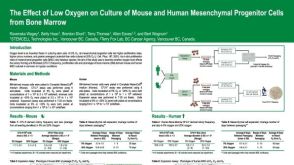 科学海报The Effect of Low Oxygen on Culture of Mouse and Human Mesenchymal Progenitor Cells from Bone Marrow
 沪公网安备31010102008431号