Genomic Instability Associated with p53 Knockdown in the Generation of Huntington's Disease Human Induced Pluripotent Stem Cells.
Alterations in DNA damage response and repair have been observed in Huntington's disease (HD). We generated induced pluripotent stem cells (iPSC) from primary dermal fibroblasts of 5 patients with HD and 5 control subjects. A significant fraction of the HD iPSC lines had genomic abnormalities as assessed by karyotype analysis,while none of our control lines had detectable genomic abnormalities. We demonstrate a statistically significant increase in genomic instability in HD cells during reprogramming. We also report a significant association with repeat length and severity of this instability. Our karyotypically normal HD iPSCs also have elevated ATM-p53 signaling as shown by elevated levels of phosphorylated p53 and H2AX,indicating either elevated DNA damage or hypersensitive DNA damage signaling in HD iPSCs. Thus,increased DNA damage responses in the HD genotype is coincidental with the observed chromosomal aberrations. We conclude that the disease causing mutation in HD increases the propensity of chromosomal instability relative to control fibroblasts specifically during reprogramming to a pluripotent state by a commonly used episomal-based method that includes p53 knockdown.
View Publication
产品类型:
产品号#:
85850
85857
产品名:
mTeSR™1
mTeSR™1
Maldonado M et al. (MAY 2016)
Advanced Healthcare Materials 5 12 1408--1412
Enhanced Lineage-Specific Differentiation Efficiency of Human Induced Pluripotent Stem Cells by Engineering Colony Dimensionality Using Electrospun Scaffolds
Electrospun scaffolds with varied stiffness promote distinct colony morphology of human induced pluripotent stem cells,which affects their subsequent differentiation. On soft scaffolds,induced pluripotent stem cells develop 3D colonies due to the pliability of the electrospun fibrous networks,leading to greater differentiation tendency to ectodermal lineage.
View Publication
产品类型:
产品号#:
85850
85857
产品名:
mTeSR™1
mTeSR™1
Ramachandra CJA et al. (JUN 2016)
Stem Cells
ErbB Receptor Tyrosine Kinase: A Molecular Switch between Cardiac and Neuroectoderm Specification in Human Pluripotent Stem Cells
Mechanisms determining intrinsic differentiation bias inherent to human pluripotent stem cells (hPSCs) toward cardiogenic fate remain elusive. We evaluated the interplay between ErbB4 and EGFR in determining cardiac differentiation in vitro as these receptor tyrosine kinases (RTKs) are key to heart and brain development in vivo. Our results demonstrate that during cardiac differentiation,cell fate biases exist in hPSCs due to cardiac/neuroectoderm divergence post cardiac mesoderm stage. Stage-specific up-regulation of EGFR in concert with persistent Wnt3a signaling post cardiac mesoderm favors commitment towards neural progenitor cells (NPCs). Inhibition of EGFR abrogates these effects with enhanced (textgreater2-fold) cardiac differentiation efficiencies by increasing proliferation of Nkx2-5 expressing cardiac progenitors while reducing proliferation of Sox2 expressing NPCs. Forced overexpression of ErbB4 rescued cardiac commitment by augmenting Wnt11 signaling. Convergence between EGFR/ErbB4 and canonical/non-canonical Wnt signaling determines cardiogenic fate in hPSCs. This article is protected by copyright. All rights reserved.
View Publication
产品类型:
产品号#:
85850
85857
产品名:
mTeSR™1
mTeSR™1
Lin S et al. (NOV 2010)
Toxicological Sciences 118 1 202--12
Comparison of the toxicity of smoke from conventional and harm reduction cigarettes using human embryonic stem cells.
This study evaluated the hypothesis that smoke from harm reduction cigarettes impedes attachment and proliferation of H9 human embryonic stem cells (hESCs). Smoke from three harm reduction brands was compared with smoke from a conventional brand. Doses of smoke were measured in puff equivalents (PE) (1 PE = the amount of smoke in one puff that dissolves in 1 ml of medium). Cytotoxic doses were determined using morphological criteria and trypan blue staining,and apoptosis was confirmed using Magic Red staining. Attachment and proliferation of hESC were followed at a noncytotoxic dose in time-lapse videos collected using BioStation technology. Data were mined from videos either manually or using video bioinformatics subroutines developed with CL-Quant software. Mainstream (MS) and sidestream (SS) smoke from conventional and harm reduction cigarettes induced apoptosis in hESC colonies at 1 PE. At 0.1 PE (noncytotoxic),SS smoke from all brands inhibited attachment of hESC colonies to Matrigel with the strongest inhibition occurring in harm reduction brands. At 0.1 PE,SS smoke,but not MS smoke,from all brands inhibited hESC growth,and two harm reduction brands were more potent than the conventional brand. In general,hESC appeared more sensitive to smoke than their mouse ESC counterparts. Although harm reduction cigarettes are often marketed as safer than conventional brands,our assays show that SS smoke from harm reduction cigarettes was at least as potent or in some cases more potent than smoke from a conventional brand and that SS smoke was more inhibitory than MS smoke in all assays.
View Publication
产品类型:
产品号#:
85850
85857
产品名:
mTeSR™1
mTeSR™1
Li Z et al. (OCT 2011)
Stem cells and development 20 10 1701--10
Functional characterization and expression profiling of human induced pluripotent stem cell- and embryonic stem cell-derived endothelial cells.
With regard to human induced pluripotent stem cells (hiPSCs),in which adult cells are reprogrammed into embryonic-like cells using defined factors,their functional and transcriptional expression pattern during endothelial differentiation has yet to be characterized. In this study,hiPSCs and human embryonic stem cells (hESCs) were differentiated using the embryoid body method,and CD31(+) cells were sorted. Fluorescence activated cell sorting analysis of hiPSC-derived endothelial cells (hiPSC-ECs) and hESC-derived endothelial cells (hESC-ECs) demonstrated similar endothelial gene expression patterns. We showed functional vascular formation by hiPSC-ECs in a mouse Matrigel plug model. We compared the gene profiles of hiPSCs,hESCs,hiPSC-ECs,hESC-ECs,and human umbilical vein endothelial cells (HUVECs) using whole genome microarray. Our analysis demonstrates that gene expression variation of hiPSC-ECs and hESC-ECs contributes significantly to biological differences between hiPSC-ECs and hESC-ECs as well as to the distances" among hiPSCs�
View Publication
产品类型:
产品号#:
85850
85857
产品名:
mTeSR™1
mTeSR™1
Shimada H et al. (JAN 2012)
Biochemical and Biophysical Research Communications 417 2 659--664
Accelerated generation of human induced pluripotent stem cells with retroviral transduction and chemical inhibitors under physiological hypoxia
Induced pluripotent stem (iPS) cells are generated from somatic cells by the forced expression of a defined set of pluripotency-associated transcription factors. Human iPS cells can be propagated indefinitely,while maintaining the capacity to differentiate into all cell types in the body except for extra-embryonic tissues. This technology not only represents a new way to use individual-specific stem cells for regenerative medicine but also constitutes a novel method to obtain large amounts of disease-specific cells for biomedical research. Despite their great potential,the long reprogramming process (up to 1. month) remains one of the most significant challenges facing standard virus-mediated methodology. In this study,we report the accelerated generation of human iPS cells from adipose-derived stem (ADS) cells,using a new combination of chemical inhibitors under a setting of physiological hypoxia in conjunction with retroviral transduction of Oct4,Sox2,Klf4,and L-Myc. Under optimized conditions,we observed human embryonic stem (ES)-like cells as early as 6. days after the initial retroviral transduction. This was followed by the emergence of fully reprogrammed cells bearing Tra-1-81-positive and DsRed transgene-silencing properties on day 10. The resulting cell lines resembled human ES cells in many respects including proliferation rate,morphology,pluripotency-associated markers,global gene expression patterns,genome-wide DNA methylation states,and the ability to differentiate into all three of the germ layers,both in vitro and in vivo. Our method,when combined with chemical inhibitors under conditions of physiological hypoxia,offers a powerful tool for rapidly generating bona fide human iPS cells and facilitates the application of iPS cell technology to biomedical research. textcopyright 2011 Elsevier Inc.
View Publication
Zhang S et al. (APR 2014)
Biomaterials 35 12 3786--3793
The influence of a spatiotemporal 3D environment on endothelial cell differentiation of human induced pluripotent stem cells.
Current EC differentiation protocols are inefficient,and the phenotypes of the differentiated ECs are only briefly stable,which significantly inhibits their utility for basic science research. Here,a remarkably more efficient hiPSC-EC differentiation protocol that incorporates a three-dimensional (3D) fibrin scaffold is presented. With this protocol,up to 45% of the differentiated hiPSCs assumed an EC phenotype,and after purification,greater than 95% of the cells displayed the EC phenotype (based on CD31 expression). The hiPSC-ECs continued to display EC characteristics for 4 weeks invitro. Gene and protein expression levels of CD31,CD144 and von Willebrand factor-8 (vWF-8) were significantly up-regulated in differentiated hiPSC-ECs. hiPSC-ECs also have biological function to up-take Dil-conjugated acetylated LDL (Dil-ac-LDL) and form tubular structures on Matrigel. Collectively,these data demonstrate that a 3D differentiation protocol can efficiently generate ECs from hiPSCs and,furthermore,the differentiated hiPSC-ECs are functional and can maintain EC fate up to 4 weeks invitro. ?? 2014 Elsevier Ltd.
View Publication
产品类型:
产品号#:
85850
85857
产品名:
mTeSR™1
mTeSR™1
Mehta A et al. (NOV 2014)
Biochimica et biophysica acta 1843 11 2394--2402
Phasic modulation of Wnt signaling enhances cardiac differentiation in human pluripotent stem cells by recapitulating developmental ontogeny.
Cardiomyocytes (CMs) derived from human pluripotent stem cells (hPSCs) offer immense value in studying cardiovascular regenerative medicine. However,intrinsic biases and differential responsiveness of hPSCs towards cardiac differentiation pose significant technical and logistic hurdles that hamper human cardiomyocyte studies. Tandem modulation of canonical and non-canonical Wnt signaling pathways may play a crucial role in cardiac development that can efficiently generate cardiomyocytes from pluripotent stem cells. Our Wnt signaling expression profiles revealed that phasic modulation of canonical/non-canonical axis enabled orderly recapitulation of cardiac developmental ontogeny. Moreover,evaluation of 8 hPSC lines showed marked commitment towards cardiac-mesoderm during the early phase of differentiation,with elevated levels of canonical Wnts (Wnt3 and 3a) and Mesp1. Whereas continued activation of canonical Wnts was counterproductive,its discrete inhibition during the later phase of cardiac differentiation was accompanied by significant up-regulation of non-canonical Wnt expression (Wnt5a and 11) and enhanced Nkx2.5(+) (up to 98%) populations. These Nkx2.5(+) populations transited to contracting cardiac troponin T-positive CMs with up to 80% efficiency. Our results suggest that timely modulation of Wnt pathways would transcend intrinsic differentiation biases of hPSCs to consistently generate functional CMs that could facilitate their scalable production for meaningful clinical translation towards personalized regenerative medicine.
View Publication
PDX1 binds and represses hepatic genes to ensure robust pancreatic commitment in differentiating human embryonic stem cells.
Inactivation of the Pancreatic and Duodenal Homeobox 1 (PDX1) gene causes pancreatic agenesis,which places PDX1 high atop the regulatory network controlling development of this indispensable organ. However,little is known about the identity of PDX1 transcriptional targets. We simulated pancreatic development by differentiating human embryonic stem cells (hESCs) into early pancreatic progenitors and subjected this cell population to PDX1 chromatin immunoprecipitation sequencing (ChIP-seq). We identified more than 350 genes bound by PDX1,whose expression was upregulated on day 17 of differentiation. This group included known PDX1 targets and many genes not previously linked to pancreatic development. ChIP-seq also revealed PDX1 occupancy at hepatic genes. We hypothesized that simultaneous PDX1-driven activation of pancreatic and repression of hepatic programs underlie early divergence between pancreas and liver. In HepG2 cells and differentiating hESCs,we found that PDX1 binds and suppresses expression of endogenous liver genes. These findings rebrand PDX1 as a context-dependent transcriptional repressor and activator within the same cell type.
View Publication
产品类型:
产品号#:
85850
85857
产品名:
mTeSR™1
mTeSR™1
Carlo-Stella C et al. (JAN 2007)
Stem cells (Dayton,Ohio) 25 1 252--61
Placental growth factor-1 potentiates hematopoietic progenitor cell mobilization induced by granulocyte colony-stimulating factor in mice and nonhuman primates.
The complex hematopoietic effects of placental growth factor (PlGF) prompted us to test in mice and nonhuman primates the mobilization of peripheral blood progenitor cells (PBPCs) elicited by recombinant mouse PlGF-2 (rmPlGF-2) and recombinant human PlGF-1 (rhPlGF-1). PBPC mobilization was evaluated by assaying colony-forming cells (CFCs),high-proliferative potential-CFCs (HPP-CFCs),and long-term culture-initiating cells (LTC-ICs). In mice,both rmPlGF-2 and rhPlGF-1 used as single agents failed to mobilize PBPCs,whereas the combination of rhPlGF-1 and granulocyte colony-stimulating factor (rhG-CSF) increased CFCs and LTC-ICs per milliliter of blood by four- and eightfold,respectively,as compared with rhG-CSF alone. rhPlGF-1 plus rhG-CSF significantly increased matrix metalloproteinase-9 plasma levels over rhG-CSF alone,suggesting a mechanistic explanation for rhPlGF-1/rhG-CSF synergism. In rhesus monkeys,rhPlGF-1 alone had no mobilization effect,whereas rhPlGF-1 (260 microg/kg per day) plus rhG-CSF (100 microg/kg per day) increased rhG-CSF-elicited mobilization of CFCs,HPP-CFCs,and LTC-ICs per milliliter of blood by 5-,7-,and 15-fold,respectively. No specific toxicity was associated with the administration of rhPlGF-1 alone or in combination. In conclusion,our data demonstrate that rhPlGF-1 significantly increases rhG-CSF-elicited hematopoietic mobilization and provide a preclinical rationale for evaluating rhPlGF-1 in the clinical setting.
View Publication
产品类型:
产品号#:
05150
产品名:
MyeloCult™H5100
Tripp A et al. (NOV 2003)
Journal of virology 77 22 12152--64
Human T-cell leukemia virus type 1 tax oncoprotein suppression of multilineage hematopoiesis of CD34+ cells in vitro.
Human T-cell leukemia virus type 1 (HTLV-1) and HTLV-2 are highly related viruses that differ in disease manifestation. HTLV-1 is the etiologic agent of adult T-cell leukemia and lymphoma,an aggressive clonal malignancy of human CD4-bearing T lymphocytes. Infection with HTLV-2 has not been conclusively linked to lymphoproliferative disorders. We previously showed that human hematopoietic progenitor (CD34(+)) cells can be infected by HTLV-1 and that proviral sequences were maintained after differentiation of infected CD34(+) cells in vitro and in vivo. To investigate the role of the Tax oncoprotein of HTLV on hematopoiesis,bicistronic lentiviral vectors were constructed encoding the HTLV-1 or HTLV-2 tax genes (Tax1 and Tax2,respectively) and the green fluorescent protein marker gene. Human hematopoietic progenitor (CD34(+)) cells were infected with lentivirus vectors,and transduced cells were cultured in a semisolid medium permissive for the development of erythroid,myeloid,and primitive progenitor colonies. Tax1-transduced CD34(+) cells displayed a two- to fivefold reduction in the total number of hematopoietic clonogenic colonies that arose in vitro,in contrast to Tax2-transduced cells,which showed no perturbation of hematopoiesis. The ratio of colony types that developed from Tax1-transduced CD34(+) cells remained unaffected,suggesting that Tax1 inhibited the maturation of relatively early,uncommitted hematopoietic stem cells. Since previous reports have linked Tax1 expression with initiation of apoptosis,lentiviral vector-mediated transduction of Tax1 or Tax2 was investigated in CEM and Jurkat T-cell lines. Ectopic expression of either Tax1 or Tax2 failed to induce apoptosis in T-cell lines. These data demonstrate that Tax1 expression perturbs development and maturation of pluripotent hematopoietic progenitor cells,an activity that is not displayed by Tax2,and that the suppression of hematopoiesis is not attributable to induction of apoptosis. Since hematopoietic progenitor cells may serve as a latently infected reservoir for HTLV infection in vivo,the different abilities of HTLV-1 and -2 Tax to suppress hematopoiesis may play a role in the respective clinical outcomes after infection with HTLV-1 or -2.
View Publication


 EasySep™小鼠TIL(CD45)正选试剂盒




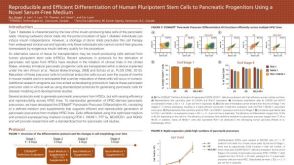 科学海报Reproducible and Efficient Differentiation of Human Pluripotent Stem Cells to Pancreatic Progenitors Using a Novel Serum-Free Medium
 沪公网安备31010102008431号