CXCR4 is a key regulator of neutrophil release from the bone marrow under basal and stress granulopoiesis conditions.
The number of neutrophils in the blood is tightly regulated to ensure adequate protection against microbial pathogens while minimizing damage to host tissue. Neutrophil homeostasis in the blood is achieved through a balance of neutrophil production,release from the bone marrow,and clearance from the circulation. Accumulating evidence suggests that signaling by CXCL12,through its major receptor CXCR4,plays a key role in maintaining neutrophil homeostasis. Herein,we generated mice with a myeloid lineage-restricted deletion of CXCR4 to define the mechanisms by which CXCR4 signals regulate this process. We show that CXCR4 negatively regulates neutrophil release from the bone marrow in a cell-autonomous fashion. However,CXCR4 is dispensable for neutrophil clearance from the circulation. Neutrophil mobilization responses to granulocyte colony-stimulating factor (G-CSF),CXCL2,or Listeria monocytogenes infection are absent or impaired,suggesting that disruption of CXCR4 signaling may be a common step mediating neutrophil release. Collectively,these data suggest that CXCR4 signaling maintains neutrophil homeostasis in the blood under both basal and stress granulopoiesis conditions primarily by regulating neutrophil release from the bone marrow.
View Publication
产品类型:
产品号#:
03434
03444
产品名:
MethoCult™GF M3434
MethoCult™GF M3434
Bruserud &O et al. (MAR 2007)
Haematologica 92 3 332--41
Subclassification of patients with acute myelogenous leukemia based on chemokine responsiveness and constitutive chemokine release by their leukemic cells.
BACKGROUND AND OBJECTIVES: Chemokines are soluble mediators involved in angiogenesis,cellular growth control and immunomodulation. In the present study we investigated the effects of various chemokines on proliferation of acute myelogenous leukemia (AML) cells and constitutive chemokine release by primary AML cells. DESIGN AND METHODS: Native human AML cells derived from 68 consecutive patients were cultured in vitro. We investigated AML cell proliferation (3H-thymidine incorporation,colony formation),chemokine receptor expression,constitutive chemokine release and chemotaxis of normal peripheral blood mononuclear cells. RESULTS: Exogenous chemokines usually did not have any effect on AML blast proliferation in the absence of hematopoietic growth factors,but when investigating growth factor-dependent (interleukin 3 + granulocyte-macrophage colony-stimulating factor + stem cell factor) proliferation in suspension cultures the following patient subsets were identified: (i) patients whose cells showed chemokine-induced growth enhancement (8 patients); (ii) divergent effects on proliferation (15 patients); and (iii) no effect (most patients). These patient subsets did not differ in chemokine receptor expression,but,compared to CD34- AML cells,CD34+ cells showed higher expression of several receptors. Chemokines also increased the proliferation of clonogenic AML cells from the first subset of patients. Furthermore,a broad constitutive chemokine release profile was detected for most patients,and the following chemokine clusters could be identified: CCL2-4/CXCL1/8,CCL5/CXCL9-11 (possibly also CCL23) and CCL13/17/22/24/CXCL5 (possibly also CXCL6). Only the CCL2-4/CXCL1/8 cluster showed significant correlations between corresponding mRNA levels and NFkB levels/activation. The chemotaxis of normal immunocompetent cells for patients without constitutive chemokine release was observed to be decreased. INTERPRETATION AND CONCLUSIONS: Differences in chemokine responsiveness as well as chemokine release contribute to patient heterogeneity in AML. Patients with AML can be classified into distinct subsets according to their chemokine responsiveness and chemokine release profile.
View Publication
产品类型:
产品号#:
04434
04444
09600
09650
产品名:
MethoCult™H4434经典
MethoCult™H4434经典
StemSpan™ SFEM
StemSpan™ SFEM
Li S et al. (JAN 2014)
Heart Rhythm 11 1 133--140
Mechanistic basis of excitation-contraction coupling in human pluripotent stem cell-derived ventricular cardiomyocytes revealed by Ca2+ spark characteristics: Direct evidence of functional Ca2+-induced Ca 2+ release
Background Human embryonic stem cells (hESCs) serve as a potential unlimited ex vivo source of cardiomyocytes for disease modeling,cardiotoxicity screening,drug discovery,and cell-based therapies. Despite the fundamental importance of Ca2+-induced Ca2+ release in excitation-contraction coupling,the mechanistic basis of Ca2+ handling of hESC-derived ventricular cardiomyocytes (VCMs) remains elusive. Objectives To study Ca2+ sparks as unitary events of Ca2+ handling for mechanistic insights. Methods To avoid ambiguities owing to the heterogeneous nature,we experimented with hESC-VCMs,purified on the basis of zeocin resistance and signature ventricular action potential after LV-MLC2v-tdTomato-T2A-Zeo transduction. Results Ca2+ sparks that were sensitive to inhibitors of sarco/endoplasmic reticulum Ca2+-ATPase (thapsigargin and cyclopiazonic acid) and ryanodine receptor (RyR; ryanodine,tetracaine) but not inositol trisphosphate receptors (xestospongin C and 2-aminoethyl diphenylborinate) could be recorded. In a permeabilization model,we further showed that RyRs could be sensitized by Ca2+. Increasing external Ca2+ dramatically escalated the basal Ca2+ and spark frequency. Furthermore,RyR-mediated Ca2+ release sensitized nearby RyRs,leading to compound Ca2+ sparks. Depolarization or L-type Ca2+ channel agonist (FPL 64176 and Bay K8644) pretreatment induced an extracellular Ca2+-dependent cytosolic Ca2+ increase and reduced the sarcoplasmic reticulum content. By contrast,removal of external Na+ or the addition of the Na+-Ca2+ exchanger inhibitor (KB-R7943 and SN-6) had no effect,suggesting that the Na+-Ca2+ exchanger is not involved in triggering sparks. Inhibition of mitochondrial Ca2+ uptake by carbonyl cyanide m-chlorophenyl hydrazone promoted Ca2+ waves. Conclusion Taken collectively,our findings provide the first lines of direct evidence that hESC-VCMs have functional Ca2+-induced Ca2+ release. However,the sarcoplasmic reticulum is leaky and without a mature terminating mechanism in early development.
View Publication


 EasySep™小鼠TIL(CD45)正选试剂盒




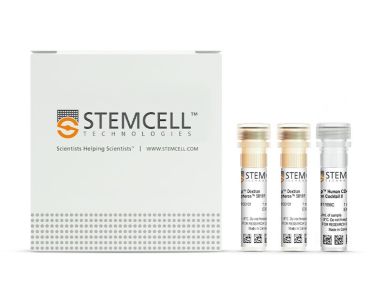 EasySep™人CD45去除试剂盒II 免疫磁珠法去除人CD45+细胞
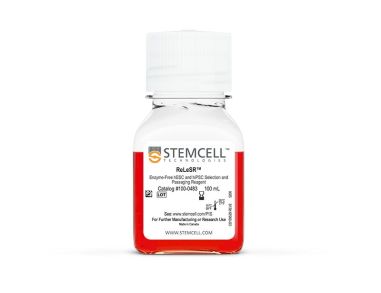 ReLeSR™ cGMP级、无酶的人多能干细胞选择与传代试剂
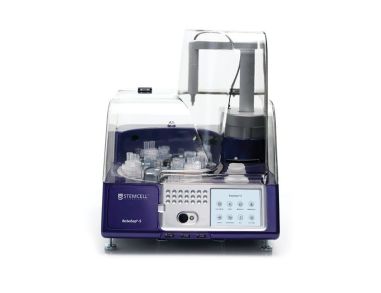 RoboSep™- S 全自动细胞分选仪器
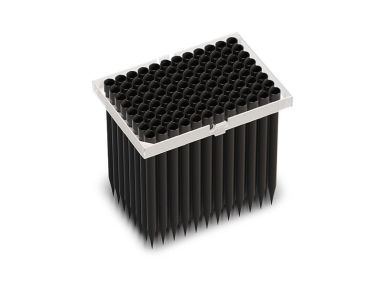 RoboSep™-16导电滤芯吸头 RoboSep™-16导电滤芯吸头
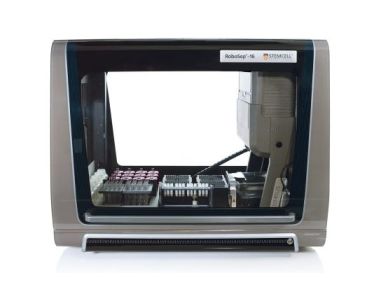 RoboSep™-16 全自动细胞分选仪器适用于多达16个样本
 RoboSep™-16垃圾袋 RoboSep™-16垃圾袋
 RoboSep™分选管套装 RoboSep™分选管套装(9个塑料管)



 沪公网安备31010102008431号