Fu J-DD et al. (SEP 2013)
Stem Cell Reports 1 3 235--247
Direct Reprogramming of Human Fibroblasts toward a Cardiomyocyte-like State
Summary Direct reprogramming of adult somatic cells into alternative cell types has been shown for several lineages. We previously showed that GATA4,MEF2C,and TBX5 (GMT) directly reprogrammed nonmyocyte mouse heart cells into induced cardiomyocyte-like cells (iCMs) in vitro and in vivo. However,GMT alone appears insufficient in human fibroblasts,at least in vitro. Here,we show that GMT plus ESRRG and MESP1 induced global cardiac gene-expression and phenotypic shifts in human fibroblasts derived from embryonic stem cells,fetal heart,and neonatal skin. Adding Myocardin and ZFPM2 enhanced reprogramming,including sarcomere formation,calcium transients,and action potentials,although the efficiency remained low. Human iCM reprogramming was epigenetically stable. Furthermore,we found that transforming growth factor β signaling was important for,and improved the efficiency of,human iCM reprogramming. These findings demonstrate that human fibroblasts can be directly reprogrammed toward the cardiac lineage,and lay the foundation for future refinements in vitro and in vivo. textcopyright 2013 The Authors.
View Publication
产品类型:
产品号#:
05850
05857
05870
05875
85850
85857
85870
85875
产品名:
mTeSR™1
mTeSR™1
Easley CA et al. (SEP 2012)
Cell reports 2 3 440--6
Direct differentiation of human pluripotent stem cells into haploid spermatogenic cells.
Human embryonic stem cells (hESCs) and induced pluripotent stem cells (hiPSCs) have been shown to differentiate into primordial germ cells (PGCs) but not into spermatogonia,haploid spermatocytes,or spermatids. Here,we show that hESCs and hiPSCs differentiate directly into advanced male germ cell lineages,including postmeiotic,spermatid-like cells,in vitro without genetic manipulation. Furthermore,our procedure mirrors spermatogenesis in vivo by differentiating PSCs into UTF1-,PLZF-,and CDH1-positive spermatogonia-like cells; HIWI- and HILI-positive spermatocyte-like cells; and haploid cells expressing acrosin,transition protein 1,and protamine 1 (proteins that are uniquely found in spermatids and/or sperm). These spermatids show uniparental genomic imprints similar to those of human sperm on two loci: H19 and IGF2. These results demonstrate that male PSCs have the ability to differentiate directly into advanced germ cell lineages and may represent a novel strategy for studying spermatogenesis in vitro
View Publication
产品类型:
产品号#:
05850
05857
05870
05875
07923
85850
85857
85870
85875
产品名:
Dispase (1 U/mL)
mTeSR™1
mTeSR™1
Hu Y-L et al. (JUN 2007)
Blood 109 11 4732--8
Evidence that the Pim1 kinase gene is a direct target of HOXA9.
The HOXA9 homeoprotein exerts dramatic effects in hematopoiesis. Enforced expression of HOXA9 enhances proliferation of primitive blood cells,expands hematopoietic stem cells (HSCs),and leads to myeloid leukemia. Conversely,loss of HOXA9 inhibits proliferation and impairs HSC function. The pathways by which HOXA9 acts are largely unknown,and although HOXA9 is a transcription factor,few direct target genes have been identified. Our previous study suggested that HOXA9 positively regulates Pim1,an oncogenic kinase. The hematologic phenotypes of Hoxa9- and Pim1-deficient animals are strikingly similar. Here we show that HOXA9 protein binds to the Pim1 promoter and induces Pim1 mRNA and protein in hematopoietic cells. Pim1 protein is diminished in Hoxa9(-/-) cells,and Hoxa9 and Pim1 mRNA levels track together in early hematopoietic compartments. Induction of Pim1 protein by HOXA9 increases the phosphorylation and inactivation of the proapoptotic BAD protein,a target of Pim1. Hoxa9(-/-) cells show increased apoptosis and decreased proliferation,defects that are ameliorated by reintroduction of Pim1. Thus Pim1 appears to be a direct transcriptional target of HOXA9 and a mediator of its antiapoptotic and proproliferative effects in early cells. Since HOXA9 is frequently up-regulated in acute myeloid leukemia,Pim1 may be a therapeutic target in human disease.
View Publication
Kunisato A et al. (JAN 2011)
Stem cells and development 20 1 159--168
Direct generation of induced pluripotent stem cells from human nonmobilized blood.
The use of induced pluripotent stem cells (iPSCs) is an exciting frontier in the study and treatment of human diseases through the generation of specific cell types. Here we show the derivation of iPSCs from human nonmobilized peripheral blood (PB) and bone marrow (BM) mononuclear cells (MNCs) by retroviral transduction of OCT3/4,SOX2,KLF4,and c-MYC. The PB- and BM-derived iPSCs were quite similar to human embryonic stem cells with regard to morphology,expression of surface antigens and pluripotency-associated transcription factors,global gene expression profiles,and differentiation potential in vitro and in vivo. Infected PB and BM MNCs gave rise to iPSCs in the presence of several cytokines,although transduction efficiencies were not high. We found that 5 × 10(5) PB MNCs,which corresponds to less than 1 mL of PB,was enough for the generation of several iPSC colonies. Generation of iPSCs from MNCs of nonmobilized PB,with its relative efficiency and ease of harvesting,could enable the therapeutic use of patient-specific pluripotent stem cells.
View Publication
产品类型:
产品号#:
05850
05857
05870
05875
85850
85857
85870
85875
产品名:
mTeSR™1
mTeSR™1
Zhang K et al. (JAN 2014)
Protein and Cell 5 1 48--58
Direct conversion of human fibroblasts into retinal pigment epithelium-like cells by defined factors
The generation of functional retinal pigment epithelium (RPE) is of great therapeutic interest to the field of regenerative medicine and may provide possible cures for retinal degenerative diseases,including age-related macular degeneration (AMD). Although RPE cells can be produced from either embryonic stem cells or induced pluripotent stem cells,direct cell reprogramming driven by lineagedetermining transcription factors provides an immediate route to their generation. By monitoring a human RPE specific Best1::GFP reporter,we report the conversion of human fibroblasts into RPE lineage using defined sets of transcription factors. We found that Best1::GFP positive cells formed colonies and exhibited morphological and molecular features of early stage RPE cells. Moreover,they were able to obtain pigmentation upon activation of Retinoic acid (RA) and Sonic Hedgehog (SHH) signaling pathways. Our study not only established an ideal platform to investigate the transcriptional network regulating the RPE cell fate determination,but also provided an alternative strategy to generate functional RPE cells that complement the use of pluripotent stem cells for disease modeling,drug screening,and cell therapy of retinal degeneration.
View Publication


 EasySep™小鼠TIL(CD45)正选试剂盒




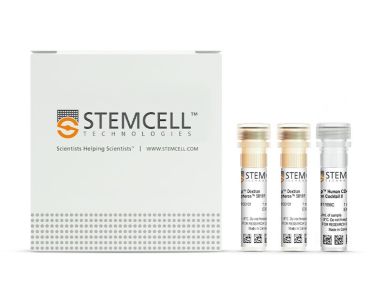 EasySep™人CD45去除试剂盒II 免疫磁珠法去除人CD45+细胞
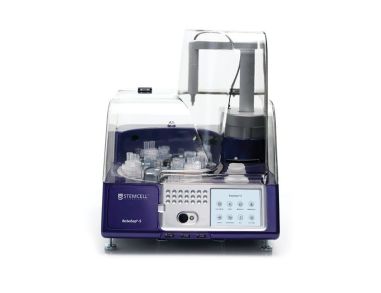 RoboSep™- S 全自动细胞分选仪器
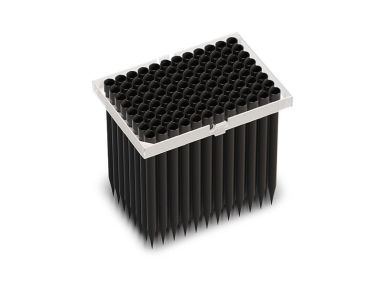 RoboSep™-16导电滤芯吸头 RoboSep™-16导电滤芯吸头
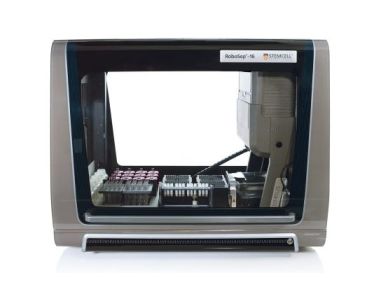 RoboSep™-16 全自动细胞分选仪器适用于多达16个样本
 RoboSep™-16垃圾袋 RoboSep™-16垃圾袋
 RoboSep™分选管套装 RoboSep™分选管套装(9个塑料管)


 沪公网安备31010102008431号