Yeung YA et al. (NOV 2016)
Nature communications 7 13376
Germline-encoded neutralization of a Staphylococcus aureus virulence factor by the human antibody repertoire.
Staphylococcus aureus is both an important pathogen and a human commensal. To explore this ambivalent relationship between host and microbe,we analysed the memory humoral response against IsdB,a protein involved in iron acquisition,in four healthy donors. Here we show that in all donors a heavily biased use of two immunoglobulin heavy chain germlines generated high affinity (pM) antibodies that neutralize the two IsdB NEAT domains,IGHV4-39 for NEAT1 and IGHV1-69 for NEAT2. In contrast to the typical antibody/antigen interactions,the binding is primarily driven by the germline-encoded hydrophobic CDRH-2 motifs of IGHV1-69 and IGHV4-39,with a binding mechanism nearly identical for each antibody derived from different donors. Our results suggest that IGHV1-69 and IGHV4-39,while part of the adaptive immune system,may have evolved under selection pressure to encode a binding motif innately capable of recognizing and neutralizing a structurally conserved protein domain involved in pathogen iron acquisition.
View Publication
产品类型:
产品号#:
19554
19554RF
19666
19669
100-0404
19669RF
产品名:
EasySep™人Pan-B细胞富集试剂盒
RoboSep™ 人Pan-B细胞富集试剂盒
EasySep™ Direct人中性粒细胞分选试剂盒
EasySep™ Direct人单核细胞分选试剂盒
RoboSep™ 人中性粒细胞分选试剂盒
RoboSep™ Direct人单核细胞分选试剂盒
Armengol Lopez S et al. (JAN 2012)
International journal of vascular medicine 2012 942512
The oxidative state of chylomicron remnants influences their modulation of human monocyte activation.
Chylomicron remnants (CMRs) contribute directly to human monocyte activation in vitro,by increasing reactive oxygen species (ROS) production and cell migration. In this study,the effects of the oxidative state of CMR on the degree of monocyte activation was investigated. CMR-like particles (CRLPs) were prepared in three different oxidative states,normal (CRLPs),protected from oxidation by incorporation of the antioxidant,probucol (pCRLPs),or oxidised with CuSO(4) (oxCRLPs). Lipid accumulation and ROS production were significantly increased in primary human monocytes incubated with CRLPs,whilst secretion on monocyte chemoattractant protein-1 was reduced,but oxCRLPs had no additional effect. In contrast,pCRLPs were taken up by monocytes to a lesser extent and had no significant effect on ROS or MCP-1 secretion. These studies suggest that the oxidative state of CMRs modulates their stimulation of the activation of peripheral blood human monocytes and that dietary antioxidants may provide some protection against these atherogenic effects.
View Publication
产品类型:
产品号#:
15028
15068
产品名:
RosetteSep™人单核细胞富集抗体混合物
RosetteSep™人单核细胞富集抗体混合物
Diou J et al. (MAR 2010)
Journal of immunology (Baltimore,Md. : 1950) 184 6 2899--907
Dendritic cells derived from hemozoin-loaded monocytes display a partial maturation phenotype that promotes HIV-1 trans-infection of CD4+ T cells and virus replication.
Coinfection of HIV-1 patients with Plasmodium falciparum,the etiological agent of malaria,results in a raise of viral load and an acceleration of disease progression. The primary objective of this study was to investigate whether the malarial pigment hemozoin (HZ),a heme by-product of hemoglobin digestion by malaria parasites,can affect HIV-1 transmission by monocytes-derived dendritic cells (DCs) to CD4(+) T cells when HZ is initially internalized in monocytes before their differentiation in DCs. We demonstrate in this study that HZ treatment during the differentiation process induces an intermediate maturation phenotype when compared with immature and fully mature DCs. Furthermore,the DC-mediated transfer of HIV-1 is enhanced in presence of HZ,a phenomenon that may be linked with the capacity of HZ-loaded cells to interact and activate CD4(+) T cells. Altogether our findings suggest a new mechanism that could partially explain the increased HIV-1 virus production during a coinfection with P. falciparum. Understanding the multifaceted interactions between P. falciparum and HIV-1 is an important challenge that could lead to the development of new treatment strategies.
View Publication
产品类型:
产品号#:
19052
19052RF
产品名:
EasySep™人CD4+ T细胞富集试剂盒
RoboSep™ 人CD4+ T细胞富集试剂盒含滤芯吸头
Saï et al. (FEB 2016)
PLoS pathogens 12 2 e1005407
HMGB1 Is Involved in IFN-α Production and TRAIL Expression by HIV-1-Exposed Plasmacytoid Dendritic Cells: Impact of the Crosstalk with NK Cells.
Plasmacytoid dendritic cells (pDCs) are innate sensors of viral infections and important mediators of antiviral innate immunity through their ability to produce large amounts of IFN-α. Moreover,Toll-like receptor 7 (TLR7) and 9 (TLR9) ligands,such as HIV and CpG respectively,turn pDCs into TRAIL-expressing killer pDCs able to lyse HIV-infected CD4+ T cells. NK cells can regulate antiviral immunity by modulating pDC functions,and pDC production of IFN-α as well as cell-cell contact is required to promote NK cell functions. Impaired pDC-NK cell crosstalk was reported in the setting of HIV-1 infection,but the impact of HIV-1 on TRAIL expression and innate antiviral immunity during this crosstalk is unknown. Here,we report that low concentrations of CCR5-tropic HIV-1Ba-L promote the release of pro-inflammatory cytokines such as IFN-α,TNF-α,IFN-γ and IL-12,and CCR5-interacting chemokines (MIP-1α and MIP-1β) in NK-pDCs co-cultures. At high HIV-1BaL concentrations,the addition of NK cells did not promote the release of these mediators,suggesting that once efficiently triggered by the virus,pDCs could not integrate new activating signals delivered by NK cells. However,high HIV-1BaL concentrations were required to trigger IFN-α-mediated TRAIL expression at the surface of both pDCs and NK cells during their crosstalk. Interestingly,we identified the alarmin HMGB1,released at pDC-NK cell synapse,as an essential trigger for the secretion of IFN-α and IFN-related soluble mediators during the interplay of HIV-1 exposed pDCs with NK cells. Moreover,HMGB1 was found crucial for mTRAIL translocation to the plasma membrane of both pDCs and NK cells during their crosstalk following pDC exposure to HIV-1. Data from serum analyses of circulating HMGB1,HMGB1-specific antibodies,sTRAIL and IP-10 in a cohort of 67 HIV-1+ patients argue for the in vivo relevance of these observations. Altogether,these findings identify HMGB1 as a trigger for IFN-α-mediated TRAIL expression at the surface of pDCs and NK cells,and they suggest a novel mechanism of innate control of HIV-1 infection.
View Publication
Leiba M et al. (AUG 2006)
Journal of leukocyte biology 80 2 399--406
Halofuginone inhibits NF-kappaB and p38 MAPK in activated T cells.
Halofuginone,a low molecular weight plant alkaloid,inhibits collagen alpha1 (I) gene expression in several animal models and in patients with fibrotic disease,including scleroderma and graft-versus-host disease. In addition,halofuginone has been shown to inhibit angiogenesis and tumor progression. It was demonstrated recently that halofuginone inhibits transforming growth factor-beta (TGF-beta),an important immunomodulator. The present study was undertaken to explore the effects of halofuginone on activated T cells. Peripheral blood T cells were activated by anti-CD3 monoclonal antibodies in the absence and presence of halofuginone and assessed for nuclear factor (NF)-kappaB activity,production of tumor necrosis factor alpha (TNF-alpha) and interferon-gamma (IFN-gamma),T cell apoptosis,chemotaxis,and phosphorylation of p38 mitogen-activated protein kinase (MAPK). A delayed-type hypersensitivity (DTH) model was applied to investigate the effect of halofuginone on T cells in vivo. Preincubation of activated peripheral blood T cells with 10-40 ng/ml halofuginone resulted in a significant dose-dependent decrease in NF-kappaB activity (80% inhibition following incubation with 40 ng halofuginone,P = 0.002). In addition,40 ng/ml halofuginone inhibited secretion of TNF-alpha,IFN-gamma,interleukin (IL)-4,IL-13,and TGF-beta (P textless 0.005). Similarly,halofuginone inhibited the phosphorylation of p38 MAPK and apoptosis in activated T cells (P = 0.0001 and 0.005,respectively). In contrast,T cell chemotaxis was not affected. Halofuginone inhibited DTH response in mice,indicating suppression of T cell-mediated inflammation in vivo. Halofuginone inhibits activated peripheral blood T cell functions and proinflammatory cytokine production through inhibition of NF-kappaB activation and p38 MAPK phosphorylation. It also inhibited DTH response in vivo,making it an attractive immunomodulator and anti-inflammatory agent.
View Publication
产品类型:
产品号#:
15022
15062
15023
15063
产品名:
RosetteSep™人CD4+ T细胞富集抗体混合物
RosetteSep™人CD4+ T细胞富集抗体混合物
RosetteSep™人CD8+ T细胞富集抗体混合物
RosetteSep™人CD8+ T细胞富集抗体混合物
C. R. Seehus et al. (DEC 2017)
Nature communications 8 1 1900
Alternative activation generates IL-10 producing type 2 innate lymphoid cells.
Type 2 innate lymphoid cells (ILC2) share cytokine and transcription factor expression with CD4+ Th2 cells,but functional diversity of the ILC2 lineage has yet to be fully explored. Here,we show induction of a molecularly distinct subset of activated lung ILC2,termed ILC210. These cells produce IL-10 and downregulate some pro-inflammatory genes. Signals that generate ILC210 are distinct from those that induce IL-13 production,and gene expression data indicate that an alternative activation pathway leads to the generation of ILC210. In vivo,IL-2 enhances ILC210 generation and is associated with decreased eosinophil recruitment to the lung. Unlike most activated ILC2,the ILC210 population contracts after cessation of stimulation in vivo,with maintenance of a subset that can be recalled by restimulation,analogous to T-cell effector cell and memory cell generation. These data demonstrate the generation of a previously unappreciated IL-10 producing ILC2 effector cell population.
View Publication
J. U. Hermansen et al. (dec 2018)
Scientific reports 8 1 17651
Cryopreservation of primary B cells minimally influences their signaling responses.
Phospho flow is a powerful approach to detect cell signaling aberrations,identify biomarkers and assess pharmacodynamics,and can be performed using cryopreserved samples. The effects of cryopreservation on signaling responses and the reproducibility of phospho flow measurements are however unknown in many cell systems. Here,B lymphocytes were isolated from healthy donors and patients with the B cell malignancy chronic lymphocytic leukemia and analyzed by phospho flow using phospho-specific antibodies targeting 20 different protein epitopes. Cells were analyzed both at basal conditions and after activation of cluster of differentiation 40 (CD40) or the B cell receptor. Pharmacodynamics of the novel pathway inhibitor ibrutinib was also assessed. At all conditions,fresh cells were compared to cryopreserved cells. Minimal variation between fresh and frozen samples was detected. Reproducibility was tested by running samples from the same donors in different experiments. The results demonstrate reproducibility across different phospho flow runs and support the use of cryopreserved samples in future phospho flow studies of B lymphocytes.
View Publication
Callahan KP et al. (OCT 2014)
Leukemia 28 10 1960--8
Flavaglines target primitive leukemia cells and enhance anti-leukemia drug activity.
Identification of agents that target human leukemia stem cells is an important consideration for the development of new therapies. The present study demonstrates that rocaglamide and silvestrol,closely related natural products from the flavagline class of compounds,are able to preferentially kill functionally defined leukemia stem cells,while sparing normal stem and progenitor cells. In addition to efficacy as single agents,flavaglines sensitize leukemia cells to several anticancer compounds,including front-line chemotherapeutic drugs used to treat leukemia patients. Mechanistic studies indicate that flavaglines strongly inhibit protein synthesis,leading to the reduction of short-lived antiapoptotic proteins. Notably though,treatment with flavaglines,alone or in combination with other drugs,yields a much stronger cytotoxic activity toward leukemia cells than the translational inhibitor temsirolimus. These results indicate that the underlying cell death mechanism of flavaglines is more complex than simply inhibiting general protein translation. Global gene expression profiling and cell biological assays identified Myc inhibition and the disruption of mitochondrial integrity to be features of flavaglines,which we propose contribute to their efficacy in targeting leukemia cells. Taken together,these findings indicate that rocaglamide and silvestrol are distinct from clinically available translational inhibitors and represent promising candidates for the treatment of leukemia.
View Publication


 EasySep™小鼠TIL(CD45)正选试剂盒




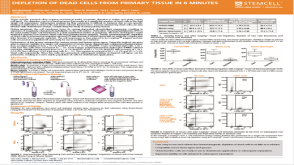 科学海报Depletion of Dead Cells from Primary Tissue in 6 Minutes



 沪公网安备31010102008431号