Falco M et al. (JUL 2010)
Journal of immunology (Baltimore,Md. : 1950) 185 1 433--41
Combined genotypic and phenotypic killer cell Ig-like receptor analyses reveal KIR2DL3 alleles displaying unexpected monoclonal antibody reactivity: identification of the amino acid residues critical for staining.
In humans,recent clinical and experimental data from hematopoietic stem cell transplantation revealed that donor-derived alloreactive NK cells exert a beneficial graft versus leukemia effect. The existence of donor-derived alloreactive NK cells can be predicted on the basis of donor killer cell Ig-like receptor (KIR) gene profile and HLA class I typing of both donor and recipient. Moreover,the size of the alloreactive NK cell population can be directly assessed by the combined use of anti-KIR-specific mAb. In this study,in an attempt to improve the definition of alloreactive NK cell subsets,we assessed the KIR genotype and phenotype in a cohort of 44 donors. This approach allowed the identification of two different KIR2DL3 alleles (KIR2DL3*005 and the novel allele KIR2DL3*015) that did not react with the anti-KIR2DL3-specific ECM41 mAb. In contrast,both alleles were recognized at the cell surface by several mAb reacting with KIR2DL2/L3/S2. Notably,KIR2DL3*005 was also stained by the anti-KIR2DL1/S1-specific EB6B and 11PB6 mAb. Functional analysis revealed that,despite its particular mAb reactivity,the specificity of KIR2DL3*005 for HLA-C molecules did not differ from that of other KIR2DL2/L3 alleles. Finally,site-directed mutagenesis demonstrated that glutamine at position 35 is required for ECM41 staining,whereas glutamic acid 35 and arginine 50 are relevant for staining with EB6B or 11PB6 mAb. Our present data represent a substantial progress in the characterization of the NK cell repertoire and an improved phenotypic/functional definition of given KIR(+) subsets.
View Publication
产品类型:
产品号#:
15025
15065
产品名:
RosetteSep™人NK细胞富集抗体混合物
RosetteSep™人NK细胞富集抗体混合物
Llibre A et al. (MAR 2016)
Journal of Immunology 196 5 2085--94
LLT1 and CD161 Expression in Human Germinal Centers Promotes B Cell Activation and CXCR4 Downregulation.
Germinal centers (GCs) are microanatomical structures critical for the development of high-affinity Abs and B cell memory. They are organized into two zones,light and dark,with coordinated roles,controlled by local signaling. The innate lectin-like transcript 1 (LLT1) is known to be expressed on B cells,but its functional role in the GC reaction has not been explored. In this study,we report high expression of LLT1 on GC-associated B cells,early plasmablasts,and GC-derived lymphomas. LLT1 expression was readily induced via BCR,CD40,and CpG stimulation on B cells. Unexpectedly,we found high expression of the LLT1 ligand,CD161,on follicular dendritic cells. Triggering of LLT1 supported B cell activation,CD83 upregulation,and CXCR4 downregulation. Overall,these data suggest that LLT1-CD161 interactions play a novel and important role in B cell maturation within the GC in humans.
View Publication
Castriconi R et al. (JUN 2007)
Blood 109 11 4873--81
Functional characterization of natural killer cells in type I leukocyte adhesion deficiency.
In this study,we analyzed IL-2-activated polyclonal natural killer (NK) cells derived from 2 patients affected by leukocyte adhesion deficiency type I (LAD1),an immunodeficiency characterized by mutations of the gene coding for CD18,the beta subunit shared by major leukocyte integrins. We show that LAD1 NK cells express normal levels of various triggering NK receptors (and coreceptors) and that mAb-mediated engagement of these receptors results in the enhancement of both NK cytolytic activity and cytokine production. Moreover,these activating NK receptors were capable of recognizing their specific ligands on target cells. Thus,LAD1 NK cells,similarly to normal NK cells,were capable of killing most human tumor cells analyzed and produced high amounts of IFN-gamma when cocultured in presence of target cells. Murine target cells represented a common exception,as they were poorly susceptible to LAD1 NK cells. Finally,LAD1 NK cells could efficiently kill or induce maturation of monocyte-derived immature dendritic cells (DCs). Altogether our present study indicates that in LAD1 patients,3 important functions of NK cells (eg,cytotoxicity,IFN-gamma production,and DC editing) are only marginally affected and provides new insight on the cooperation between activating receptors and LFA-1 in the induction of NK cell activation and function.
View Publication
产品类型:
产品号#:
15025
15065
产品名:
RosetteSep™人NK细胞富集抗体混合物
RosetteSep™人NK细胞富集抗体混合物
Yokota A et al. (APR 2009)
International immunology 21 4 361--77
GM-CSF and IL-4 synergistically trigger dendritic cells to acquire retinoic acid-producing capacity.
Retinoic acid (RA) produced by intestinal dendritic cells (DCs) imprints gut-homing specificity on lymphocytes and enhances Foxp3(+) regulatory T-cell differentiation. The expression of aldehyde dehydrogenase (ALDH) 1A in these DCs is essential for the RA production. However,it remains unclear how the steady-state ALDH1A expression is induced under specific pathogen-free (SPF) conditions. Here,we found that bone marrow-derived dendritic cells (BM-DCs) generated with granulocyte-macrophage colony-stimulating factor (GM-CSF) expressed Aldh1a2,an isoform of Aldh1a,but that fms-related tyrosine kinase 3 ligand-generated BM-DCs did not. DCs from mesenteric lymph nodes (MLN) and Peyer's patches (PP) of normal SPF mice expressed ALDH1A2,but not the other known RA-producing enzymes. Employing a flow cytometric method,we detected ALDH activities in 10-30% of PP-DCs and MLN-DCs. They were CD11c(high)CD4(-/low)CD8alpha(intermediate)CD11b(-/low) F4/80(low/intermediate)CD45RB(low)CD86(high)MHC class II(high)B220(-)CD103(+). Equivalent levels of aldehyde dehydrogenase activity (ALDHact) and ALDH1A2 expression were induced synergistically by GM-CSF and IL-4 in splenic DCs in vitro. In BM-DCs,however,additional signals via Toll-like receptors or RA receptors were required for inducing the equivalent levels. The generated ALDH1A2(+) DCs triggered T cells to express gut-homing receptors or Foxp3. GM-CSF receptor-deficient or vitamin A-deficient mice exhibited marked reductions in the ALDHact in intestinal DCs and the T cell number in the intestinal lamina propria,whereas IL-4 receptor-mediated signals were dispensable. GM-CSF(+)CD11c(-)F4/80(+) cells existed constitutively in the intestinal tissues. The results suggest that GM-CSF and RA itself are pivotal among multiple microenvironment factors that enable intestinal DCs to produce RA.
View Publication
产品类型:
产品号#:
01700
01705
01701
01702
产品名:
ALDEFLUOR™ 试剂盒
ALDEFLUOR™ DEAB试剂, 1.5 mM, 1 mL
ALDEFLUOR™检测缓冲液
Xue D et al. (NOV 2016)
Journal of immunology (Baltimore,Md. : 1950)
Semaphorin 4C Protects against Allergic Inflammation: Requirement of Regulatory CD138+ Plasma Cells.
The regulatory properties of B cells have been studied in autoimmune diseases; however,their role in allergic diseases is poorly understood. We demonstrate that Semaphorin 4C (Sema4C),an axonal guidance molecule,plays a crucial role in B cell regulatory function. Mice deficient in Sema4C exhibited increased airway inflammation after allergen exposure,with massive eosinophilic lung infiltrates and increased Th2 cytokines. This phenotype was reproduced by mixed bone marrow chimeric mice with Sema4C deficient only in B cells,indicating that B lymphocytes were the key cells affected by the absence of Sema4C expression in allergic inflammation. We determined that Sema4C-deficient CD19(+)CD138(+) cells exhibited decreased IL-10 and increased IL-4 expression in vivo and in vitro. Adoptive transfer of Sema4c(-/-) CD19(+)CD138(+) cells induced marked pulmonary inflammation,eosinophilia,and increased bronchoalveolar lavage fluid IL-4 and IL-5,whereas adoptive transfer of wild-type CD19(+)CD138(+)IL-10(+) cells dramatically decreased allergic airway inflammation in wild-type and Sema4c(-/-) mice. This study identifies a novel pathway by which Th2-mediated immune responses are regulated. It highlights the importance of plasma cells as regulatory cells in allergic inflammation and suggests that CD138(+) B cells contribute to cytokine balance and are important for maintenance of immune homeostasis in allergic airways disease. Furthermore,we demonstrate that Sema4C is critical for optimal regulatory cytokine production in CD138(+) B cells.
View Publication
Cretenet G et al. (APR 2016)
Scientific Reports 6 24129
Cell surface Glut1 levels distinguish human CD4 and CD8 T lymphocyte subsets with distinct effector functions.
CD4 and CD8 T lymphocyte activation requires the generation of sufficient energy to support new biosynthetic demands. Following T cell receptor (TCR) engagement,these requirements are met by an increased glycolysis,due,at least in part,to induction of the Glut1 glucose transporter. As Glut1 is upregulated on tumor cells in response to hypoxia,we assessed whether surface Glut1 levels regulate the antigen responsiveness of human T lymphocytes in both hypoxic and atmospheric oxygen conditions. Notably,Glut1 upregulation in response to TCR stimulation was significantly higher in T lymphocytes activated under hypoxic as compared to atmospheric oxygen conditions. Furthermore,TCR-stimulated human T lymphocytes sorted on the basis of Glut1-Lo and Glut1-Hi profiles maintained distinct characteristics,irrespective of the oxygen tension. While T cells activated in hypoxia divided less than those activated in atmospheric oxygen,Glut1-Hi lymphocytes exhibited increased effector phenotype acquisition,augmented proliferation,and an inverted CD4/CD8 ratio in both oxygen conditions. Moreover,Glut1-Hi T lymphocytes exhibited a significantly enhanced ability to produce IFN-γ and this secretion potential was completely dependent on continued glycolysis. Thus,Glut1 surface levels identify human T lymphocytes with distinct effector functions in both hypoxic and atmospheric oxygen tensions.
View Publication
产品类型:
产品号#:
15021
15061
产品名:
RosetteSep™人T细胞富集抗体混合物
RosetteSep™人T细胞富集抗体混合物
Jones RB et al. (SEP 2009)
Journal of virology 83 17 8722--32
Human immunodeficiency virus type 1 escapes from interleukin-2-producing CD4+ T-cell responses without high-frequency fixation of mutations.
The presence of interleukin-2 (IL-2)-producing human immunodeficiency virus type 1 (HIV-1)-specific CD4(+) T-cell responses has been associated with the immunological control of HIV-1 replication; however,the causal relationship between these factors remains unclear. Here we show that IL-2-producing HIV-1-specific CD4(+) T cells can be cloned from acutely HIV-1-infected individuals. Despite the early presence of these cells,each of the individuals in the present study exhibited progressive disease,with one individual showing rapid progression. In this rapid progressor,three IL-2-producing HIV-1 Gag-specific CD4(+) T-cell responses were identified and mapped to the following optimal epitopes: HIVWASRELER,REPRGSDIAGT,and FRDYVDRFYKT. Responses to these epitopes in peripheral blood mononuclear cells were monitored longitudinally to textgreater1 year postinfection,and contemporaneous circulating plasma viruses were sequenced. A variant of the FRDYVDRFYKT epitope sequence,FRDYVDQFYKT,was observed in 1/21 plasma viruses sequenced at 5 months postinfection and 1/10 viruses at 7 months postinfection. This variant failed to stimulate the corresponding CD4(+) T-cell clone and thus constitutes an escape mutant. Responses to each of the three Gag epitopes were rapidly lost,and this loss was accompanied by a loss of antigen-specific cells in the periphery as measured by using an FRDYVDRFYKT-presenting major histocompatibility complex class II tetramer. Highly active antiretroviral therapy was associated with the reemergence of FRDYVDRFYKT-specific cells by tetramer. Thus,our data support that IL-2-producing HIV-1-specific CD4(+) T-cell responses can exert immune pressure during early HIV-1 infection but that the inability of these responses to enforce enduring control of viral replication is related to the deletion and/or dysfunction of HIV-1-specific CD4(+) T cells rather than to the fixation of escape mutations at high frequencies.
View Publication
产品类型:
产品号#:
19052
19052RF
产品名:
EasySep™人CD4+ T细胞富集试剂盒
RoboSep™ 人CD4+ T细胞富集试剂盒含滤芯吸头
Irish JM et al. (AUG 2006)
Journal of immunology (Baltimore,Md. : 1950) 177 3 1581--9
Kinetics of B cell receptor signaling in human B cell subsets mapped by phosphospecific flow cytometry.
Differences in BCR signaling may govern outcomes as diverse as proliferation and cell death. We profiled BCR signaling kinetics in subsets of primary human B cells using flow cytometry. In the predominant population expressing IgM,BCR cross-linking led to a quick burst of Syk,ERK1/2,and p38 signaling. In contrast,IgG B cells sustained higher per-cell ERK1/2 phosphorylation over time. This dichotomy suggested a mechanism for dampening signals transmitted by IgM. Regulatory phosphatase activity in IgM B cells was BCR-mediated and initiated more slowly than kinase activity. This BCR-mediated phosphatase activity was sensitive to inhibition by H(2)O(2) and required to attenuate IgM BCR signaling. These results provide the first kinetic maps of BCR signaling in primary human B cell subsets and enable new studies of signaling in B cell disorders,such as autoimmunity and cancer.
View Publication
产品类型:
产品号#:
09850
产品名:
Kremer KN et al. (FEB 2007)
Journal of immunology (Baltimore,Md. : 1950) 178 3 1581--8
Haplotype-independent costimulation of IL-10 secretion by SDF-1/CXCL12 proceeds via AP-1 binding to the human IL-10 promoter.
Costimulation by the chemokine,stromal cell-derived factor-1 (SDF-1)/CXCL12,has been shown to increase the amount of IL-10 secreted by TCR-stimulated human T cells; however,the molecular mechanisms of this response are unknown. Knowledge of this signaling pathway may be useful because extensive evidence indicates that deficient IL-10 secretion promotes autoimmunity. The human IL-10 locus is highly polymorphic. We report in this study that SDF-1 costimulates IL-10 secretion from T cells containing all three of the most common human IL-10 promoter haplotypes that are identified by single-nucleotide polymorphisms at -1082,-819,and -592 bp (numbering is relative to the transcription start site). We further show that SDF-1 primarily costimulates IL-10 secretion by a diverse population of CD45RA(-) (memory") phenotype T cells that includes cells expressing the presumed regulatory T cell marker�
View Publication
产品类型:
产品号#:
15021
15061
产品名:
RosetteSep™人T细胞富集抗体混合物
RosetteSep™人T细胞富集抗体混合物
Lee-Chang C et al. (APR 2016)
Journal of Immunology 196 8 3385--97
Aging Converts Innate B1a Cells into Potent CD8+ T Cell Inducers.
B cell dysregulation in aging is thought to mostly occur in conventional B2 cells without affecting innate B1 cells. Elderly humans and mice also accumulate 4-1BBL(+)MHC class-I(Hi)CD86(Hi)B cells of unknown origin. In this article,we report that these cells,termed 4BL cells,are activated murine and possibly human B1a cells. The activation is mediated by aging human monocytes and murine peritoneal macrophages. They induce expression and activation of 4-1BBL and IFN-γR1 on B1a cells to subsequently upregulate membrane TNF-α and CD86. As a result,activated B1a/4BL cells induce expression of granzyme B in CD8(+)T cells by targeting TNFR2 via membrane TNF-α and providing costimulation with CD86. Thus,for the first time,to our knowledge,these results indicate that aging affects the function of B1a cells. Upon aging,these cells lose their tumor-supporting activity and become inducers of potentially antitumor and autoimmune CD8(+)T cells.
View Publication


 EasySep™小鼠TIL(CD45)正选试剂盒




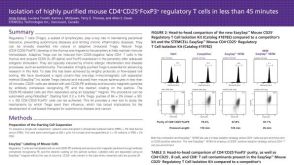 科学海报Isolation of Highly Purified Mouse CD4+CD25+Foxp3+ Regulatory T Cells in Less

 沪公网安备31010102008431号