Ode Y et al. (JAN 2018)
Journal of leukocyte biology
CIRP increases ICAM-1+ phenotype of neutrophils exhibiting elevated iNOS and NETs in sepsis.
Sepsis represents uncontrolled inflammation due to an infection. Cold-inducible RNA-binding protein (CIRP) is a stress-induced damage-associated molecular pattern (DAMP). A subset of neutrophils expressing ICAM-1+ neutrophils was previously shown to produce high levels of reactive oxygen species. The role of CIRP for the development and function of ICAM-1+ neutrophils during sepsis is unknown. We hypothesize that CIRP induces ICAM-1 expression in neutrophils causing injury to the lungs during sepsis. Using a mouse model of cecal ligation and puncture (CLP)-induced sepsis,we found increased expression of CIRP and higher frequencies and numbers of ICAM-1+ neutrophils in the lungs. Conversely,the CIRP-/- mice showed significant inhibition in the frequencies and numbers of ICAM-1+ neutrophils in the lungs compared to wild-type (WT) mice in sepsis. In vitro treatment of bone marrow-derived neutrophils (BMDN) with recombinant murine CIRP (rmCIRP) significantly increased ICAM-1+ phenotype in a time- and dose-dependent manner. The effect of rmCIRP on increasing frequencies of ICAM-1+ neutrophils was significantly attenuated in BMDN treated with anti-TLR4 Ab or NF-κB inhibitor compared,respectively,with BMDN treated with isotype IgG or DMSO. The frequencies of iNOS producing and neutrophil extracellular traps (NETs) forming phenotypes in rmCIRP-treated ICAM-1+ BMDN were significantly higher than those in ICAM-1- BMDN. Following sepsis the ICAM-1+ neutrophils in the lungs showed significantly higher levels of iNOS and NETs compared to ICAM-1- neutrophils. We further revealed that ICAM-1 and NETs were co-localized in the neutrophils treated with rmCIRP. CIRP-/- mice showed significant improvement in their survival outcome (78% survival) over that of WT mice (48% survival) in sepsis. Thus,CIRP could be a novel therapeutic target for regulating iNOS producing and NETs forming ICAM-1+ neutrophils in the lungs during sepsis.
View Publication
产品类型:
产品号#:
19762
19762RF
产品名:
EasySep™小鼠中性粒细胞富集试剂盒
RoboSep™ 小鼠中性粒细胞富集试剂盒含滤芯吸头
C. R. Seehus et al. (DEC 2017)
Nature communications 8 1 1900
Alternative activation generates IL-10 producing type 2 innate lymphoid cells.
Type 2 innate lymphoid cells (ILC2) share cytokine and transcription factor expression with CD4+ Th2 cells,but functional diversity of the ILC2 lineage has yet to be fully explored. Here,we show induction of a molecularly distinct subset of activated lung ILC2,termed ILC210. These cells produce IL-10 and downregulate some pro-inflammatory genes. Signals that generate ILC210 are distinct from those that induce IL-13 production,and gene expression data indicate that an alternative activation pathway leads to the generation of ILC210. In vivo,IL-2 enhances ILC210 generation and is associated with decreased eosinophil recruitment to the lung. Unlike most activated ILC2,the ILC210 population contracts after cessation of stimulation in vivo,with maintenance of a subset that can be recalled by restimulation,analogous to T-cell effector cell and memory cell generation. These data demonstrate the generation of a previously unappreciated IL-10 producing ILC2 effector cell population.
View Publication
产品类型:
产品号#:
19860
19860RF
85415
85420
85450
85460
86415
86420
86450
86460
产品名:
EasySep™ 小鼠Streptavidin RapidSpheres™分选试剂盒
RoboSep™ 小鼠Streptavidin RapidSpheres™分选试剂盒
SepMate™-15 (IVD), 100 units
SepMate™-15 (IVD)
SepMate™-50 (IVD)
SepMate™-50 (IVD)
SepMate™-15 (RUO), 100 units
SepMate™-15 (RUO)
SepMate™-50 (RUO)
SepMate™-50 (RUO)
Hornick EE et al. (FEB 2018)
Journal of immunology (Baltimore,Md. : 1950) 200 3 1188--1197
Nlrp12 Mediates Adverse Neutrophil Recruitment during Influenza Virus Infection.
Exaggerated inflammatory responses during influenza A virus (IAV) infection are typically associated with severe disease. Neutrophils are among the immune cells that can drive this excessive and detrimental inflammation. In moderation,however,neutrophils are necessary for optimal viral control. In this study,we explore the role of the nucleotide-binding domain leucine-rich repeat containing receptor family member Nlrp12 in modulating neutrophilic responses during lethal IAV infection. Nlrp12-/- mice are protected from lethality during IAV infection and show decreased vascular permeability,fewer pulmonary neutrophils,and a reduction in levels of neutrophil chemoattractant CXCL1 in their lungs compared with wild-type mice. Nlrp12-/- neutrophils and dendritic cells within the IAV-infected lungs produce less CXCL1 than their wild-type counterparts. Decreased CXCL1 production by Nlrp12-/- dendritic cells was not due to a difference in CXCL1 protein stability,but instead to a decrease in Cxcl1 mRNA stability. Together,these data demonstrate a previously unappreciated role for Nlrp12 in exacerbating the pathogenesis of IAV infection through the regulation of CXCL1-mediated neutrophilic responses.
View Publication
Rega A et al. (MAR 2013)
Journal of immunology (Baltimore,Md. : 1950) 190 5 2391--402
Plasmacytoid dendritic cells play a key role in tumor progression in lipopolysaccharide-stimulated lung tumor-bearing mice.
The antitumor activity of LPS was first described by Dr. William Coley. However,its role in lung cancer remains unclear. The aim of our study was to elucidate the dose-dependent effects of LPS (0.1-10 μg/mouse) in a mouse model of B16-F10-induced metastatic lung cancer. Lung tumor growth increased at 3 and 7 d after the administration of low-dose LPS (0.1 μg/mouse) compared with control mice. This was associated with an influx of plasmacytoid dendritic cells (pDCs),regulatory T cells,myeloid-derived suppressor cells,and CD8(+) regulatory T cells. In contrast,high-dose LPS (10 μg/mouse) reduced lung tumor burden and was associated with a greater influx of pDCs,as well as a stronger Th1 and Th17 polarization. Depletion of pDCs during low-dose LPS administration resulted in a decreased lung tumor burden. Depletion of pDCs during high-dose LPS treatment resulted in an increased tumor burden. The dichotomy in LPS effects was due to the phenotype of pDCs,which were immunosuppressive after the low-dose LPS,and Th1- and T cytotoxic-polarizing cells after the high-dose LPS. Adoptive transfer of T cells into nude mice demonstrated that CD8(+) T cells were responsible for pDC recruitment following low-dose LPS administration,whereas CD4(+) T cells were required for pDC influx after the high-dose LPS. In conclusion,our data suggest differential effects of low-dose versus high-dose LPS on pDC phenotype and tumor progression or regression in the lungs of mice.
View Publication
产品类型:
产品号#:
19752
19752RF
19753
19753RF
19764
19764RF
产品名:
EasySep™小鼠浆细胞样DC分选试剂盒
RoboSep™ 小鼠浆细胞样DC分选试剂盒
Stadtmann A et al. (OCT 2013)
The Journal of Experimental Medicine 210 11 2171--80
The PSGL-1-L-selectin signaling complex regulates neutrophil adhesion under flow
Neutrophils are recruited from the blood to sites of inflammation,where they contribute to immune defense but may also cause tissue damage. During inflammation,neutrophils roll along the microvascular endothelium before arresting and transmigrating. Arrest requires conformational activation of the integrin lymphocyte function-associated antigen 1 (LFA-1),which can be induced by selectin engagement. Here,we demonstrate that a subset of P-selectin glycoprotein ligand-1 (PSGL-1) molecules is constitutively associated with L-selectin. Although this association does not require the known lectin-like interaction between L-selectin and PSGL-1,the signaling output is dependent on this interaction and the cytoplasmic tail of L-selectin. The PSGL-1-L-selectin complex signals through Src family kinases,ITAM domain-containing adaptor proteins,and other kinases to ultimately result in LFA-1 activation. The PSGL-1-L-selectin complex-induced signaling effects on neutrophil slow rolling and recruitment in vivo demonstrate the functional importance of this pathway. We conclude that this is a signaling complex specialized for sensing adhesion under flow.
View Publication
产品类型:
产品号#:
19257
19257RF
19762
19762RF
产品名:
EasySep™小鼠中性粒细胞富集试剂盒
RoboSep™ 小鼠中性粒细胞富集试剂盒含滤芯吸头
Long T et al. (MAR 2014)
Biomaterials 35 9 2752--9
The effect of mesenchymal stem cell sheets on structural allograft healing of critical sized femoral defects in mice.
Structural bone allografts are widely used in the clinic to treat critical sized bone defects,despite lacking the osteoinductive characteristics of live autografts. To address this,we generated revitalized structural allografts wrapped with mesenchymal stem/progenitor cell (MSC) sheets,which were produced by expanding primary syngenic bone marrow derived cells on temperature-responsive plates,as a tissue-engineered periosteum. In vitro assays demonstrated maintenance of the MSC phenotype in the sheets,suggesting that short-term culturing of MSC sheets is not detrimental. To test their efficacy in vivo,allografts wrapped with MSC sheets were transplanted into 4-mm murine femoral defects and compared to allografts with direct seeding of MSCs and allografts without cells. Evaluations consisted of X-ray plain radiography,3D microCT,histology,and biomechanical testing at 4- and 6-weeks post-surgery. Our findings demonstrate that MSC sheets induce prolonged cartilage formation at the graft-host junction and enhanced bone callus formation,as well as graft-host osteointegration. Moreover,a large periosteal callus was observed spanning the allografts with MSC sheets,which partially mimics live autograft healing. Finally,biomechanical testing showed a significant increase in the structural and functional properties of MSC sheet grafted femurs. Taken together,MSC sheets exhibit enhanced osteogenicity during critical sized bone defect repair,demonstrating the feasibility of this tissue engineering solution for massive allograft healing.
View Publication
产品类型:
产品号#:
19771
产品名:
EasySep™ 小鼠间充质干/祖细胞富集试剂盒
Hou TZ et al. ( 2015)
The Journal of Immunology 194 5 2148--2159
A Transendocytosis Model of CTLA-4 Function Predicts Its Suppressive Behavior on Regulatory T Cells
Manipulation of the CD28/CTLA-4 pathway is at the heart of a number of immunomodulatory approaches used in both autoimmunity and cancer. Although it is clear that CTLA-4 is a critical regulator of T cell responses,the immunological contexts in which CTLA-4 controls immune responses are not well defined. In this study,we show that whereas CD80/CD86-dependent activation of resting human T cells caused extensive T cell proliferation and robust CTLA-4 expression,in this context CTLA-4 blocking Abs had no impact on the response. In contrast,in settings where CTLA-4(+) cells were present as regulators�
View Publication
S. Balu et al. ( 2011)
The Journal of Immunology 186 3113-3119
A novel human IgA monoclonal antibody protects against tuberculosis
Abs have been shown to be protective in passive immunotherapy of tuberculous infection using mouse experimental models. In this study,we report on the properties of a novel human IgA1,constructed using a single-chain variable fragment clone (2E9),selected from an Ab phage library. The purified Ab monomer revealed high binding affinities for the mycobacterial ?-crystallin Ag and for the human Fc?RI (CD89) IgA receptor. Intranasal inoculations with 2E9IgA1 and recombinant mouse IFN-? significantly inhibited pulmonary H37Rv infection in mice transgenic for human CD89 but not in CD89-negative littermate controls,suggesting that binding to CD89 was necessary for the IgA-imparted passive protection. 2E9IgA1 added to human whole-blood or monocyte cultures inhibited luciferase-tagged H37Rv infection although not for all tested blood donors. Inhibition by 2E9IgA1 was synergistic with human rIFN-? in cultures of purified human monocytes but not in whole-blood cultures. The demonstration of the mandatory role of Fc?RI (CD89) for human IgA-mediated protection is important for understanding of the mechanisms involved and also for translation of this approach toward development of passive immunotherapy of tuberculosis.
View Publication


 EasySep™小鼠TIL(CD45)正选试剂盒




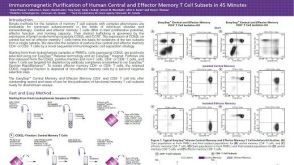 科学海报Immunomagnetic Purification of Human Central and Effector Memory T Cell Subsets in 45 Minutes
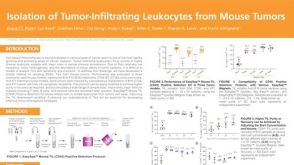 科学海报Isolation of Tumor-Infiltrating Leukocytes from Mouse Tumors


 沪公网安备31010102008431号