Nettenstrom L et al. (JAN 2013)
Journal of immunological methods 387 2-Jan 81--8
An optimized multi-parameter flow cytometry protocol for human T regulatory cell analysis on fresh and viably frozen cells, correlation with epigenetic analysis, and comparison of cord and adult blood.
Multi-parameter flow cytometry analysis of T regulatory (Treg) cells is a widely used approach in basic and translational research studies. This approach has been complicated by a lack of specific markers for Treg cells and lack of uniformity in the quantification of Treg cells. Given the central role of Treg cells in the inception and perpetuation of diverse immune responses as well as its target as a therapeutic,it is imperative to have established methodologies for Treg cell analysis that are robust and usable for studies with multiple subjects as well as multicenter studies. In this study,we describe an optimized multi-parameter flow cytometry protocol for the quantification of human Treg cells from freshly obtained and viably frozen samples and correlations with epigenetic Treg cell analysis (TSDR demethylation). We apply these two methodologies to characterize Treg cell differences between cord blood and adult peripheral blood. In summary,the optimized protocol appears to be robust for Treg cell quantification from freshly isolated or viably frozen cells and the multi-parameter flow cytometry findings are strongly positively correlated with TSDR demethylation thus providing several options for the characterization of Treg cell frequency and function in large translational or clinical studies.
View Publication
Nolz JC et al. (JUL 2007)
Journal of immunology (Baltimore,Md. : 1950) 179 2 1104--12
TCR/CD28-stimulated actin dynamics are required for NFAT1-mediated transcription of c-rel leading to CD28 response element activation.
TCR/CD28 engagement triggers the initiation of a variety of signal transduction pathways that lead to changes in gene transcription. Although reorganization of the actin cytoskeleton is required for T cell activation,the molecular pathways controlled by the actin cytoskeleton are ill defined. To this end,we analyzed TCR/CD28-stimulated signaling pathways in cytochalasin D-treated T cells to determine the cytoskeletal requirements for T cell activation. Cytochalasin D treatment impaired T cell activation by causing a reduction in TCR/CD28-mediated calcium flux,and blocked activation of two regulatory elements within the IL-2 promoter,NFAT/AP-1 and CD28RE/AP. Treatment had no effect on signaling leading to the activation of either AP-1 or NF-kappaB. Significantly,we found that NFAT1 is required for optimal c-rel up-regulation in response to TCR/CD28 stimulation. In fact,NFAT1 could be detected bound at the c-rel promoter in response to TCR/CD28 stimulation,and targeting of NFAT1 using RNA interference in human CD4(+) T cells abrogated c-rel transcription. Overall,these findings establish that disrupting actin cytoskeletal dynamics impairs TCR/CD28-mediated calcium flux required for NFAT1-mediated c-rel transcription and,thus,activation of the CD28RE/AP.
View Publication
产品类型:
产品号#:
15022
15062
产品名:
RosetteSep™人CD4+ T细胞富集抗体混合物
RosetteSep™人CD4+ T细胞富集抗体混合物
Richard J et al. (FEB 2010)
Blood 115 7 1354--63
HIV-1 Vpr up-regulates expression of ligands for the activating NKG2D receptor and promotes NK cell-mediated killing.
HIV up-regulates cell-surface expression of specific ligands for the activating NKG2D receptor,including ULBP-1,-2,and -3,but not MICA or MICB,in infected cells both in vitro and in vivo. However,the viral factor(s) involved in NKG2D ligand expression still remains undefined. HIV-1 Vpr activates the DNA damage/stress-sensing ATR kinase and promotes G(2) cell-cycle arrest,conditions known to up-regulate NKG2D ligands. We report here that HIV-1 selectively induces cell-surface expression of ULBP-2 in primary CD4(+) T lymphocytes by a process that is Vpr dependent. Importantly,Vpr enhanced the susceptibility of HIV-1-infected cells to NK cell-mediated killing. Strikingly,Vpr alone was sufficient to up-regulate expression of all NKG2D ligands and thus promoted efficient NKG2D-dependent NK cell-mediated killing. Delivery of virion-associated Vpr via defective HIV-1 particles induced analogous biologic effects in noninfected target cells,suggesting that Vpr may act similarly beyond infected cells. All these activities relied on Vpr ability to activate the ATR-mediated DNA damage/stress checkpoint. Overall,these results indicate that Vpr is a key determinant responsible for HIV-1-induced up-regulation of NKG2D ligands and further suggest an immunomodulatory role for Vpr that may not only contribute to HIV-1-induced CD4(+) T-lymphocyte depletion but may also take part in HIV-1-induced NK-cell dysfunction.
View Publication
Hinrichs CS et al. (OCT 2009)
Proceedings of the National Academy of Sciences of the United States of America 106 41 17469--74
Adoptively transferred effector cells derived from naive rather than central memory CD8+ T cells mediate superior antitumor immunity.
Effector cells derived from central memory CD8(+) T cells were reported to engraft and survive better than those derived from effector memory populations,suggesting that they are superior for use in adoptive immunotherapy studies. However,previous studies did not evaluate the relative efficacy of effector cells derived from naïve T cells. We sought to investigate the efficacy of tumor-specific effector cells derived from naïve or central memory T-cell subsets using transgenic or retrovirally transduced T cells engineered to express a tumor-specific T-cell receptor. We found that naïve,rather than central memory T cells,gave rise to an effector population that mediated superior antitumor immunity upon adoptive transfer. Effector cells developed from naïve T cells lost the expression of CD62L more rapidly than those derived from central memory T cells,but did not acquire the expression of KLRG-1,a marker for terminal differentiation and replicative senescence. Consistent with this KLRG-1(-) phenotype,naïve-derived cells were capable of a greater proliferative burst and had enhanced cytokine production after adoptive transfer. These results indicate that insertion of genes that confer antitumor specificity into naïve rather than central memory CD8(+) T cells may allow superior efficacy upon adoptive transfer.
View Publication


 EasySep™小鼠TIL(CD45)正选试剂盒




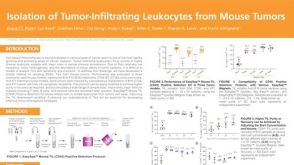 科学海报Isolation of Tumor-Infiltrating Leukocytes from Mouse Tumors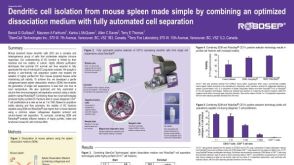
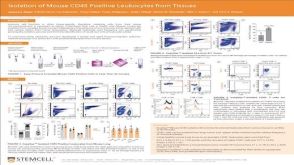 科学海报Isolation of Mouse CD45 Positive Leukocytes from Tissues
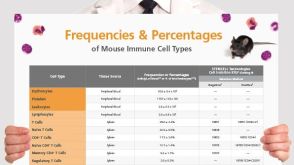 挂图Frequencies and Percentages of Mouse Immune Cell Types List of the frequencies of over 25 immune cell types in C57BL/6 mice


 沪公网安备31010102008431号