Krummey SM et al. (MAR 2016)
Journal of Immunology 196 6 2838--46
Low-Affinity Memory CD8+ T Cells Mediate Robust Heterologous Immunity.
Heterologous immunity is recognized as a significant barrier to transplant tolerance. Whereas it has been established that pathogen-elicited memory T cells can have high or low affinity for cross-reactive allogeneic peptide-MHC,the role of TCR affinity during heterologous immunity has not been explored. We established a model with which to investigate the impact of TCR-priming affinity on memory T cell populations following a graft rechallenge. In contrast to high-affinity priming,low-affinity priming elicited fully differentiated memory T cells with a CD45RB(hi) status. High CD45RB status enabled robust secondary responses in vivo,as demonstrated by faster graft rejection kinetics and greater proliferative responses. CD45RB blockade prolonged graft survival in low affinity-primed mice,but not in high affinity-primed mice. Mechanistically,low affinity-primed memory CD8(+) T cells produced more IL-2 and significantly upregulated IL-2Rα expression during rechallenge. We found that CD45RB(hi) status was also a stable marker of priming affinity within polyclonal CD8(+) T cell populations. Following high-affinity rechallenge,low affinity-primed CD45RB(hi) cells became CD45RB(lo),demonstrating that CD45RB status acts as an affinity-based differentiation switch on CD8(+) T cells. Thus,these data establish a novel mechanism by which CD45 isoforms tune low affinity-primed memory CD8(+) T cells to become potent secondary effectors following heterologous rechallenge. These findings have direct implications for allogeneic heterologous immunity by demonstrating that despite a lower precursor frequency,low-affinity priming is sufficient to generate memory cells that mediate potent secondary responses against a cross-reactive graft challenge.
View Publication
Effector T Cells Abrogate Stroma-Mediated Chemoresistance in Ovarian Cancer.
Effector T cells and fibroblasts are major components in the tumor microenvironment. The means through which these cellular interactions affect chemoresistance is unclear. Here,we show that fibroblasts diminish nuclear accumulation of platinum in ovarian cancer cells,resulting in resistance to platinum-based chemotherapy. We demonstrate that glutathione and cysteine released by fibroblasts contribute to this resistance. CD8(+) T cells abolish the resistance by altering glutathione and cystine metabolism in fibroblasts. CD8(+) T-cell-derived interferon (IFN)γ controls fibroblast glutathione and cysteine through upregulation of gamma-glutamyltransferases and transcriptional repression of system xc(-) cystine and glutamate antiporter via the JAK/STAT1 pathway. The presence of stromal fibroblasts and CD8(+) T cells is negatively and positively associated with ovarian cancer patient survival,respectively. Thus,our work uncovers a mode of action for effector T cells: they abrogate stromal-mediated chemoresistance. Capitalizing upon the interplay between chemotherapy and immunotherapy holds high potential for cancer treatment.
View Publication
产品类型:
产品号#:
17953
17953RF
15022
15062
100-0710
产品名:
EasySep™人CD8+ T细胞分选试剂盒
RoboSep™ 人CD8+ T细胞分选试剂盒
RosetteSep™人CD4+ T细胞富集抗体混合物
RosetteSep™人CD4+ T细胞富集抗体混合物
EasySep™人CD8+ T细胞分选试剂盒
Ghandour H et al. (NOV 2007)
Blood 110 10 3682--90
Essential role for Rap1 GTPase and its guanine exchange factor CalDAG-GEFI in LFA-1 but not VLA-4 integrin mediated human T-cell adhesion.
Regulated adhesion of T cells by the integrins LFA-1 (lymphocyte function-associated antigen-1) and VLA-4 (very late antigen-4) is essential for T-cell trafficking. The small GTPase Rap1 is a critical activator of both integrins in murine lymphocytes and T-cell lines. Here we examined the contribution of the Rap1 regulatory pathway in integrin activation in primary CD3(+) human T cells. We demonstrate that inactivation of Rap1 GTPase in human T cells by expression of SPA1 or Rap1GAP blocked stromal cell-derived factor-1alpha (SDF-1alpha)-stimulated LFA-1-ICAM-1 (intercellular adhesion molecule-1) interactions and LFA-1 affinity modulation but unexpectedly did not significantly affect binding of VLA-4 to its ligand VCAM-1 (vascular cell adhesion molecule 1). Importantly,silencing of the Rap1 guanine exchange factor CalDAG-GEFI inhibited SDF-1alpha- and phorbol 12-myristate 13-acetate (PMA)-induced adhesion to ICAM-1 while having no effect on adhesion to VCAM-1. Pharmacologic inhibition of Phospholipase C (PLC) blocked Rap1 activation and inhibited cell adhesion and polarization on ICAM-1 and VCAM-1. Protein kinase C (PKC) inhibition led to enhanced levels of active Rap1 concomitantly with increased T-cell binding to ICAM-1,whereas adhesion to VCAM-1 was reduced. Thus,PLC/CalDAG-GEFI regulation of Rap1 is selectively required for chemokine- and PMA-induced LFA-1 activation in human T cells,whereas alternate PLC- and PKC-dependent mechanisms are involved in the regulation of VLA-4.
View Publication
产品类型:
产品号#:
15021
15061
产品名:
RosetteSep™人T细胞富集抗体混合物
RosetteSep™人T细胞富集抗体混合物
E. Giuliani et al. (mar 2019)
Scientific reports 9 1 4373
Hexamethylene bisacetamide impairs NK cell-mediated clearance of acute T lymphoblastic leukemia cells and HIV-1-infected T cells that exit viral latency.
The hexamethylene bisacetamide (HMBA) anticancer drug was dismissed due to limited efficacy in leukemic patients but it may re-enter into the clinics in HIV-1 eradication strategies because of its recently disclosed capacity to reactivate latent virus. Here,we investigated the impact of HMBA on the cytotoxicity of natural killer (NK) cells against acute T lymphoblastic leukemia (T-ALL) cells or HIV-1-infected T cells that exit from latency. We show that in T-ALL cells HMBA upmodulated MICB and ULBP2 ligands for the NKG2D activating receptor. In a primary CD4+ T cell-based latency model,HMBA did not reactivate HIV-1,yet enhanced ULBP2 expression on cells harboring virus reactivated by prostratin (PRO). However,HMBA reduced the expression of NKG2D and its DAP10 adaptor in NK cells,hence impairing NKG2D-mediated cytotoxicity and DAP10-dependent response to IL-15 stimulation. Alongside,HMBA dampened killing of T-ALL targets by IL-15-activated NK cells and impaired NK cell-mediated clearance of PRO-reactivated HIV-1+ cells. Overall,our results demonstrate a dominant detrimental effect of HMBA on the NKG2D pathway that crucially controls NK cell-mediated killing of tumors and virus-infected cells,providing one possible explanation for poor clinical outcome in HMBA-treated cancer patients and raising concerns for future therapeutic application of this drug.
View Publication
Osman MS et al. (FEB 2007)
Journal of immunology (Baltimore,Md. : 1950) 178 3 1261--7
Activating Ly-49 receptors regulate LFA-1-mediated adhesion by NK cells.
NK cells are important for innate resistance to tumors and viruses. Engagement of activating Ly-49 receptors expressed by NK cells leads to rapid NK cell activation resulting in target cell lysis and cytokine production. The ITAM-containing DAP12 adapter protein stably associates with activating Ly-49 receptors,and couples receptor recognition with generation of NK responses. Activating Ly-49s are potent stimulators of murine NK cell functions,yet how they mediate such activities is not well understood. We demonstrate that these receptors trigger LFA-1-dependent tight conjugation between NK cells and target cells. Furthermore,we show that activating Ly-49 receptor engagement leads to rapid DAP12-dependent up-regulation of NK cell LFA-1 adhesiveness to ICAM-1 that is also dependent on tyrosine kinases of the Syk and Src families. These results indicate for the first time that activating Ly-49s control adhesive properties of LFA-1,and by DAP12-dependent inside-out signaling. Ly-49-driven mobilization of LFA-1 adhesive function may represent a fundamental proximal event during NK cell interactions with target cells involving activating Ly-49 receptors,leading to target cell death.
View Publication


 EasySep™小鼠TIL(CD45)正选试剂盒




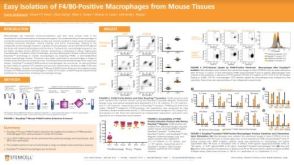 科学海报Easy Isolation of F4/80-Positive Macrophages from Mouse Tissues



 沪公网安备31010102008431号